Signs of Life
April 15, 2026
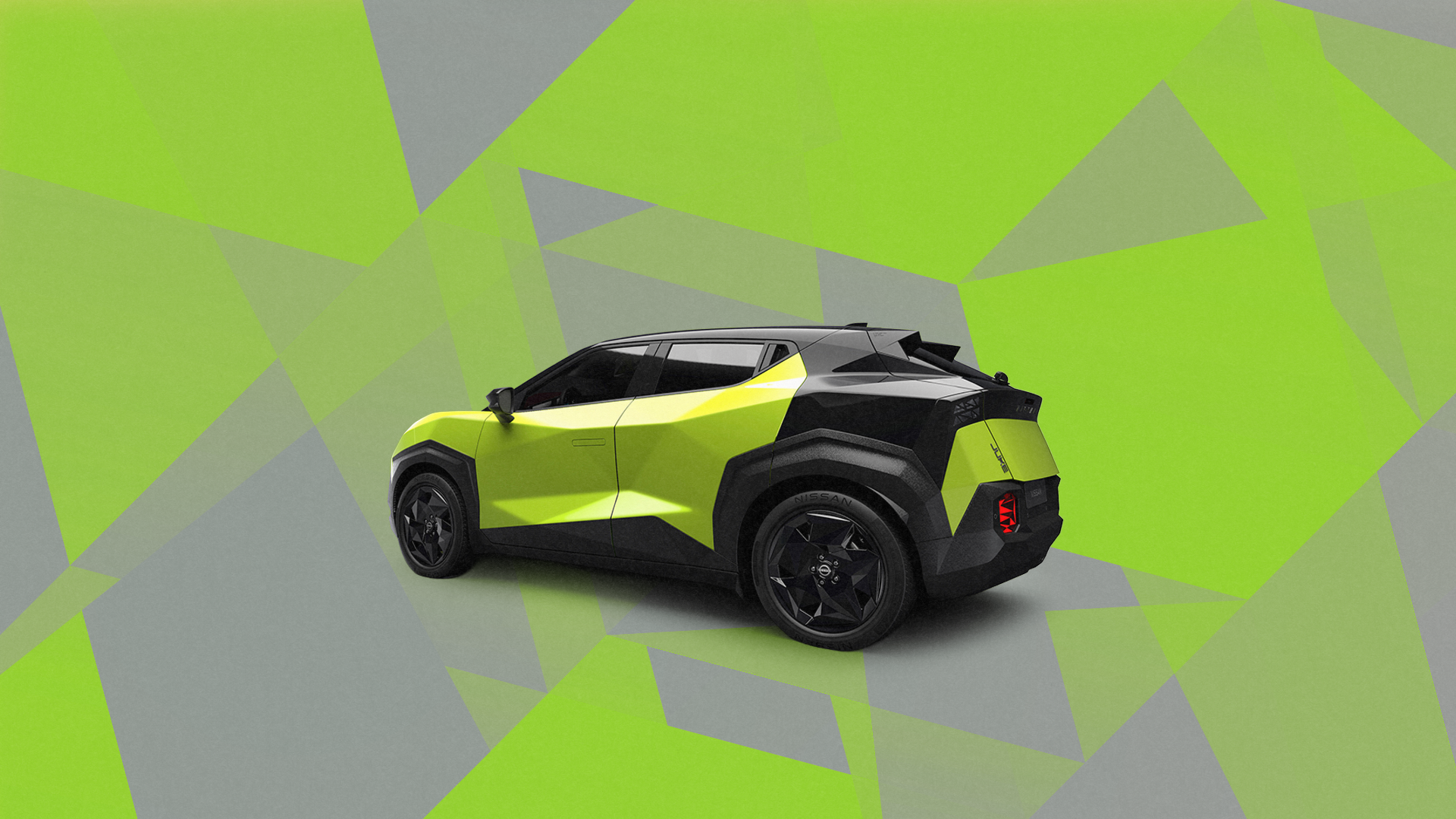
Alex KiersteinNissan has been doing badly for a while, but you wouldn’t know it from the bold, experimental-looking Juke EV it just released.
One of the most essential, and most difficult, parts of being a car writer and reviewer is contextualizing your own preconceptions, quirks, and preferences, figuring out why you like a certain thing and not another. When you take on something as an interest and start seeing an awful lot of it, you start to see weirdness as a virtue. You start to like things because they’re novel. I am deeply uninterested in stamps but I get why a stamp collector might be excited to find a stamp that was printed upside down. That’s weird. That’s different.
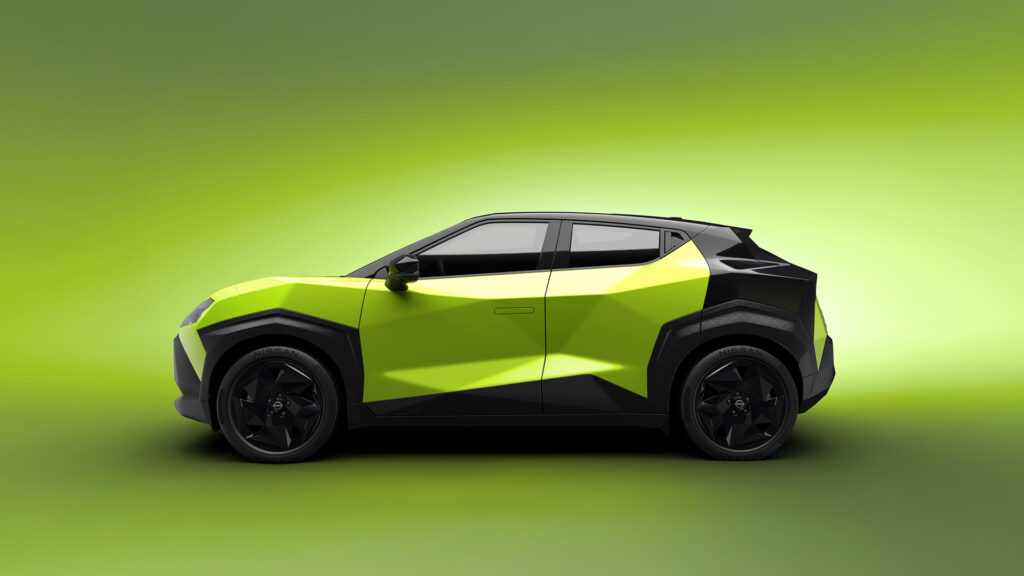
The new Nissan Juke is, to me, a bit like a stamp printed upside down. I appreciate that it exists, I love the weirdness. It’s sure to be almost as controversial as the first Nissan Juke, so it is true to its heritage.
Do I like the way it looks? Not necessarily.
But I do admire how it looks. That’s subtly different from liking it. So I’m going to set aside my opinion about its aesthetic value and consider it within its market context. Let’s start with Europe, which is in the midst of both an influx of Chinese EVs but also a moment of creative evolution for European ones.
Consider Renault, which has reimagined the Renault 5, the 4, and even the delightful Twingo as aesthetic experiments that work fantastically well even if you ignore the nostalgia appeal. The Peugeot 208 EV and its Opel twin, the Corsa F, are a little less inspired but also clean and handsome. Even Ford’s European EV experiments, some based on VW platforms, are style-forward; not that all are visually appealing. At least it is trying something interesting.
And then there’s the Citroen ELO concept. Wow.
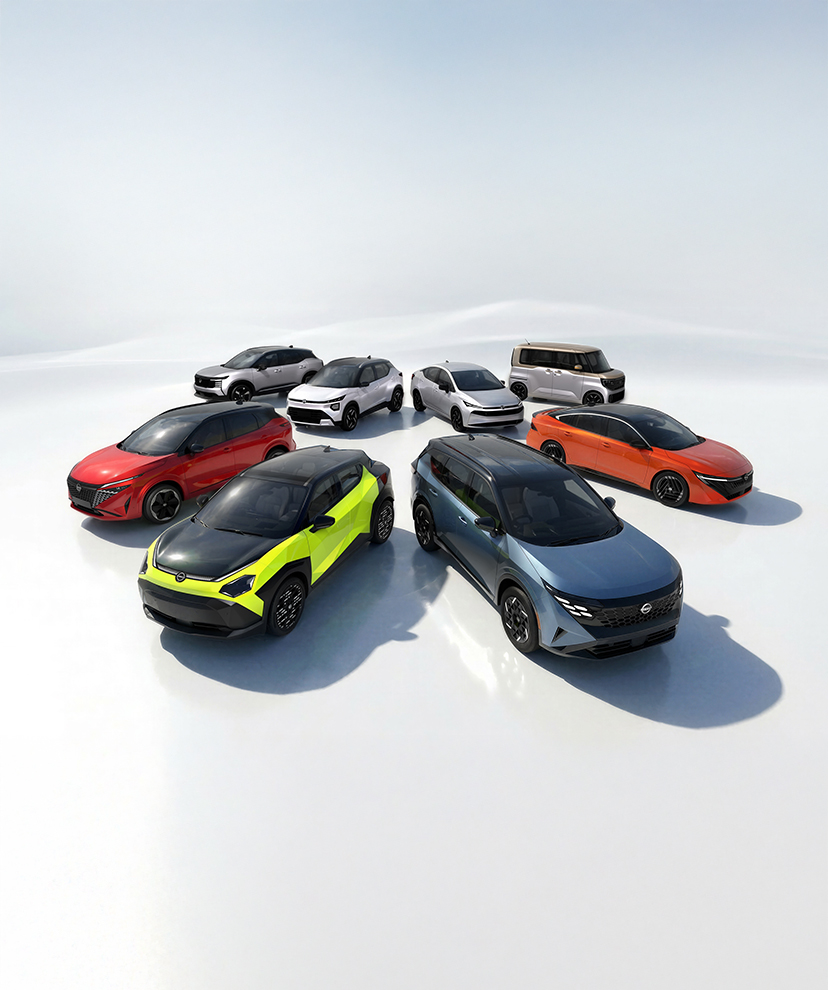
The new Nissan Juke goes beyond interesting into familiar ground for Nissan: controversy. The original Juke introduced a handful of styling tropes that remain popular, although the Juke itself was never universally regarded as a styling success. I recall the opinions of my colleagues throughout the industry being on a spectrum from revulsion to begrudging admiration. It was not a flop; sales were in the 30,000-unit/year range for much of its run, which was just shy of a decade.
The new Juke is multi-faceted, quite literally. (I’m sorry. I tried not to.) Everywhere there could be a crease or convex angularity, there is. Numerous sharp-edged, triangular shapes emerge from the rear. Even the wheel well trim is a riot of curves, with a convex section with one profile blending into a bit inset into the fender with at least five facets. There’s significant contrast between the blacked-out hood, pillars, roof, and D-pillar “blade” and the Kermit green reveal paintjob.
What is missing, interestingly, are divorced driving lamps. The headlights are a more muted shape and occupy a conventional position, although look closely and they have as many angular elements as the rest of the car.
The profile is still Juke-ish, although it’s not as distinctive as the original. It is eye-catching, and I think that’s important. Europe is in a moment in which whimsy is in, especially for the small, urban EV. You can overlook a lot of austerity when the car is either adorable (the Ami!) or bold (this Juke).
I think what differentiates the new Juke from its contemporaries is personality. Perhaps the interior and driving experience will provide that more than the exterior. But I credit Nissan for resisting the urge to go conservative here. What the Juke tells me is that the company is willing to take risks that show more confidence in the product’s prospects than some observers have in the company’s prospects. In other words, it’s got chutzpah.
If you can’t be cute, at least be bold.
One response to “Signs of Life”
-
This take also encapsulates how I feel about the Cybertruck design. I’m glad someone tried something new and unusual, but it does not appeal to me personally on any level.
I’m hoping this is the beginning of better things for Nissan. I still have fond memories of my first RWD car – a first gen 200sx that I drove sideways everywhere. And that drivetrain…it ran always ran perfectly, smooth and silent, even as the rest of the car was literally falling apart after a decade of hard living.

Recent Posts
All Posts
July 17, 2026
July 16, 2026
July 13, 2026
Leave a Reply
You must be logged in to post a comment.