Master of All
May 11, 2026
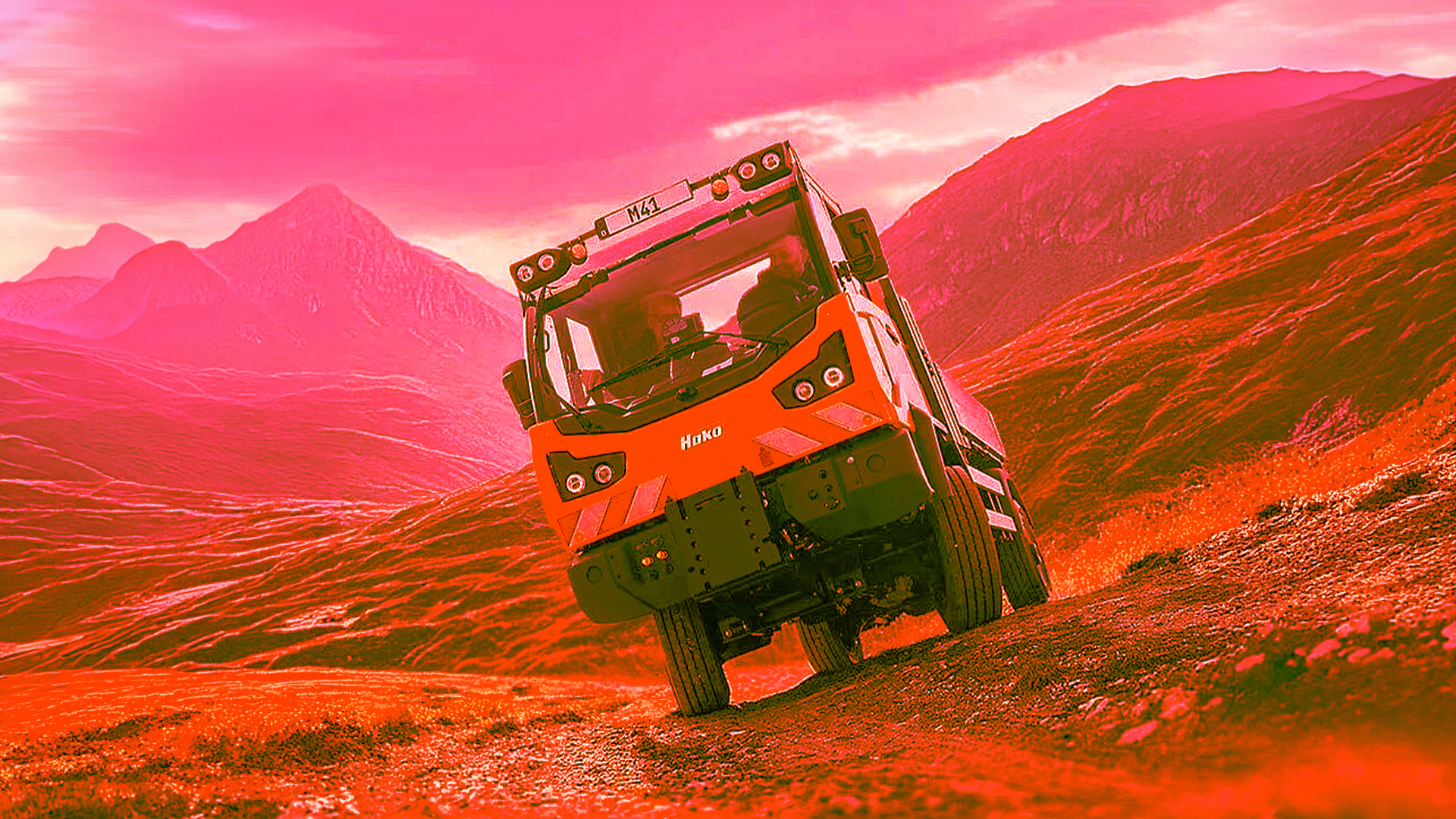
Alex KiersteinThe long-running Hako Multicar is a modular powerhouse, and perhaps a useful case study for American commercial vehicle manufacturers.
A tractor is not a truck, but one of the neat things about a tractor is the ability to fit powered and unpowered implements and tools forward and back, thanks to the three-point hitch and PTOs. Farm tools, front loaders for handling pallets, trailers of all sorts, snow plows and blowers. The original civilian ur-4x4s had some of this functionality, too. The original Land Rover offered a rear PTO; period ads show it running a big-ass saw. The early Jeep CJs were real “work the farm, drive to town” jobs, capable of plowing and running belt-driven tools as a static powerplant. The Hako Multicar does this, too, and unlike the modern Jeep Wrangler and Land Rover Defender it never abandoned the format. It specialized in it. Really, it’s all the Multicar does. There’s no civilian analogue.

Multicars, I should say, as there are several versions. But they’re all small-ish forward-control truck-like things, with a variety of tools and components that’ll attach to the bed, front, or back. Some versions have robust hydraulic or hydrostatic systems to support powered tools like snowplows, sweepers, that sort of thing. Others are optimized for towing and hauling, with tip-beds and cranes. Number of wheels driven? Yes. 4×2 and 4×4 versions are available.
There are a few different chassis and basic cab arrangements, from the narrow-track M29 to the 7.5-ton-class M41. The mid-grade M31 will be available as a BEV soon, too.
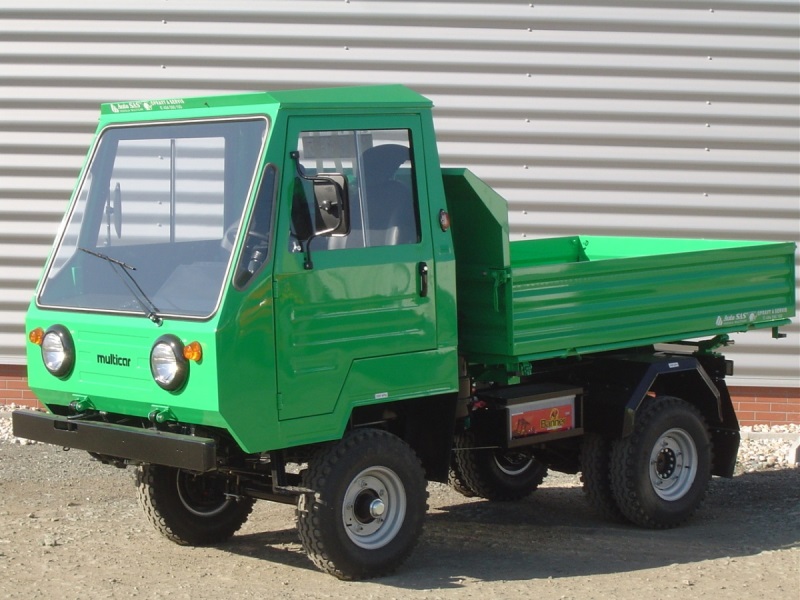
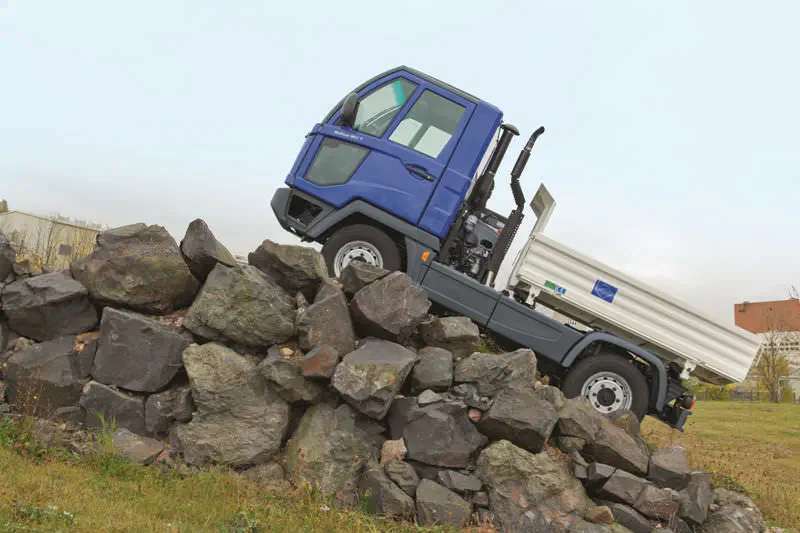
Despite the modern, European-working-vehicle look, the Multicar line is old. Like, it predates the official founding of East Germany, where it was located. As part of the state-owned vehicle production conglomerate Industrieverband Fahrzeugbau, it was produced alongside the Trabant, the Wartburg, all of those things. Things with questionable reputations for quality, utility, and competitiveness with contemporary cars from elsewhere.
All of the other IFA brands are gone. There are no Framos, no Barkas, being produced today. (OK, there are Framos, but the company hasn’t existed continuously. Framo was reconstituted in 2014.) But the Multicar persisted. In 2004, the line was sold to Hako, but it’s been in production continuously since the 1950s.
The early Multicars were delightfully weird. Think about those electric Taylor-Dunn carts running around factories. (Which, incidentally, are worth recognizing as an efficient and interesting development in their own right.) The first pre-Multicars were basically internal combustion versions of these called the “Diesel Ant.” (Can’t make this stuff up.) The subsequent Multicar was equally rudimentary, with bizarre stand-up cabs or asymmetrical single canopies. Further development, like the M23 Multicar, looked like brutalist kei trucks, which is not far off from reality.
With the end of East Germany, Multicar wasn’t shuttered; the factory was privatized. Production continued, Hako-Werke became the primary shareholder in the late 1990s, and the rest is history.
I credit the Multicar’s relentless, singular focus on utility for its survival. These look like exceptionally useful machines, particularly for municipal governments and certain types of large corporations. And perhaps spending much of its existence in East Germany allowed the factory to resist the urge to cash in on mass consumer appeal—no bourgeois Multicar MPV! I can appreciate their task-focused nature and the ability to survive a groundshaking political upheaval. What a vehicle.
Recent Posts
All Posts
June 24, 2026
June 23, 2026

June 21, 2026
Leave a Reply
You must be logged in to post a comment.