Visit: Ford’s EVDC Skunkworks
Last week, I saw Ford’s Universal EV, wrapped tipped to tail in black and white camouflage. It’s roughly Maverick-sized, though with a more car-like passenger cabin and nose, apparently designed more for aero than for truck-appeal. That’s about all I have to say about it, I got just a glimpse as it rolled by our little flock of journalists on its way back into Ford’s Electric Vehicle Development Center in Long Beach, California. But, I did learn a lot about it and Ford’s unconventional plan to bring an affordable EV to the US market.
Over the course of a lengthy tour, Ford walked us through the two buildings that comprise the 250,000 square-ft campus where it says it’s rethinking the EV. Our first stop was a visit with the truck’s structure, including the largely cast-aluminum piece from the a-pillar forward. Ford’s been public about its bounty system and this project’s overall focus on reducing the number of parts that make it on to the UEV. Cooling system components hang from a bolted-in cast-aluminum structure sitting between the wheels in a configuration that would be more or less familiar to anyone who has pulled the carpet out of a Tesla Model 3. We would later see that the large radiator/heat exchanger is located between the front subframe horns with its intake pointed down to the road, also in Tesla fashion. For better or worse, Tesla’s influence on modern EV design is sizable and this project is happening under the affable Allen Clarke, who was heavily involved in every product that company has brought to market (or promised to bring to market.)
The emergence of these large structural castings has led to some discussion about repairability and Ford said that the structure was built with repairability in mind. The company claims to have worked with insurers and repairers to engineer for common types of crashes. In cases where the aluminum structure is damaged, there are cut lines in the stampings to indicate where damaged sections of it can be removed. Ford said they can then be replaced with adhesives and rivets, without welding, which obviously raises some questions.
Ford then shuffled us over to a massive open L-shaped room with two cars under black drapes and one first-gen Ford Escort rally car peaking at us from the other part of the L. We were there to hear about the design philosophy that has informed the project from designers Eva Ross and Simona Merker. A huge moodboard hung behind them and a table was covered in consumer goods meant to inspire the feel of the UEV. As In pictures or on the table there were Nocs binoculars, a lot of Teenage Engineering imagery, including the OB-4 portable stereo (in person) and Playdate handheld gaming system (picture), a grey Casio G-Shock, two motorcycles, some cyberpunk commuter cars, a Nike Calm Mule, a Couch Console storage thing, a handful of modern buildings, two different surfboard fins, a Converse All-Star, a few different foam cushions, a lot of that felty grey textile stuff, maybe a knob.design keyboard, and my notes say “hacked-together crab drone” but I don’t remember what that could possibly be referring to. If the moodboards are any indication, the car will have a cool, retrofuturistic vibe with more detailing and visual interest than Slate’s cheap pickup, which is headed to market later this year, and relies a little on the owner to add their own visual flourishes.
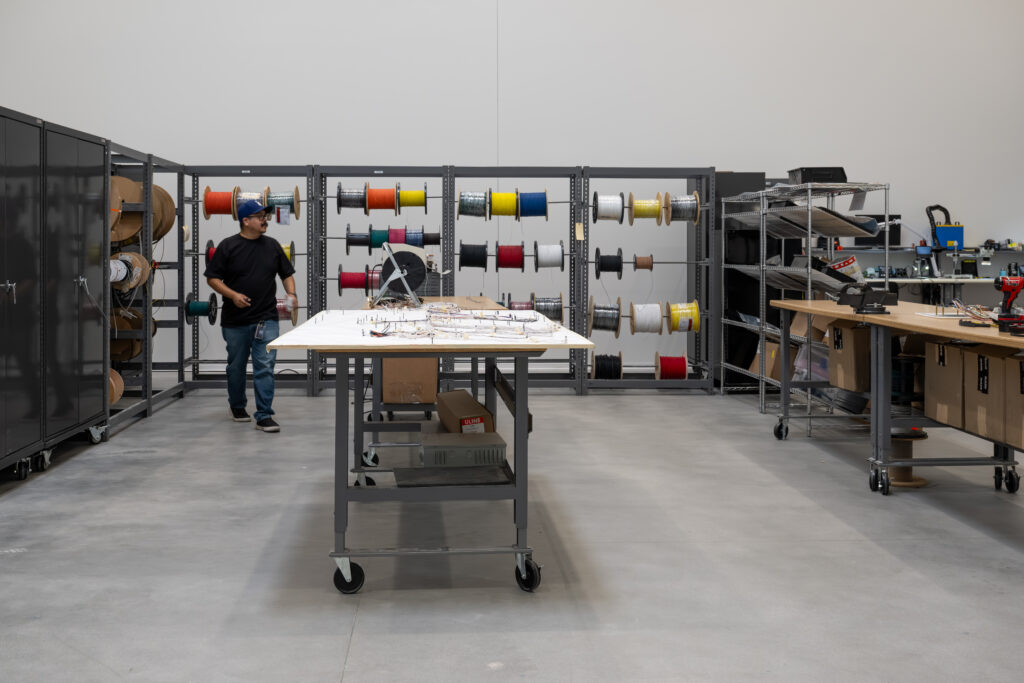
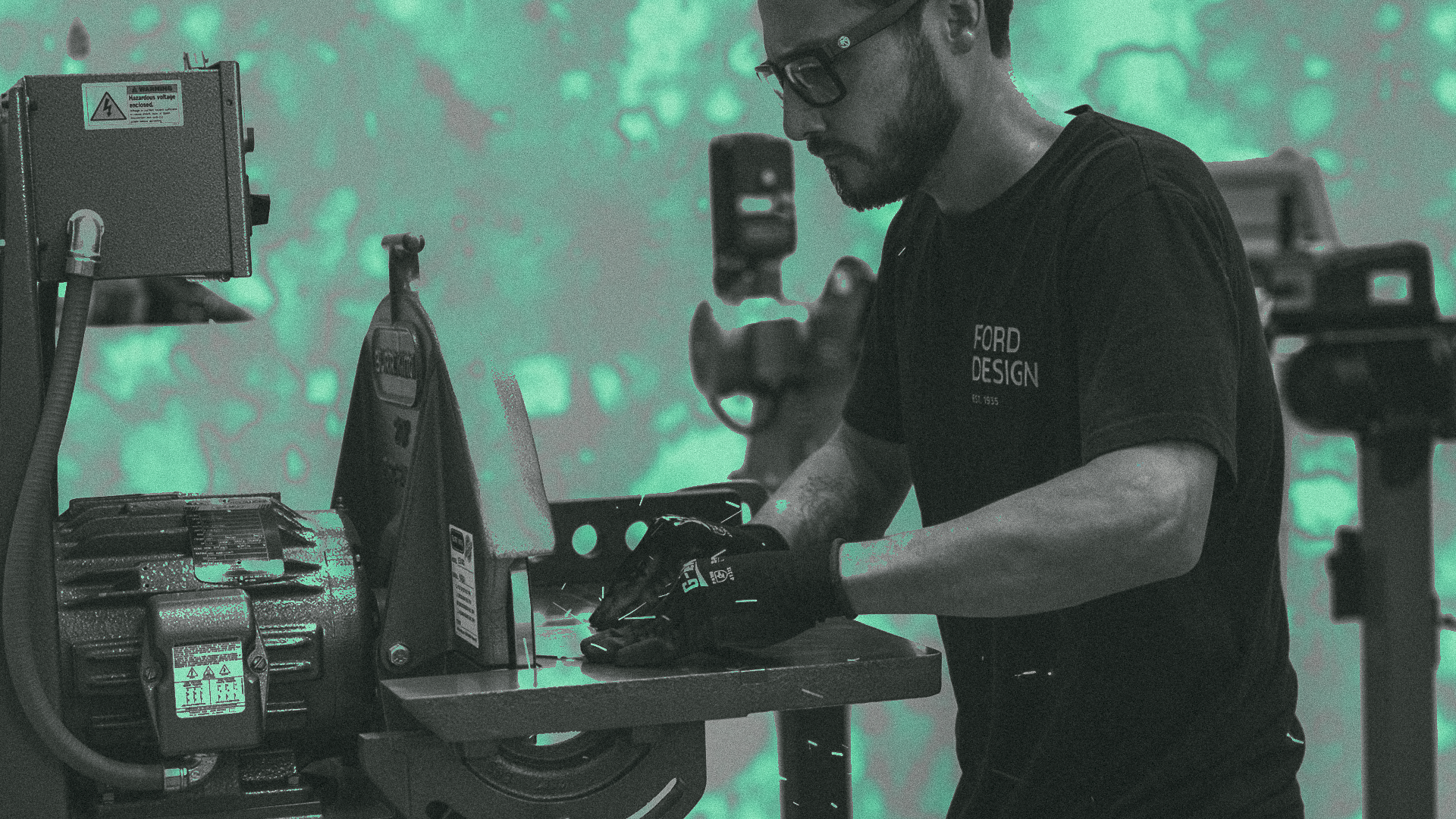
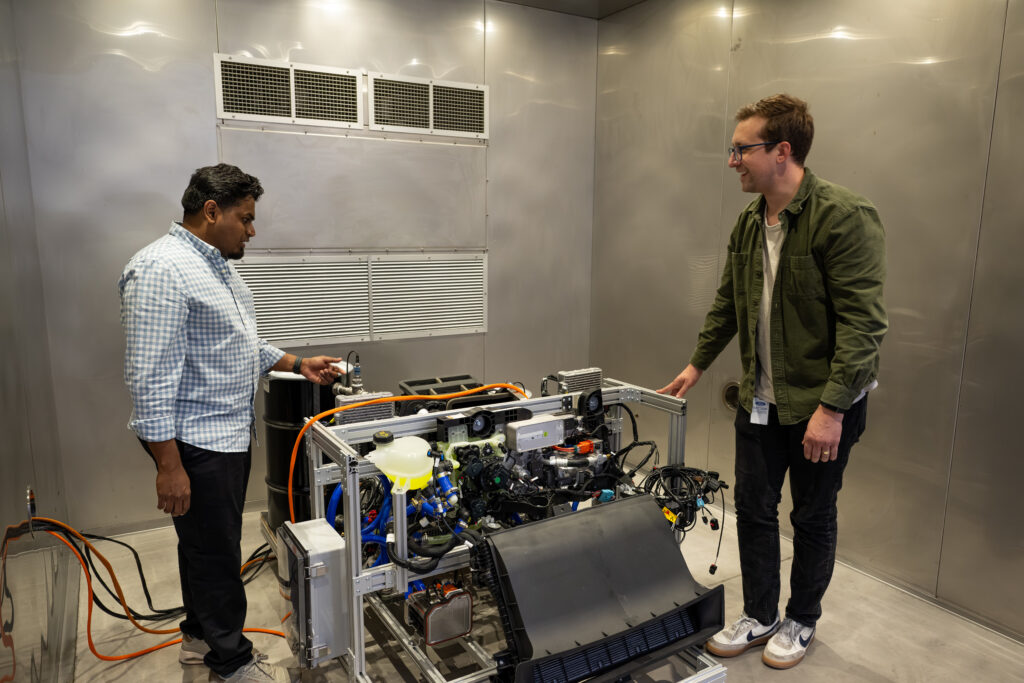
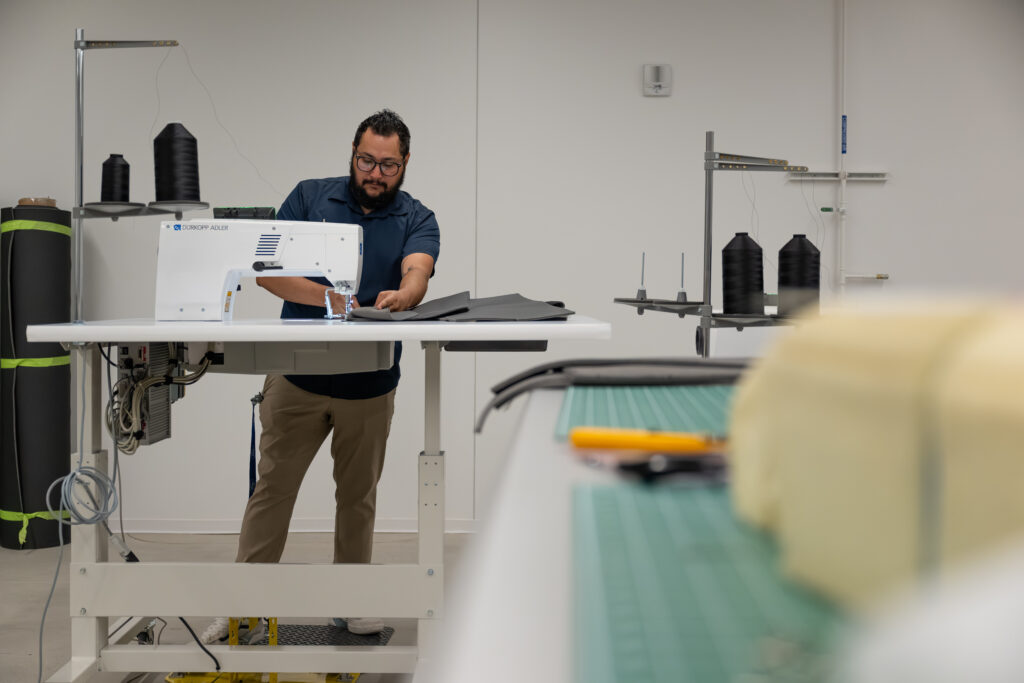
From there, we learned that seating was being designed and prototyped under the EVDC’s roof, got a look at a Fooke 5-axis Gantry Milling Machine (Linear 911 Endura) that can mill a full-sized model of a car, saw the woodshop, metal shop, paint booths, climate testing chambers, a climate controlled chassis dyno, electronics/battery lab, heating and electrical system mockups, a room where prototype wire harnesses are made and a metrology lab with a pull tester and CT scanner.

The point was that a lot of stuff that would normally be done across several facilities, or in partnership with suppliers, was happening at the EVDC to facilitate collaboration and quick iteration, in pursuit of maximum efficiency. Overall, the project is to build a car that has a level of equipment and content comparable to other cars while also selling at a low price and delivering margin to Ford. The EV pickup has been a hard sell, my personal theory is that EV people don’t want a pickup and pickup people don’t want an EV. But, Ford contends that this one will have crossover-like interior space with the added utility of a bed. We saw a wooden mockup of an SUV/Crossover/Wagon thing, presumably to be built on the same platform and Ford has been pretty open that the UEV project will result in multiple vehicles.
The aforementioned Hall came to Ford in 2022 as this project’s first hire. It predates the current market for EVs and by the time it goes on sale it’s not at all unlikely that American consumers could be begging for inexpensive electric cars. It’s going to face the same infrastructure hurdles that every other electric car has faced, but it will not face the same “premium price for reduced utility” hurdles–it should be price-competitive with an equivalent gas truck. We haven’t really seen that before.
We met a lot of bright-eyed, optimistic designers, technicians and engineers at the EVDC. For them, this could be a once-in-a-lifetime opportunity to do something entirely novel in the U.S. car business. An EV that sells in ICE-car quantities would also be entirely novel. We’ll know more about its chances when we can see more of it, especially the SUV version.
Recent Posts
All Posts
June 23, 2026

June 21, 2026
June 19, 2026
Leave a Reply
You must be logged in to post a comment.