“New” Teslas?
November 7, 2025
Jay RameyTesla is betting that it can keep updating its current model range in the U.S. for years to come, but falling sales in Europe are a bad sign.
As an EV maker, Tesla is clearly an outlier. It seems immune to the cadence of production cycles, for one. Now, in 2025, Tesla’s lack of investment in entirely new passenger car platforms appears to be finally catching up to it. At least in Europe.
Tesla’s Model S dates back all the way to 2012, when people were buying the iPhone 5, while the Model X is a decade old as of this year. This duo accounts for just a tiny percentage of the EV maker’s annual output, but they have received some updates along the way—who can forget Tesla’s brief obsession with yoke steering setups in 2021?
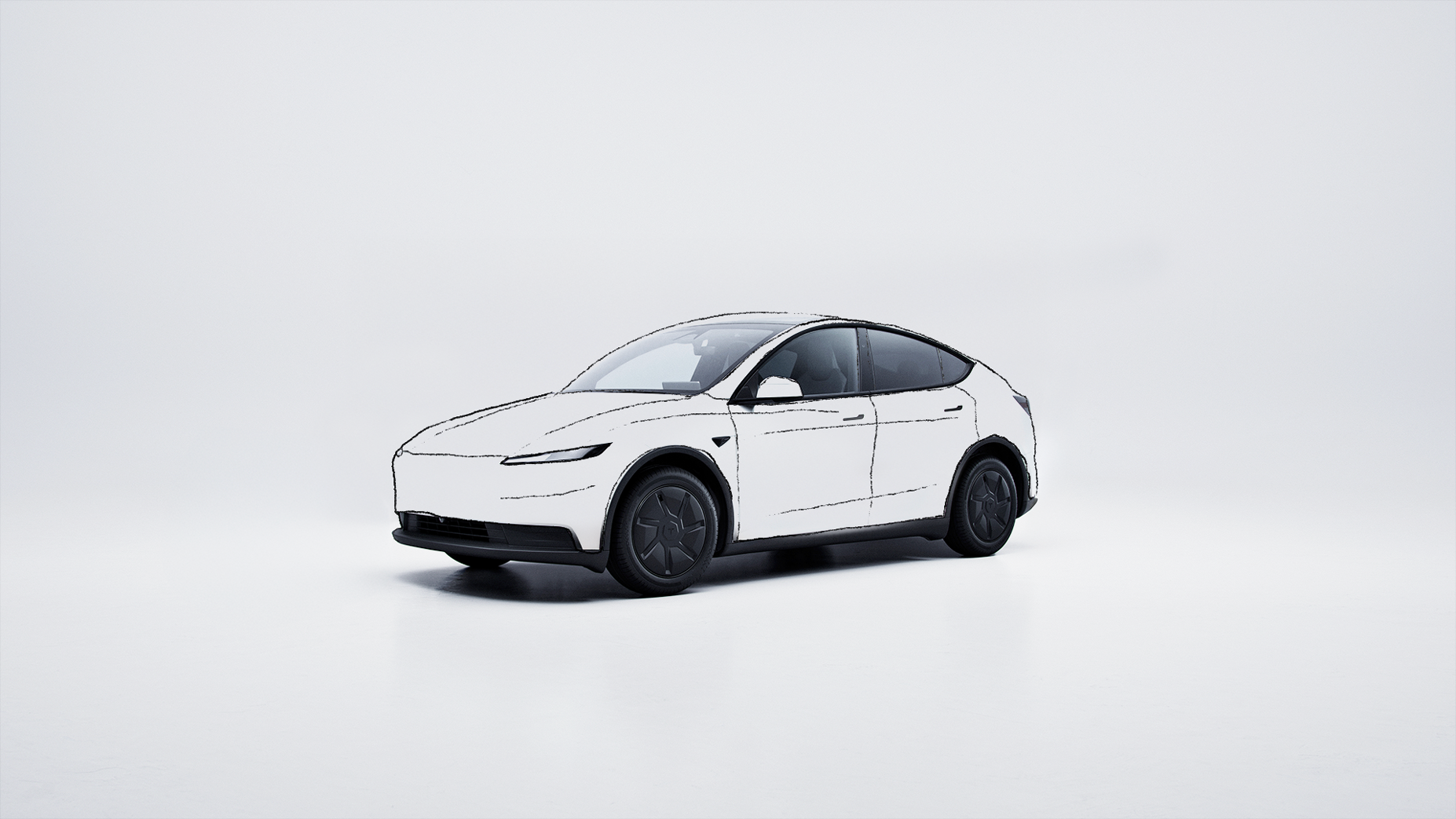
Tesla’s core products are still the Model 3 and the Model Y, neither of which is exactly fresh by normal standards. The Model 3 entered production in 2017 with a few hiccups due to “production hell,” as Elon Musk termed it, while the Model Y arrived on the same platform in 2020. Within that eight-year time span, entire EV platforms from its competitors have come and gone.
Registration data from key European markets, including Germany, where the automaker has a large manufacturing facility just outside Berlin, show a significant drop year-on-year. Just 750 Teslas found homes in Germany this October according to data from German traffic agency KBA, Reuters reported this week, compared to 1,607 in October 2024.
While Tesla’s decline in Germany over the past two years has been linked consumer fallout from Elon Musk’s support for the far-right AfD party, in the U.K. Tesla is now facing stiff competition from Chinese automaker BYD and others, and the data is grim. Tesla sold just 511 vehicles in October 2025 compared to 971 a year prior. Both numbers are well below the 2,677 vehicles sold there in the same month in 2023.
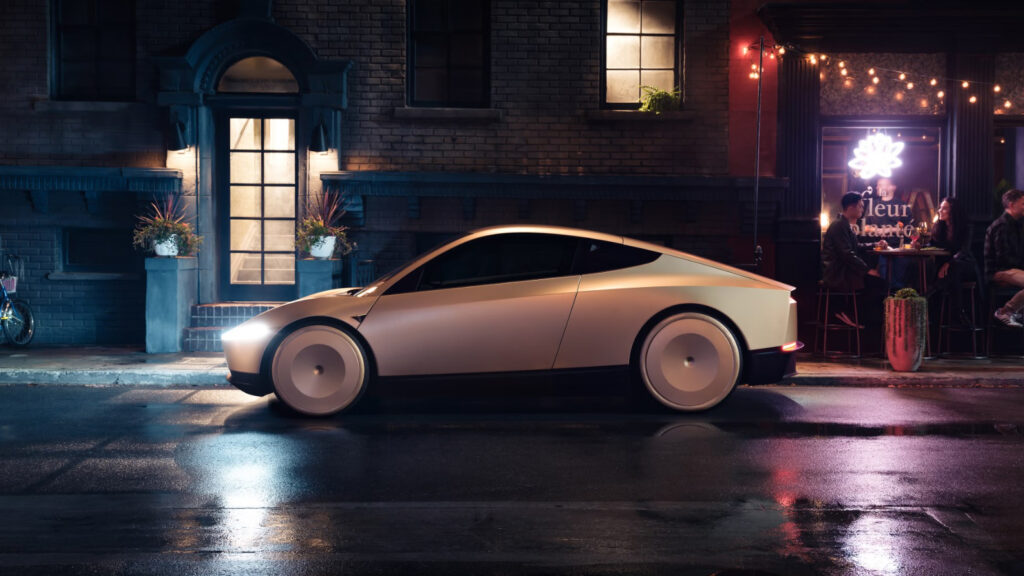
This week Elon Musk claimed that Tesla plans to begin production of the Cybercab in April 2026, with the nominally SAE Level 4 autonomous two-door slated to feature no driver controls. But it’s hardly meant to be a consumer model, even if it manages to deliver the autonomous tech it promises. Nor do Musk’s promises about new product timing hold much sway at this point.
Tesla’s response to the spate of new competitors in Europe and the U.S. this year is a batch of de-contented budget models, including a Model Y without some interior items and tech for 39,990 euros. But even the budget models still seem expensive compared to EVs from China rapidly eating into Tesla’s market share in Europe.
Likewise, Tesla has launched similarly de-contented versions of the Model Y and 3 here in the U.S., with the cheaper Model Y still requiring $41,630, with the Model 3 wearing a $38,630 price tag. These two Standard-flavor RWD models with more spartan interiors and exteriors sit a full $5,000 below the next trim level in Tesla’s lineup.
While this time-tested de-contenting tactic has brought down the price of entry for two of Tesla’s most popular models, it hasn’t done anything to assure consumers or investors that any entirely new models are coming. The six-seat version of the facelifted Model Y in China, stretched by 5.9 inches, is perhaps the closest to a “new” model launch that Tesla saw in 2025.
The second-gen Roadster, meanwhile, is not being taken seriously at this point by most Tesla watchers, despite the automaker having collected hefty deposits of as much as $250,000 since November 2017.
Tesla’s on-again, off-again Model 2 is likewise seen as moot, if only because inflation has made this target price far more unlikely than half a decade prior. The profit margins on such a model would make it a tough proposition for Tesla even in China, where sub-$20,000 EVs are in abundance.
Until Tesla reveals otherwise, it seems that the company’s only move is to keep updating its current model lineup. It’s not clear how much longer it can let this bet ride.
Recent Posts
All Posts
February 27, 2026

February 26, 2026

February 25, 2026
Leave a Reply