Grenadier Grind
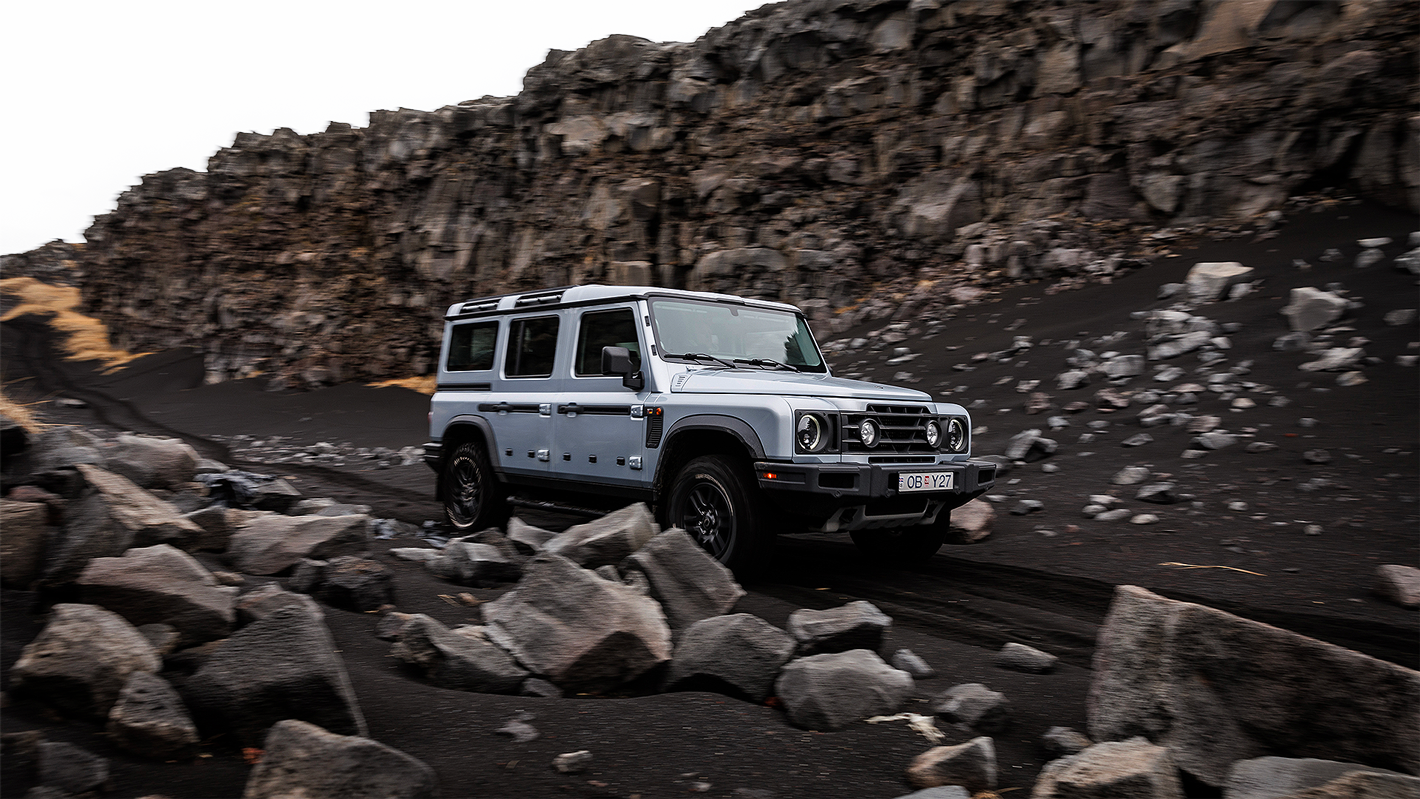
Ineos CEO Sir Jim Ratcliffe famously sketched out a rugged, Defender-style 4×4 at the Grenadier Pub in London, imagining a vehicle more rugged than the new Land Rover Defender.
“The vehicle has been designed to meet the demands for a rugged, capable and functional go-anywhere working tool,” Ineos said, aiming for a starting price of £35,000, or about $47,500 at the time of the project’s launch.
But what materialized a few years later was a vehicle that’s as pricey and aimed at the same audience of deep-pocketed buyers as the Land Rover it sought to undercut.
Ineos’ financial fortunes, having survived the challenges of the pandemic era, are now facing a wider debt crunch at its main petrochemical business, while its automotive arm is facing a variety of auto business pressures.
Ineos Automotive recently revealed that it would cut hundreds of corporate jobs out of a total of about 1,700, at a number of its sites in Europe. This includes staff at the corporate office in the UK and an engineering center in Germany.
“The company will focus on frontline operations and simplify its head office to improve efficiency and responsiveness,” Ineos said in a brief message.
But the deeper issues Ineos has in the US and elsewhere go beyond simply employing too many people, or being forced to offer steep discounts to battle tariffs.
The Grenadier project still faces the age-old problem of having been designed in one economic climate to arrive on sale in a very different one, encountering some mission drift and unexpected expenses in the process.
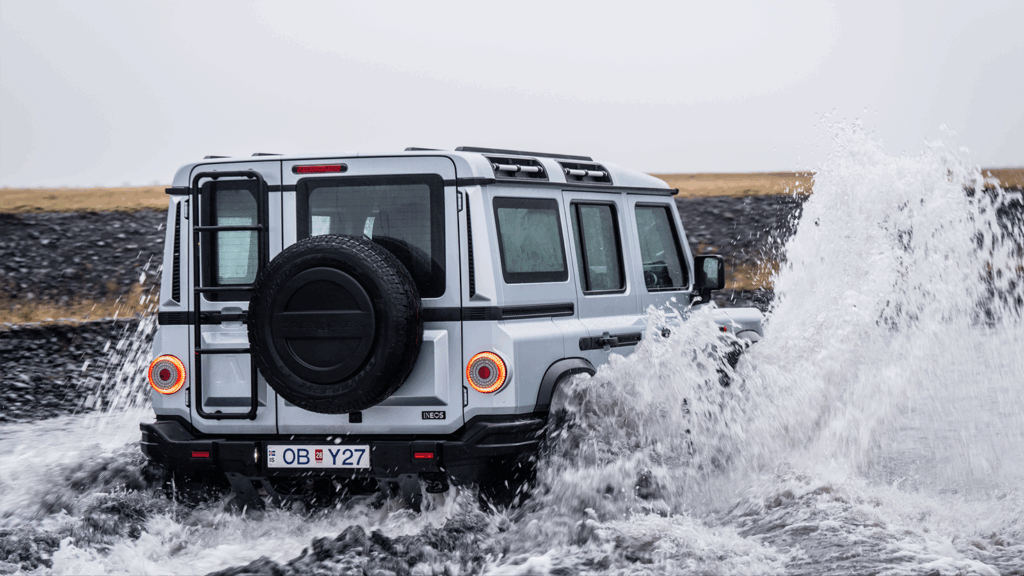
The 4×4 has already been hampered by production halts due to the 2024 bankruptcy of seat supplier Recaro that halted deliveries, a door latch recall affecting more than 7,000 vehicles, other prolonged factory stoppages due to other component shortages, and various other glitches. And that’s before we get to the main event: Prices that land it squarely in luxury SUV territory where it still faces Land Rover, Mercedes-Benz and a few others.
One difference is that Land Rover and Mercedes have multiple model lines, and they aren’t keeping all of their eggs in one basket. Ineos, meanwhile, has an SUV and truck version of the same model. And both are pricey.
But the Trump tariffs might not have had that much of an effect. The duties initially forced Ineos to raise the base Grenadier’s price up to $78,900 this spring, but by late summer the company had lowered the price of the base model down to $72,600, below pre-tariff levels.
But even a lower starting price of $72,600 doesn’t quite make the Grenadier a no-frills alternative to the base Land Rover Defender, which starts at a surprisingly reasonable $58,750 in two-door form, with the four-door Defender 110 S coming in at $62,425. Even the long Defender 130 S model still starts at $71,325, which is a hair below where the Grenadier lineup begins.
At the top of the range, the Grenadier effectively faces much more common luxury rivals rather than sitting some distance below them. It’s easy for some buyers to find themselves uncomfortably close to the six-figure mark.
The Grenadier Quartermaster pickup, having originally cost $96,500, now wears an $86,000 sticker and is subject to the Chicken Tax. This doesn’t quite open up the model to audiences that value working trucks, which is what the Grenadier project was ostensibly about.
To highlight its rugged image Ineos has recently tried to distance itself from Land Rover with a cheeky ad campaign, seemingly calling out the UK automaker for making the new Defender more on-road focused.
“Good luck to the others: they’re cool cars. But we’re tired of the comparisons. To be clear, this is all about saying we’re different,” said Lynn Calder, CEO of Ineos Automotive.
Finally, there is Ineos the petrochemical company, on which Ineos Automotive is still reliant. And at the moment it is facing one of the greatest crises in its history.
“Europe’s chemical sector, the foundation of modern manufacturing is being drowned, by a tidal wave of low-cost imports from Asia, the Middle East and the United States,” Ineos said this month, adding that it was in the process of filing 10 anti-dumping cases with the European Commission. “These products are undercutting European producers who face the world’s highest energy prices and escalating, unilateral carbon costs.”
But the damage has largely been done. Ineos closed two chemical plants in Germany just a few weeks ago, once again citing competition from cheaper imports as well as high energy costs in Europe.
Despite all of these headwinds, Ineos managed to sell about 8,000 Grenadiers in the US in 2024, and at the time aimed for a 50% bump in 2025.
While plans for such ambitious growth were undoubtedly hampered by the tariff drama this spring and summer, the automaker had a warm-enough welcome stateside even with a limited sales and service network. At the same time, quite a bit still hinges on a steady pace of sales in the US after the momentum of its launch begins to wane. That is not a phenomenon unique to Ineos.
“North America is the largest market for Ineos Automotive, accounting for more than 60% of the company’s global sales,” the automaker notes.
Whether Ineos can maintain some of the energy of its first year of sales remains to be seen, but steering its way out of multiple challenges will take some effort.

Recent Posts
All Posts
March 6, 2026
March 6, 2026

March 5, 2026
Leave a Reply