Flocked
August 5, 2026
Alex KiersteinFlock cameras themselves are problematic. A new report also examines the haphazard, and dangerous, infrastructure that supports them.
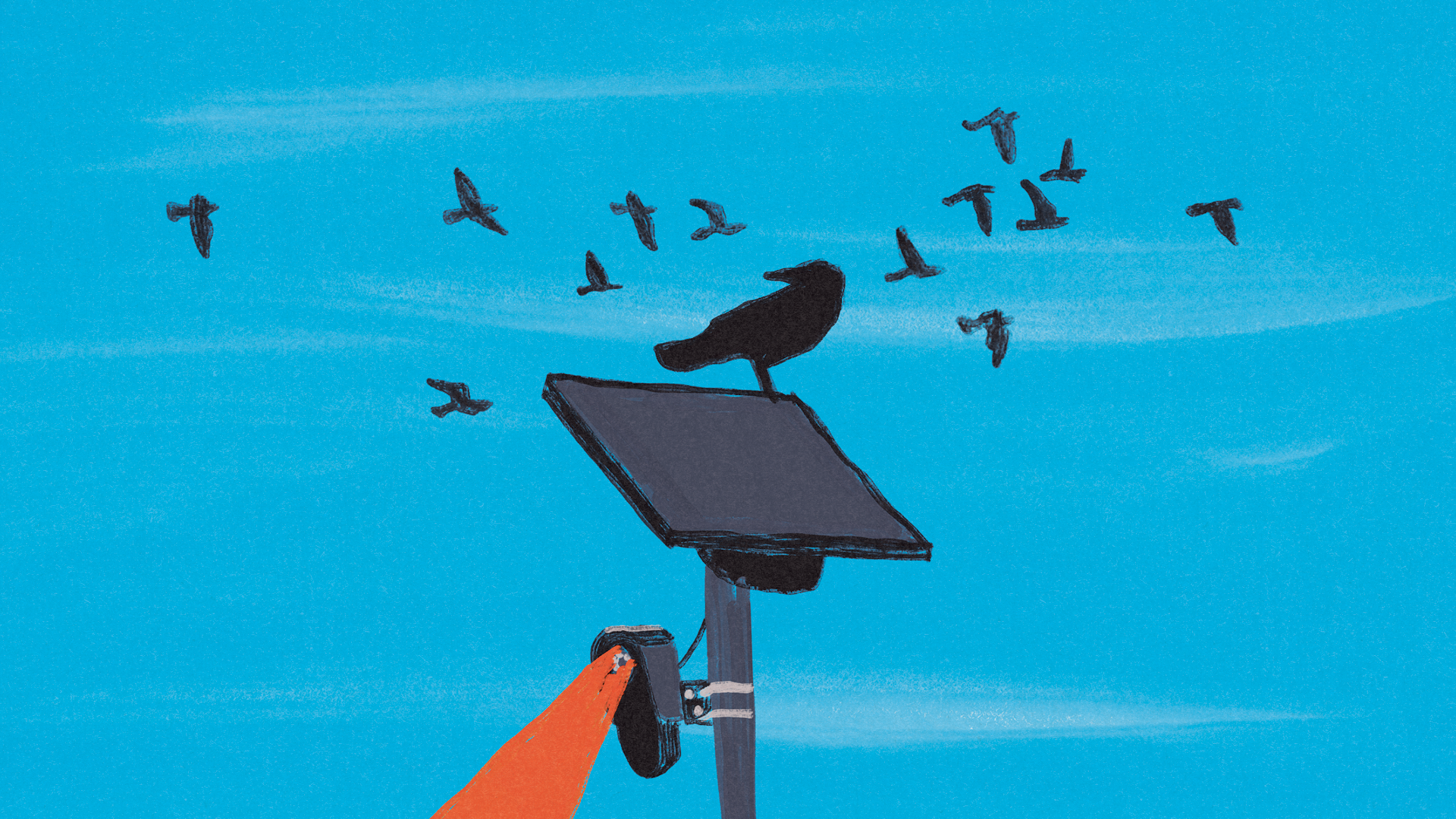
Automated license plate readers (ALPR) of the type made infamous by Flock are problematic in a couple of ways. There’s the obvious one: when Flock cameras do what they’re intended to do, they cast a wide surveillance net on unwitting drivers, without a warrant, creating a massive database that can be accessed (and misused) by law enforcement. But these are also physical devices installed in a roadside location. A new report from the Guardian reveals that at a number of Flock’s installations are dangerous, missing some of the baseline safety equipment that would prevent injury were a driver to leave the road and strike a Flock camera.
The Guardian points to standalone installations, typically on a pole not shared with other infrastructure, of these ALPR cameras. Federal standards require some sort of safety device to protect drivers if they strike one of these sign or camera supports. That could be a guardrail to deflect the car away from an unyielding and thus dangerous pole. Or it could be a breakaway device, such as a plate with a specific yield characteristic or a larger wooden pole with holes drilled in the bottom to allow it to break off.
Guess which support poles don’t seem to have these safety devices? Flock’s. The Guardian, and a safety advocate named Steve “The Guardrail Guy” Eimers, surveyed a certain number of Flock camera installations and didn’t find very many of these devices. No breakaway plates, installation too close to the roadway, they’re painted all black.
Eimers opines that Flock “is not a sophisticated user of roadside safety hardware,” and on that I can agree. But in a universe in which regulatory agencies are under attack, and were already under-resourced before that, it’s the company’s responsibility to appropriately understand the requirements and adhere to them. Failure to do so should have a consequence that encourages compliance.
Flock, in response, insisted its installations meet all relevant requirements, but also noted that it would review its installations.
The second most common crash type that resulted in a fatality was a driver striking a fixed or non-automotive object—almost 26% of fatal crashes in 2024. If society tolerates these ALPRs to exist, whatever benefit or detriment they provide, the least they can do is protect drivers who might strike them.
Recent Posts
All Posts
August 3, 2026

July 30, 2026

July 27, 2026
Leave a Reply
You must be logged in to post a comment.