Stop-Sale

December 30, 2025
Jay Ramey2025 was a big year for EV cancellations. Here are all the electric models that won't make it into 2026.
2025 will be remembered for a long time by industry observers and EV enthusiasts as the year the longtime $7500 EV tax credit went away, producing an effect on the EV market that has yet to be fully internalized by automakers and buyers alike.
2025 was also a year that saw more than its share of US-market departures, last-minute cancellations, brief cameos, temporary assembly halts, shipment pauses, and outright production stoppages when it comes to EVs.
In the brief cameo category, the long-awaited Volkswagen ID. Buzz landed stateside in the closing weeks of 2024, but saw a few early stumbles including a weird recall for a third row of seats that were too wide and needed an extra set of seatbelts by US safety standards. By the middle of 2025 VW had sold or shipped just over 5,000 units of the ID. Buzz stateside, so the model was doing pretty well for such a niche offering. But in the closing weeks of the year VW chose to keep the 2026 model out of the US, citing market factors.
Update 1/12/2026: “To optimize inventory, we’re leveraging 2025 models to support our dealers through mid-year, and we’re excited to welcome model year 2027 in 2026,” reads a statement published on behalf of Kjell Gruner, President and CEO, Volkswagen Group of America.
In the category of launch cancellations, the year began with the Volkswagen ID.7 sedan being kept on its side of the pond and declining to challenge the Tesla Model 3 head-on, perhaps wary of the Polestar 2’s record in this regard.
Similarly, the Kia EV4 stayed out of the US, at least for now, with the model having been “delayed indefinity” per the automaker.
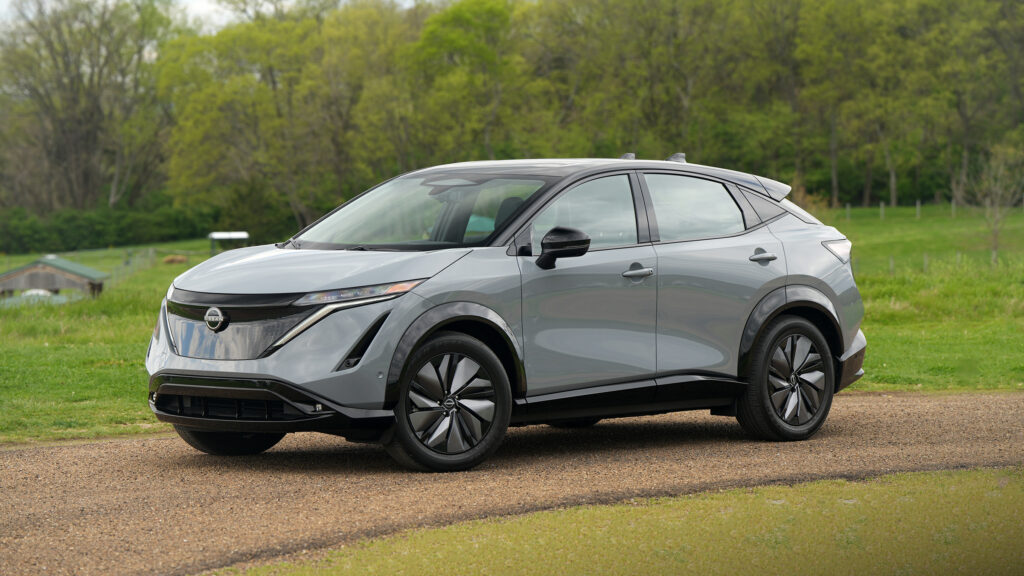
In the untimely departure category we have the Nissan Ariya, which at one time was going to be next big thing for the brand following in the footsteps of the Leaf. But the Ariya arrived only after a few delays and by mid-September of 2025 Nissan confirmed that the model wouldn’t make it stateside for 2026, with Nissan choosing to bet solely on the new Leaf for now.
The Ariya, it should be noted, had landed in a segment that was perhaps too crowded and was still dominated by the aging Tesla Model Y. The Ariya’s starting price of $41,265 was perfectly reasonable, but became subject to 15% tariffs as it is built in Japan, which, along with the loss of the $7500 tax credit was apparently enough to sour the deal for dealers and buyers alike.
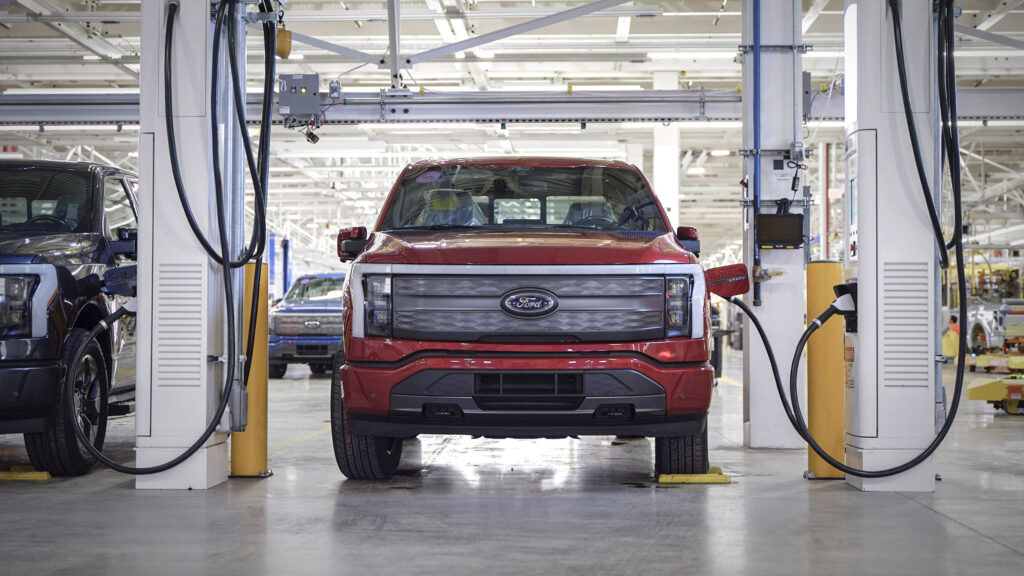
Another major departure, also untimely, was that of the Ford F-150 Lightning. The truck had beaten the overhyped Tesla Cybertruck to launch in 2022, but after a few strong months of sales it was becoming apparent that Dearborn’s electric pickup was slowly running out of juice on dealer lots. Ford stuck with it while cutting back some production in the process, but by 2025 it was clearly struggling in the marketplace.
But we’ll still see Ford trucks with batteries in the near future. This month Ford revealed plans for an EREV version of the Lightning, promising over 700 miles of combined range.
For 2026 the Polestar 2 is leaving as well, having scored only minimal points against the much older Tesla Model 3. The Volvo sibling’s electric sedan, once seemingly destined for success in the EV sugar rush of the early pandemic, saw very modest sales from the start, often chalked up to a limited sales network and sparse marketing. What should have been a solid contender on paper was upstaged by a large number of crossovers, Polestar overestimated just how many Tesla Model 3 competitors could be battling it out for second place at a given time.
It doesn’t feel like the Mercedes-Benz EQB has been around all that long, having reached the US in the summer of 2022, but it is also among the early retirees with no 2026 model planned. The decision itself wasn’t abrupt, with Mercedes-Benz indicating that the model had simply reached the end of its product cycle, with a platform that dated back to 2011.
Mercedes ultimately saw the biggest US-market pause of 2025, choosing to stop importation of the EQS SUV, EQS and EQE sedans, and the EQE SUV in September, but will keep producing the models for other markets for a while longer.
Mercedes’ entire electric lineup, in fact, is going through significant changes starting with the discontinuation of the EQ nomenclature and the shift to a more unified exterior design.
“Mercedes-Benz will apply a coherent, status-oriented design across the entire portfolio and customers will primarily decide on a model—and then choose their preferred drive type,” the automaker said in early 2025.
The departure of the Genesis Electrified G80, did not come as a surprise but was perhaps hardly noticed by the EV buying public at large, with this Genesis model having felt like a secret menu item for its entire run stateside that began in the summer of 2022. From the start it was oddly positioned with styling too similar to its ICE version and a starting price of $76,225, along with a range of 290 miles. Luxury EV sedan buyers by that point were either buying something from Mercedes-Benz, Lucid, or Tesla with its aging but yoke-ready Model S, with seemingly few shoppers trying the Genesis model.
In a vacuum, the sedan may have made some sense on paper, but the consensus was that it was ultimately too stealthy for its own good in a marketplace more geared toward luxury crossovers and SUVs.
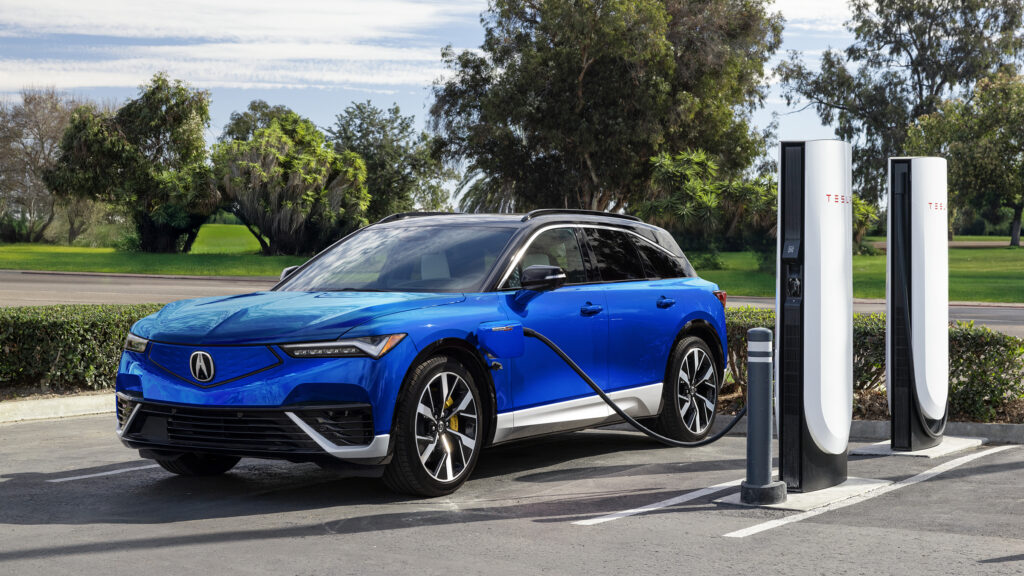
In the “instant collectible” category we have the Acura ZDX, better known as the Honda Prologue’s slightly more luxurious twin, one underpinned by GM’s Ultium platform. The model arrived for the 2024 model year into a busy segment, one filled with other Ultium-based electric SUVs, but may have been one Ultium-based SUV too many. Production ended this September, with the more affordable Honda Prologue perhaps making more sense for buyers looking for electric options at Honda and Acura dealerships alike, especially after the loss of the $7500 EV tax credit.
Speaking of instant collectibles, if the Volkswagen ID. Buzz doesn’t come back stateside it could also become a collectible of sorts down the road, with just a few thousand having been imported.
A number of EVs were cancelled in 2025 before even reaching production. Quite a few automakers cut back on future EV plans this year, including Ford, which cancelled a large electric SUV and a new electric passenger van that would have followed up on the E-Transit.
Similarly, Ram cancelled its planned 1500 REV pickup in what was perhaps less of a surprise than some other cancellations, having observed the demand for the F-150 Lightning over the past few years. Ram now plans to focus on extended-range powertrains for its upcoming pickup, pairing a battery with a gas engine acting as a generator.
A minor but still notable cancellation for Stellantis was the early postponement of R/T trim of the Dodge Charger Daytona, even though the standard model will continue.
At the other end of the price spectrum, Stellantis also cancelled the Maserati MC20 Folgore supercar in what was perhaps an overdue admission, since this model was first announced back in 2020. But it took until this year for Maserati to make the cancellation official, with the twin-turbo V6 MC20 deemed enough for the target audience.
In all, 2025 was a landmark year for EV departures, cancellations, reshufflings, and pauses. But seemingly few of them had anything to do with the demise of the $7500 EV tax credit or the tariff drama of the summer. Rather, most of these departures were the results of trends that were visible for some time, with most of the major cancellations being responses to sales that had been slowing for a while.
Recent Posts
All Posts
February 27, 2026

February 26, 2026

February 25, 2026
Leave a Reply