Agnostica
February 10, 2026
Alex KiersteinFerrari aims the Luce at its customers, not its critics, with a little help from Jony Ive of Apple design fame.
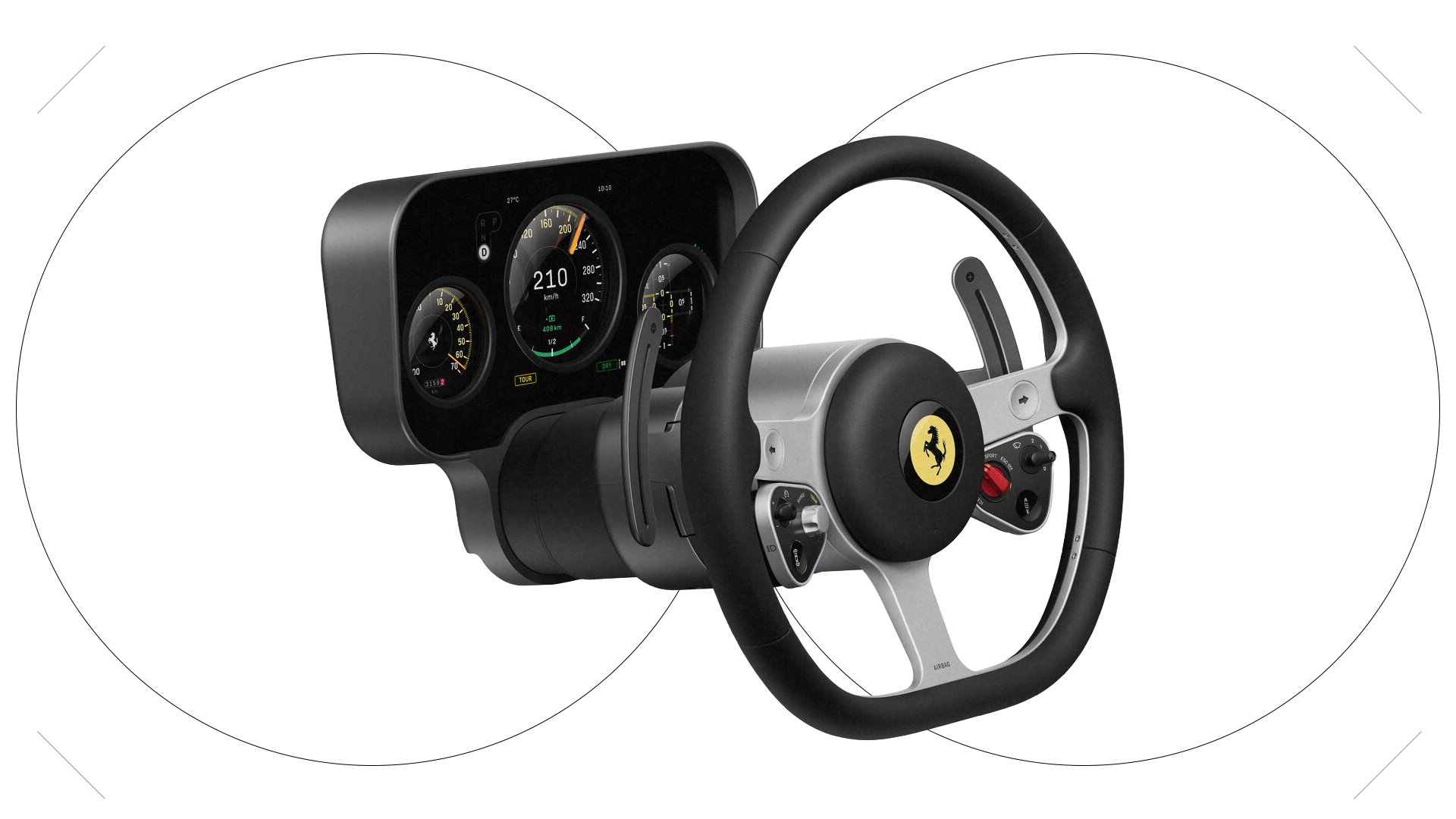
Ferrari only has one job, and it isn’t to make you or me happy. It’s a public company that exists to provide a return to its investors. Brand dilution is only a concern in as much as it might affect the bottom line. Enough prancing horse merch to bury Fiorano six inches deep hasn’t done enough harm to the brand to impact its status among the customers who matter. And after seeing a variety of reactions to the Jony Ive-designed Ferrari Luce interior, I doubt entirely that an electric vehicle, probably a smallish SUV, with a decade-old-iPhone interior aesthetic will either.
I’m usually antagonistic to the idea that to really evaluate something, you must be part of the target audience. Those who can’t afford a Ferrari can be perfectly competent and objective analysts. But it takes a much more conscious effort to switch off the various biases I bring to the table as an enthusiast, because enthusiasm bends objectivity. It’s a gravity well. You have to compensate for it.
From an enthusiast perspective, the Ferrari Luce runs a gauntlet that stretches from the company’s founding to its modern choices. All of that history—iconic cars, motorsport history, Enzo’s own viewpoints—provide a lot of ammunition for modern critique. Enzo Ferrari himself was a very specific sort of enthusiast, to which road cars were a means to a motorsport end. He drove a Fiat.
It might be tempting to interpret this to mean that Enzo would be horrified at the thought of an electric, consumer-oriented vehicle. (Lord knows that Luca di Montezemolo must be livid.) I think there’s also a solid argument to make that he’d be much more concerned with how the road car business was supporting the Scuderia.
Enzo the pragmatist? I don’t know if that’s a valid read, but I can be pragmatic. The Jony Ive move is polarizing, but if you can look past the aspects of it which code as dated—more 2014 Apple Watch than 2026—there are hints of very good ergonomic design here.
I don’t mean retro typefaces or simulated gauges. I mean careful thought and attention to usability, simplicity. Consider the anti-design of classic switchgear. Ever been in an early Volvo 240-series? Massive toggle switches, enormous knobs. European vehicles in general of that era had gauges that may have well been ripped off of medical equipment—simple, high-contrast, legible.
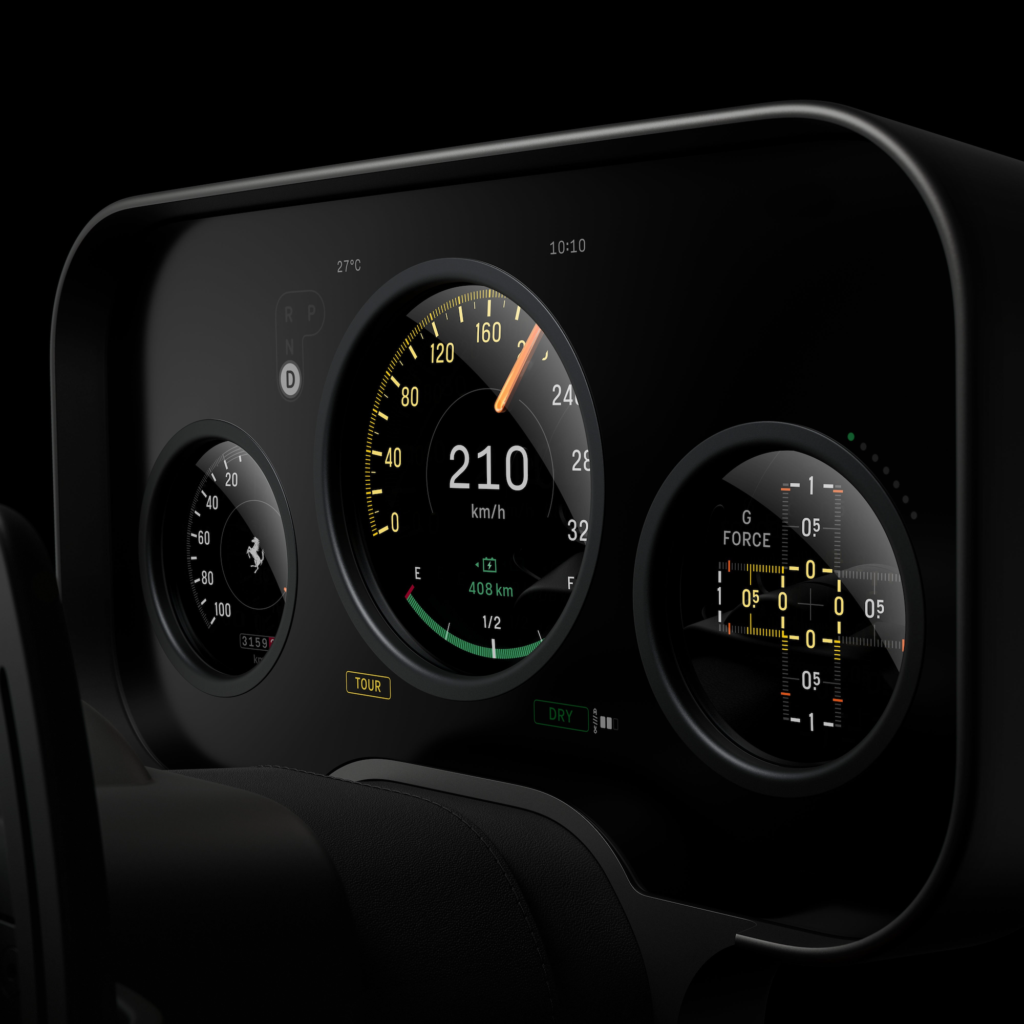
Since it’s 2026, though, we can have that physicality but in the form of a digital toggle, with perfectly crafted springback and click, but mated to a screen giving an almost infinite amount of potential functionality for each switch. But the important thing is the implementation is clean, uncluttered. I don’t know if this is an interior in which you’d be able to operate everything by touch alone, but it’s quite intentionally not a touchscreen-only interface.
The steering wheel is Ive-ian, but also delightful in its own right. The manetinos are held in nicely shaped, symmetrical binnacles, the turn signals are cleanly integrated into the spokes, which are flat and retro. But retro isn’t really the right word; maybe classic. Timeless. Some usage of those words that isn’t loaded with judgement. The proportions look excellent for actual use in the same way the vintage Testarossa steering wheel was. That was a simple design, three flat spokes and a medium-thick leather-wrapped rim. Flatten the bottom of the rim and add the manetinos, and you’re just an airbag housing away from the Luce’s wheel.
The interior isn’t going to make or break this vehicle, and an EV isn’t going to make or break Ferrari. Ferrari’s brand seems nigh-indestructible, and the ultra-wealthy do not appear to be reducing their Ferrari consumption in what for the rest of us is a troubled economic outlook. The Luce isn’t going to change that.
Recent Posts
All Posts
February 27, 2026

February 26, 2026
February 25, 2026
Leave a Reply