Double Take
June 23, 2026
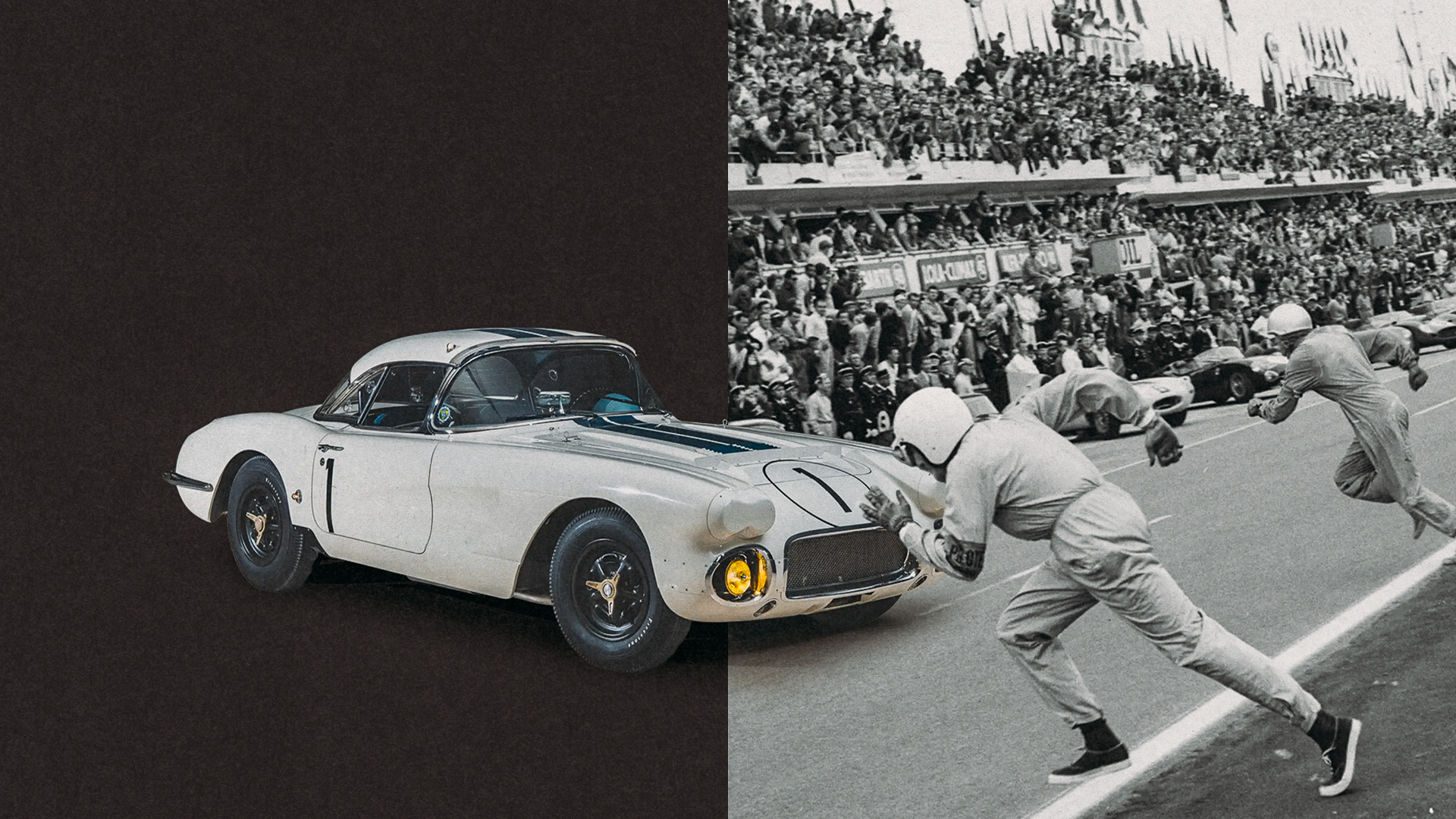
Alex KiersteinBriggs Cunningham’s legendary No. 1 liveried Le Mans Corvette had a second life as a surprisingly cool custom.
I’ve been a little judgemental in the past about the early American attempts at international endurance racing glory. Partly, I have some distaste for how non-sporty early American factory sports cars were. I like the early I-6 Corvettes as period pieces, but they ain’t Jaguars, which were conquering the European front with a broadly similar setup. That goes double for the Kaiser Darrin. I don’t think I’ve given Briggs Cunningham and those at his company, and later at GM who helped his Le Mans efforts under the table, enough credit for the work they did to turn the C1 into a world-beater. So I’m going to look at this Briggs Cunningham-driven 1960 Chevrolet Corvette C1 with as fresh an eye as I can.
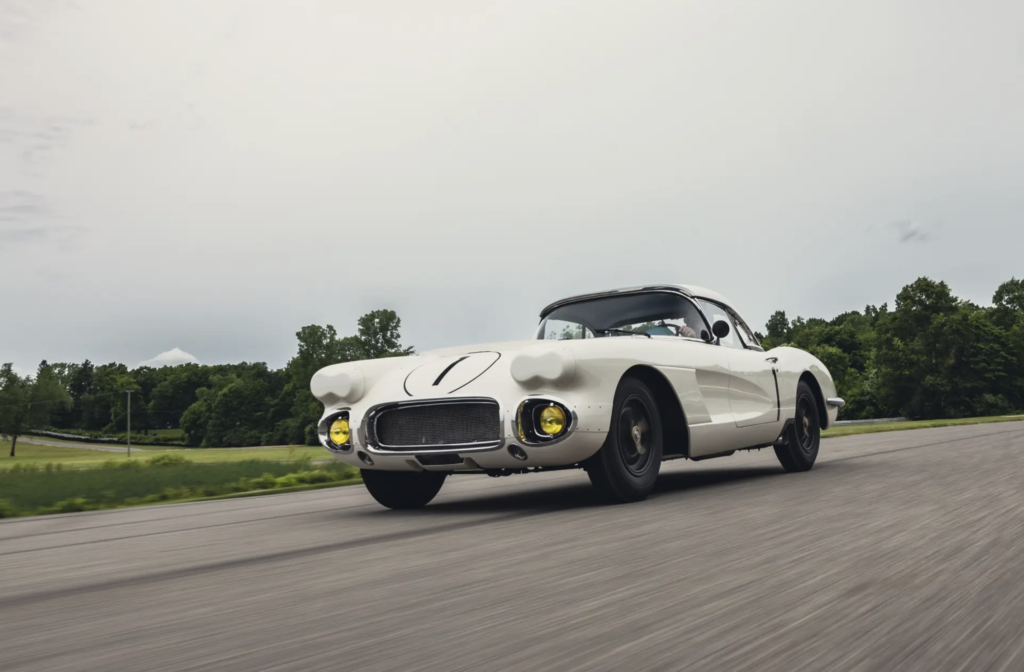
And that’s prompted by taking a spin through the RM Sotheby’s Monterey catalog, where there are a lot of the usual high-buck subjects. I was initially more interested in the much louder ‘68 NART car, arguably the ultimate C3. I don’t even really like the late C1s, but something compelled me to click in, and read down. This car didn’t get the win Cunningham and Zora Arkus-Duntov wanted (nor did the latter get to drive, thanks to the AMA racing ban).
But the car itself is awesome, and the second life it had later as a custom is almost as cool. For one, the AMA ban probably hurt the car; having to coordinate with the manufacturer on the sly meant certain compromises were made. But it also meant that there’s a cloak-and-dagger aspect to it. As RM Sotheby’s explains, the cars were ordered by Cunningham from a New York Chevy dealer in a heavy-duty spec.
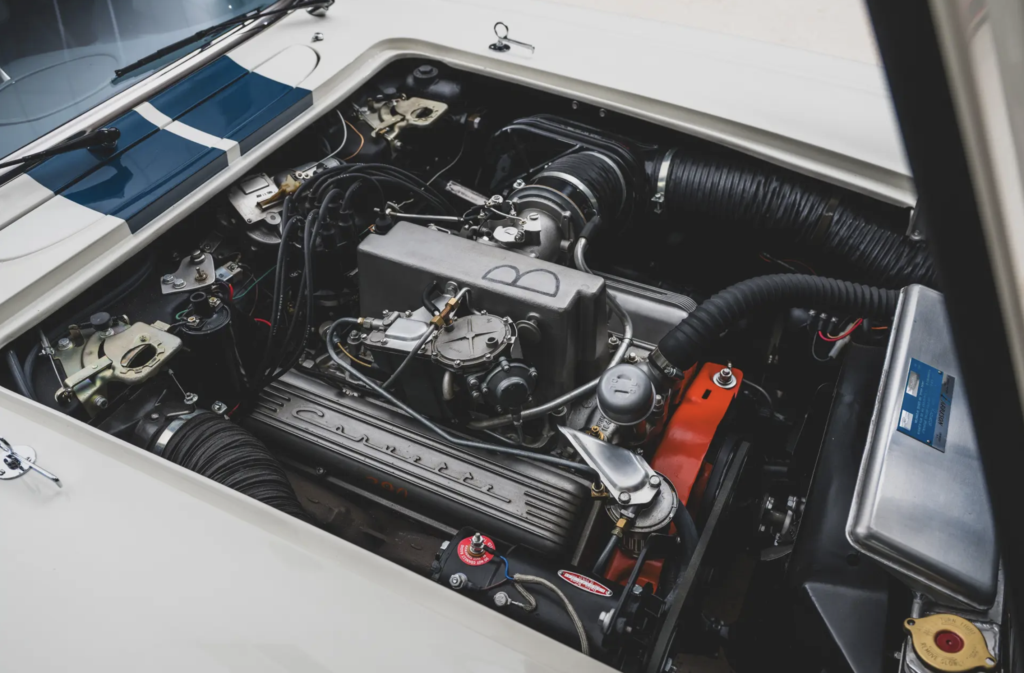
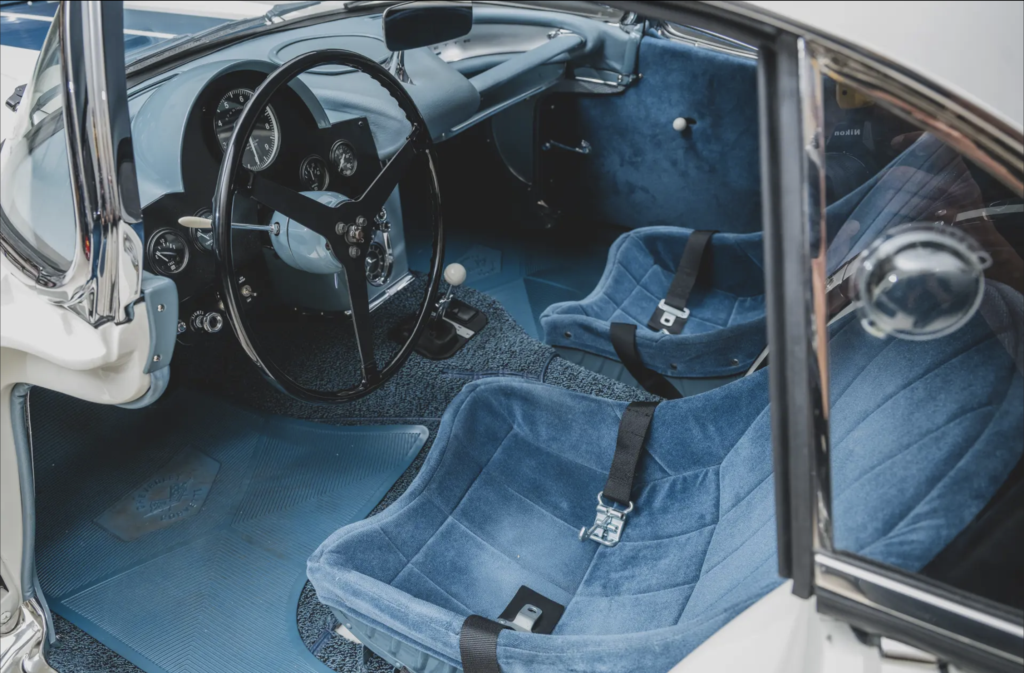
From there, the list of mods installed by Cunningham’s people was extensive. Some highlights: aluminum jump seats from the military version of the DC-3, the C-47 Skytrain. A 283-cube fuel injected engine straight from Arkus-Duntov’s engineering team. A partly redundant electrical system, with twin batteries and starters. A cheaty 42-gallon tank that the French never discovered. Cast-iron heads, as the team’s manager didn’t want to risk running at Le Mans with the aluminum ones.
It wasn’t engine failure that did the No. 1 car in. After Cunningham handed off the car to co-driver Bill Kimberly, a Kimberly-Clark scion, he made it a few laps before physics and friction had a dust-up after Arnage. No rain tires met a “wall of rain,” the car skated then rolled. Kimberly was basically unharmed, but the car was smashed up real good.
Cunningham sold off the Corvettes, including the No. 1 car, after the race. The race motors were shipped back to Arkus-Duntov’s people, stock motors were re-installed, and the car ended up with Marshall “Perry” Boswell, Jr. An SCCA racer, who modified it to his taste. Normally I’d be horrified about the notion of real Le Mans racer being hacked up, but by the standards of the day the result was pretty cool. And after all, this was just an old race car, not a unicorn.
The Boswell-modified C1 ended up looking pretty clean, with a single-headlight conversion, a custom grille he made himself, and filled-in side scallops. The smooth sides give it a European look, but the headlights do protrude a fair bit. Personally, I would’ve done a glassed-in recessed light, like a ‘53 through ‘55 car, but prominent frenched headlights were kind of a thing at the time. I’m going to say that it looks better than the as-raced version of the car aesthetically, and if that makes me a heretic, so be it.
Of course, with a pedigree like this, there’s no way it would stay in Boswell form once the car’s actual VIN was known and checked against Cunningham’s records. Cunningham’s family acquired and restored the car from one of its subsequent owners, and then spent a half-million dollars restoring it to its competition trim.
I wasn’t able to determine what engine the No. 1 has in it now; I’m betting its a 283 with fuel injection but I don’t know how it differs from the Chevrolet-sourced competition motors. I’ll send RM Sotheby’s a message about that. Not that I’m an interested buyer; the auction house imagines it’ll top $2 million, and I don’t have enough salable internal organs for that. Nor enough interest. I can appreciate it without coveting it. And I appreciate it more having learned about its star-crossed time in France and its surprisingly cool rebirth in America.
Recent Posts
All Posts
June 21, 2026
June 19, 2026
June 16, 2026
Leave a Reply
You must be logged in to post a comment.