Out Of Controls
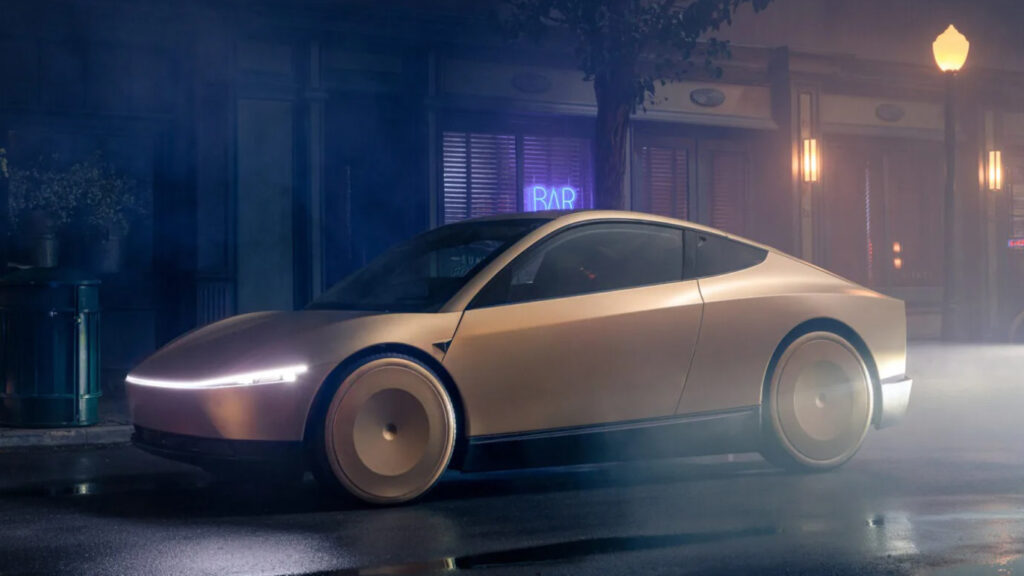
Tesla raised eyebrows with the debut of its two-door Cybercab, which featured no driver controls, then launched the Model Y as its actual robotaxi months later. The Cybercab is supposedly headed into production in 2026 (if one suddenly trusts Elon Musk’s product timelines for some reason), but it’s not the only robotaxi concept with no driver controls.
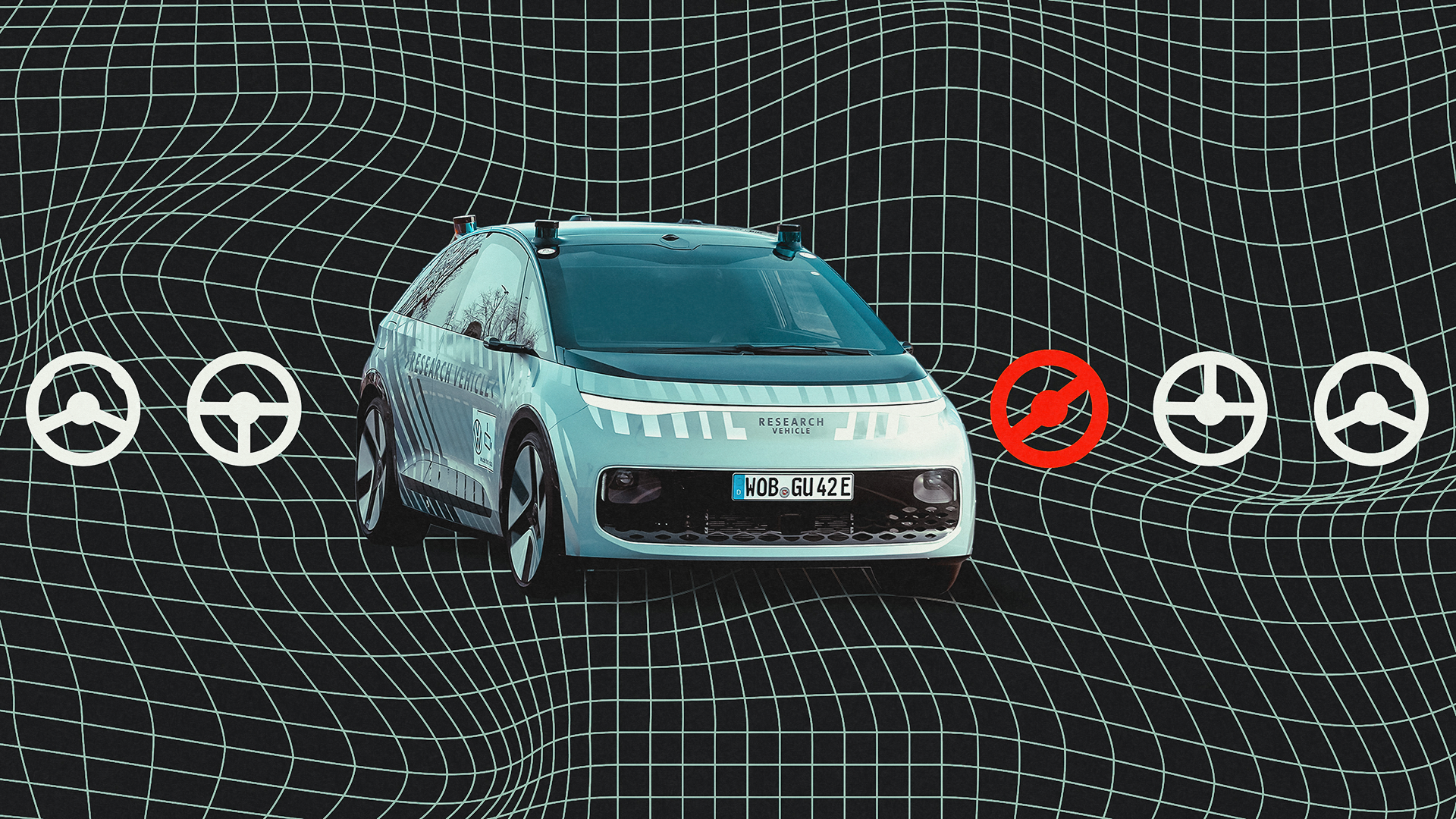
This month a team from Volkswagen Group Innovation began road tests of the Gen.Urban prototype.
The purpose of the prototype, aside from testing VW’s SAE Level 4 tech, is to find out whether real people would feel comfortable in such a vehicle and just how passengers respond to robotaxis with no steering wheel or pedals. The automaker is putting the passengers right in what would be the driver’s seat, while placing a safety driver with a joystick in the passenger seat.
“With our Gen.Urban research vehicle, we want to understand exactly how passengers experience autonomous driving. Because: The key to a positive customer experience is to build trust – through meaningful interaction, a relaxed atmosphere, and intelligent assistance systems that respond precisely to the needs of passengers,” said Dr. Nikolai Ardey, Head of Volkswagen Group Innovation.
So for passengers it could be a lot like that dream where you find yourself in a car with no controls and the car is driving itself while you try to grab the non-existent steering wheel in front of you.
Cars without steering wheels or other controls have been a sci-fi staple for decades, but the question the test asks is actually a useful one, because up until now there hasn’t been an SAE Level 4 vehicle without controls that’s laid out like a traditional sedan.
Zoox’s autonomous shuttle, which also has no manual controls inside and has been testing in Las Vegas and in San Francisco, features conference-style seating for up to four passengers. But Zeekr’s custom robotaxi for Waymo is laid out more conventionally with a steering wheel and other driver controls, despite also being a proprietary design just for autonomous tech. So the slate is still relatively clean when it comes to other possible layouts.
The tests might also help answer the question of whether proprietary robotaxis, instead of those based on existing car models, will make more financial sense to VW in the longer term. After all, VW could have simply redesigned the dash of the ID.7 sedan for the purpose of this test while equipping it with the same sensors if it wanted to test or build a large number of such vehicles.
When it comes to the Tesla Cybercab, it has been pointed out that Tesla isn’t really saving money by not including a steering wheel or pedals, and that absent another manual mode of control from the inside it could be difficult to troubleshoot or simply manage large groups of such cars for robotaxi fleet staff who have to clean and recharge them.
But will this minimalist approach be a better fit down the road, especially when it comes to the costs of building such models, or is this a momentary fad in the robotaxi sphere?
It is worth noting that Volkswagen’s current ID.Buzz AD, which entered production last year, offers a lot of space inside and a big battery while transporting just one or two passengers most of the time. The ID. Buzz itself, in its civilian guise, is also a bit a pricey, which has led some observers to ask just how much an autonomous version of the minivan is costing the automaker to build.
So there could be downsides to minivan-sized robotaxis after all, even though robotaxi operators aren’t concerned about costs at the moment.
With the Gen.Urban prototype VW will also test app-based in vehicle controls, which will allow passengers to use their phones to adjust the temperature and lighting inside the four-door EV, previewing functions we could see in the future. But the vehicle will also feature traditional controls for such things, including a wide infotainment screen integrated into the dash which can be adjusted by passengers.
The tests will be conducted in Volkswagen’s home city of Wolfsburg, with a roughly 20-minute route that includes traffic intersections, construction sites, residential areas, and roundabouts. So it could be a fairly scripted experience, even if still in a real-world environment.
But VW has stopped short of saying that the control-free cab is headed into production at some point in the future, and hasn’t disclosed what underpins the prototype, even though it’s suspected to be based on the ID platform.
It remains to be seen whether this approach is a passing fad in the autonomous vehicle sphere, or whether this is indeed a preview of the cab of the future.
Recent Posts
All Posts
August 3, 2026
July 30, 2026
July 27, 2026
Leave a Reply
You must be logged in to post a comment.