Remote Control
By now robotaxis can be seen in half a dozen big cities, with more on the way in 2026 as Waymo slowly makes its way to the east coast. But it’s not the only ride-hailing technology that involves a car without a driver.
German teledriving startup Vay has been operating in Las Vegas for almost two years, offering its own futuristic approach to getting around a city.
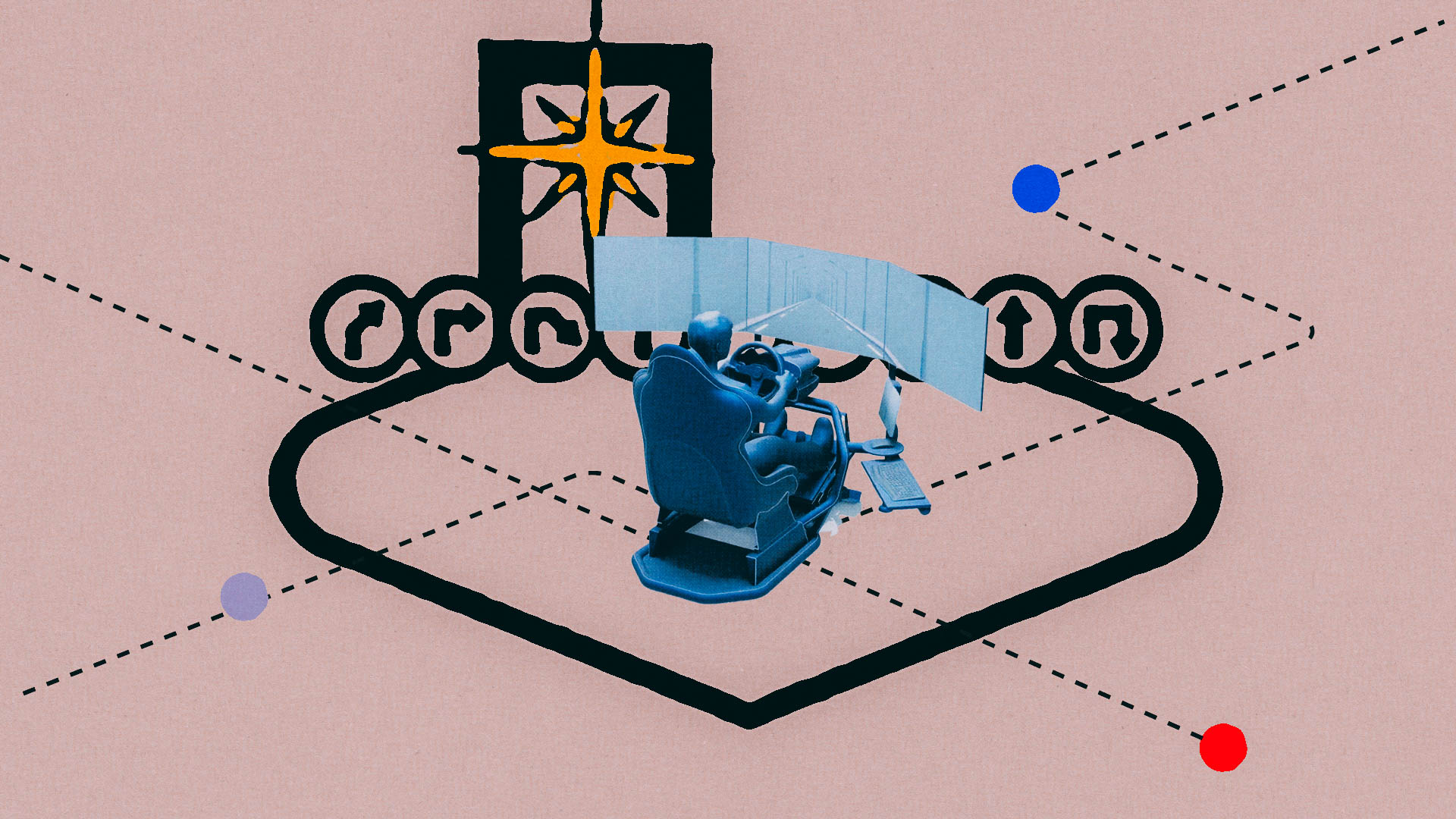
The service provides cars that are remotely driven to your location by a person sitting in something akin to a sim racing setup, at which point you take over and use it as a rental. Once you are done with the car, the remote driver takes back control and drives the car to the next user.
Vay’s remotely driven cars use many of the same sensors as robotaxis, but that’s about where the similarities end. There is no autonomous software, which cuts down on operation costs, and the hardware investment per car is much smaller as well. Also, all the edge cases are effectively up to humans to sort out.
The pitch to users is simple as well: Half the cost of traditional ride-sharing services. Teledriving also has the advantage of not having a true 1:1 car to driver ratio, as its remote drivers rotate between cars as needed in between bookings by users.
“Vay offers a convenient door-to-door rental car service, allowing residents and visitors to bypass the usual hassles and fees associated with traditional rentals or ride-sharing,” the company says. “This includes avoiding long wait times, enjoying the flexibility to stop as often as desired along the way, and ensuring complete privacy.”
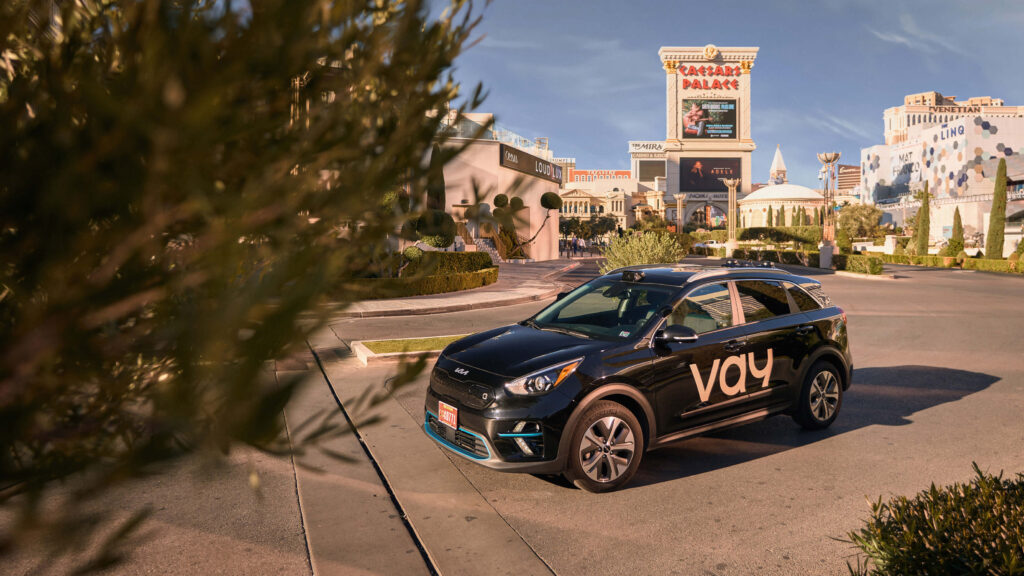
At the moment Vay’s operations in Las Vegas employ over 50 vehicles, with its driving delivery area having grown since its launch in January 2024, with plans to expand its fleet to 100 cars. The company also runs a production facility in Henderson, Nevada, to outfit cars with sensors and remote driving hardware. The launch of operations in Las Vegas, as opposed to its native Germany, was mostly due to regulatory factors, as Nevada has been far more welcoming to all types of autonomous and remote driving tech for over a decade.
“Las Vegas is the only city in the world where our service exists; a door-to-door, short-term car rental, delivered and parked by Remote Drivers,” said Thomas Von der Ohe, CEO and co-founder of Vay.
But after a long period of regulatory inaction, teledriving is perhaps coming to Europe as well. Earlier this summer Germany’s new Federal Road Traffic Remote Driving Regulation has finally opened the door to remote driving operations.
The potential of teledriving tech isn’t limited to ride-hailing operations. Earlier this year Vay has teamed up with Kodiak Robotics, which operates a fleet of SAE Level 4 trucks in Texas, with the aim of using Vay’s services for instances in which some maneuvers are best performed by a human, rather than autonomous driving software. Kodiak’s trucks operate mostly on off-road routes in the Permian Basin, hauling sand used in mining operations in the desolate area.
“Assisted Autonomy allows a human to remotely control a truck in certain low-speed and clearly-defined scenarios that benefit from human involvement,” Vay notes.
Vay’s role in autonomous driving blends the two technologies, allowing for greater safety and flexibility, especially in instances where Level 4 software still has some limitations. This potentially includes robotaxi operations, which are still in need of plenty of human intervention.

At the moment, Vay is still the only company offering teledriving services to customers, with the technology not having attracted as much attention from investors or competitors as the current robotaxi mania.
So despite its putative advantages, Vay is not about to challenge Waymo or other robotaxi services head-on in major US cities. The startup has also stayed mum when it comes to possible expansion plans in the US.
Just like the autonomous driving industry, remote driving still faces some inherent barriers to profitable, scalable operations, such as the need to own and maintain a fleet of cars with some advanced hardware on board, versus a human ride-hailing driver who owns and services their own car while working for an app like Uber or Lyft. Teledriving also requires human workers in a high-tech command center — another hefty cost to bear.
At this point it’s easy to get the impression that teledriving is a high-tech solution looking for a problem — a criticism that is just as often leveled against robotaxis.
One possible niche for teledriving involves integrating the tech into user-driven car sharing fleets, allowing for greater fleet flexibility and rotation. In this manner, the licensed tech could become a regular part of traditional car-sharing networks in Europe. At least in theory.
Vay is exploring this role as well, having struck a partnership with Belgium’s car sharing fleet Poppy. But costly fleet-wide integration with car sharing fleets remains to be implemented at scale, with such fleets still facing thin margins in Europe where public transportation is actually well developed.
Whether teledriving can overcome some of the same cost challenges of robotaxis remains to be seen. But for now, Las Vegas is the only place where users can try this alternative to robotaxis.
Recent Posts
All Posts
August 3, 2026

July 30, 2026

July 27, 2026
Leave a Reply
You must be logged in to post a comment.