Update: Buzz Cut
December 22, 2025
Jay RameyThe untimely departure of the VW ID. Buzz might seem sudden, but it was long suspected that the model could see a tough time stateside.
Update 1/12/2026: “To optimize inventory, we’re leveraging 2025 models to support our dealers through mid-year, and we’re excited to welcome model year 2027 in 2026,” reads a statement published on behalf of Kjell Gruner, President and CEO, Volkswagen Group of America.
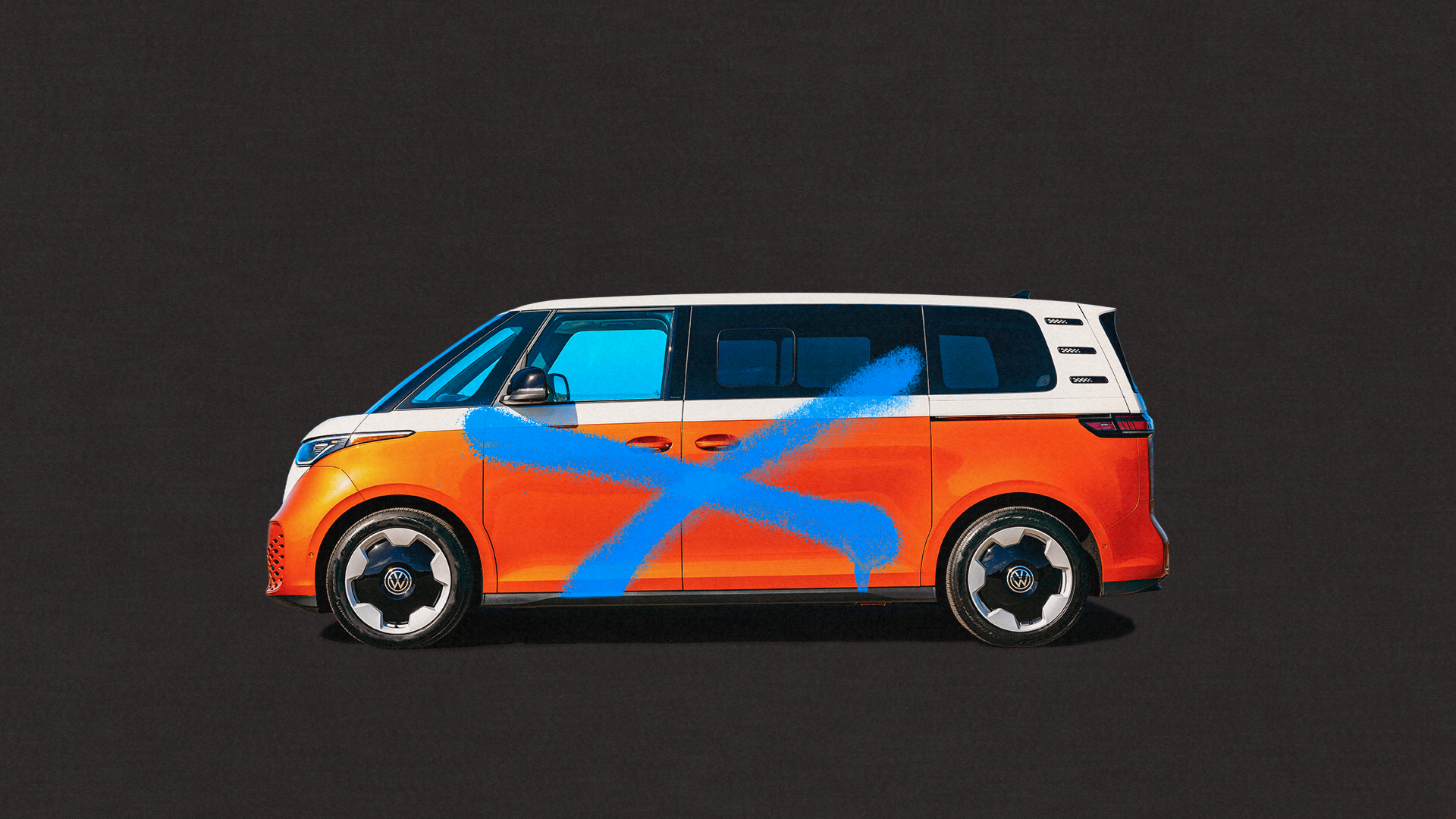
The 2025 Volkswagen ID. Buzz only saw the first US deliveries in November of last year, but the electric halo model is already taking a break from the American market. VW dealers confirmed to customers this month that the EV would not see a 2026 model year stateside, as was first reported by Carscoops.
VW did not indicate what contributed to the untimely and perhaps still temporary retirement of the ID. Buzz, only citing EV market factors. But there have been some indications that the electric minivan has struggled with sales volumes in more than one market, with the US model seeing a relatively ambitious starting price of $61,545 and a 234-mile range even with a generous 86.0-kWh battery and a single-motor layout, good for 282 hp and 413 lb-ft of torque.
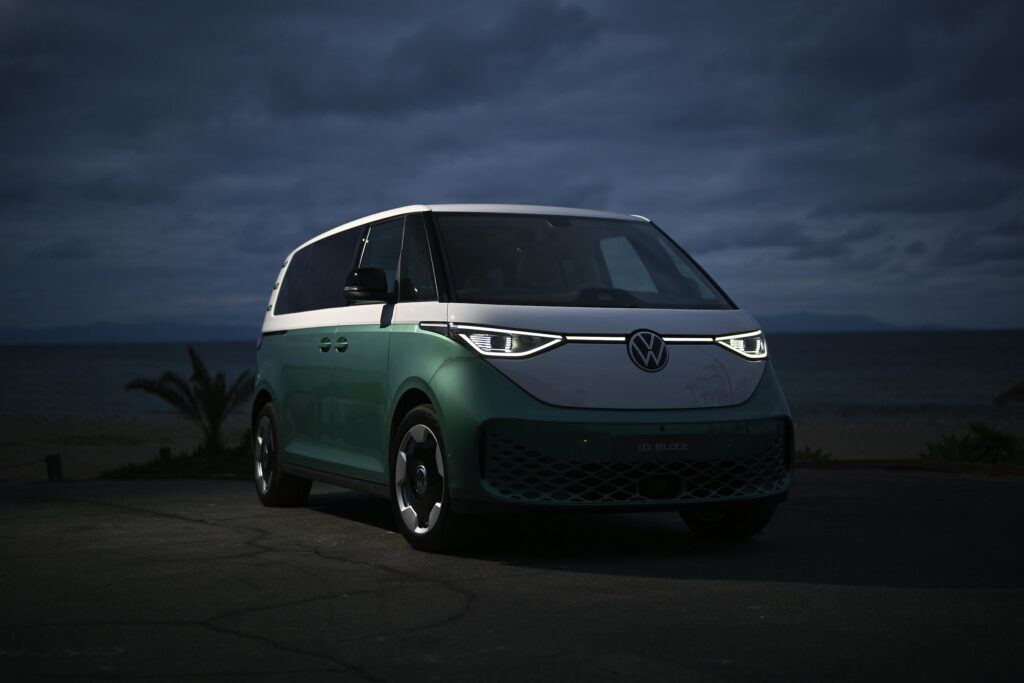
The model’s US sales were further dented by a seat recall in the spring of this year, with the rear bench being wide enough for three people but only having seatbelts for two. US safety regulations require that benches that wide should have belts for three passengers. At the time of the recall in early May some 5,637 examples were said to be affected, pointing to just how many had been sold or shipped by that point.
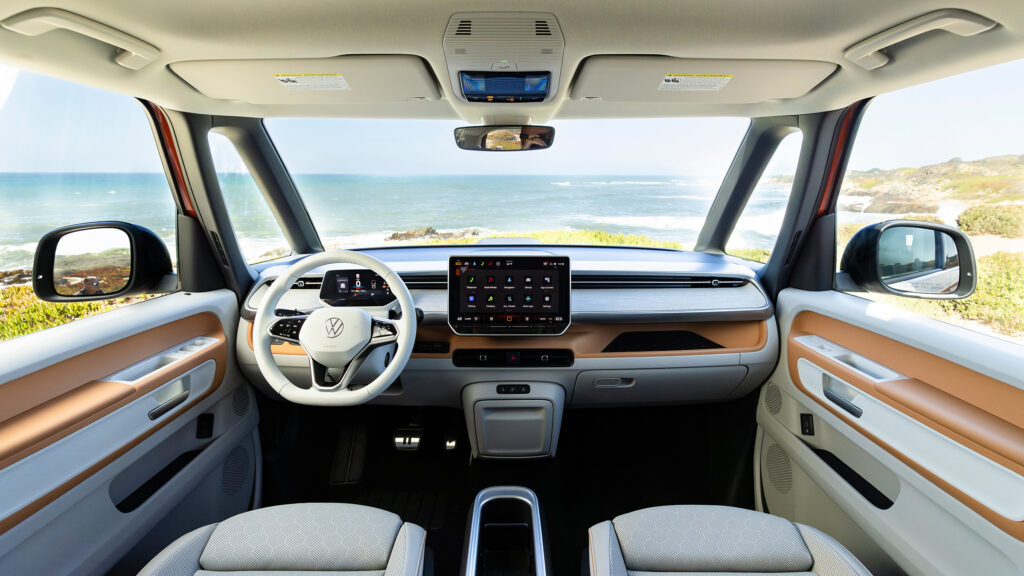
Early reviews of the ID. Buzz were decidedly mixed, praising its comfortable interior accommodations, solid handling despite its 5939-lb curb weight, and high driver visibility, but noted its modest EPA range and high price of entry. Even prior to landing stateside, it was suspected that the model would face a tough time in this market.
The withdrawal of the 2026 model for the ID. Buzz makes it the second EV model that VW has either cancelled or suspended this year, with the automaker choosing to withhold the ID.7 sedan at the last minute back in January 2025, with that cancellation being chalked up to a worsening outlook for the EV sedan segment and other market factors.
Now, with the benefit of some hindsight, it seems the ID.7 might have easily scored more sales stateside than the ID.Buzz owing to a more popular bodystyle and a lower starting price. However, the same is also true of the Polestar 2, and that model has seen a tough time mounting a challenge to the older but still popular Tesla Model 3.
But a lower starting price or a higher EPA range estimate may not have automatically propelled ID. Buzz sales into Tesla territory. The electric minivan was still seen as a niche offering in an untested segment with inherently limited appeal, so even drastically different numbers might not have diverted buyers.
The departures of the ID. Buzz and the ID.7 do not bode well for the automaker’s electric ambitions stateside, with VW already keeping quite a bit of the European-built ID lineup, including the ID.3 hatch and the ID.7 station wagon on its home continent. Other ID models are produced in China solely for the Chinese market, including the seven-seat ID.6 crossover.
The ID.Buzz itself faced an unusually long development period, having been confirmed for production all the way back in 2017. The model ultimately saw some of its retro styling toned down, going on sale in Germany in the spring of 2022, with the first deliveries taking place later that fall.
But the electric minivan took an additional two and a half years to find its way stateside, and not in all available variants. Likewise, VW kept the ID. Buzz Cargo out of the US.
The ID. Buzz also faced the dual challenge of being the first mass-market electric minivan, with other automakers having studiously avoided this segment, while also being a retro-styled lifestyle model with what could be called novelty appeal. This limited its potential audience further, while the modest range dented its appeal as a vehicle for longer road trips, which was one of the main selling points of all of its predecessors including the original Type 2 Bus.
The ID. Buzz won’t be the last EV model to fall victim to a collection of unforgiving market factors, concerns over range, or a high base price. But its early vacation from US sales after a year filled with other cancellations and departures, notably the Nissan Ariya and the Ford F-150 Lightning, to name a couple major ones, is perhaps a preview of a more challenging environment for EVs in 2026.
Recent Posts
All Posts
February 27, 2026

February 26, 2026

February 25, 2026
Leave a Reply