State of Charge

January 8, 2026
Jay RameyAre battery-energy storage systems a preview of efficient charging plazas of the future, or will simpler grid-only chargers be more common?
Automakers have long touted battery-energy storage systems (BESS) as a potential second life use for batteries from old, dismantled EVs. Audi has even integrated BESS into its reservations-only charging hubs, which have been slowly popping up in Europe, though the concept’s application has remained on a relatively modest scale.
Germany’s charging developer XCharge along with New York-based Energy Plus plans to change that this year, with the opening of one of the largest battery-backed EV charging plazas in the US, which will be located in the Williamsburg part of Brooklyn.
It will be different in one important way: Each charging stall will have its own battery, with 44 XCharge NA GridLink units providing 9.46 MWh of energy storage while serving 88 parking spots. So this energy storage system will be very decentralized, rather than having individual chargers drawing power from one single battery case composed of individual units.
The advantages of this approach, as with other BESS units, includes the ability to juice up during off-peak hours, when electricity from utilities is cheaper, and then to serve it to EVs at very fast 300-kW rates.

“The site will operate under Energy Plus’ Eplug brand—a next-generation urban charging solution designed for dense, high-demand environments like New York City,” XCharge noted.
This approach is also said to contribute not only to cheaper charging rates for EV owners, but also to boost grid resiliency. The battery-based chargers will offer the potential to support to the grid via bidirectional charging by supplying energy back to the grid when needed.
To date, the US has seen BESS used in a number of stand-alone, smaller-scale charging projects, some paired with slower off-grid solar chargers. One major exception has been Tesla’s new Project Oasis station along I-5 in California, with solar power providing energy to 39 MWh worth of storage, with 10 centralized units dubbed Megapacks offering 3.9 MWh each.
If all goes according to schedule, the new 88-spot Williamsburg station could serve as a model for other big urban plazas, which have been in short supply in US cities.
But XCharge hasn’t mentioned just what kind of pricing customers could see once the station opens in the second half of 2026.
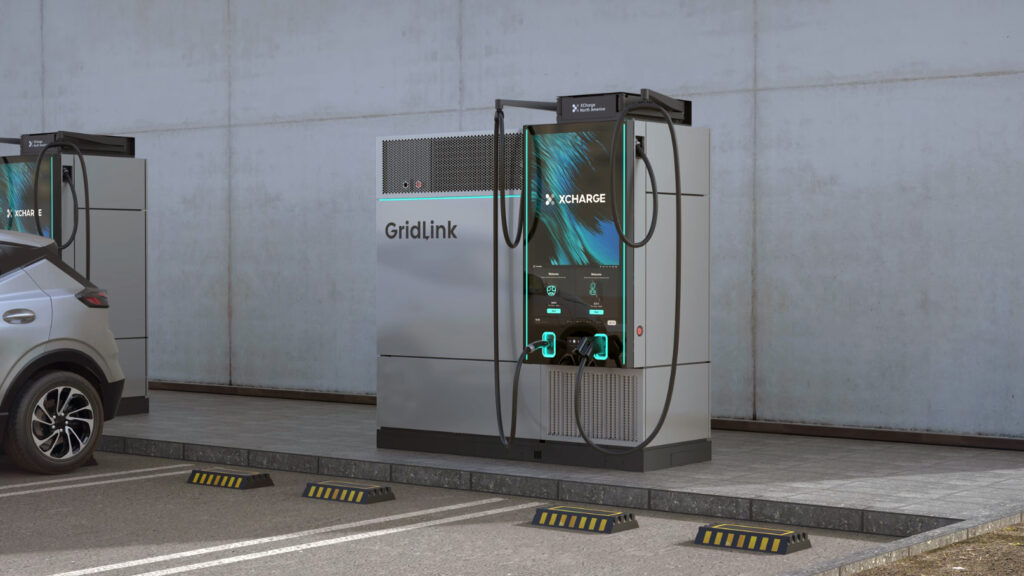
To be sure, there are costs to stringing together 44 individual lithium-ion batteries offering 215 kWh of storage each as part of a charging station still connected to the grid — costs that someone will have to bear up front and also pay for down the road. But once second-life batteries from used EVs become a slightly more common commodity, it becomes easier to picture this being a popular charger type given some of its advantages.
Energy Plus is looking to expand this model to other cities in the near future, while also being mindful of positioning such stations near other businesses for visitors’ convenience.
“Together we’re not only creating a model that any U.S. city can replicate, but also laying the foundation for Eplug, a network designed for real urban life—one that’s dependable, familiar, and as easy to use as stepping into your local café to grab a cup of coffee,” said said Moshe Lefkowitz, founder of Energy Plus.
It remains to be seen what kind of role BESS can play in the charging speed arms race that’s taking place at the moment, with ever-quicker DC fast-chargers prioritizing shorter times at the stall over everything else, including affordability.
Recent Posts
All Posts
March 10, 2026

March 10, 2026

March 9, 2026
Leave a Reply