Economy Class

By now the kei car class is popular enough outside Japan to drive some enthusiasts to pay quite a premium for 25-year-old imported cars, trucks, and vans halfway around the world. Even President Trump — famously not a car guy — has apparently noticed them.
The kei car class still accounts for about a third of all vehicle sales in Japan, with gas and electric models alike now filling the country’s dense metropolitan areas and rural regions, making every inch of space and every yen count.
But the idea of a separate microcar category that would be limited by strict size and displacement rules is now seeing a renewed interest from automakers far outside Japan.
There is a wave of European automaker support behind a similar vehicle category for Europe, with carmakers now lobbying for a more favorable landscape for such models. And there is political support behind such a move as well.
“Millions of Europeans want to buy affordable European cars, so we should also invest in small, affordable vehicles, both for the European market but also to meet the surge in global demand,” European Commission president Ursula von der Leyen said earlier this summer.
The Fiat Topolino and its Citroën Ami twin are merely two of the latest production models to reflect this trend, with the recent Dacia Hipster and Toyota FT-Me concepts giving a further preview of what we could see in the near future.
The latter, seen in concept form earlier this March, is aimed specifically at the European market.
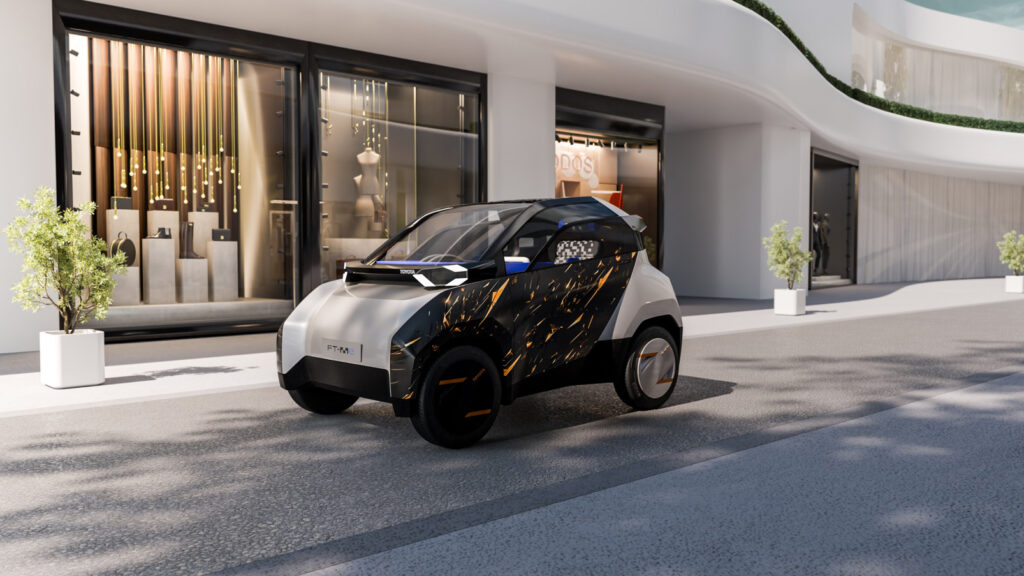
“The FT-Me concept embraces Toyota’s ‘Mobility for All’ philosophy, embracing both younger drivers as well as those wanting to downsize in the changing urban landscape,” Toyota said at the time of the concept’s debut.
And even those as young as 14 will be able to obtain licenses for them in some markets, the automaker said.
Formally, the effort is known as the Small Affordable Cars initiative.
“I believe Europe should have its own E-car,” von der Leyen added. “E for environmental – clean, efficient and lightweight. E for economical – affordable for people. E for European – built here in Europe with European supply chains. Because we cannot let China and others conquer this market.”
What is causing this sudden turn toward a new class of kei-like vehicles?
One major motivating factor for this push, as von der Leyen plainly admitted, is a response to the gains made by Chinese automakers in Europe, whose inexpensive EVs with prices at times below $20,000 in certain global markets have scared just about all other automakers. BYD in particular has made significant gains outside China with offerings like the Dolphin becoming the poster car for a wave of affordable Chinese EVs that are seemingly gaining market share in Europe with each passing month.
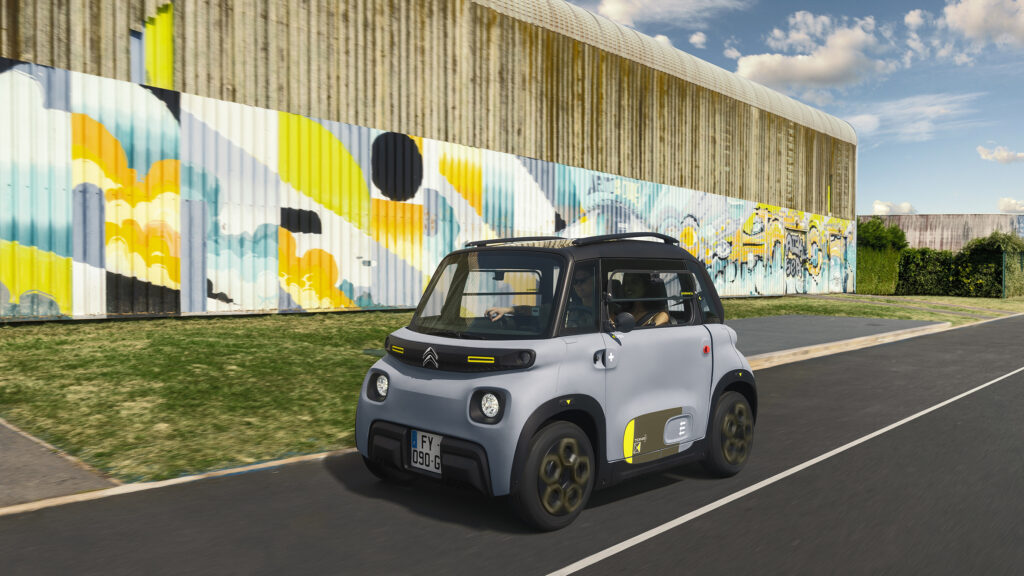
European automakers are, in effect, realizing in real time that they may have little chance of competing with Chinese auto manufacturing might in the longer term, except in a loosened regulatory landscape that could permit lower-speed urban vehicles that don’t necessarily have all the crash safety hardware of real cars.
Another motivating factor for this is the rapidly ballooning cost of real cars, with European automakers’ lineups now increasingly filled the crossovers and SUV, compared to affordable hatchbacks that still dominated the market two decades ago. Just like in the US, vehicles are now larger and more expensive to build, while continuously being filled with ever-more-complex safety, powertrain, and infotainment technologies.
But the effort to launch an E-car class doesn’t mean that European automakers are embracing EV powertrains across the board. Quite the contrary.
At the moment European automakers are lobbying to push back the EU’s 2035 target for the phase-out of ICE vehicle sales, and it has just as much momentum behind it. The 2035 target is now seen an unachievable, as argued by Mercedes-Benz CEO Ola Källenius, with current vehicle buying trends and other pressures. So a smaller microcar class could certainly work toward the same goals of reducing CO2 emissions.
But despite the promise and optics of a new category of cute and ultra-compact cars for Europe, there are still a few reasons to be wary of this trend.
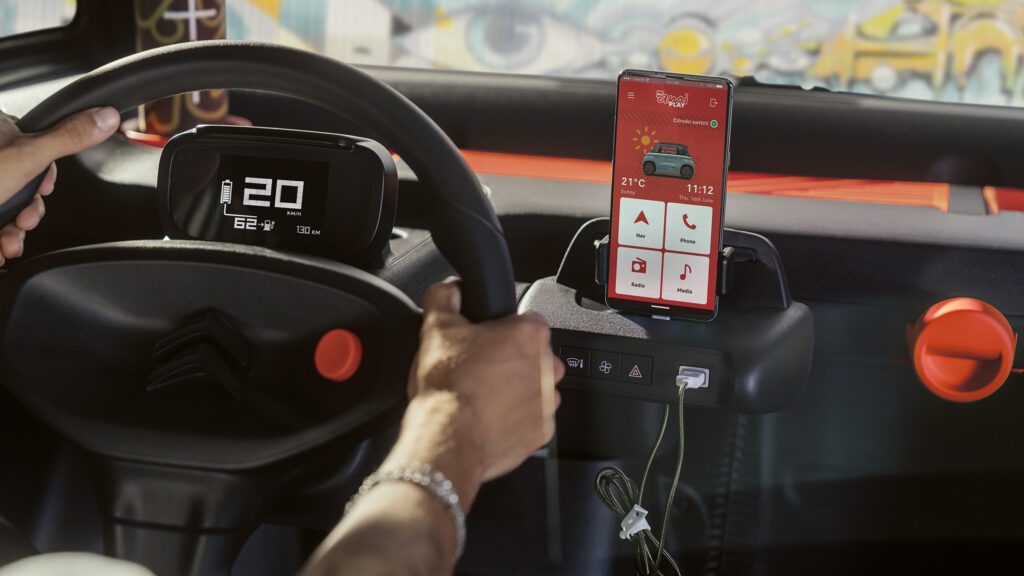
The results for European automakers won’t be immediate and will still require years of development and billions of dollars, as most of these cars are still on the drawing boards or in the concept stage. Even given a more friendly regulatory landscape, if one were to arrive tomorrow, the results might not be seen for some time.
Also, the smaller size of such vehicles and looser license restrictions, as well as slower acceleration, may make traffic accidents for their drivers less survivable even with some modern safety tech.
And by itself, the E-car class will still be no guarantee of longer-term financial resilience of European automakers against imported models from China. European automakers, despite this regulatory push, might still lose more market share to Chinese EVs and hybrids even as they’re building their own microcars, with wider demand for such models remaining largely untested.
Chinese automakers, for their part, could seize upon this E-car class as well, perhaps quicker than European automakers, beating them at their own game.
Perhaps the most humbling part of this for European automakers is that Japan’s kei car class, which European automakers have seldom envied, is now seen as their best chance of surviving a wave of imported cars from China.
Recent Posts
All Posts
March 16, 2026
March 12, 2026

March 11, 2026
Leave a Reply