Rivian R2

November 10, 2025
Jay RameyThe upcoming midsize SUV will face no shortage of competitors at a tricky time for the EV market.
Rivian’s R1T and R1S may have been a rare success story for a startup during the first half of the decade, but the EV maker faced plenty of challenges in getting them to buyers. Now, the company will need to capture lightning in a bottle a second time in 2026, with the arrival of the midsize R2.
Pre-production examples of Rivian’s second major model lineup should roll out of the recently expanded Normal, Illinois factory before the end of 2025. Deliveries of the R2 are still scheduled for the first half of 2026, with an estimated peak annual production capacity of 155,000 units.
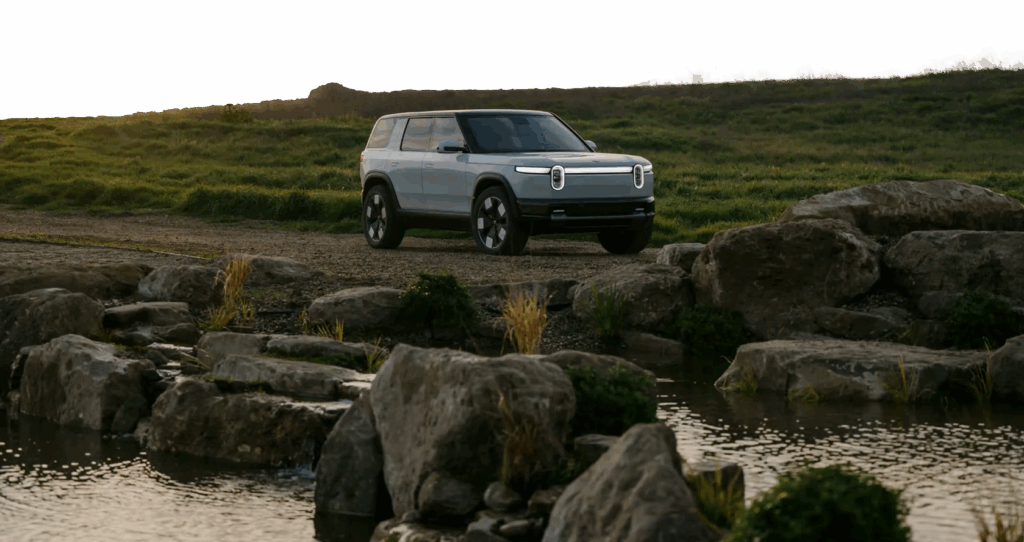
Slated to offer three motor layouts including a single-motor RWD version, a dual-motor AWD variant, and even a tri-motor AWD setup, the boxy R2 will also serve up bidirectional charging via its Energy Management Control Module.
This new feature will be able to supply power to a home, Rivian said, converting DC power from the R2’s battery into AC, but will need additional home energy hardware to make this happen once it’s available.
“We believe this innovation has the potential to unlock gigawatts-hours of energy storage from Rivian vehicles, creating a cost-effective power storage solution for our customers,” Rivian said.
A few unknowns remain, including the capacities of the two battery options, though Rivian has promised a range of 330 miles for the larger of the packs. The smaller one should land just south of the 280-mile mark.
The R2 will also rely on a new structural battery, known as the 4695 cell, which is said to offer greater energy density over older 2170 cells. The packs will be built by LG Energy Solutions in the U.S. starting in 2027, thus avoiding tariffs, though at launch the cells will come from LGES’ South Korean operations.
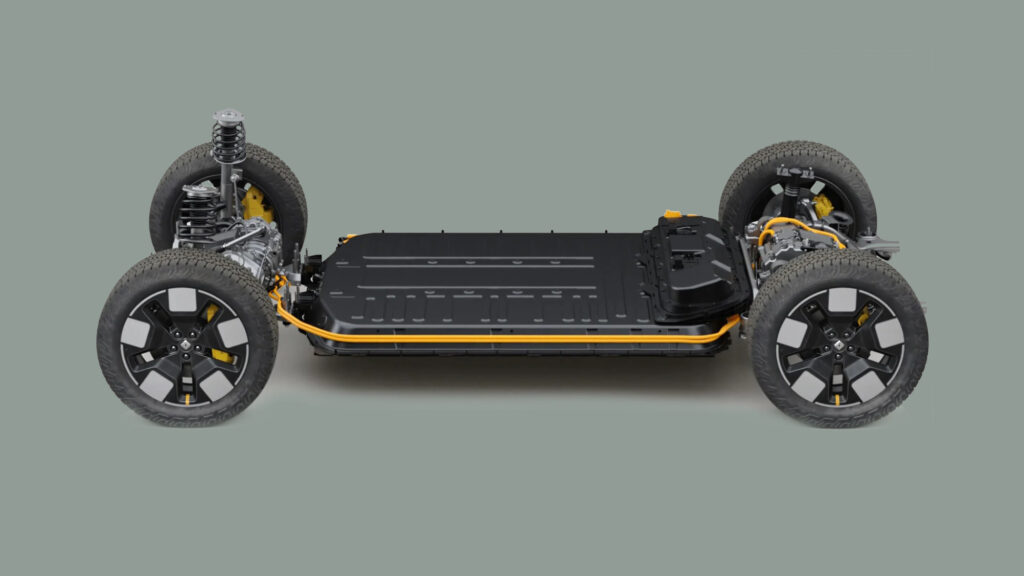
“We completed a clean-sheet design for R2’s battery pack and 4695 cell, which offers six times the energy of the 2170 cell used in R1,” Rivian said in a letter to shareholders. “The new cell-to-pack design uses the vehicle’s floor as the battery pack lid, which helps to minimize the pack’s mass.”
The R2 is expected to start a notch higher, at about $45,000 for the single-motor RWD base model, though pricier options may stretch up to $60,000. The biggest challenge the R2 will likely face is differentiating itself from the current choices in its size and price range. That includes the Nissan Ariya, which despite its very reasonable $41,265 starting price has already gone out of production. It will also face the Tesla Model Y, fresh from an update in January of this year.
The R2 will arrive in a different EV landscape than Rivian’s debut truck and SUV. Not only is the EV market creaking under the weight of too many options in the $40,000 to $60,000 range, some of them selling poorly, but it will also launch after the recent departure of the $7,500 tax credit that has already hurt a number of players in this segment.
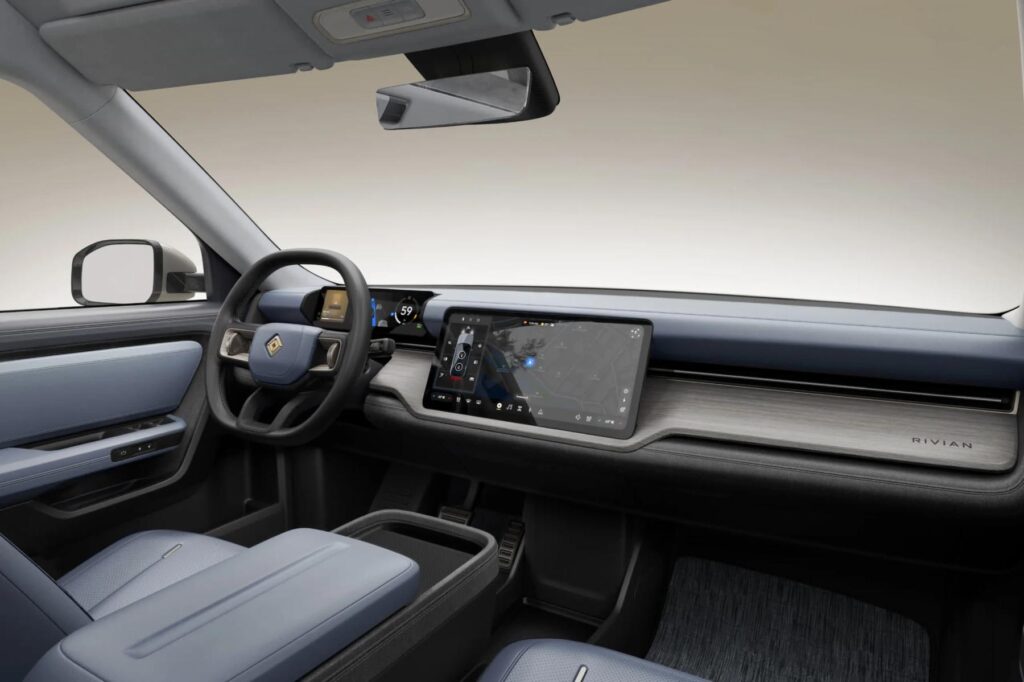
Rivian’s output still represents a tiny fraction of Tesla sales, with the EV maker having delivered 13,201 vehicles in the third quarter, including vans for Amazon. In total, Rivian expects to deliver between 41,500 and 43,500 EVs in 2025.
Rivian’s first two models may have still been aimed at deep-pocketed early adopters, but the R2 will need to capture a broader audience to succeed in a segment and EV market beset with strong headwinds.
Recent Posts
All Posts
March 6, 2026
March 6, 2026

March 5, 2026
Leave a Reply