Buzzkill
November 11, 2025
Jay RameyA rocky start to sales in America puts pressure on VW's retro EV at a time of industry turmoil.
The EV era has already produced its share of spectacular sales duds. But 2025 has been a perfect storm of other, unforeseen headaches for EV makers, including a tariff war and the demise of the $7,500 tax credit.
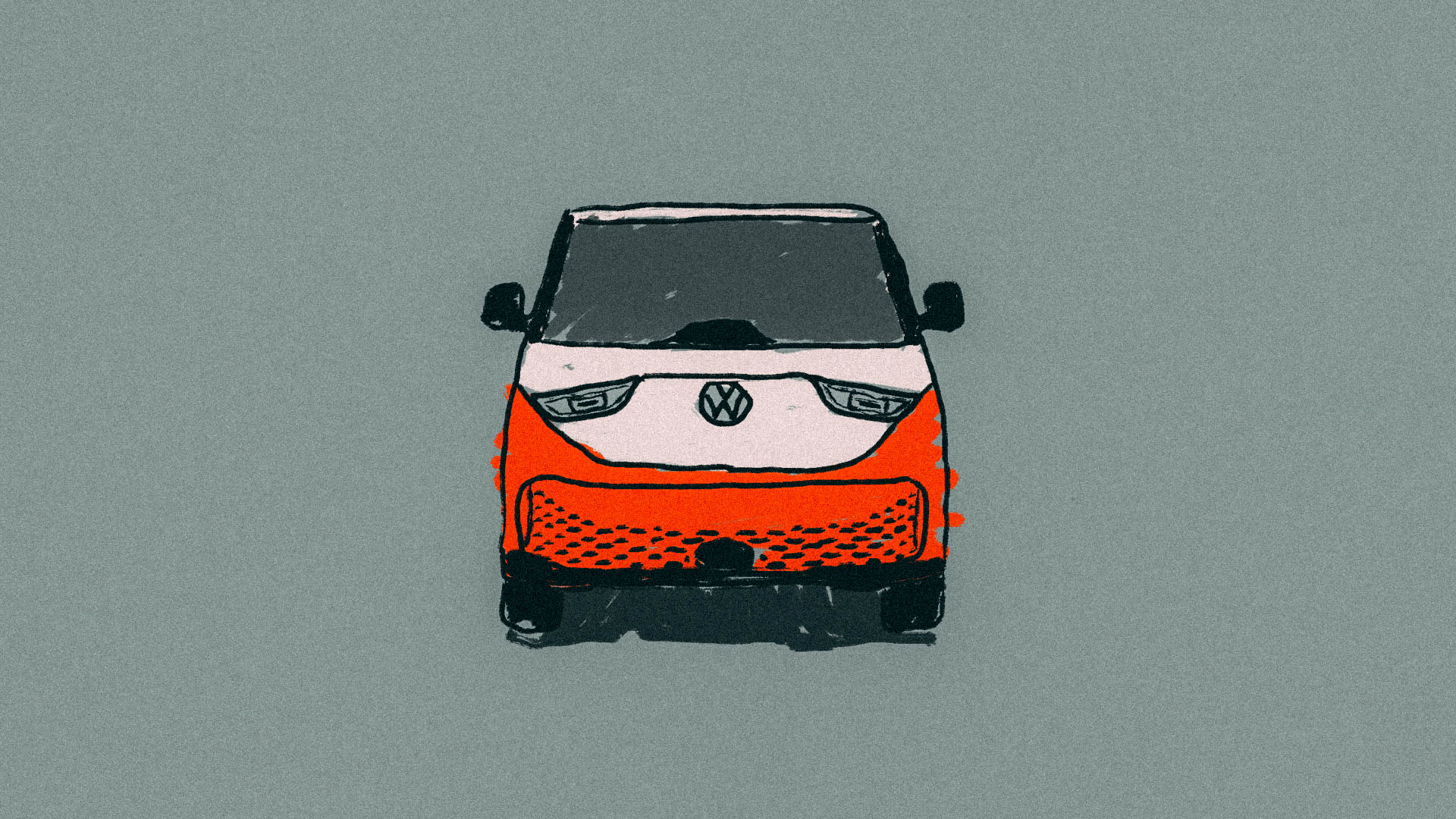
The long-delayed VW ID. Buzz arrived stateside months before this perfect storm to test the American public’s appetite for a retro-styled electric minivan with a relatively high $61,545 price and a modest 234-mile range. Conceived in one economic and political climate, the ID. Buzz landed on sale in very different one and was quickly dealt a one-two punch of tariff threats and a 5,000-unit recall tied to the width of its third row of seats.
In the first quarter of 2025 VW sold 1,901 examples of the EV van stateside, largely fulfilling orders placed in advance with dealers. But the second quarter, overshadowed by the seat recall that caused a two-month stop-sale, saw just 564 examples find homes.
The third quarter saw a strong rebound for the nostalgia-flavored model despite the tariff tug of war with the EU, with VW selling 2,469 units, some held back by the summer recall.
The ID. Buzz may have seen its share of issues during its short time in the US, but it’s definitely not out of the fight.
In fact, the global picture for the model shows some positive signs.

In the first half of 2025 some 27,600 units spanning all variants were sold worldwide, which represents a 70% bump over the same period a year prior. Sales in northern Europe, particularly in Germany and Norway, contributed to a sudden increase in VW Group’s global BEV sales seeing a 50% in the first half of the year compared to 2024, and a 90% increase in Europe alone.
But Europe is seemingly the only region where the ID. Buzz has seen momentum this year, with VW experiencing vastly different sales climates in different regions.
“Overall, we were able to slightly increase our global deliveries by the end of June despite challenging conditions,” noted Marco Schubert, Member of the Group’s Extended Executive Committee for Sales. “Gains in South America and Europe more than offset the expected declines in China and North America.”
When it comes to the US, the ID. Buzz was expected to see plenty of challenges even before its arrival. (After all, there is a reason other EV makers have largely avoided the minivan segment).
And as we’ve seen time and again, the first year of sales for any new model is usually the best, especially for “novelty” EVs.
But VW isn’t storing all of its eggs in one basket when it comes to this platform.
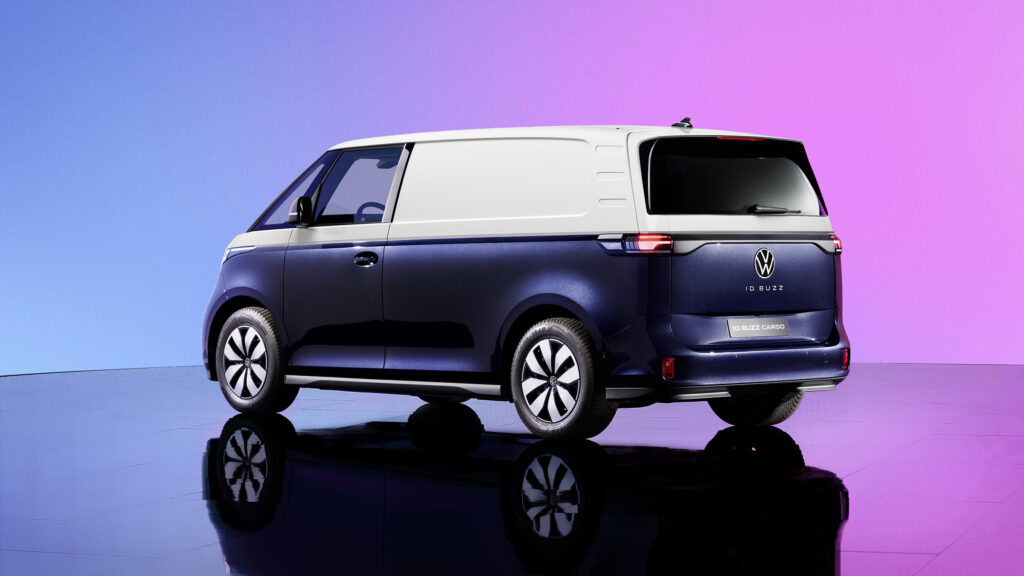
The commercial ID. Buzz Cargo has been on sale in Europe for some time, with VW also readying fleets of SAE Level 4 autonomous vans based on the passenger model for deployment in Europe. Continued production of the latter still hinges quite a bit on SAE Level 4 going mainstream in Europe and elsewhere, with VW set to provide autonomous ID. Buzz models to Uber at some point in the future.
The commercial EV van segment in Europe, however, is off to a shaky start with no shortage of competitors for Volkswagen’s electric model, some of them VW’s own ICE offerings. Stellantis alone offers commercial electric panel vans under Peugeot, Opel, FIAT, and Citroën brands, with four marques offering three models each that the ID. Buzz has to contend with.
The greater question for US buyers is what kind of annual minimum sales volume Volkswagen of America can tolerate when it comes to the ID. Buzz, and whether something like 5,000 units a year can keep the EV buzzing along in the states.
In the past VW has proven to be more allergic to lower-volume offerings than some of its European rivals, having even pulled the ID.7 sedan before it arrived.
One response to “Buzzkill”
-
I just feel really sad for the entire electric vehicle industry

Recent Posts
All Posts
March 6, 2026
March 6, 2026

March 5, 2026
Leave a Reply