ELETTRICA?

October 19, 2025
Tim Stevens
Is 2025 really the right time for an electric Ferrari?
Back in 2011, I made a trip out to Maranello to meet a room full of design and engineering students, each standing next to their own 1:12-scale vision for a future Ferrari. Most of those models were wildly shaped and decidedly futuristic, and a fair few of them were clearly envisioned as EVs.
At that event, hosted at Ferrari HQ, I also got to meet then-CEO Luca di Montezemolo. I asked him what he thought about these concepts. Was there an EV in Ferrari’s future?
“You will never see a Ferrari electric because I don’t believe in electric cars, because I don’t think they represent an important step forward for pollution or CO2 or the environment.”
I knew at the time he was wrong, but I wouldn’t have guessed back then that it would take a further 15 years for the company to finally get on board the big battery train.
Fast forward to 2021, when tech exec Benedetto Vigna signed on as Ferrari CEO. He soon promised to introduce an EV by the end of 2025. I confess that, with the year coming to a close, and with the American EV market in particular taking a bruising, I’d begun to figure that Vigna was just going to hope everyone had forgotten about that promise.
But no, he and the rest of Ferrari were going to make it happen. And lo, earlier this month, he unveiled the first details on the Elettrica, Ferrari’s first electric car.
“As our founder did 78 years ago, we go ahead with our timeline. We commit,” he told me in Maranello.

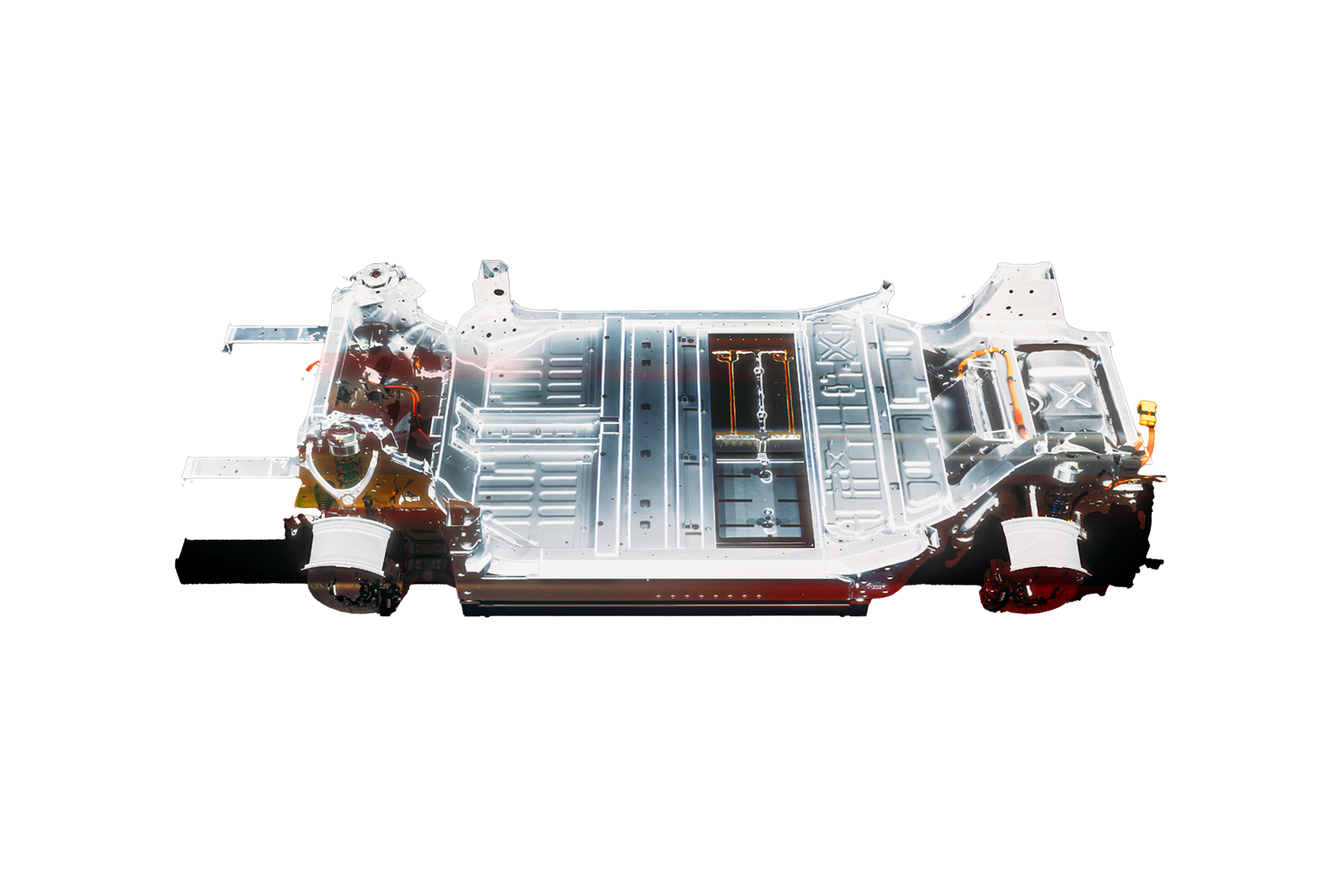
But it was only half an unveil, the bottom half as it were. We now know that the Elettrica is a machine that may or may not be an SUV, may or may not be a grand tourer, and may or may not even be called Elettrica when it’s more comprehensively unveiled next year. Even so, it’s easily among the most significant product launches in the company’s 78 years of crafting crimson road cars.
I must say that, as an unabashed fan of EVs, I admire Vigna’s commitment. But, as a student of business, I do have to question the wisdom of making a big deal out of a high-performance, surely high-dollar EV in a market that seems increasingly hostile to the things.
Porsche’s Taycan, arguably the best grand tourer the company has ever made, is selling well but suffering from depreciation rates so precipitous that even journalists like me are getting bad ideas about bringing one home. In the segments Ferrari plays in, that’s bad news.
So why, in the face of all this, is 2025 the right time to launch Ferrari’s first EV?
“We believe that there is also a way with an electric powertrain to do something unique. You need to master it in the right way,” he told me. “We want to show, one, that we are able to harness any technology in a unique way for the sake of driving the pleasure of our client. Two, we want to also access another pool of clients who will buy a Ferrari if and only if it is electric.”
In other words, Vigna believes Ferrari can do a performance EV better than anyone else, and that the company can expand its market share if it does so.
It’s a far better answer than the one Montezemolo gave me back in 2011, that’s for sure. But after spending a full day talking with engineers, poring over effervescent press releases and gazing at cutaway models of various components, I’m not yet convinced that Ferrari’s first EV is actually going to be that special from a hardware standpoint.
It is a combination of parts that are, by and large, pretty standard fare. There’s a battery pack situated down in the floor, made up of 15 modules of 14 cells each. Those cells are nickel manganese cobalt pouches, sourced at least initially from SK on.
122 kilowatt-hours of capacity will deliver a Ferrari-estimated 330 miles of range — though that’s presumably on the European WLTP cycle. Expect something closer to 300 on the American EPA cycle, far short of the 427 offered by the 1,234-hp Lucid Air Sapphire.
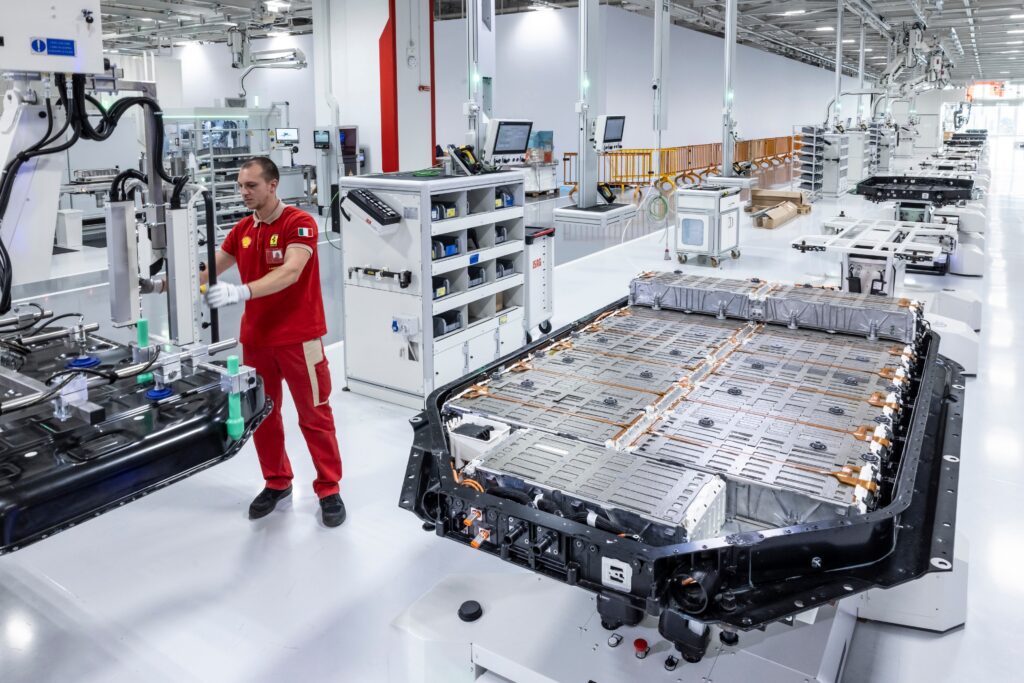
That module construction of the Elettrica’s battery means Ferrari is eschewing the cell-to-pack trend most brands are following in pursuit of ever-higher energy densities.
I asked about this, too, and was told that the focus here is on repairability and, ultimately, longevity. The Elettrica, according to its press release, will “meet Ferrari’s uncompromising approach to building cars that will last forever.”
Ferraris are generally the kinds of cars celebrated for decades after release. It remains to be seen whether the brand’s current spate of more practical models, like the Purosangue, will achieve that level of long-term desirability. Regardless, a focus on repairability is a big improvement over the packs from other manufacturers that are literally glued together and designed to be scrapped if a single cell fails.
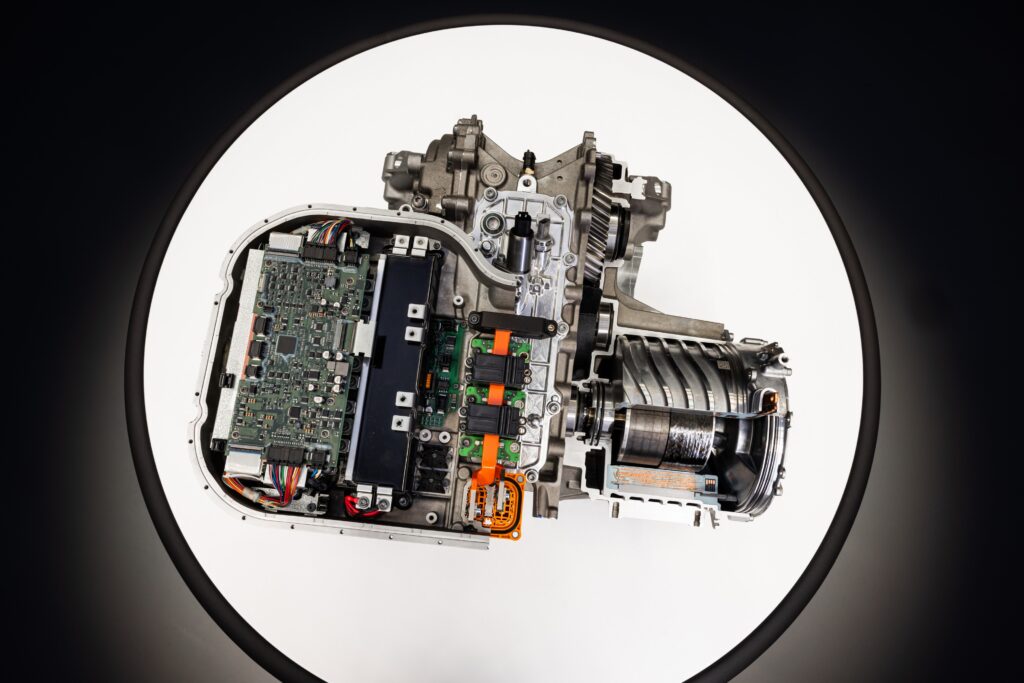
In terms of propulsion, the Elettrica has a quad-motor design, which should do great things for vehicle dynamics, but again is not novel.
Those motors are controlled by a set of silicon carbide inverters developed in-house by Ferrari. Previously, the notion of a high-tech piece of circuitry like that coming out of Maranello might not have inspired much confidence, but remember, current CEO Vigna’s previous gig was overseeing the development of microelectromechanical systems. Under him, Ferrari is clearly upping its tech chops.
Those four motors will deliver something north of 1,000 horsepower when the car hits the road. Nobody was willing to say exactly how much just yet, but regardless it’s clearly not going to threaten the aforementioned Lucid Air Sapphire or, indeed, any of the dozens of 2,000-plus hp Chinese EVs announced last week.
Gianmaria Fulgenzi, Ferrari’s chief product development officer, believes that doesn’t matter, because the competition is too heavy and no fun to drive. “It’s very easy and simple to create power in an electric engine. It’s not difficult,” he said. “But what do you feel when you drive this kind of car? They are elephants.”
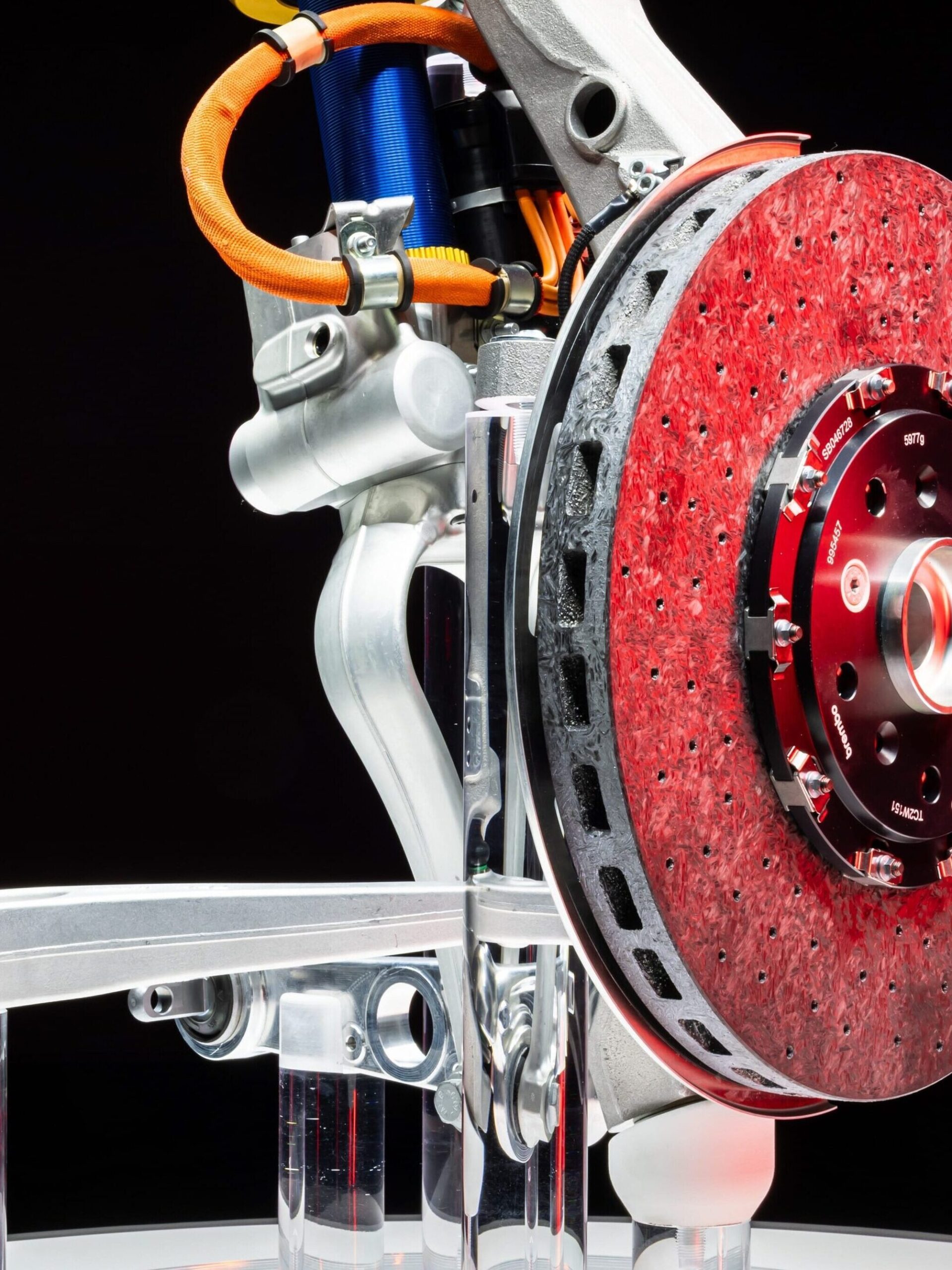
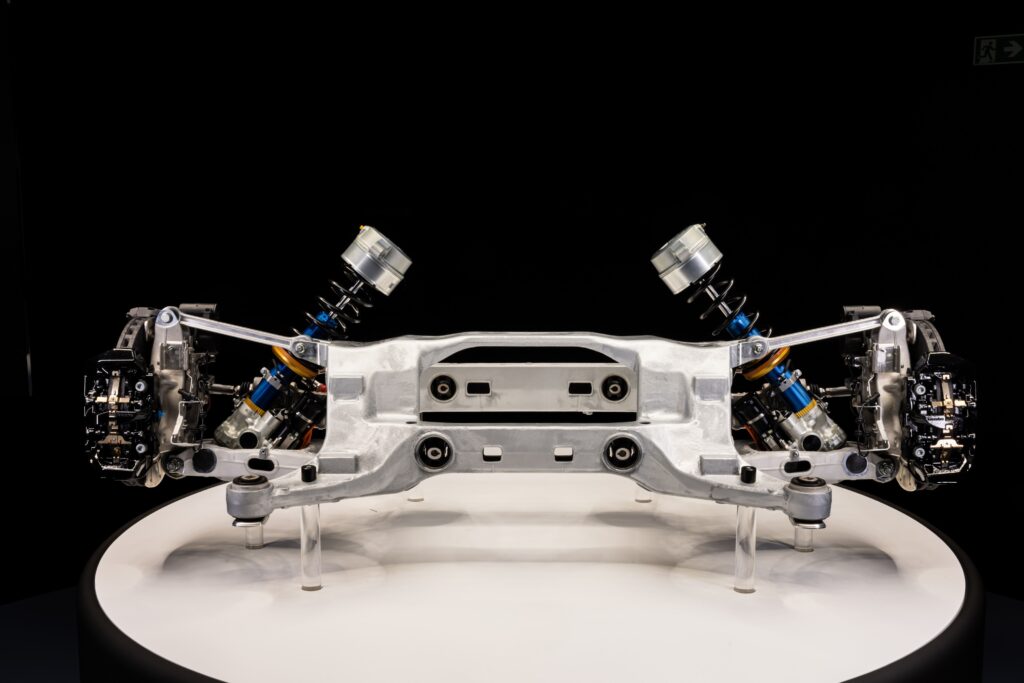
How will the Elettrica avoid a mastodon-like fate? Ferrari’s novel, 48-volt damper system should help. It replaces good ol’ valves and oil with screws and electric motors. Four-wheel steering is also on offer, plus an advanced stability and traction management system to bring it all together into a beautiful harmony.
That, again, is all pretty standard fare in a modern performance EV, but the Elettrica has one final feature that Ferrari promises will make it unlike any other EV on the road: Its sound.
Inside the rear drivetrain housing, Ferrari is installing an extra accelerometer capable of picking up the minute vibrations emitted by the pair of electric motors back there. Those vibrations are then digitally processed to create a sound that will be played in the cockpit, seemingly at different volume levels depending on the selected drive mode.
Porsche took much the same path in developing the Electric Sport Sound for its Taycan. However, Ferrari’s approach seems significantly more advanced than that, and far less fake than offerings seen on Hyundai’s Ioniq 5 N and elsewhere.
The sound’s pitch and tone are said to be of a high enough fidelity that you can tell when you lose grip from one motor versus the other. Fulgenzi likens it to the way an amp modulates the sound of an electric guitar, painting this as a natural evolution of vehicle sound rather than an artificial replacement for it.
It’s a stellar marketing pitch, but the proof is in the resulting harmony, and that, like many other details of the Elettrica, remains undisclosed.
The biggest missing detail is how it’ll look. The chassis that Ferrari showed was a substantial thing, clearly not for a sports car. Elettrica will be a four-door, four-seater, and if I had to guess, it’ll be a fair bit taller than a Purosangue.
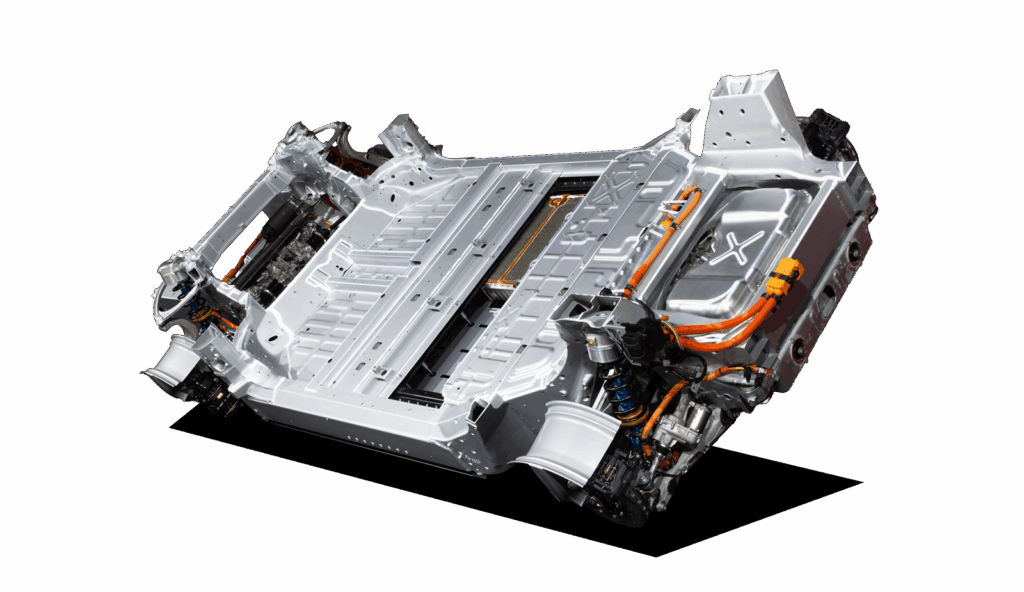
Interestingly, the design here isn’t being done purely in-house, nor was it farmed out to Ferrari’s BFFs at Pininfarina. The Elettrica was designed in partnership with LoveFrom, the design firm launched by Jony Ive, famous for creating a massive array of Apple products that all more or less look the same.
What will the Elettrica look like? What will it sound like? How much will it cost, and when will we be able to buy one? And will it even be called the Elettrica? These are all questions that Ferrari CEO Vigna and the other executives promised to answer through a series of unveilings to take place in early 2026.
On paper, there’s nothing particularly novel about the bulk of what Ferrari is planning for its first EV. There’s no fancy 3-D printed suspension components, no wildly advanced software-defined digital backbone, and no hyper-advanced cell chemistry to finally enable a lightweight, battery-powered sports car.
That’s a bit disappointing, but then novelty doesn’t lead to greatness. Great cars are less about research and development, more about curation and refinement. These are areas where Ferrari excels.
But can the company figure out how to make a truly desirable, non-depreciating premium EV? The market isn’t exactly convinced. Ferrari’s stock had its worst trading day ever after the news of the Elettrica hit the wires, but I’m not too worried about that, either. Market valuation is a historically terrible indicator of vehicle quality. One need only look at the TSLA curve for proof of that.

Recent Posts
All Posts
March 2, 2026
February 27, 2026

February 26, 2026
Leave a Reply