Endurance, Racing
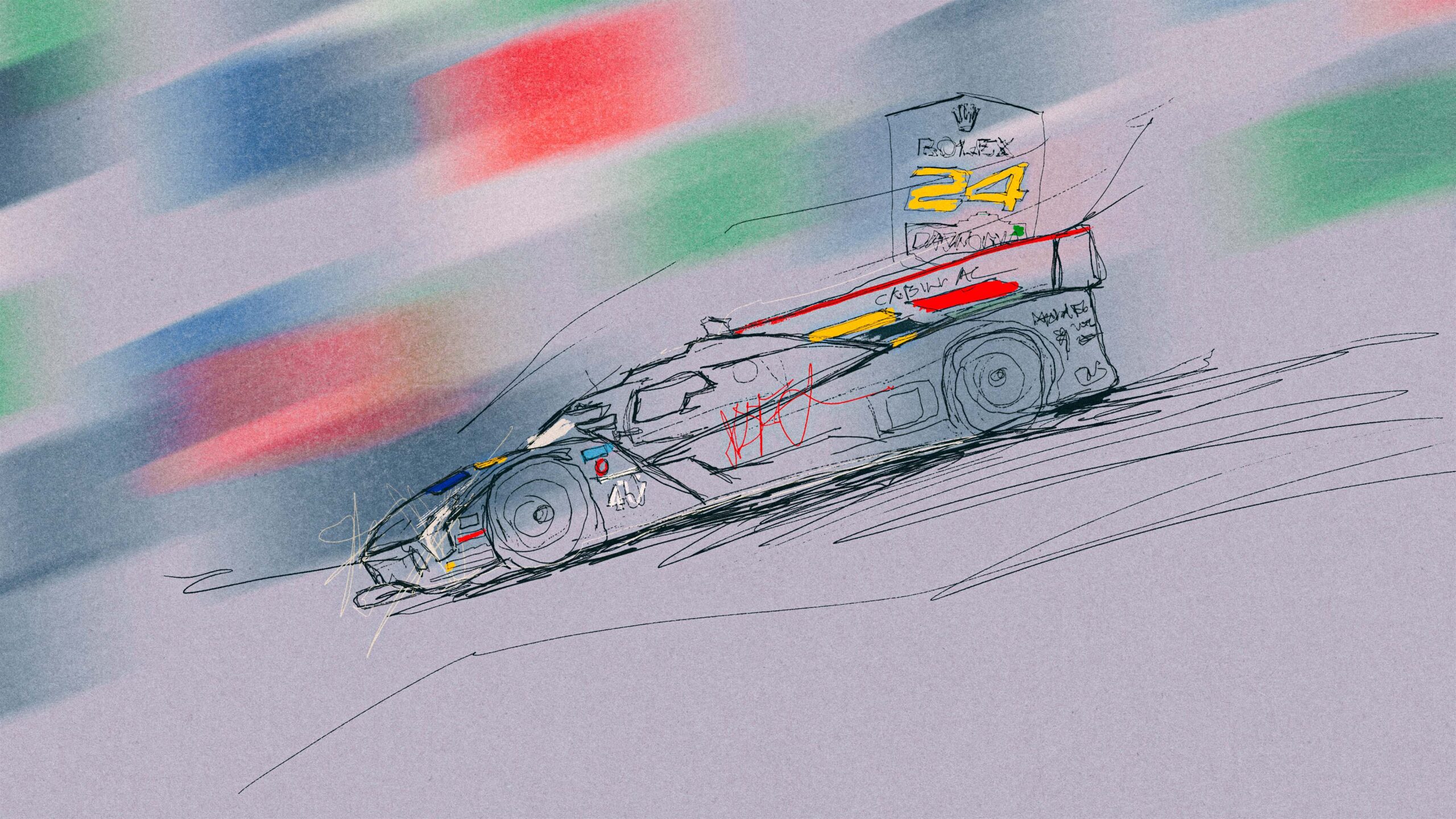
January 23, 2026
Peter HughesIn a comprehensive Rolex 24 and IMSA preview, Peter Hughes makes the case for shutting out the world to bask in IMSA's ongoing golden era.
It’s 2026. Masked stormtroopers roam the streets, pulling people from their homes and killing with impunity. To the extent that the law exists, it seems to apply only to those who dare protest mass murder, while graft and corruption go unpunished; politics has become the redoubt of a collection of bizarrely facetuned grifters and insider traders. What little economic growth persists depends entirely upon the promise of a technology that—best case scenario—will put millions of people out of work. Meanwhile, diseases once considered cured reappear as an increasingly propagandized and illiterate population turns its back on the treatments that banished them.
A global hegemon in decline desperately flails about, unleashing chaos upon friends and enemies alike. At the same time, international institutions created after the last world war in the hopes of preventing another one find themselves suddenly irrelevant, impotent, or simply abandoned. In the background, a climate catastrophe continues to unfold at a pace that outstrips scientists’ gloomiest predictions, and one by one, dystopian visions of the future from Orwellian doublespeak to William Gibson’s warnings about artificial intelligence and even the cashless society foretold by the Book of Revelations prove to have been distressingly on the money.
It’s a bad scene, man. The vibes are terrible!
And yet…and yet…amidst all this tumult and darkness, a small but tenacious tribe thrives. Indeed, for car enthusiasts of a certain stripe, for motorsports fans of a particular persuasion, things have never been better. Even as the automotive industry itself faces threats from all corners and struggles for survival, somehow, of all things, sports car and endurance racing finds itself in a state of health unprecedented in its history. With its beguiling complexity—teams of drivers, both professional and amateur, sharing cars ranging from production-based GTs to exotic prototypes, competing across multiple classes—the sport continues to defy gravity, attracting a growing number of participants and spectators alike, both internationally and here in the U.S.
So despair not, my friends. Time to stop doomscrolling. It’s 2026, and another IMSA season is upon us!
***
In all seriousness, there is no better antidote to the 24-hour news cycle than a 24-hour car race like the one happening in Daytona this weekend. It works best if you’re lucky enough to be there in person, where you can fully immerse yourself in the experience, but even following along at home, the hypnotic effect of watching cars on track over the course of a full day, night, and day again can stimulate something akin to what practitioners of Buddhist meditation call jhāna, a state of bliss in which the mind is fully concentrated and unhindered by distractions. Less sympathetic observers might also characterize it as “dissociating,” but you know what? Fuck them. Let us have this! Everybody deserves a break at some point.
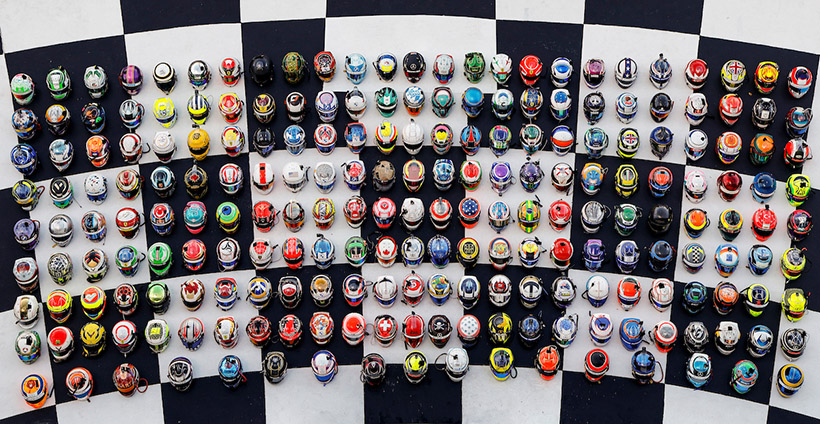
So where did we leave off, and what’s new?
Let’s go by class, starting at the top with GTP. Porsche Penske Motorsport clinched both drivers’ and manufacturers’ championships back in October with a podium at Petit Le Mans, the customary 10-hour season finale at Road Atlanta. Of the reigning champs, Mathieu Jaminet is off to greener pastures in the World Endurance Championship with Genesis, while Matt Campbell returns in a reduced, as-needed capacity to support the duo of Kevin Estre and Laurens Vanthoor, coming over from the WEC after Porsche’s withdrawal from same. The WEC’s loss is our gain in this regard, as Estre in particular has been responsible for some of the most spectacular displays of racecraft in recent memory.
Last year Porsche Penske were buoyed by a start that saw them win the first four races of the season, after which IMSA quietly admitted to having gotten the BOP wrong—the forever-contentious “balance of performance” equation that’s supposed to keep everyone on an equal footing, a huge part of the reason the series has become so attractive to manufacturers—and made adjustments to correct it. Can they repeat for a third consecutive year? Does Porsche’s decision to pull its 963s from the WEC mean this could be the last year we’ll see them here?
Coming on strong at the end of last season was the Action Express Cadillac, which won at both Petit and the Indianapolis 6-hour a month earlier, and returns with an identical driver lineup, joined for Daytona by 19-year-old NASCAR wunderkind Connor Zilisch. Similarly, the two Wayne Taylor cars return after a frustrating 2025 with unchanged driver packages, rounded out for the 24 by Will Stevens in the 10 car who comes over from the Jota Cadillac program in the WEC, and Zibs drummer and potential F1 pilot Colton Herta in the 40.
The Cadillacs have been something of an enigma in the GTP era, so far unable to replicate the success they enjoyed during the previous DPi years with essentially the same understressed and wonderfully sonorous naturally-aspirated V8. For 2026 they’ve received a new aero package which should help at high-speed tracks like Le Mans where they simply haven’t had the top end to keep up; might work at Daytona, too.
There have been big changes behind the scenes for the BMW prototypes, where longtime stateside BMW partner RLL is out and Belgian mega-team WRT is in. WRT has been running the M Hybrid V8s in WEC for the last two years, so they’re familiar with the package, if not the series. Like the Cadillacs, the BMWs return with some aerodynamic tweaking, most notably to the front end where, defying recent street car custom, the signature twin kidneys have actually gotten a little smaller.
The Meyer Schenk Acuras return with a handful of minor aero mods of their own, and a new livery and title sponsor for the 60 car—Bitcoin Max, which, if I may quote from its LinkedIn bio with all punctuation and capitalization intact, “is a decentralized, peer-to-peer digital currency that enables you to easily send money online, No credit card or bank required. Bitcoin Max is a community driven project Decentralized meaning no state or company is controlling it, the Ecosystem is based on people helping out in marketing, support & development.” I don’t know about you, but I’m persuaded. Like the old Apple Porsche 935, this one’s guaranteed to evoke a particular historical moment for generations to come.
The Acura prototypes, like the BMWs, have enjoyed success at times since their 2023 debut, but consistency has eluded them. Last year represented something of a comeback season for Meyer Schenk after a year away from IMSA, and a learning year for the HRC crew largely responsible for the 93 car. A sparkling driver lineup returns intact, joined at Daytona by ringers including Scott Dixon and reigning IndyCar champ Alex Palou.
Without question, the belle of the ball in 2025 was the Aston Martin Valkyrie. Nobody cared if it was competitive, so charmed were we by its ravishing beauty and ungodly howl. It’s also notable for being the first and as yet only car developed according to the WEC’s bespoke LMH specification to enter the IMSA fray (as opposed to the IMSA-native LMDh spec, which allows manufacturers the less expensive option of designing cars around a spine supplied by one of four platform manufacturers). First-year programs typically struggle, but the Aston defied expectations by showing startling pace in its inaugural season, and thrilled all concerned with a surprise second at Petit.
The Heart of Racing team will doubtless be looking to build on that momentum coming into Daytona, which it skipped last year in favor of a Sebring debut. In any case, the normally-aspirated Aston V12 will be a hell of a thing to hear on the banking at four in the morning.
Barring an entry from Proton later in the season, the JDC-Miller “banana boat” Porsche 963 will be the only privateer entry in the top class in 2026. It’s something of a disappointment, given that the new GTP era at its launch three years ago promised the possibility of a healthy number of customer cars mixing it up with factory teams. Those hopes seem to have dimmed.
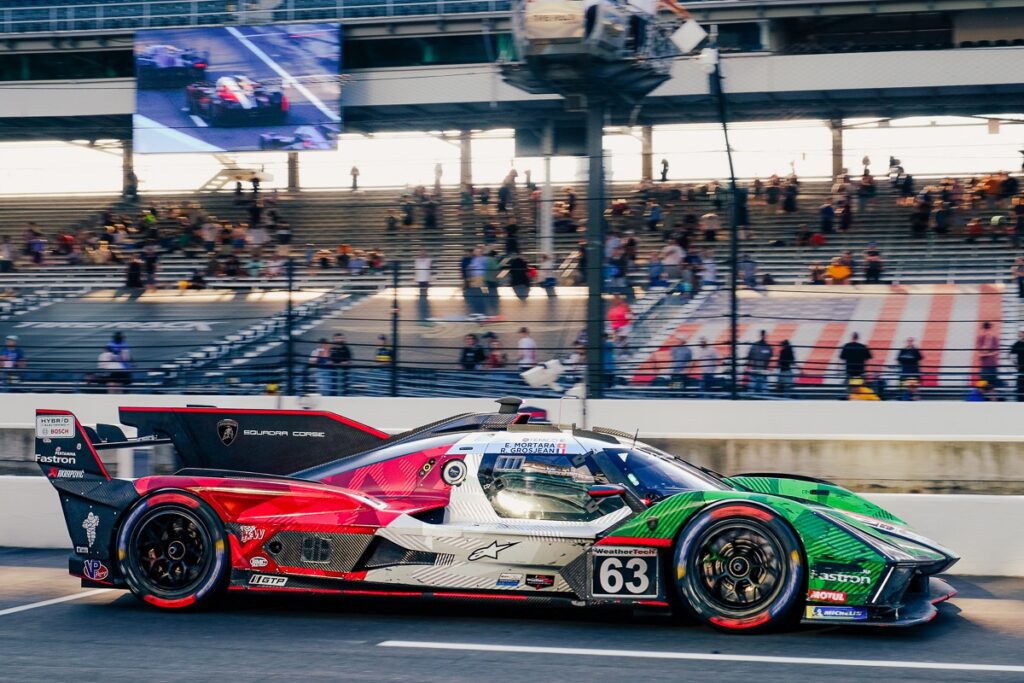
As for the lovely but ill-fated Lamborghini SC63? Ciao, bella. It was fun while it lasted.
***
Let’s come back to LMP2 for now and skip straight to GTD Pro, where 2025 saw an epic title battle between the Pratt Miller Corvette of Antonio Garcia and Alexander Sims and the upstart Dragonspeed Ferrari effort—with a critical assist from some Risi Competizione personnel during a season the latter otherwise passed on—featuring a team of drivers lead by the ever-ebullient Albert Costa. Dragonspeed came on strong with a streak of five consecutive podiums through the summer, closing the gap to a handful of points going into Petit. Ultimately it wasn’t enough. Garcia and Sims closed out the season with a strong third, clinching the championship.
The big news here for 2026 is the debut of the all-new Lamborghini Temerario in the hands of Pfaff Motorsports, but that won’t happen until March at Sebring; Daytona will be the last hurrah for the outgoing Huracán. There are new “evo” packages for the Mustang and Ferrari GTs, and Porsche arrives with its latest generation of 911, which you’ll know by the set of louvers above the front wheels if the 4-mil Gurney flap doesn’t tip you off first.
There are new faces up and down the grid, too, as 2025 GTD champs Winward Racing make the jump to GTD Pro with a second Mercedes-AMG, and RLL, no longer responsible for the BMW prototypes, partner with McLaren for a full-season run with their GT3 EVO.
Global Porsche powerhouse Manthey bring their famous “Grello” 911 to the Michelin Endurance Cup—the five enduro rounds on the IMSA calendar—for the first time this year, and Florida’s Triarsi Competizione moves up from GTD for a similar campaign with their Ferrari, bringing with them a murderer’s row of factory talent including Le Mans–winners James Calado and Miguel Molina. Fan favorite Risi Competizione is back for the endurance cup, too, with their traditional winning livery—just a red Ferrari, thank you very much—and a driver lineup consisting of essentially the remaining factory scuderia, including current WEC Hypercar pilot Alessandro Pier Guidi for Daytona.
The Mustangs and Corvettes return as expected, as do the Vasser Sullivan Lexuses, soldiering on for what has to be—now that its GR GT3 successor has finally been unveiled—a final season with the venerable RC F, right? Paul Miller Racing pares back its effort from two BMWs to one.
AO Racing’s beloved “Rexy” Porsche—it’s the one that looks like a dinosaur, if you don’t know—is back with a new crew, pairing veteran Nick Tandy with rookie Harry King. Tandy has been running 963s for the last three years, and is coming off a win at Daytona last year that made him the first driver ever to notch overall victories in all four major 24-hour races (Le Mans, the Nürburgring, and Spa being the others), in what some have called the “grand slam” of endurance racing. You’d think moving back to a GT car would represent something of a demotion, but in recent interviews he’s sounded like nothing so much as a hostage who just successfully negotiated his own release.
Harry King is a 25-year-old fellow Englishman who has been quietly tearing it up in Porsche Supercup and GT World Challenge and is widely considered to be a star in the making. Costumes aside, there aren’t many outfits more professional than AO Racing; combine that with two guys with something to prove, and it would seem unwise to bet against Rexy in 2026.
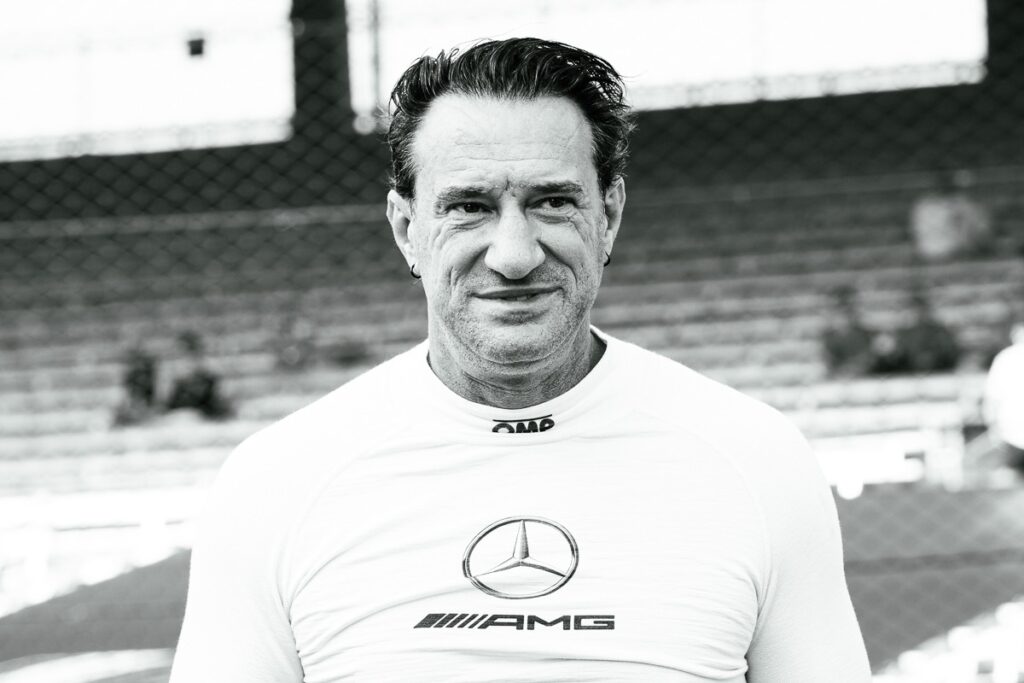
Bonus car for our friends down under to keep an eye on: the Kenny Habul-led 75 Express Daytona entry, with an Aussie all-star lineup featuring two-time IndyCar champ Will Power and current Supercars champion Chas Mostert alongside factory Mercedes veteran Maro Engel. Kenny Habul is a solar energy CEO who has a house literally on Bathurst’s famed Mount Panorama. When I took this photo of him at Indianapolis last year, I didn’t recognize the friends he was chatting with. I later learned they were Brock Lesnar and his wife Sable.
***
Moving on to GTD, the “pro-am” GT class where wealthy weekend warriors pay big money—or young aspirants piece together sponsorship—to compete alongside journeyman professionals in cars identical to the ones running in GTD Pro. There are too many teams to talk about them all, but there are some notable additions, changes, and a sad departure.
In the New Here column, Porsches from Manthey 1st Phorm (featuring American former jet-ski champion Ryan Hardwick and estimable Austrian veteran Richard Lietz, coming off a Le Mans– and championship-winning season in the WEC); Muehlner Motorsports (with reigning Porsche Carrera Cup North America champ Ryan Yardley); and RS1 (with Jan Heylen, moving up from a title-winning season in the Michelin Pilot Challenge’s GT4-spec GS class).
After seven seasons hustling Hyundai TCRs for Bryan Herta Autosport in that same Michelin Pilot Challenge—essentially IMSA’s undercard series to the top-billed Weathertech Championship—Mason Filippi joins Charlie Eastwood and Salih Yoluc in the DXDT Corvette for his first full year in the big leagues. Also making his full-season IMSA debut: 24-year-old Brazilian Eduardo “Dudu” Barrichello, son of F1 luminary Rubens, who will be competing in the Heart of Racing’s other Aston, the Vantage GT3 Evo. We’ll be seeing a lot of proud papa Rubens glued to pit box monitors, patting his kid on the back, and wiping tears from his eyes should they find any success.
It’s a sign of just how competitive things have gotten in IMSA when you see the number of marquee names even here in GTD, ostensibly the “lowest” class on the grid. Joining Sheena Monk and Felipe Fraga in the new Myers Riley Mustang for Daytona? Former F1 and IndyCar pilot Romain Grosjean. Sure, why not? In the other Triarsi Ferrari, alongside Kenton Koch, Robert Megennis, and eponymous team principal Onofrio? Yeah, that’s Yifei Ye. He won overall at Le Mans last year, the first Chinese driver ever to do so. Antonio Fuoco—he won Le Mans, too, in 2024—joins Simon Mann and Lilou Wadoux Ducellier, stars in their own right, in the AF Corse Ferrari.
Elsewhere, Adam Adelson, of, yes, those Adelsons, assumes ownership of Wright Motorsports as he continues to campaign their handsomely-liveried Porsche. Whatever one might think of his parents’ politics, he must be commended for squandering the family fortune in the dumbest—and more importantly, most harmless—way possible. Adam, we salute you!
In other ownership-change news, AWA becomes 13 Autosport with Orey Fidani taking the team over from erstwhile namesake Andrew Wojteczko as they seek a third straight Bob Akin Award—the prize that grants the highest-ranked bronze-rated (read: amateur) driver and their team an automatic entry for Le Mans the following year. They’ll face some stiff competition in 2026, with their erstwhile rivals at Inception Racing (Brendan Iribe) and Gradient Racing (Till Bechtolsheimer) returning, along with the aforementioned Monk and Hardwick entries, colorful Swede Henrik Hedman in the Evel Knievel Dragonspeed Corvette, and too many more than space—who are we kidding? My patience and yours—allows me to name here.
We’d be remiss not to mention returning champions for two years running, Winward Racing. With their proven package of the robust and driver-friendly Mercedes-AMG GT3 and a winning (obviously) driver lineup led by Russell Ward and Philip Ellis, there’s little reason to think Winward will be anywhere other than deep in the mix for a third consecutive title.
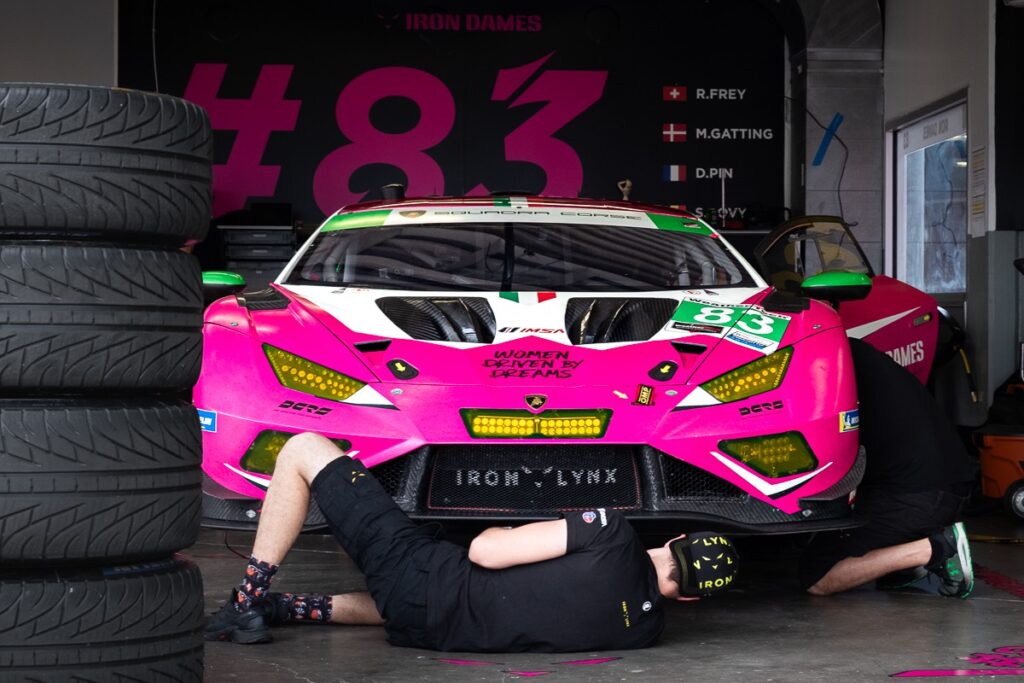
It is also with regret that we note the conspicuous absence of the hugely popular Iron Dames, the Italian all-female team whose pink Porsches and Lamborghinis gave even the most casual observer something obvious to root for. Apart from the one with the guy in a green monster suit standing next to it, no table was more reliably mobbed during autograph sessions over the last several years than that helmed by Sarah Bovy, Rahel Frey, and Michelle Gatting, and watching them go toe-to-toe on track with their overwhelmingly male competition was a treat. They’ll be missed.
***
Finally, we come to LMP2, the pro-am prototypes. The class the hardcore fans claim to love and that everyone else ignores.
In a way, this is IMSA’s answer to its critics. Oh, you don’t like BOP? You say you miss privateer prototype entries? Here you go: no BOP, no factory teams. Also: no ABS, no regenerative braking, no complex hybrid systems, and no sound-muffling turbos! You will never see a bricked LMP2 car beached in the runoff while its driver patiently waits for it to reboot. That is not a thing that happens.
Essentially a spec class—other cars are eligible, but everyone figured out long ago that the Orecas were the ticket—LMP2 represents the purest, most old-school racing across the entire series. The cars turn lap times faster than the thousand-horsepower Porsche 917s that killed Can-Am. Hell, they’d be faster than the GTPs if they weren’t restricted.
And while their drivers don’t enjoy the level of prestige and fan recognition accorded their peers in GTP, if you listen carefully to the many former top-level shoes currently employed as hired guns in LMP2—or drivers moonlighting in IMSA from full-time Hypercar gigs in the WEC—you won’t hear any of them complaining. It’s not hard to get the sense that in a vacuum, all other considerations aside, every last one of them would pick an LMP2 car over their more glamorous hybrid cousins any day.
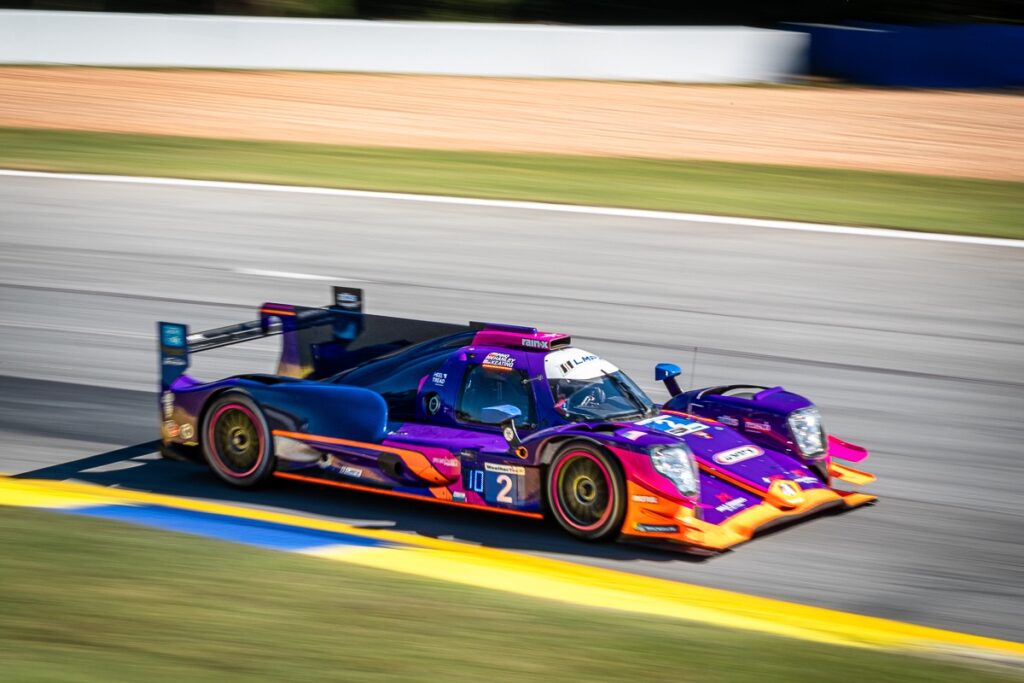
AO Racing—the same people who bring you Rexy—won a decisive championship in 2025 with the team of PJ Hyett and Dane Cameron. One of them is a former Porsche 963 driver and the other one is a tech billionaire, which is how they can afford to forgo primary sponsorship for a purple dragon livery. (This car is named Spike; Spike is a dragon. For 2026 the dragon is gold.)
There are several other billionaires competing in LMP2, and some of them are even pretty good drivers. It’s fun to google the bronzes and see what comes up. It’s also fun to look up and down the Daytona entry list and see names like Sébastien Bourdais (current Cadillac Hypercar driver, WEC); Nick Cassidy (Peugeot, WEC); Paul di Resta (Peugeot, WEC); Antonio Felix da Costa (Alpine, WEC); Ferdinand Habsburg (Alpine, WEC, and yes, of those Habsburgs!); Malthe Jakobsen (formerly with Peugeot, now committed to McLaren for 2027, WEC); Charles Milesi (Alpine, WEC); Niklas Nielsen (Ferrari, WEC)…you get the picture.
Point being: The cars that all look the same and don’t have team names or sponsors that any normal person would recognize? Those are some of the most elite endurance racers in the world, and they’re having more fun than possibly anybody else on track.
I think that about covers it. Now that you know what to look for, it’s time to download the spotter’s guide, silence the phone, gather provisions, apologize in advance to your spouse/partner/friends, fire up the VPN—er, Peacock, I meant Peacock!—and settle in for a long winter’s racing reverie. See you on the other side, friends.
Recent Posts
All Posts
January 27, 2026
January 26, 2026
Leave a Reply