Good DAMD
December 17, 2025
Alex KiersteinIn which the author attempts to link jeans, Americana poster art, and Japan’s fun and quirky custom industry.
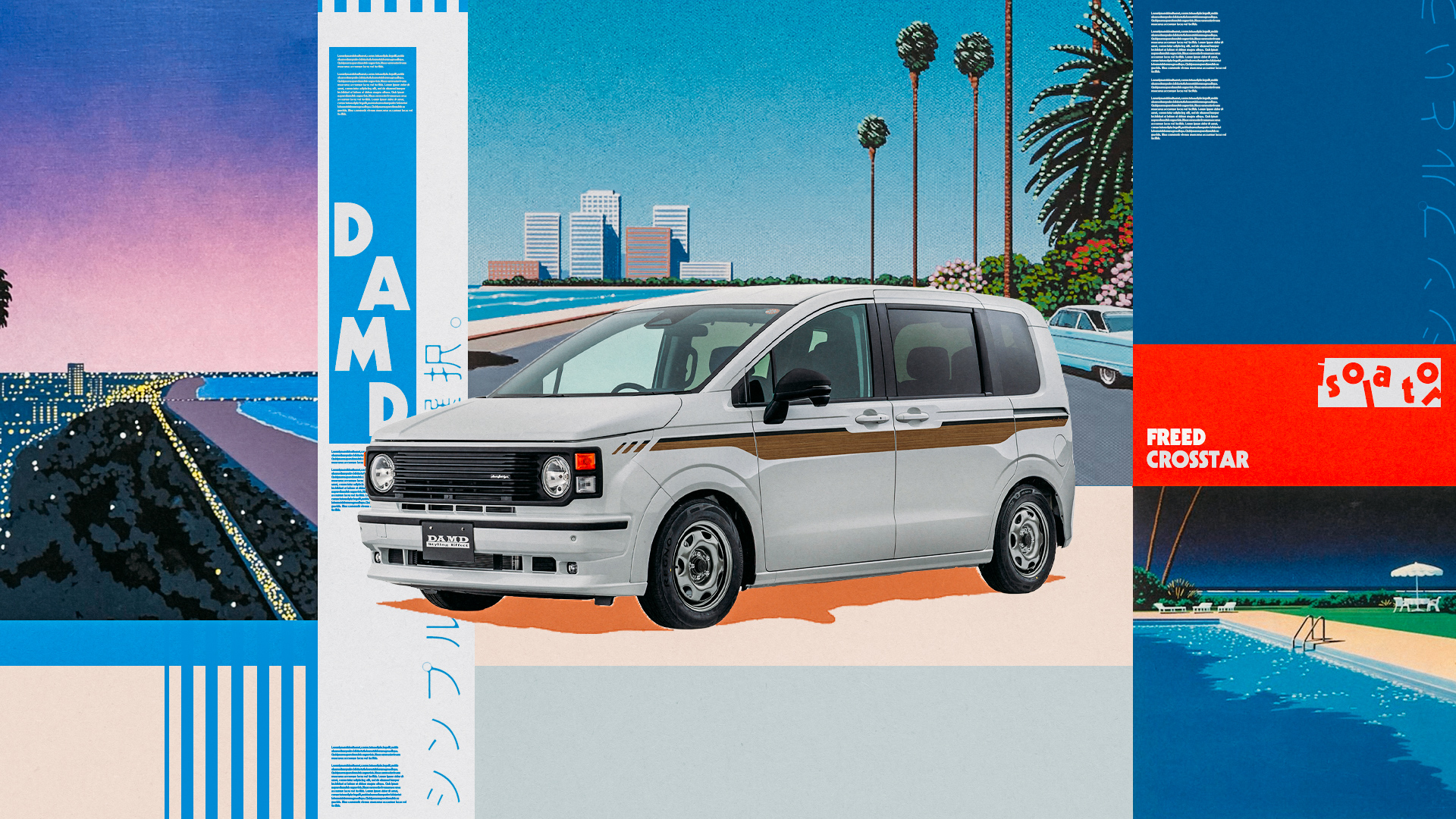
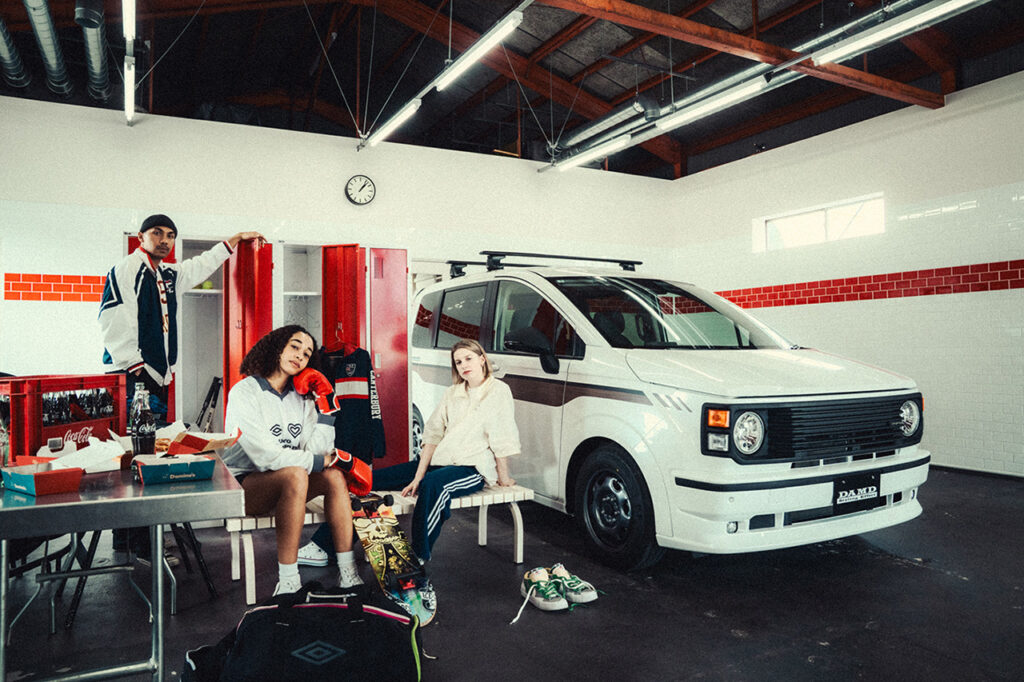
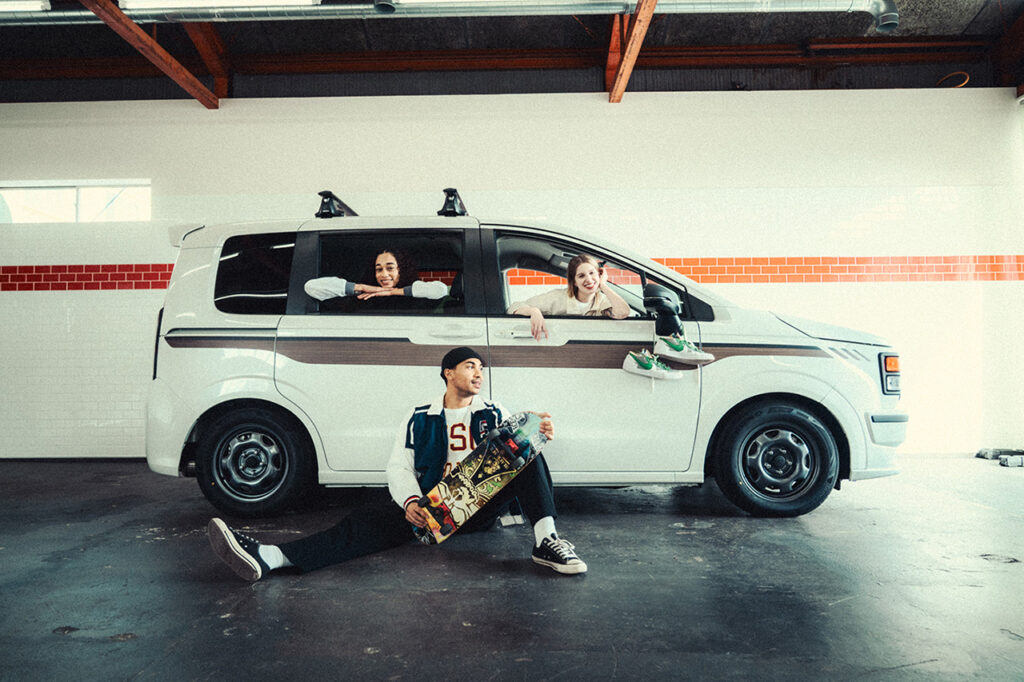
When I saw the DAMD Freed Isolator Air, there was a little explosion of synapses. The Japanese hunger for American denim! Dajiban! There’s a lot of understandable focus on trends imported from Japan to America, but the Japanese fascination, revulsion, and remixing of American concepts is just as important. Which is why this retro-reimagined Honda Freed—basically a Honda Fit van for the Japanese market—being presented by DAMD superimposed on what looks like a Hiroshi Nagai painting is just perfect. Chef kissing fingers. Galaxy brain.
Thanks to a multi-genre vaporwave/synthwave cultural moment, there’s something familiar about Nagai’s art. His 1980s work, with stark lighting, soaring palm trees, pastel pools of turquoise water, almost seems like contemporary art reinterpreting the aesthetic moment. But it predates the reconsideration of the 1980s. This is the 1980s, but it also has the warm and inviting air of nostalgia. The recollection of a place, some aspects reduced in detail, others enhanced by sense-memory. The scenes are sparse but not cold, they don’t look abandoned. They look remembered.
It’s not surprising that Nagai, more than other ‘80s pop artists, has become something of an icon in vaporwave. I see his work (or imitations of it) advertised on Instagram, which I appreciate because most of what Meta tries to sell me is terrible. It often incorporates cars, generally 1950s landyachts like the bullet T-Birds. But like the other elements in his stuff, the cars aren’t done to excess. They take up just a portion of the piece, he’s not rendering ‘59 Cadillacs in a lurid shade of pink. It’s restrained. It’s tasteful. It is not something you’d find on a gas station t-shirt.
I don’t think the painting is actually a Nagai—the signature doesn’t match—but whoever did it certainly is familiar with Nagai’s style. And the DAMD crew behind the restyled Freed are also certainly familiar with American influences on Japanese design. I don’t think you get the Japanese vans of the 1980s without the cultural influence of the American van craze of the 1970s, or the adventurously styled vans of the 1960s like the Dodge A100 and the Ford Econoline. (DAMD hasn’t ignored these; consider the A100-inspired Locoboy, based on a Honda Acty.)
The interpretations of these themes were uniquely Japanese—no one would argue that the first-generation Mazda Bongo was a copy of anything, aesthetically. The same goes for upscale Japanese cars, which transformed American-inspired trends into Japanese-market sized forms. The original Prince Skyline (pre-Nissan) looks an awful lot like a ‘55 Chevy, for example. Nothing strange about that. America led the world in style and desirability, set the trends.
With a modern van and a contemporary perspective on 1980s appeal, DAMD’s final product is completely charismatic. Compare it to the Mitsuoka Buddy, which approaches cognitive dissonance. The modern RAV4’s shape with a strangely proportioned retro front end is delightful mostly because of its awkwardness. The DAMD-reimagined Freed, meanwhile, could be one of the factory-produced retro editions of mainstream Japanese cars, like the Subaru Vivio Bistro.
I’d buy a DAMD Freed Isolator Air just like I’d hang a Hiroshi Nagai print in my living room. And since I can’t do the former, I should really do the latter.
Recent Posts
All Posts
February 27, 2026

February 26, 2026

February 25, 2026
Leave a Reply