Aidios
July 17, 2026
Rory CarrollAs the AI hype cycle winds down, we ask the auto industry to be a little more skeptical about the next big thing.
Note: I started writing this in February and forgot about it. I’m posting it now because the writing’s on the wall, unless there’s a government bailout, this stuff is wrapping up.
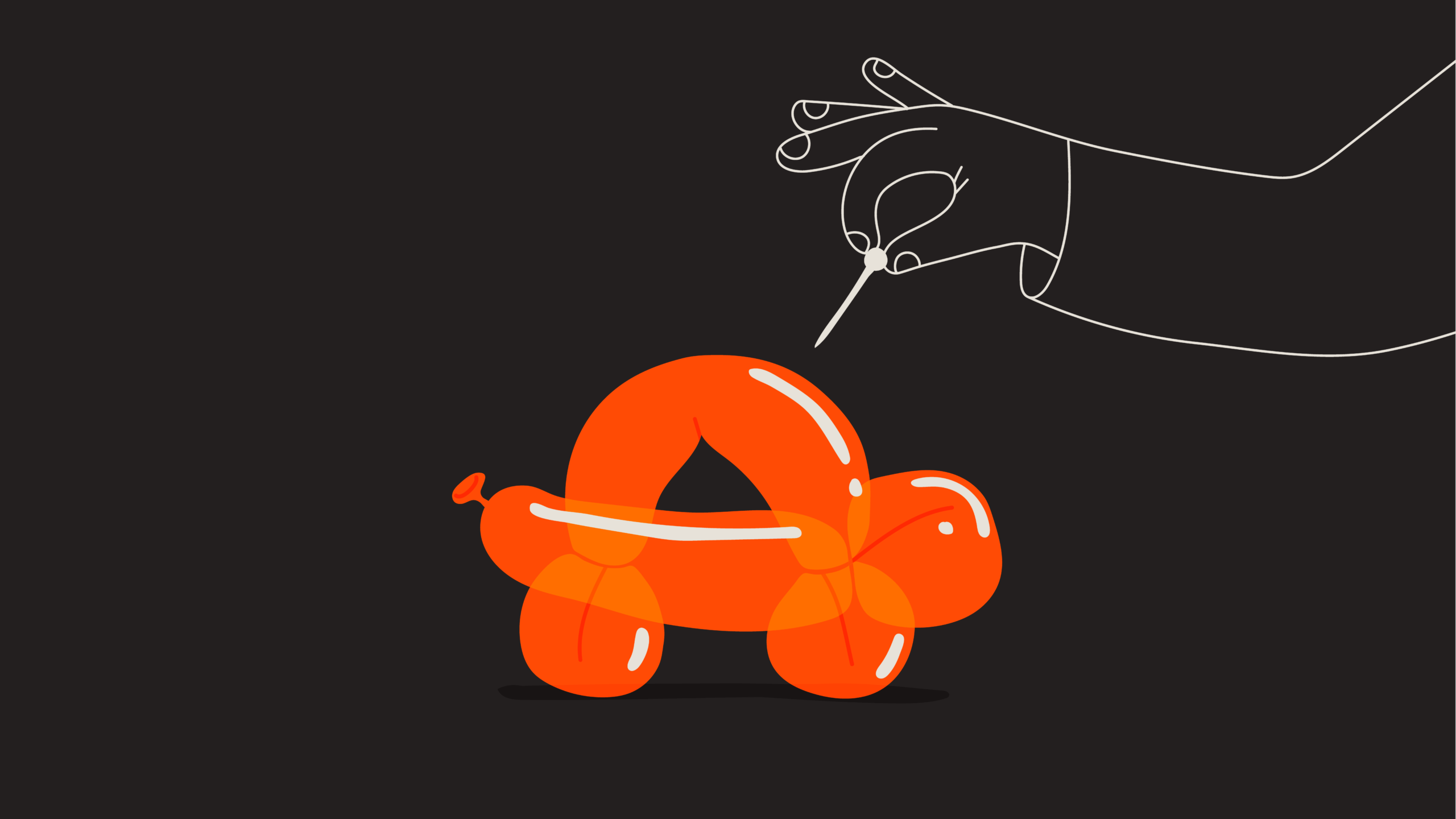
The AI thing is not going to happen. They are not going to cure cancer with it, and it can’t help build or sell cars. It’s not “the future.” Could AI help to detect patterns that predict conveyor belt breakdowns? I guess. But this, the big generative AI, agentic AI, superintelligence thing is and always has been a fiction. It has been the largest misallocation of resources in history. And it’s all but done.
The situation has been abundantly clear for a long time, but now institutional people are saying it and the mainstream financial press are giving airtime to the skeptics because they understand it’s time to get out ahead of what is sure to be a catastrophe. The auto industry was a part of it, leaders in the car business are still so easily seduced by a version of the American tech sector that shriveled a long, long time ago. Tech has been out of the big ideas business for decades.
There are moral, ethical, and practical reasons to oppose AI, but I don’t think the people boosting it on LinkedIn are likely to be persuaded by those arguments. Here’s the black and white one: This doesn’t work as a business. What’s been marketed as AI cannot do what’s been promised, it cannot replace human workers or make them meaningfully more efficient and no amount of additional investment will change that. The companies behind it want trillions of dollars in investment and make something like $50B in revenue together, with a lot of that being promises to pay each other. This is not Amazon or Uber, where big expenditures were eventually recouped. The scale of AI investment is too great, and the actual price of the services is higher than rational customers can justify paying. Every new AI customer costs these companies money. To put it in car industry terms, imagine if you lost a ton of money on every single car you sold and that the losses got bigger over time. It’s not serious but because it comes from tech world, where everybody gets rich and nobody makes money, it doesn’t have to be.
Companies are now paying employees to encourage other employees to use AI tools. No other technology in history has required this much of a hard sell. If it was useful, you wouldn’t have to force people to take time out of their day to use it. It’s another in a big string of American tech products that nobody actually wants.
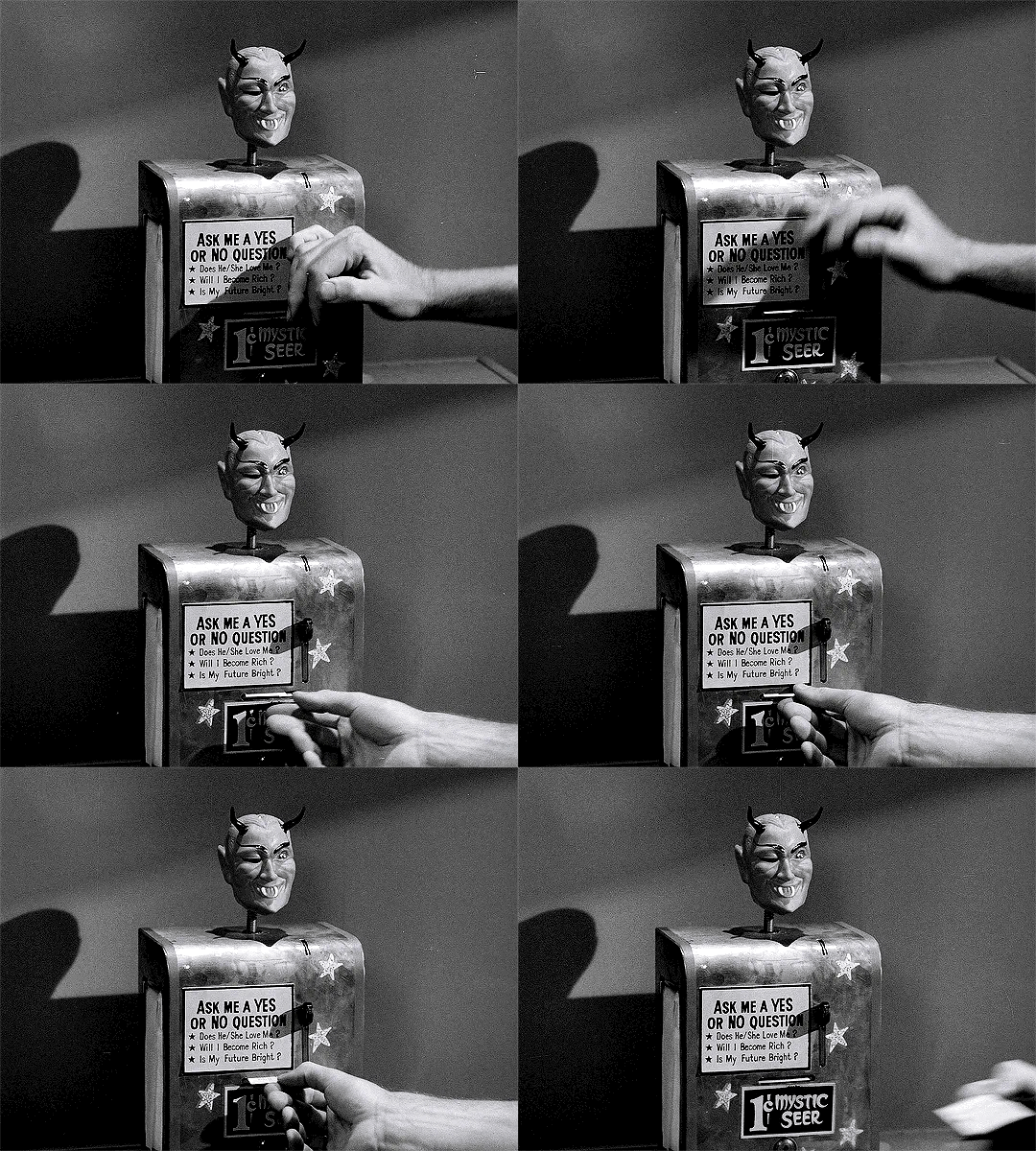
If you want to churn out huge volumes of garbage, AI is massively efficient, assuming you don’t count the amount of time you have to spend searching for bizarre and totally unpredictable errors, or if you’re fine with accepting the errors. If you need it to create LinkedIn posts that make you sound insane, it’s perfect. But workers generally don’t use it because it doesn’t work and babysitting it creates additional work. They don’t say it because they’re scared of their AI crazed bosses. So, critical functions in big companies end up getting entrusted to this.
The capabilities that we were told would justify it will never materialize. There are certainly people who are using “AI” in their jobs now, but for the most part, they’re finding it’s not worth the trouble or expense, even if they won’t say it out loud to their boss because everyone’s so terrified of getting caught up in the next round of layoffs. Nobody wants to be seen as resisting what all the smart people say is “the future” so everyone has to pretend this is working. It’s a joke and the process of fixing the buggy garbage being created right now will be long and expensive. Being on the cutting edge here means cutting your losses and taking a second to assess the situation.
There’s some time between now and the end, and there are a number of different ways this could play out, but I am pretty comfortable saying it’s over. There will be plenty of blood as OpenAI and Anthropic and the rest are winnowed down to fit whatever market remains for them. Billions will be written off, people will lose homes and jobs. The best case scenario for these companies is that the American taxpayer will bail them out. Trumpworld figures are personally invested in this and Sam Altman is, as of this writing, pushing the idea that the feds should own some of OpenAI. I don’t want to get too deep into it, but it sure seems like the tech sector is determined to maintain political power so that their unpopular products can survive public reluctance or resistance. That could work in the short term, I know it feels like everyone’s going to keep getting away with it forever, but the pendulum will swing back.
I am writing this here because the big car companies played a role in the hype that got us here. They bought in, duped again by big promises from tech industry wallet inspectors. They were cowed by the threats of being “left behind” and enticed by the prospect of being able to eliminate expensive employees. They failed to think critically when presented with this very obvious farce and they echoed the talking points. Whether they were tricked, lacked the technical knowledge to understand what was happening, or they were making a cynical play to appear tech-forward, it’s clear that they failed in their judgement. I’m not an economist or a tech expert, but this was always just simple math. There’s a huge difference between what people like Sam Altman tell you could maybe, possibly happen, and what any business undergrad could have told you was likely to happen.
Even before AI boosters started saying the word “trillions” and talking about bailouts, this felt like part of a pattern. Ride-sharing, the blockchain, NFTs, web 3.0, the metaverse, all-in on EVs, the pivot to video, micromobility, last-mile, self-driving cars. I am probably forgetting half a dozen world-changing, essential technologies that required immediate commitments but are now more or less dead. You did not want to be the only automaker without a presence in the metaverse, right?
If you’ve worked with me, or really spoken to me at all in the last decade you probably know that I have been massively, vocally skeptical of this stuff. In some cases, I have inveighed against it to my employers, trying to save us the embarrassment and wasted effort of chasing some obviously unworkable meme-technology.
I should feel vindicated. But instead, I feel insane because this same exact thing keeps happening over and over again.
I think a lot of this happens because people of a certain age were traumatized by the experience of being late to the internet. Executives may be inclined to take claims of a given technology’s inevitability at face value because they’ve seen real disruption up close and maybe spent years trying to recover from it, or recreate it in a way that benefits them. Then, there’s a kind of Emperor’s New Clothes thing that happens, where you don’t want to seem like a dinosaur in front of your colleagues who may or may not also have doubts that go unexpressed.
Because the car business is one of those sad, ancient businesses where companies are expected to “make a profit” and “sell products that people want” there’s a deep desire to be involved with whatever’s new, often at the expense of what may provide actual value. If a supplier in another sector made the kinds of promises that tech people do, they would be met with a greater degree of skepticism.
I’m not naturally a Luddite; I actually started out as an early adopter and a tech-optimist. But like a lot of people my age, I have learned to be skeptical of tech’s ability to do anything but fleece investors. Silicon Valley has not produced viable idea or product since what, Facebook? What was the last transformative technology? The iPhone? The people who built products that changed the world are out and they’ve been replaced by hucksters and freaks. The entire ecosystem of American tech is a spent force and has been for a long time. Think about it right now, what’s the last thing that normal people were excited about? And yet, every few years, the same few people start trotting out some new thing that nobody wants, and a lot of otherwise competent executives line up to get their wallets inspected.
Over the last twenty years, automakers have fallen for it again and again, scrambling to adopt or invest in silly ideas in ways that either cost them a lot of money, make their products worse, or both. My advice (which to be clear, nobody is asking for) is to stop doing that. It is not safe to assume that these people, their companies, and products can be trusted. Don’t assume that they intend to sell you things that work, or that they would not act in a way that endangers the public or their partners. The people who are openly planning to escape to fortified compounds are not going to be with you longterm and they’re not playing the same game you’re playing. Introducing buggy or unfinished tech that doesn’t deliver for car-buyers undermines the good work of human designers and engineers who care deeply about what they make.
The risk isn’t getting left-behind. It’s being insufficiently skeptical and getting wrapped up in someone else’s scam.
I know there are reasons for getting involved in this stuff. Sometimes you can make your share price go up by investing in whatever the thing is. Maybe you do the math and that bump covers whatever investment you made. I would encourage you to do the math though because people who make their money asking “what if a .JPG had a code number attached to it?” and “what if roads went underground?” are making car company executives—people who manage massively complex global manufacturing operations, usually to a yearly profit—look like dupes. I know it has to be frustrating watching Elon Musk get away with it for so long, but if Tesla’s stock price is many times higher than that of a highly profitable, highly regulated car company, that’s a problem with the market. If the market works like we’ve been promised it does, it will correct.
I’m not a business guy, I don’t have an MBA, and Alloy is really the first company where I haven’t had some kind of boss. But, before I’d stake my company’s reputation on anything from the American tech sector, I’d have to ask myself how and when it would help me make more money than I’m spending on it. If I couldn’t come up with good answers to those questions I would have to rolle the dice on being “left behind”.
I would also look hard at partners that have pitched or sold you AI slop in place of the creative work that you’re paying them for. My personal rule is that if someone shows you something that they used AI to make, even an email, they don’t believe you’re worth their time. They do not respect you, they do not respect their own job, or value their own work output. That’s my personal rule, and you may be less of an absolutist.
Further, as this starts to unravel at the cost of American jobs, homes and livelihoods, I would ask that all the people who took it seriously take a minute to reflect on how they got taken in by some people who are plainly con artists and plainly selling a non-product. What happened? What does that say about your own personal judgement and your ability to evaluate technologies? Will AI be the big capstone tech scam that finally teaches you the lesson from the last two decades of tech scams?
Are you or someone in your organization capable of thinking critically and making better judgements about these types of investments in the future? If not, you should find that person and hear them out because these scams are only going to get worse and more dangerous. You cannot outsource the visionary ideas portion of your business to Silicon Valley anymore and I don’t know that there’s value in trying to bring Sillicon Valley people in-house. The culture there is just too sclerotic and too siloed from the rest of the world.
In closing: Here’s an invitation to anyone who might be reading this: If you want to go on record with a full-throated defense of AI or even your company’s investment in it, right now in the summer of 2026, the pages of Alloy are open to you. I’ll publish it without edits. Please tell me how this is going to pan out because from where I sit, it looks bad.
2 responses to “Aidios”
-
Well said. “AI” should always be wrapped in quotation marks. It’s never been artificial intelligence. And it won’t be anytime in the next sevnten years.
-
I have had this opinion for a while, and it seems to be happening slower than the rest of the failure of AI but it seems to be the thing that justifies why it hasn’t outright collapsed yet.
I think AI goes away once the labor market gains from COVID are dragged back. They’ll continue to push AI until labor is cheaper than tokens. Once that happens – probably in some poor exploited country without labor rights like the USA… they’ll be right back to using “human capital” instead of machine resources. Leaders dont love technology. They love when the line goes up- however it happens.
I laughed when my world went from AI Everything to No, Not Like That in 48 hours at the beginning of June… and everything snapped into focus.


Recent Posts
All Posts
August 5, 2026

August 3, 2026

July 30, 2026
Leave a Reply
You must be logged in to post a comment.