New Leaf
February 24, 2026
Alex KiersteinA suspension design often derided as archaic gets a clever tweak in a simple yet promising Stellantis patent.
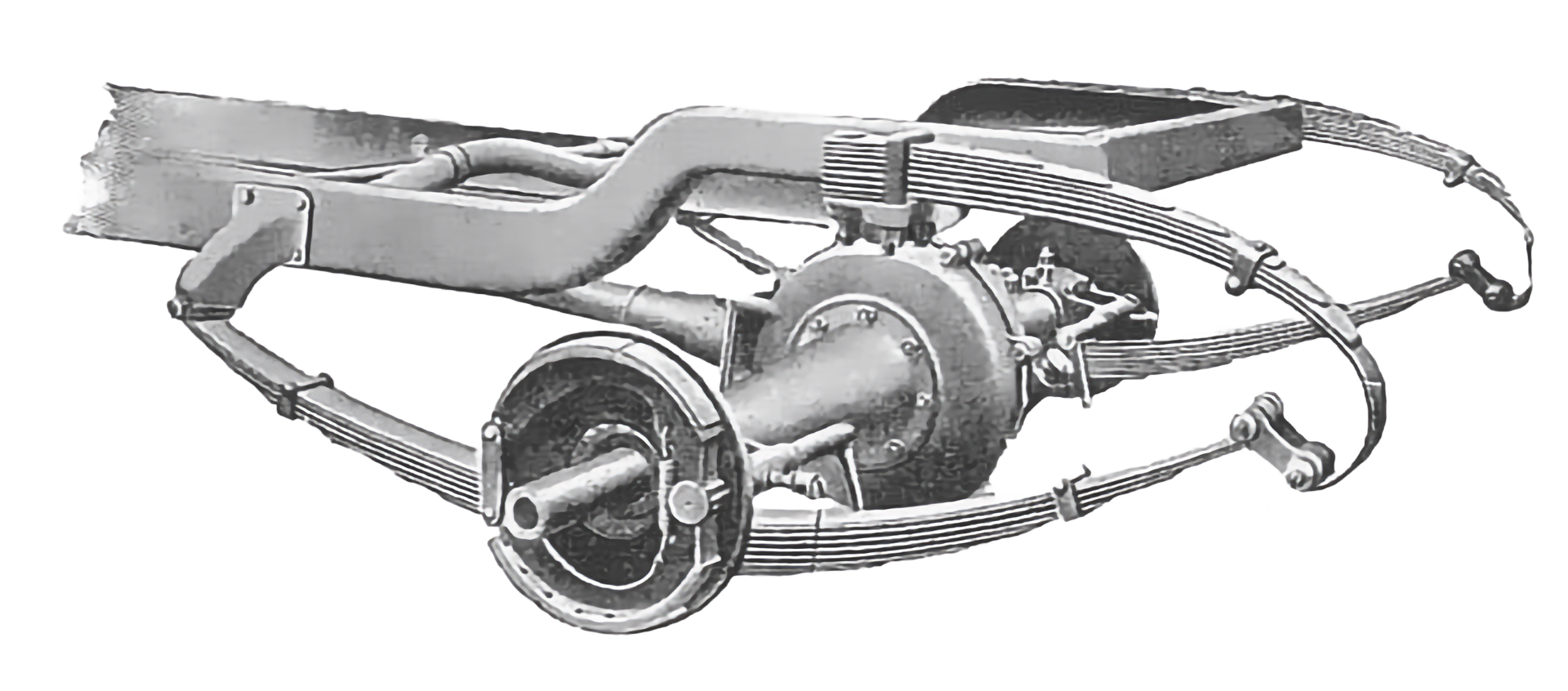
The leaf spring, and the solid axles it generally supports, are old, it’s true. Elliptical leaf springs supported carriages for a little less than a century before they appeared on the earliest internal-combustion vehicles, which were motorized carriages to some extent. You can see them arc above the rear beam axle on the Benz Patent-Motorwagen. I had a pair under my C5 Corvette—transverse and fiberglass, sure, but leaf springs. Outside of the Corvette’s unusual implementation, the leaf spring has virtually no modern light car applications in North America or Europe. Trucks and vans, absolutely. Cars? There are better options, like the often maligned twist-beam axle, which is perfectly fine in many applications. And yet, Stellantis is spending person-hours working on a different idea, one that might make the old stack of elliptical leaf springs once-again-viable for light passenger vehicles. (Note the irony here: Stellantis’ own Ram has made a big deal out of abandoning leaf springs for coils in its bread-and-butter 1500 truck line.)
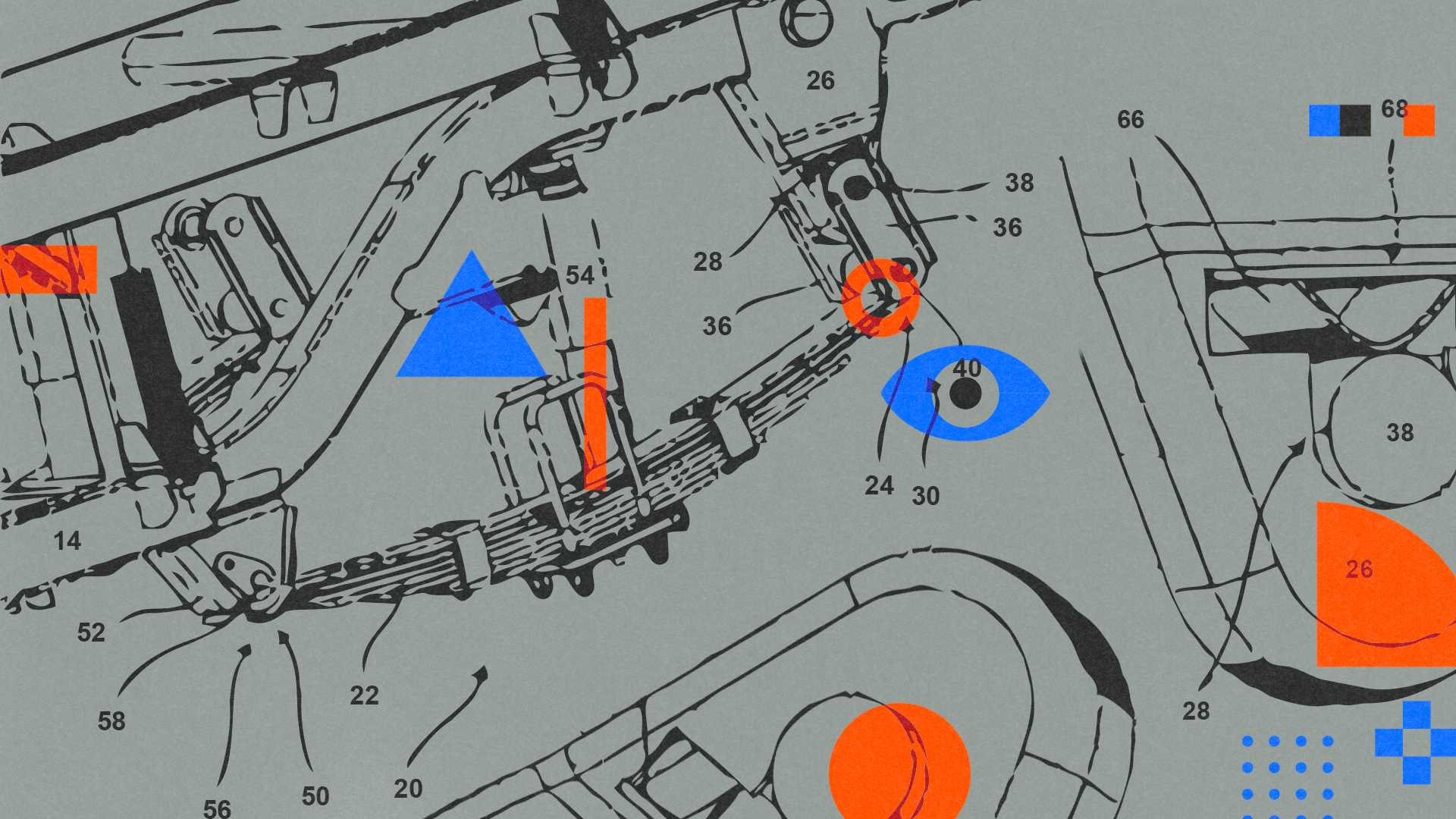
The French patent application illustrates the problem: leaf springs are cheap, and they can be made to handle a great deal of weight. Where longitudinal space isn’t an issue, they’re a good and cost-effective choice. What they don’t offer is particularly good travel, which makes the ride stiff and uncomfortable. Stellantis’ patent allows for variable travel using controlled motion on the spring shackle, and it seems pretty clever.
Usually, motion in a spring shackle is limited to a bit of fore-and-aft motion at the two points it attaches, at the chassis and to the spring. Off-road applications can add side-to-side motion for additional articulation with shackles that incorporate Johnny Joints, too. But these aren’t really engineered for improving ride comfort or on-road handling. Shackle changes are usually to gain clearance for additional suspension travel without improving comfort.
Stellantis’ idea is to provide a channel in the shackle for fore-and-aft movement, but in a controlled way. There is either a T-shaped or oblong channel located longitudinally in the shackle. In most situations, the bolt or pin at the end of the leaf, which runs through the shackle, will be held in place by the force of a smaller leaf-spring pushing down at the top of the shackle. When more travel is needed, the force will push the pin upward, compressing the little leaf spring and allowing the pin to have some fore-and-aft movement within the channel.
Stellantis says this is good for approximately 2–30mm of vertical travel depending on the application (1/16 to 1 3/16 inches), and an unspecified amount of longitudinal travel within the channel. This presumably would vary depending on the application.
Basically, this is a two-stage setup. Apply extra force and the small leaf spring in the proposed shackle compresses, allowing for some additional movement of one end of the spring, which presumably increases effective travel and comfort.
It also seems relatively simple and inexpensive to produce. It’s not that much more complicated than a standard rigid mount. There would have to be a retention method for the mini-leaf spring, but that seems relatively simple, too.
I’m not an engineer, so I’m not really equipped to look at this and come up with some sort of quantification of how much this would improve ride comfort. But I do like the idea of finding a way to perhaps make this very simple and inexpensive suspension design work for more vehicles with just a tweak to the mounting system. It could increase the ability of less-industrialized countries to make more components locally of a licensed Stellantis design. It could save cost and weight on something dual-purpose, like a small passenger and cargo van.
Look, we’ve decided as consumers that rear drum brakes and leaf springs are too archaic for use in modern passenger vehicles. And perhaps, in this country, things won’t swing back the other way. But with vehicle affordability becoming a massive problem here, this kind of thinking—simple, mechanical solutions to make lightweight systems work better—is helpful.
Remember, cars with an MSRP of $30,000 or less are a fraction of total new car sales. That isn’t going to change anytime soon unless low-cost vehicles become more profitable. Pulling costs out is one way to achieve that goal, and I think it’s wonderful that Stellantis devoted resources to exploring this solution. It’ll be really interesting to see if it goes into production, even if it’s something that won’t impact US consumers, and how it plays out in the real world.
Recent Posts
All Posts
July 17, 2026

July 16, 2026

July 13, 2026
Leave a Reply
You must be logged in to post a comment.