Plug-Out, Hybrids
January 9, 2026
Alex KiersteinStellantis drops PHEVs to refocus on “more competitive electrified solutions.” Here’s what this means for Jeep, Ram, and other brands.
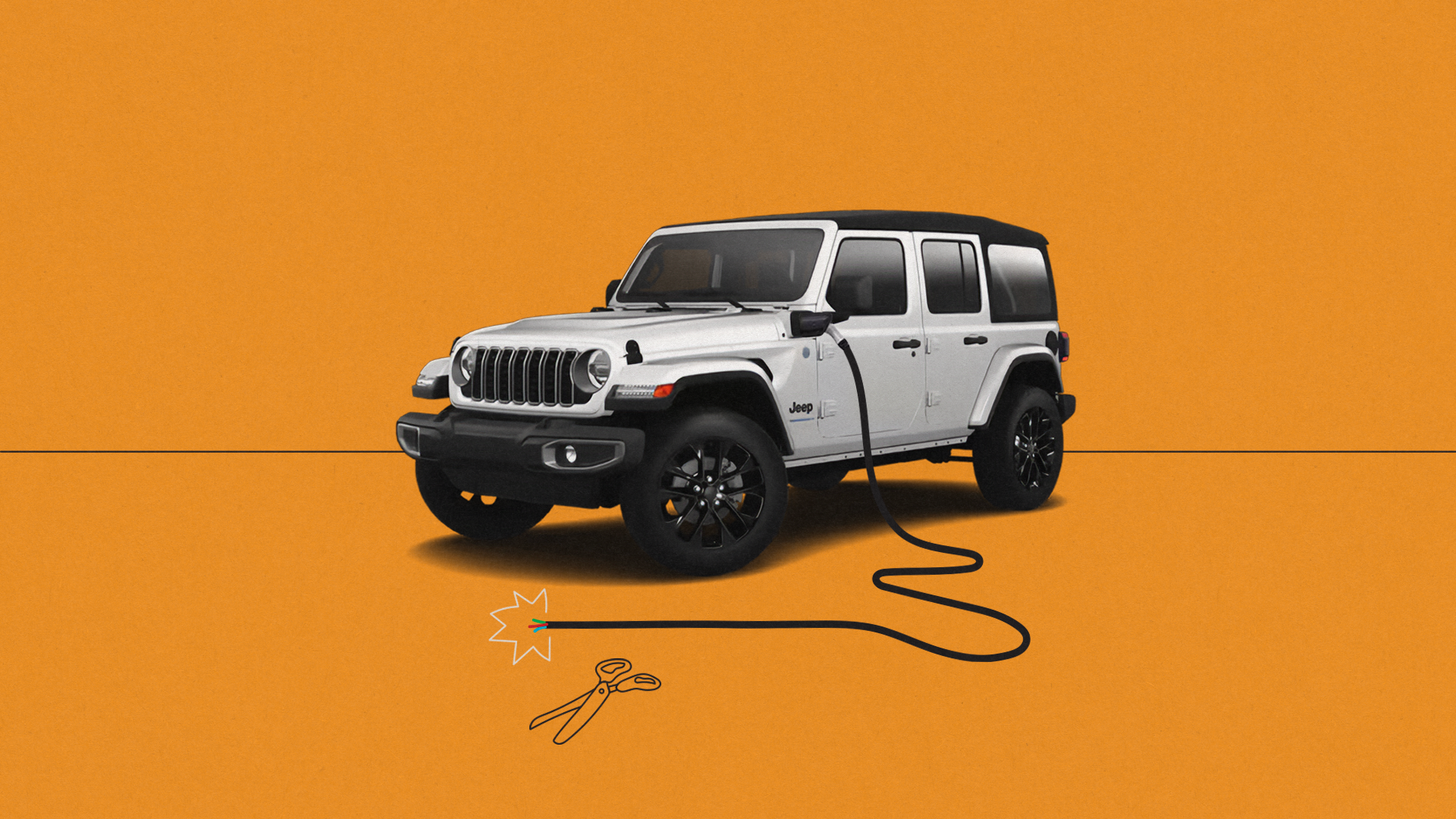
A few days ago, some media outlets noticed that certain Jeep plug-in hybrid models no longer appeared on the brand’s webpage. With a recall on 4xe PHEV models due to an issue with the 2.0-liter I-4’s sand-cast engine block which could lead to engine fires, and a fix potentially months away, one thought was that the vehicles were scrubbed from the site simply because they were affected by a stop-sale order. But today, Stellantis confirmed that the company’s PHEV plans had indeed changed. All 4xe models are dead.
Here is the statement that a Jeep rep provided to me:
Stellantis continually evaluates its product strategy to meet evolving customer needs and regulatory requirements. With customer demand shifting, Stellantis will phase out plug‑in hybrid (PHEV) programs in North America beginning with the 2026 model year, and focus on more competitive electrified solutions, including hybrid and range‑extended vehicles where they best meet customer needs. This approach reinforces the company’s commitment to offering advanced propulsion systems that maximize efficiency and provide options from internal combustion to hybrid, range‑extended, and fully electric solutions.
To clarify, the 4xe badge itself isn’t dead. Any future Jeep with a plug, the Stellantis rep told me, would get 4xe branding. That means any range-extended EVs (REEV) or BEVs, but not any series hybrids.
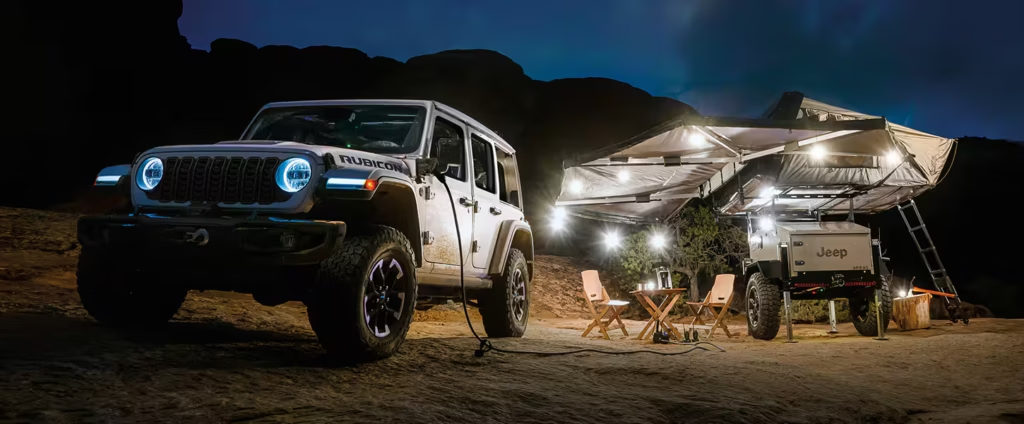
What’s not clear is which Jeeps will reemerge with which powertrains, but we can make some educated guesses. I’d imagine the Grand Cherokee 4xe will be replaced by a hybrid. I’m not sure a hybrid or REEV Wrangler is in the cards. And of course, the Recon BEV is still on the way, for now. It’s one of Jay’s “make-or-break” vehicles for manufacturer EV plans, and the muted launch of the Wagoneer S BEV among the already confusing Wagoneer offerings doesn’t bode well for it in the mid term. It might be too late to pull back on the Recon, but it could also have a short life cycle (like the recently departed Nissan Ariya).
As of October 2025, Jeep was planning on introducing a Grand Wagoneer REEV using Ram 1500 REEV mechanicals. Jeep says the Grand Wagoneer REEV will use a 92-kWh battery and a 3.6-liter Pentastar V6 to make 647 hp and 620 lb-ft of torque, for an all-up range of about 500 miles. That sounds like a monumentally heavy vehicle. It’s coming, at some point; Jeep says it will be a “late availability” model.
I think it’s a bit too early to tell what the PHEV move means for Stellantis’ business and Jeep’s prospects, but I know it will do two things. One, it’ll remove a very singular 4×4, the Wrangler 4xe, from the market. If you wanted the things that it could do, you’ll have to buy multiple vehicles now. The move will also cheer PHEV skeptics, who argue (sensibly, I will add) that there is a massive difference between PHEV’s advantages on paper and their real-world usage. Without regular charging, they are extremely heavy and inefficient series hybrids, and so they are extremely reliant on consumer psychology and behavior. It makes tracking their emissions and fuel efficiency impacts difficult, and it also introduces significant problems when attempting to determine how they should be weighted in regulatory schemes like Corporate Average Fuel Economy standards.
The Wrangler 4xe in particular was popular (for a PHEV) and sold well in several states. Jeep had previously highlighted 4xe successes in its quarterly sales reports, but the Q4 2025 report—which came out just a few days ago—is silent on all things PHEV.
At least now we know why.
Recent Posts
All Posts
July 17, 2026
July 16, 2026
July 13, 2026
Leave a Reply
You must be logged in to post a comment.