Mini
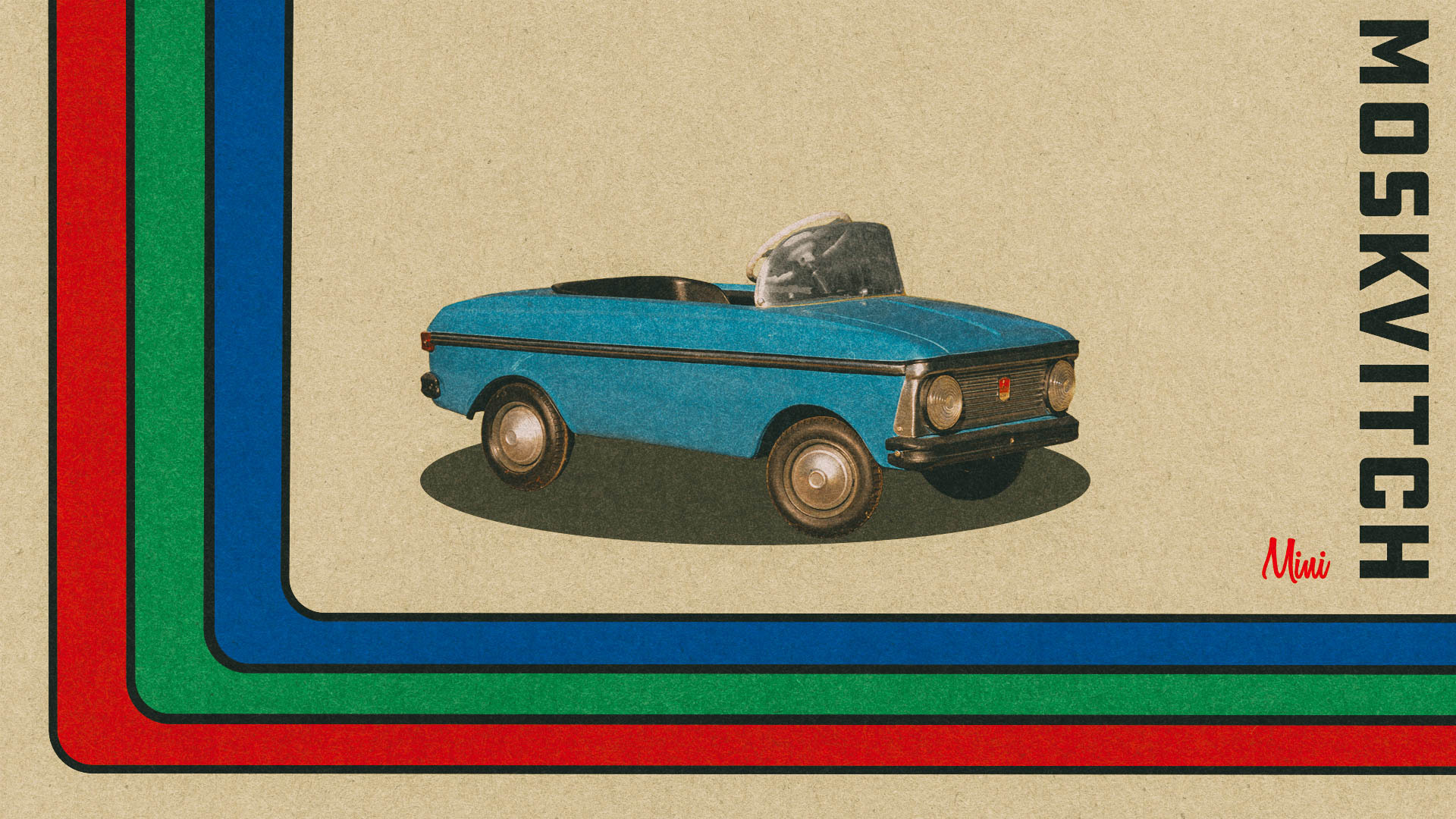
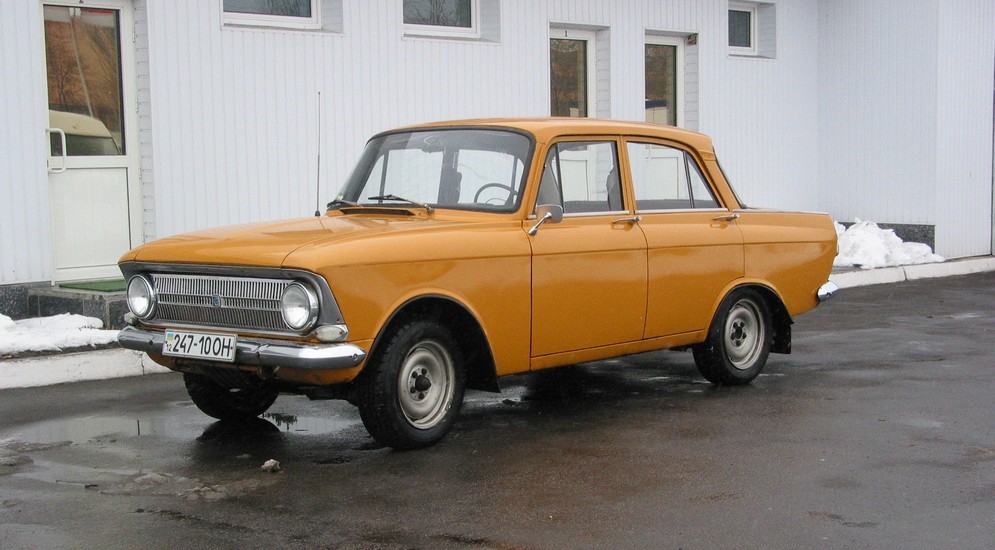
A new car was out of reach for many Soviet citizens. But there was one that wasn’t, and it came from the same factory that made Moskvitch cars in Moscow’s southeast.
The Moskvitch pedal car seen here was the ultimate Soviet toy for about two decades, debuting in 1973. Styled loosely after the Moskvitch 412 sedan that arrived seven years prior, the pedal car was easily the most popular toy produced by the AZLK plant, or Avtomobil’ny Zavod Leninskogo Komsomola, and easily the most expensive.
With a price tag of 27 rubles in the mid 1980s, when the average monthly salary was between 100 and 150 rubles, it was a serious purchase for many parents. But it was largely within reach for most family budgets. (Having enough space for one in a small apartment was a different matter). But even those families who didn’t own one could easily rent them in public parks. Kindergartens also typically had a few cars on hand for outings and special occasions.
Early pedal cars had aluminum bumpers. But in the early 1980s these were traded for plastic ones as seen on this late example, which happened not long after the real cars themselves lost their chrome bumpers in favor of rubber ones. So even the pedal cars weren’t immune to trends in the auto industry.
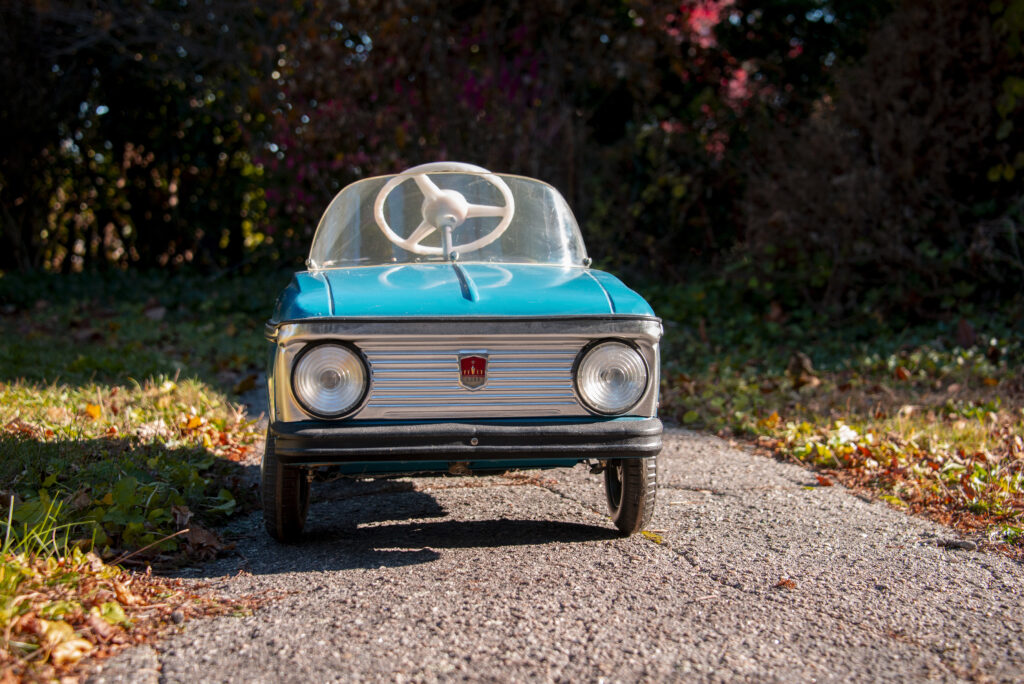
The versions coming out of the factory by the second half of the 1980s had seen some mild cost cuts. The only improvement was the changeover to softer plastic tires with more sidewall, which softened up the ride a little.
Admittedly, it’s hard to name a comparable American toy from roughly the same era in terms of desirability and price, but something like the Nintendo Super NES from 1991 with its price tag of $199 (about $473 in 2025 dollars) is perhaps not a bad comparison of value, cult status, and relative rarity.
This means a fair percentage of kids might have had a Moskvitch, but it was pricey and a bit of a status symbol that was fiercely guarded on the playground.
How did some of these pedal cars find their way stateside?
Legend has it that a container full of these was imported into the US in the early 1990s, which appears to be confirmed by the fact that all the examples seen stateside wear tiny AZLK 1993 license plates.
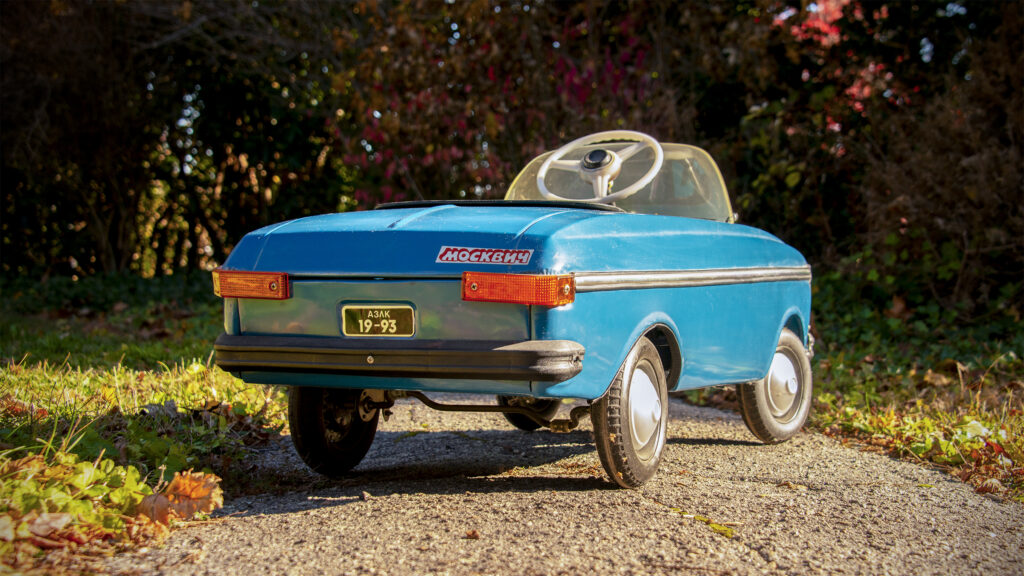
But 1994 was very last year the Moskvitch pedal car was produced, with the car plant itself falling on hard times.
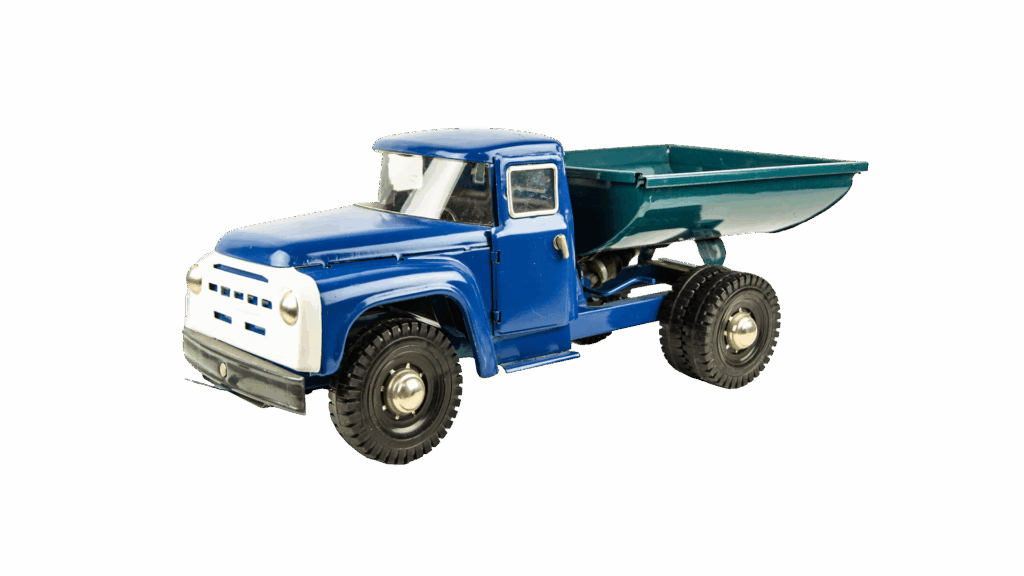
Not only did some number of these pedal cars end up in the states, but other large metal toys produced by AZLK made their way here in slightly larger batches.
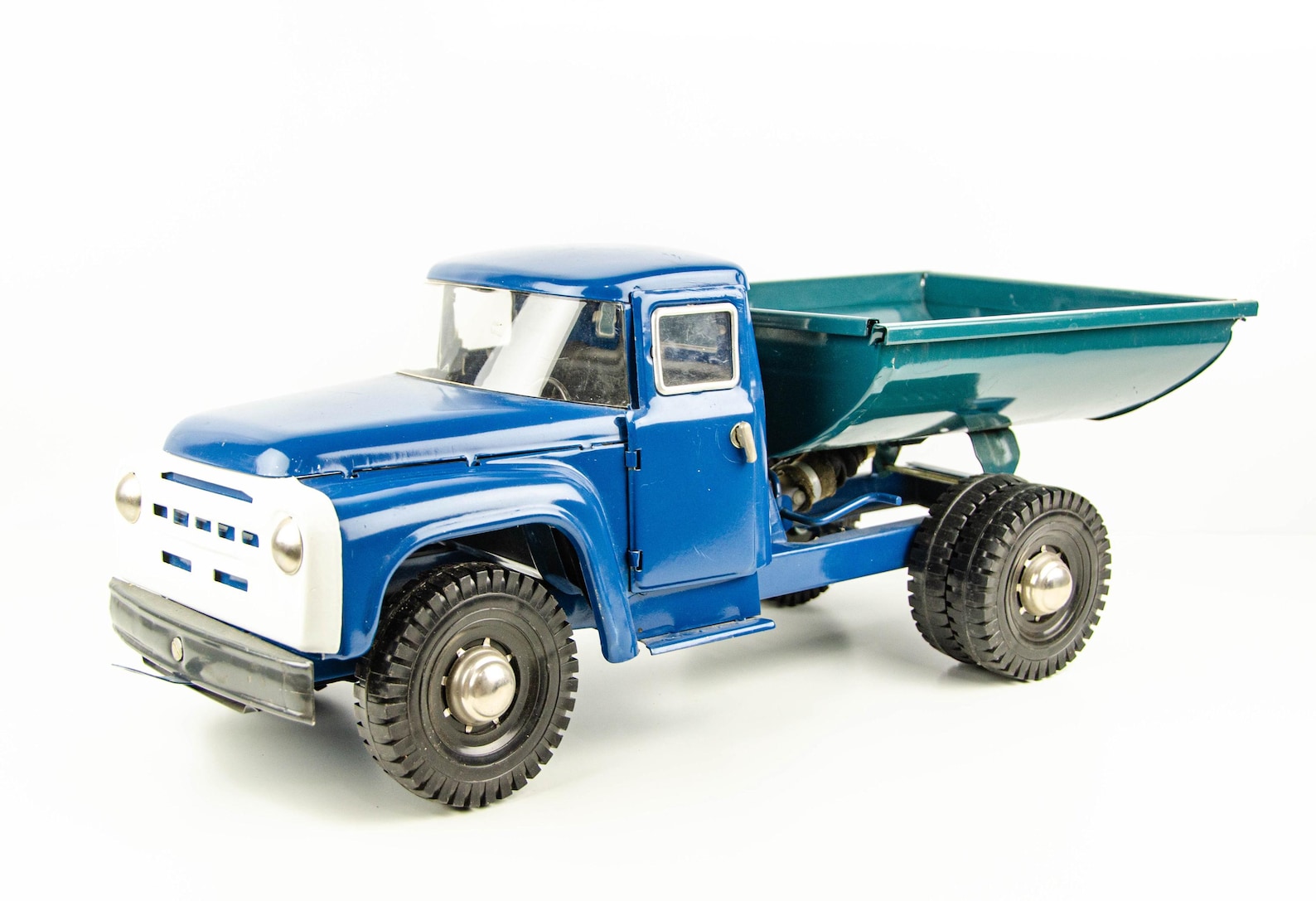
These included a two-foot-long ZiL 130 dump truck — itself one of the most popular toys of the late Soviet era — in addition to an equally weighty and detailed construction crane and excavator. The two wear tiny license plates identical to the Moskvitch pedal car, and they appear to have been brought in by a mystery importer in a relatively small number, in addition those purchased by tourists in Moscow.
Just over 30 years after it left production, the Moskvitch pedal car is still a cult toy in the former USSR and the subject of restoration efforts.
Collectors are seeking these out, restoring and even customizing them, creating police, fire, and ambulance versions with working emergency lights. There is also an active trade in spare parts for these pedal cars, especially the rare early ones.
How much should you pay for one if you suddenly spot one on eBay at 3 am?
Anything under $400 excluding shipping is perhaps a fair price here in the states, with most examples trading hands in the US having seen virtually zero use in the past thirty years. And it’s best to factor in the price of safely shipping one of these as well, as the plastic windscreen and the steering wheel are a bit fragile if the car isn’t packed carefully.
But even a few hundred dollars is perhaps a small price to pay for being able to tell car collectors you own a real Moskvitch.
Recent Posts
All Posts
August 3, 2026
July 30, 2026
July 27, 2026
Leave a Reply
You must be logged in to post a comment.