R5 Turbo 2
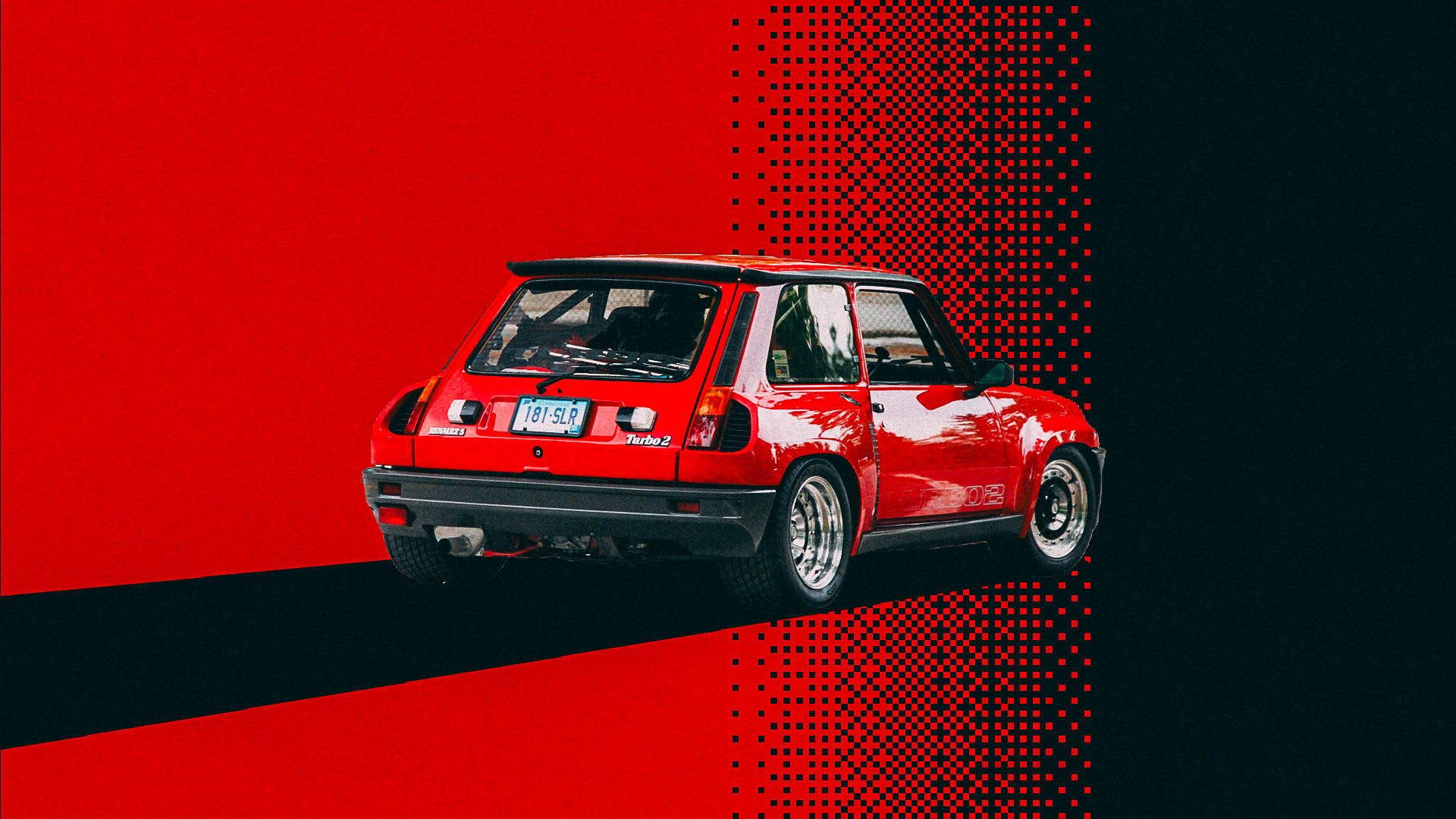
The Renault 5 may still be remembered on this side of the Atlantic as the Le Car, which was one of the oddball budget hatches from the darkest days of the Malaise Era. But the spartan French supermini, which was vastly more popular and respected on its native continent, also went on to spawn something far more potent thanks to Renault Sport’s rally ambitions.
The program that transformed the R5 into a rally legend kicked off in 1977, five years after the launch of the base hatch. Renault Sport, under the direction of Jean Terramorsi and Gérard Larrousse, would turn the front-engine, front-wheel-drive Renault 5 into a mid-engine, rear-wheel-drive terror, aimed directly at Group 4 and Group B rallying, the premier motorsport spectacle in Europe.
With design and engineering overseen by Michel Tétu of Alpine and Marc Deschamps of Bertone, the base R5’s rear seats and cargo space were ditched in favor of a 1.4-liter Cléon-Fonte engine boosted by a Garrett T3 turbocharger, with the potent four-pot positioned longitudinally behind the driver.
The result was lightweight and compact 2,138-pound hatch, helped by aluminum and composite roof, doors and quarter panels, that boasted 160 hp and 163-lb-ft of torque sent to the rear wheels. Up front the R5 Turbo was 2.3 inches wider than the stock car, but out back it gained 9 inches for the wider wheels and tires, as well as the engine air intakes.
Debuting at the 1978 Paris Motor Show as the Renault 5 Turbo, Group 4 homologation rules required at least 400 units to be produced. Known as the Turbo 1 cars, this initial batch was assembled by hand at Alpine’s Dieppe plant, with some 1,820 units leaving the factory by the end of the run.
The Renault 5 Turbo got its first win at the 1981 Monte Carlo Rally, with Jean Ragnotti and co-driver Jean-Marc Andrié piloting the wide hatch to a victory over the all-wheel-drive Audi Quattro. The mid-engine layout and lightweight design allowed the compact R5 Turbo, measuring just 144.3 inches front to back, to out-handle cars that were often more potent on paper.
As capable as the homologated Turbo 1 cars were for enthusiasts, by 1983 it was time for some changes that would keep the basic recipe intact, while optimizing some details.
The Renault 5 Turbo 2 kept the turbocharged 1.4-liter engine, still good for 160 hp, but switched from aluminum and composite panels that gave the hatch its wide stance to ones stamped from steel while borrowing some more parts from the regular R5 hatchback inside. This was done to simplify the build process (and save money). But the car remained virtually unchanged on the outside, keeping its flared wheel arches and other exterior aero elements.
The result was a slightly heavier car with a more domesticated interior, but one that still retained the rabid performance of the first R5 Turbo model.
The R5 Turbo 2 stayed in production at the Dieppe plant from 1983 until 1986, a 3,167-unit run. Collectively with the Turbo 1, this gave almost 5,000 lucky (and deep-pocketed) enthusiasts a street-legal Group B weapon to terrorize back roads.
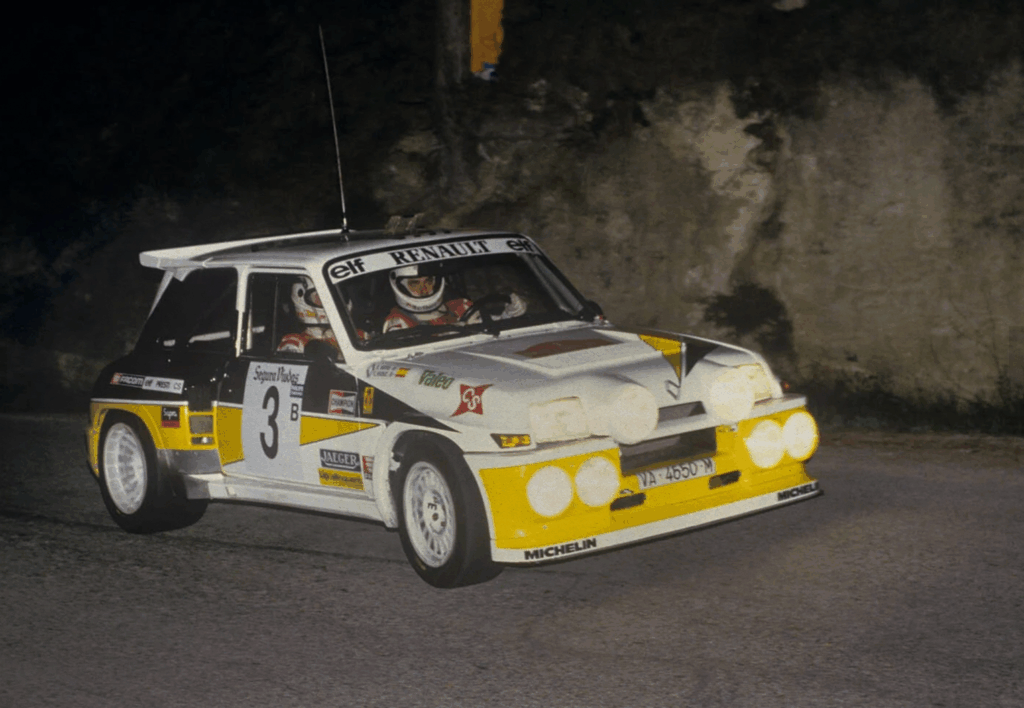
In the world of Group B rallying, the Turbo 2 continued to battle wave after wave of all-wheel-drive cars by the middle of the decade, many of them quite a bit larger than the French hatch. But it maintained its advantage on tarmac stages, where its light weight and agility still produced results.
Piloted by rally legends such as Carlos Sainz, Sr., the R5 Turbo 2 stayed competitive into the second half of the 1980s as the Group B era reached its peak.
Nearly half a century later, the specs of the Renault 5 Turbo 2 haven’t aged as well on paper as its shape. The mid-engine hatch boasts a top speed of around 130 mph and offering 0-to-60 sprints in about 6.5 seconds. But there’s more to the R5 Turbo 2 than just numbers.
The wide hatch requires some skill to handle at the limit, and not just because of the turbo lag. Steering is still unassisted, and the gearbox takes some time to get used to, assuring that driving one in anger on tarmac is still a good window into the unforgiving world of Group B stages.
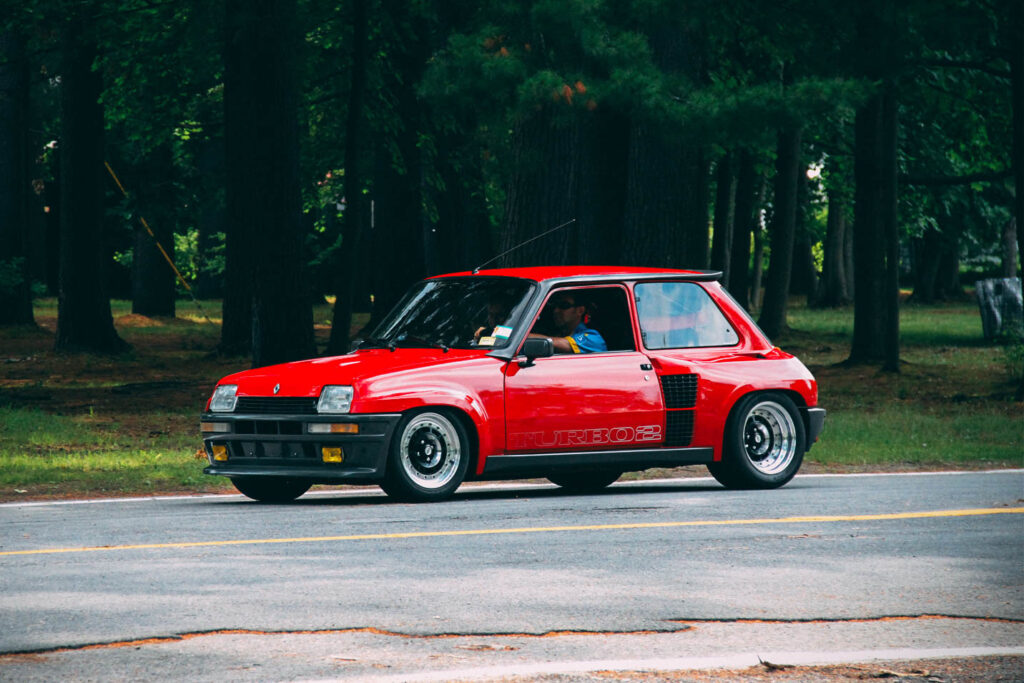
Thanks to the 25-year rule, a number of these cars have made their way into the U.S. and into the garages of dedicated enthusiasts, offering a period-correct window into the world of Group B cars, which is something that is not as easily attainable with other former contestants outside of various one-off tribute builds that try to replicate the rally cars of the time.
With average values hovering just above the $110,000 mark, it’s also one of the more affordable ways to get into something with Group B pedigree, at least for those with the skills to brave the R5 Turbo 2 at the track or off-road.
Recent Posts
All Posts
August 3, 2026
July 30, 2026
July 27, 2026
Leave a Reply
You must be logged in to post a comment.