Weighty
March 17, 2026
Alex KiersteinThe most insidious trend in auto design is bloat. Immutable natural laws mean it’s a short-sighted move.
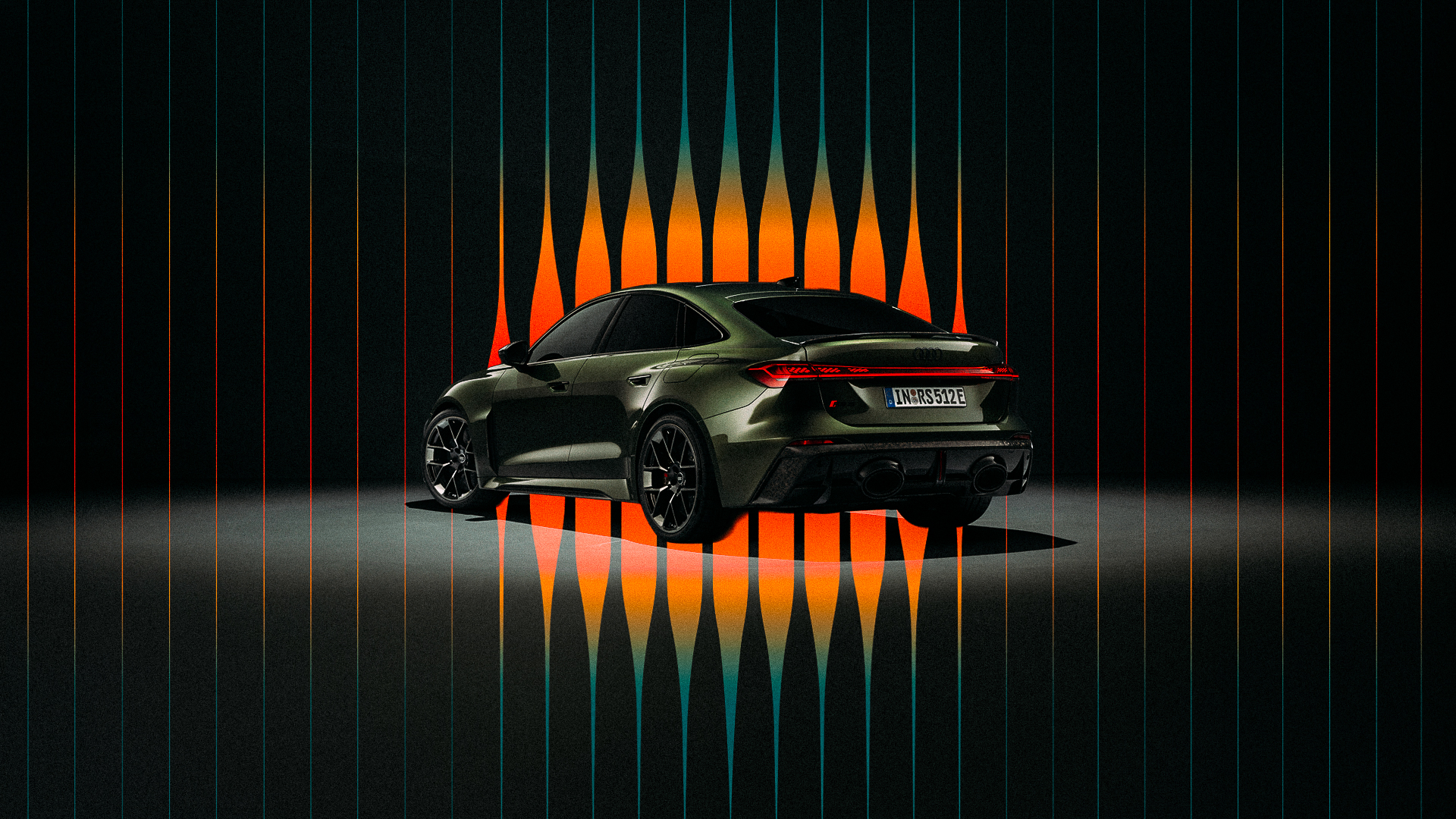
Von Kármán, I have to think, would be confused by the 2027 Audi RS5, a vehicle whose mass has become the storyline rather than its exceptional power output and advanced driveline. The Autopian was laser focused on the 1,000-plus-pound weight increase over what was already a weighty predecessor. A 5,100-pound curb weight for a compact sport wagon?
Six-hundred-thirty horsepower from a 2.9-liter V-6 and its PHEV backup is what Audi would most likely want the focus to be on. And yet, I can’t help but wonder if the costs associated with stressing out a V-6 to that level of specific output couldn’t be better applied to lighter weight materials in the structure. Two stories I’ve written lately show why this would be extremely prudent.
One is the von Kármán-Gabrielli diagram, which discusses the total thermodynamic efficiency of a mode of transportation. While its intent was to determine the most energy efficient way to move a unit of cargo or passengers, you could certainly alter the parameters to determine the best balance of characteristics for a vehicle of the RS5’s size. The other is Ford’s video on the UEV, which discusses how the company is willing to accept additional individual part or material costs if it produces a reduction in battery size or a similar improvement in efficiency.
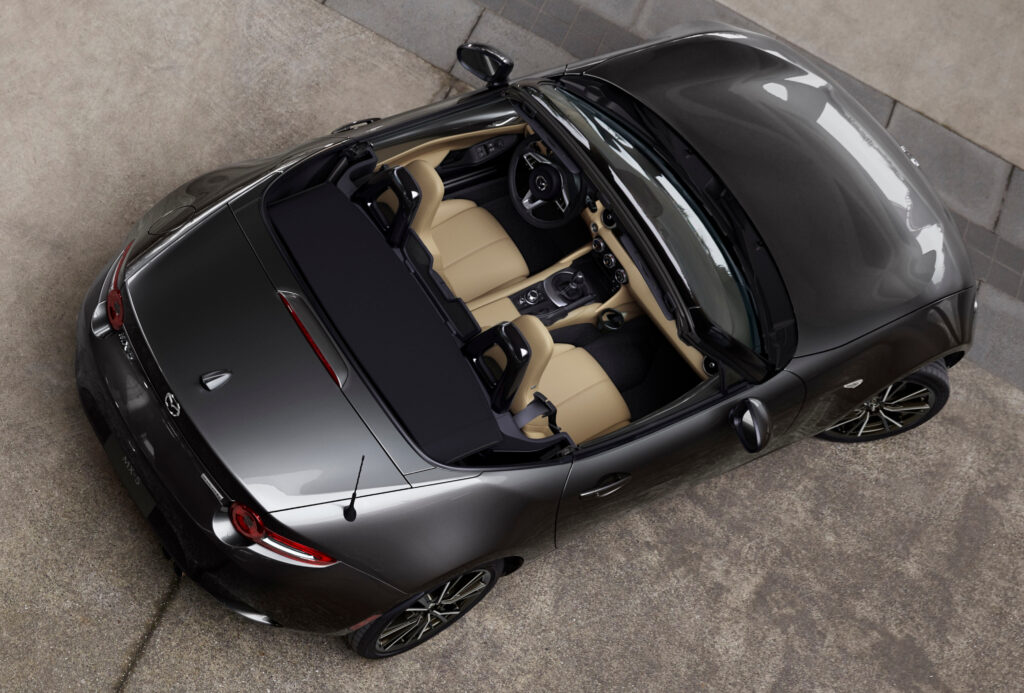
Within the realm of performance cars, lightness is a small niche. The ND-generation Mazda Miata is famous for stubbornly adhering to a low-mass strategy, becoming lighter even than its predecessor. Even the midcycle ND2 revision, which gave it a 17% bump in power, only increased weight by 7 pounds, to 2,366. It’s small, sure, but a strict focus on overall weight means that is both relatively quick and universally regarded as great to drive—and it delivers excellent overall fuel economy in the low- to mid-30 mpg range.
Audi isn’t the only automaker whose high-output hybrids put up shocking numbers on a scale. BMW’s contemporary M5 is significantly heavier than the old one; up 1,100 pounds to a total of 5.390 pounds. Even the non-hybrid M3 and M2 packed on weight in their latest iterations, gaining several hundred pounds each despite their enthusiast focus. And sure, they’re all more powerful, but the mass is there to counterbalance the gains.
The BMW example is particularly frustrating because it was, in my opinion, one of the few automakers that had really figured out a unique balance of attributes for PHEV performance. The i8 looked incredible, had a relatively stout total power output (357 hp and 420 lb-ft combined), and put up decent numbers (Car and Driver clocked it at 4.0 seconds to 60 mph) despite a 216-pound penalty from the 7.1-kWh (later 11.6-kWh) li-ion battery. A carbon fiber passenger cell and composite body panels reduced the mass enough to let the i8 perform while also returning 33 mpge in Car and Driver real-world testing.
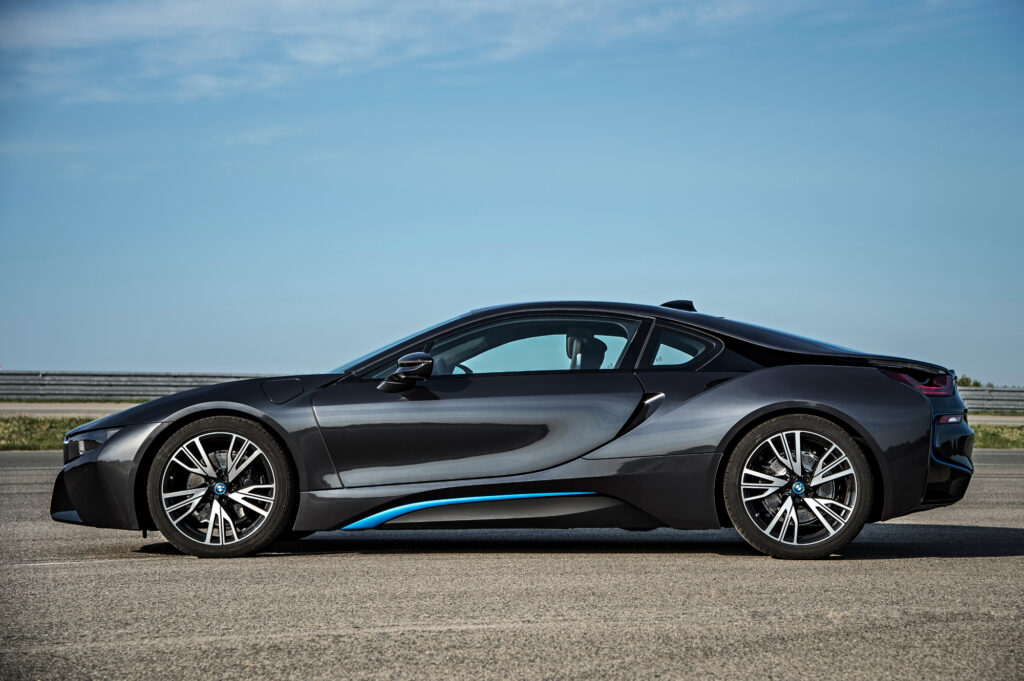
The BMW i8 weighed 3,484 pounds in American spec at debut. I wonder how much it’d weigh in a second generation, nine years later, had BMW continued to develop it or applied its philosophy and lightweight structure to the contemporary M cars.
To what purpose does all of this additional mass and power serve other than bragging rights? I don’t know. But I hope that even in this climate, in which relaxed fuel economy standards might favor bloated, profit-rich products (like high-trim full-size trucks), it’s recognized that bloat doesn’t need to be weight gain. Save some dollars on up-rating all of the components to deal with that weight you just unnecessarily added, and bake in some profit on equipment bundles. Take back bragging rights by outperforming heavier opponents.
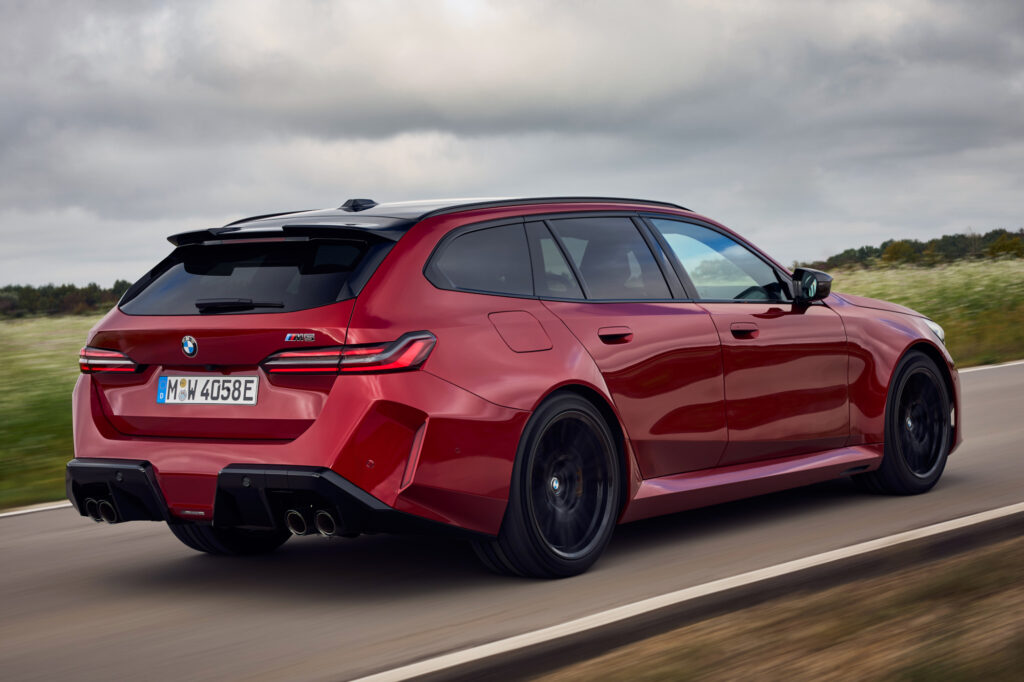
It’s not like I’m some outlier here. BMW and Audi have been roundly criticized for the M and RS weight gain. I just want to remind everyone that there’s very little downside to mass reduction. Think about the size and mass of the brake hardware needed to effectively slow a 5,100-pound wagon. Now make it 20% lighter and give it 20% less power. I’m sure the total weight savings of all of the ancillary components that will get downsized (smaller control arms, lighter driveshafts, et cetera) will provide an additional performance bonus.
And fewer filters between the driver and the vehicle; you don’t need as much electronic simulation of mechanical feedback. The amount of work the electronically controlled drivetrain is going to have to do to make a 2.5-ton wagon dance is going to be significant, and it’s going to be perceptible to the attentive driver.
A lighter car means less computer intervention, less mechanical driveline trickery. It also means less materials, fewer resources, and improved fuel consumption. It could mean an increase in materials costs, but that’s likely offset to some degree by reduced materials usage and the ability to downsize other components.
Unless something big has changed. I just had a conversation with Rory about some things he’s gleaned lately about automakers’ approach to weight and cost. He has a sense that the increased electronic complexity, and engineering components to handle greater mass, might not actually involve as much time, effort, and money as I imagine it might. Calibrating the existing systems to manage the sensations associated with a heavy car, and leveraging the increased computing power onboard to fine-tune all of the powertrain systems (ABS, traction control, torque vectoring, torque fill), might actually be cheaper. It could be that reducing weight is more expensive than I imagine, and there are not strong financial or regulatory pressure to make that additional investment.
These are the sort of things that are generally opaque to folks outside the automakers’ decision-making stakeholders. It also depends heavily on how the different criteria are valued.
That said, I know what my values are. One of them is that consuming fewer resources is a good thing, both on the manufacturing end and in terms of running costs. I know that I’d rather have a lighter car that provides pleasant sensations than a heavy car that simulates them. I like the idea of doing more with less in general. It means a better driving experience.
Reducing bloat should be in everyone’s interest. If it’s not in an automaker’s interest, then it’s worth examining why that is the case.
Recent Posts
All Posts
March 16, 2026
March 12, 2026

March 11, 2026
Leave a Reply