Plugging In
December 4, 2025
Jay RameyLotus readies PHEV options as the EV effort begins to show its limits, but staying true to its DNA could be a harder task.
At first blush it may seem difficult to lose money these days by selling luxury EVs in China. But that’s exactly what Lotus is doing, posting a $357 million operating loss in the first nine months of 2025. And not long after launching its first EVs, the Geely-owned marque has decided to embrace plug-in hybrid powertrains, having recently walked back its plans to go EV-only by 2028.
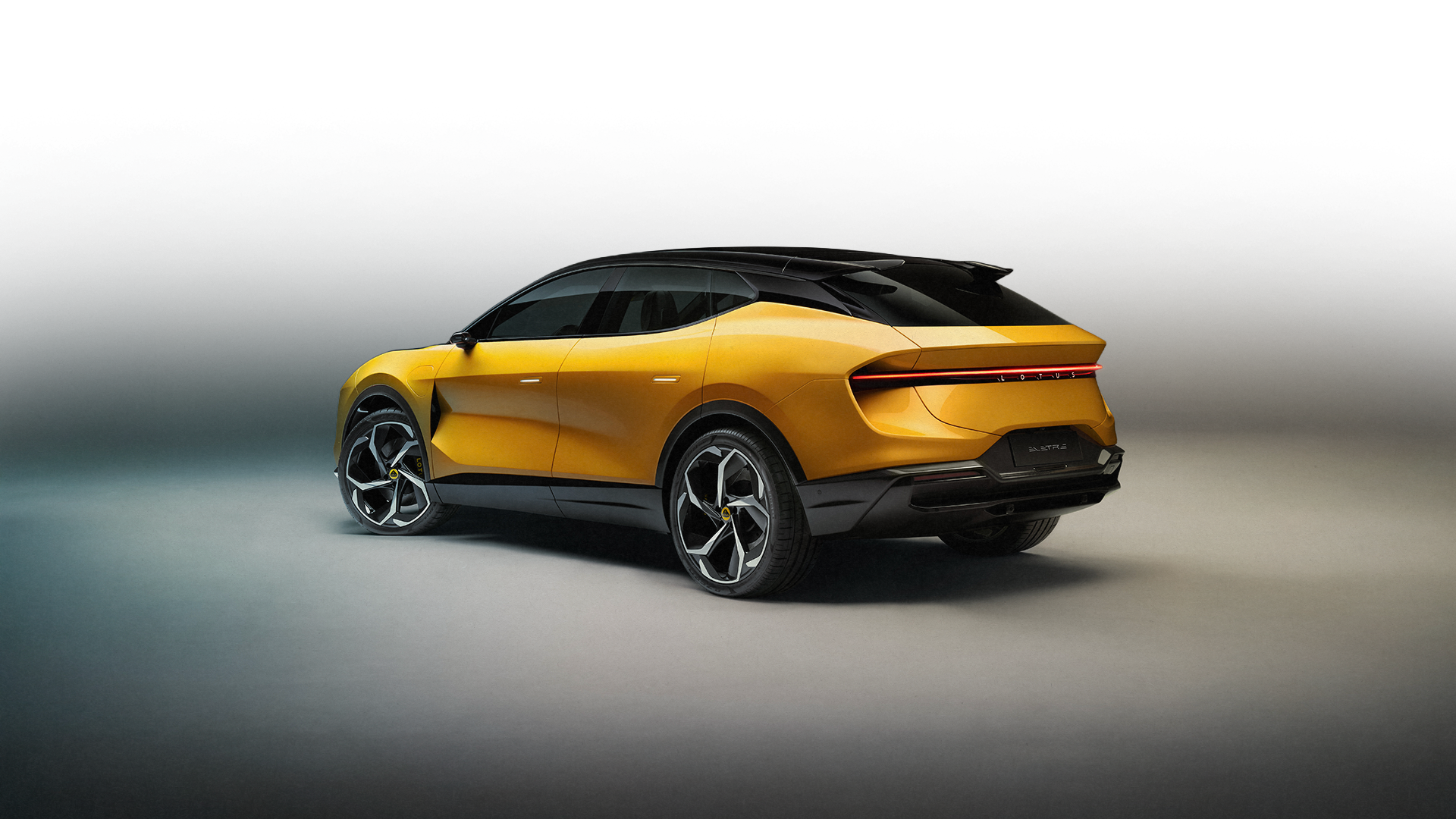
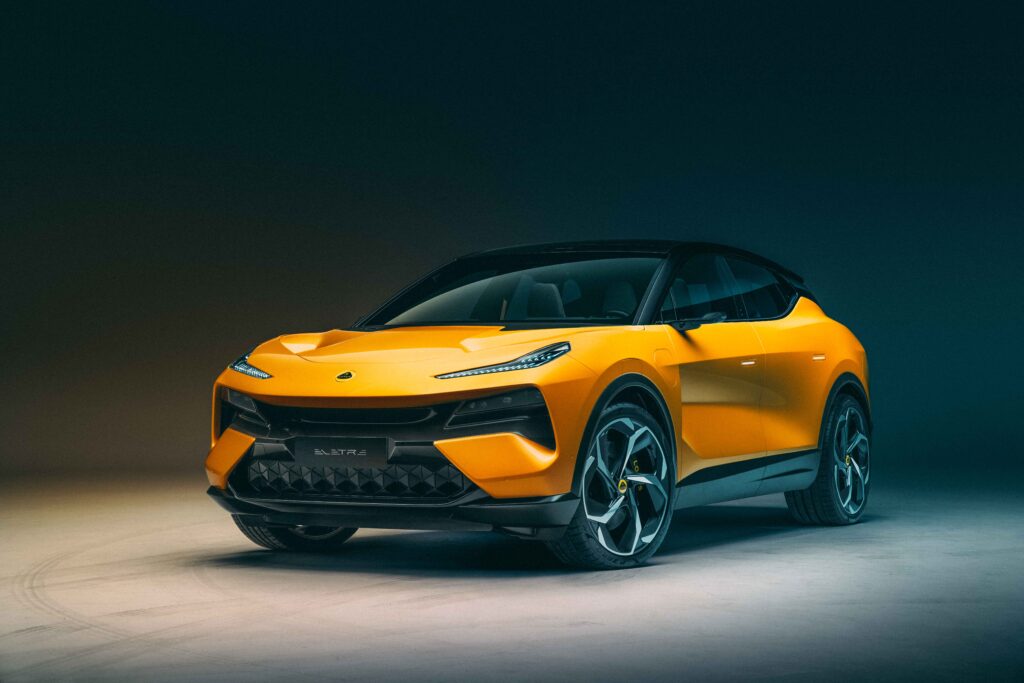
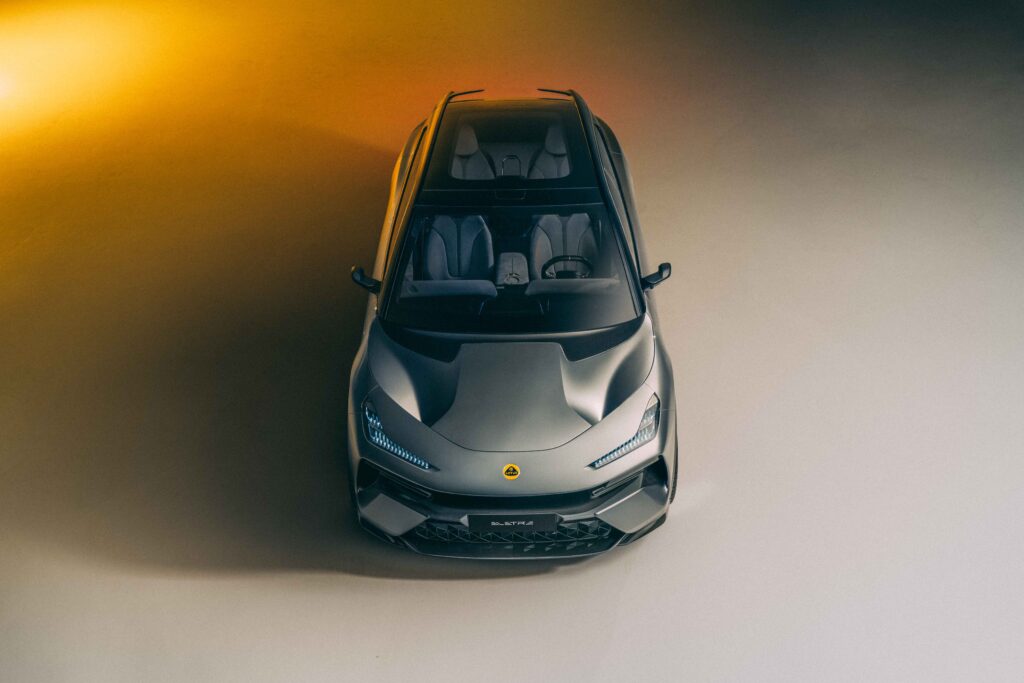
The Eletre SUV will be the initial basis for the company’s expansion into PHEV territory, as the automaker confirmed in recent days.
“The PHEV model is expected to feature a 900V hybrid platform that provides a combined driving range of over 1,000km, as well as industry leading Dual Hyper Charging technology,” Lotus said in a statement.
What powertrain could such a model feature?
A 900-volt hybrid platform already sounds complex for a company that once valued simplicity (and lightness). And it also sounds very specific, pointing to one other vehicle in parent company Geely’s larger lineup with such a system: the Zeekr 9X Hyper. For a PHEV, the upright and box-shaped Zeekr model has an absolutely giant 70-kWh battery, three electric motors, and a turbocharged 2.0-liter engine, producing an eye-watering 1,381 hp.
Needless to say, this is quite a bit of hardware even for a large SUV, and perhaps too much of a good thing.
Lotus has stopped short of confirming this particular recipe for the Eletre, but Lotus CEO Qingfeng Feng said during the recent earnings call that the Eletre PHEV will serve up 952 hp, which lands rather close to the Eletre EV’s 905 hp.
The CEO also indicated that the model will carry over Lotus DNA (at least in its modern sense).
“The first is its ultimate handling. Thanks to Lotus’ tune engineering, it is also equipped with a dual-chamber air suspension and a standard 48-volt active stabilizer,” Qingfeng Feng said during the earnings call in late November. “It can be capable of a long range and also high performance.”
Perhaps more tellingly, the CEO also indicated that the model would now feature a combined range of over 1,000 kilometers, or over 621 miles, creating some contrast for buyers between the 280-mile WLTP range of the EV.
And this fact likely points to one of the motivations of the effort itself: Slower-than-expected uptake of EV models in a number of regions, as the CEO confirmed during the earnings call.
“The introduction of hybrid models offers more choice for luxury vehicle buyers and will help us to expand into broader markets, including regions with slower EV adoption, such as Italy and Spain and Saudi Arabia,” Qingfeng Feng noted.
The Eletre PHEV is expected to arrive in the first quarter of 2026 in China, making its way to Europe later in the year. Two more Lotus PHEVs are expected to be on the way, with an unnamed SUV positioned below the Eletre and likely a PHEV version of the Emeya sedan.
Still, this engineering effort following a similar rush into BEV powertrains perhaps risks losing further sight of Lotus’ traditional DNA and becoming just another Geely-owned luxury brand loaded with complex and heavy powertrain tech — a ship that might have already sailed.
The automaker delivered 4,612 vehicles in the first nine months of the year, with the Eletre and the Emeya representing 3,314 of that worldwide total. So Lotus isn’t relying on sports cars for its bread and butter as it once did.
This has left the Emira with its supercharged V6 in the minority, if it’s not an endangered species outright. The only other car in Lotus’ lineup is the (once again electric) Evija hypercar, though its 130-unit run and nearly $3 million price tag make it another outlier.
With Lotus’ focus on the SUV and sedan for sales, it’s clear that we are in the midst of a profound shift in the company’s priorities, one that is now driven by goals other than simplicity or lightness.
Recent Posts
All Posts
March 16, 2026

March 12, 2026

March 11, 2026
Leave a Reply