Uncertain Horizons

April 24, 2026
Peter Hughes
Sports car racers head into summer with trouble looming.
The 2026 World Endurance Championship season finally got underway at Imola last weekend, with the new-look Toyotas back in winning form after a forgettable 2025. The number 51 Ferrari split the podium with a second-place finish, salvaging the day for the tifosi. Alpine kicked off their farewell tour with a solid fourth, and newcomers Genesis managed not to embarrass themselves in the least, despite a sensor issue that took one of the cars out of the running for half an hour early on.
Among the GT cars, it was a Garage 59 McLaren’s race to lose, but lose it did, succumbing to electrical gremlins in the final hour and handing the win to WRT’s number 69 BMW. The number 33 TF Sport Corvette finished on its heels, with the Manthey Porsches following a lap down.
If anyone noticed that there were no Porsches competing in the Hypercar class for the first time since 2022, nobody mentioned it. Everyone loves to imagine eavesdropping on their own funeral and hearing all the nice things people say about them; rarely does it occur to us that if we dropped in on our old workplace the following day we’d find our former colleagues carrying on as if we’d never existed. Life goes on!
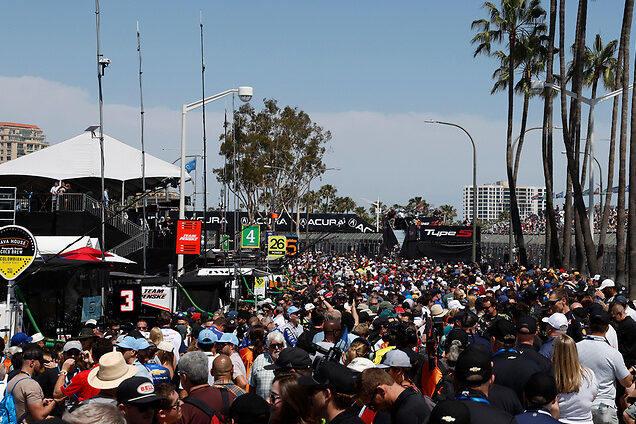
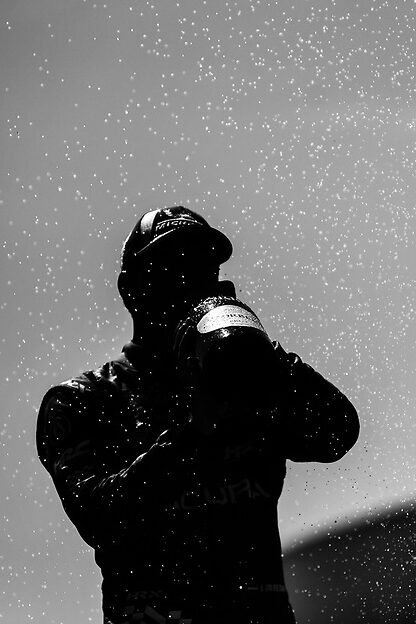
Perhaps a greater impact will be felt in IMSA, where the big story out of Long Beach was the rumor, since confirmed, that Acura will be withdrawing its ARX-06 prototypes at the conclusion of the current season. Meyer Shank responded with Acura’s first win at the race they’ve sponsored since 2019, but it was a bittersweet one given the circumstances. In his Racer.com story breaking the news, Marshall Pruett attributed the decision to “the state of…global auto sales and the costly shuttering of multiple EVs in the production pipeline.”
At least that’s something that only affects Acura, right?
The Whelen Cadillac and number 6 Porsche rounded out the Long Beach GTP podium, with GTD honors going to Vasser Sullivan and their evergreen Lexus RC F. The Turner BMW and Conquest Ferrari finished second and third. Robert Wickens turned in a stellar hand-controlled stint in his return to the DXDT Corvette for the first time since VIR last summer, but it was sadly spoiled when Mason Filippi got shoved around in traffic and fell from contention down to sixth.
Back to the WEC, though.
The season was supposed to have started a month prior in Qatar, of course. That didn’t happen for obvious reasons. The Qatar race has been rescheduled for October, slotting in a couple weekends before the season finale in Bahrain. And we’re all meant to believe that either of those races are actually going to take place.
There’s also the matter of the ACO’s Asian Le Mans Series, which has traditionally filled the off-season gap in the WEC schedule, and which this year stood to enjoy a significant boost in profile with the introduction of privateer Hypercars to a field that previously only permitted LMP2s and GTs. The rumor mill has been abuzz with seemingly credible reports of amateur-fielded Ferrari 499Ps, the possibility of privateer Porsches, talk of wingless Peugeots and even Vanwalls returning to competition.
Forgotten in the excitement is the fact that these ALMS races take place in Sepang, Dubai, and Abu Dhabi.
You might have missed it, but Super GT’s planned visit to Sepang in June was recently cancelled at the request of the Malaysian government over fuel shortage concerns. And, well, the UAE has issues of its own.
It’s easy to go crazy trying to keep up with the situation in West Asia in the wake of the U.S. and Israeli attacks on Iran that began two months ago, and the latter’s subsequent response. For the moment, the aggressors seem to have stopped just short of the precipice—repeated threats to take out Iranian infrastructure, met with stony silence, followed by cease-fire extensions—that would all but guarantee the extinction of the gulf monarchies, never mind whatever car races they were committed to host.
It took less than a month for Iran to destroy thirty years’ worth of U.S. military installations in the region. Those same thirty years saw the unlikely emergence of places like Dubai and Abu Dhabi—formerly the middle-eastern equivalents of Midland and Odessa, Texas—as glittering tourist traps and influencer magnets. What happens to their sportswashing efforts now?
Even if the situation on the ground in terms of missile and drone strikes were settled, there is the larger question of economic factors. For most of us, what we’re paying at the pump is our sole indicator—the single gauge on an otherwise empty dashboard—of the war’s impact, and while prices have increased, it hasn’t yet been enough to affect our habits or suggest that greater consequences might await us down the line.
If you listen to actual oil and financial executives, though, you might get the sinking feeling that we’re all standing on the beach staring at the tide that’s gone all the way out to the horizon, scratching our heads and going, huh…weird. I wonder what that means. The economy understanders seem to have an idea, but nobody’s paying attention to them.
Somebody joked on the WEC subreddit when questions about the Qatar season opener first arose, “If we get rid of all the Middle East tracks, WW3 is a sacrifice I’m willing to make.”
You might get your wish, buddy. You also might end up sacrificing more than you realized.
Recent Posts
All Posts
August 3, 2026

July 30, 2026

July 27, 2026