The robotaxi dilemma
November 5, 2025
Rory CarrollWaymo is way ahead in the robotaxi race, but what do they stand to gain?
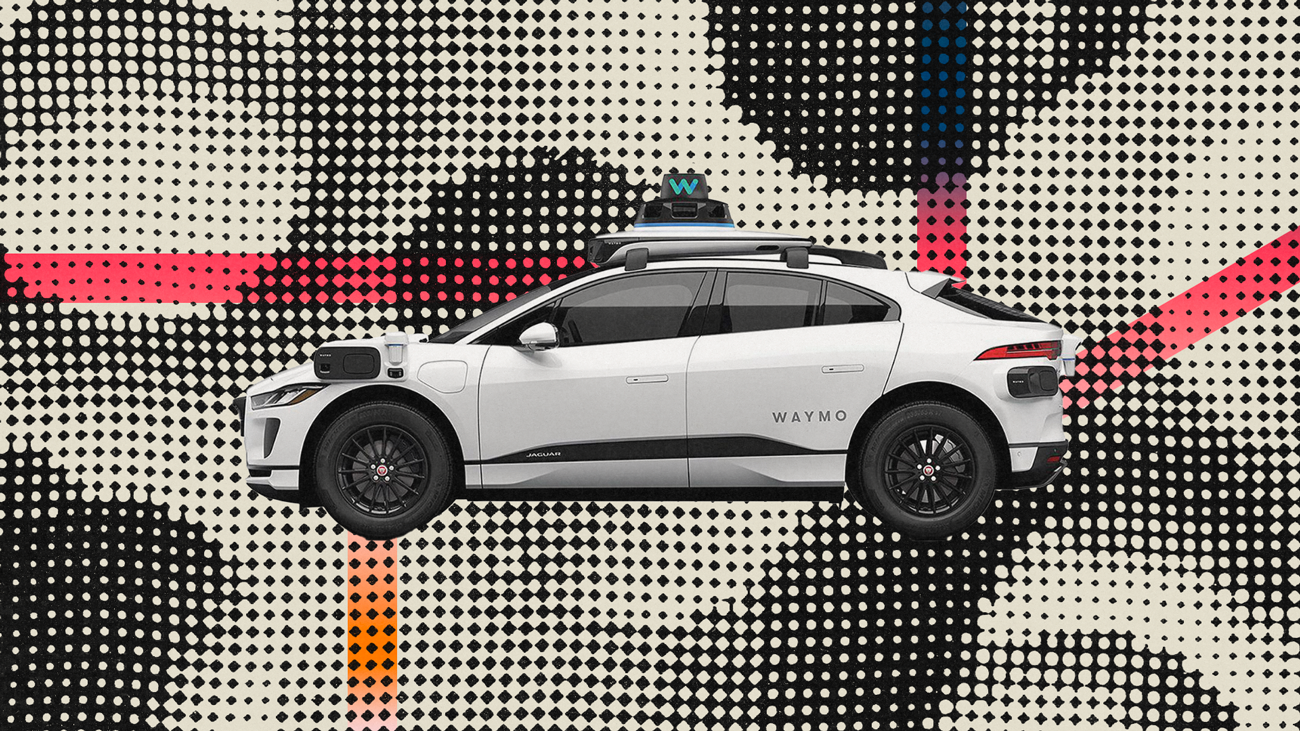
In the span of a couple of years Waymo has cemented its status as the runaway leader in the robotaxi race. GM’s Cruise has been shuttered with the resources and learnings from that endeavor having been rolled into GMs mainline ADAS efforts. This leaves Waymo as the sole robotaxi service provider in the US, offering as many as 250,000 rides per week as of 2025. Those fleets operate in San Francisco, Los Angeles, Phoenix, Austin, and Atlanta. In 2026, Waymo plans to expand to San Diego, Las Vegas, Detroit, Miami, Nashville, Denver, and Washington DC, and has kicked off testing in a couple of international metro areas including Tokyo and London, with service launches planned for 2026.
Expansion is still a gradual process with a lot of work behind the scenes, including with local regulators. Waymo spends months 3D mapping an area before running tests with human drivers behind the wheel. Following successful tests in a given geofenced area of a city, driverless operations with paying customers begin.
2026 promises to be a busy year, in part due to partnerships with existing ride-hailing apps in several cities, including Uber. This approach has notably sped up Waymo’s planned roll-outs in several cities, starting with Atlanta and Austin via the Uber app. This team effort allows Uber users to select Waymo cars, giving Waymo a ready user base and offloading some fleet management to Uber.
Waymo is now the undisputed leader in this new industry, even though it is far from the only company with working SAE Level 4 technology and fleets of vehicles.
Still, being a leader in testing robotaxis not the same thing as being a profitable business, with Waymo relying on a steady stream of investment from Alphabet. Waymo also relies on vast teams working behind the scenes to help the robotaxi fleets run smoothly — an often ignored part of the robotaxi equation that adds its own hefty operational costs.
But are any of Waymo’s aspiring competitors actually close to catching them?
2026 promises to be a big year for Waymo’s rivals-in-waiting, with Zoox having launched its long-awaited, custom-designed driverless shuttle around the Las Vegas strip, following over a year of testing and more than a decade of development work.
The proprietary Level 4 EV, which has no driver controls inside, features conference-style seating for four passengers, and has been open to a limited group of users in Las Vegas since September, for free.
“Eleven years ago, we started on a journey to fundamentally rethink transportation. The idea for Zoox was never to make a car drive itself; it was about creating an entirely new mode of transportation,” said Jesse Levinson, Co-Founder and CTO of Zoox.
Needless to say, a completely custom EV imposes its own hefty costs in contrast to the modified Jaguar I-Pace models used and stockpiled by Waymo. So Zoox has faced some significant development costs in reaching its autonomous dream even on a limited scale in one given city, which for now covers largely the tourist-heavy part of Las Vegas. And like Waymo, the fleet still relies on a team of remote human monitors behind the scenes.
But Zoox won’t be alone in trying to challenge Waymo in some limited markets. Automakers and ride-hailing apps alike are also teaming up to launch robotaxi services in selected cities, with Volkswagen recently teaming up with Uber to bring its autonomous VW ID. Buzz to Los Angeles in 2026.
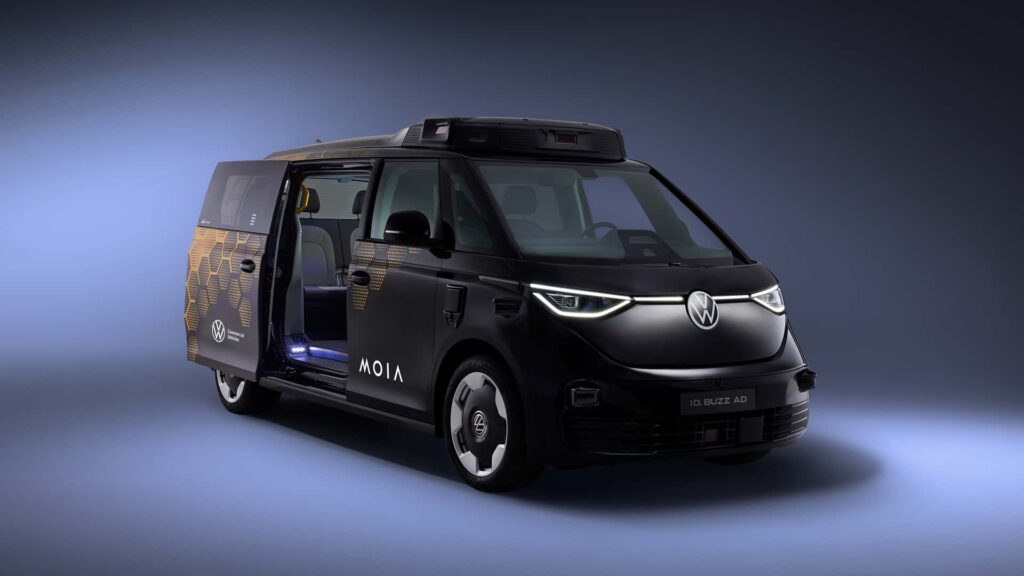
VW has spent years developing and testing the Level 4 ID. Buzz, which was initially planned for the automaker’s own MOIA ride-pooling service in Hamburg, Germany.
“Through our work with Uber, we’ll introduce the ID. Buzz, the reimagined version of the iconic Microbus in all-electric form, to a growing number of riders in the years to come,” said Kjell Gruner, president and CEO, Volkswagen Group of America.
The planned launch in Los Angeles by VW and Uber, which will contribute its user base, should make LA of the rare cities with two functioning robotaxi services, though in both cases the service is expected to be geofenced to certain parts of the sprawling megapolis.
Uber itself announced just days ago that it is getting into the robotaxi business, having revealed plans with Lucid Motors and autonomous developer Nuro, known mostly for its large delivery robots. Uber plans to effectively license the Nuro Driver autonomous system, and install it in some 20,000 Lucid-Nuro robotaxis in the US and foreign markets, with Lucid set to build robotaxis based on the Lucid Gravity right on its assembly line in Arizona. The first operational debut is planned for a US city in 2026.
If all goes according to plan, this will be the first step of its kind in the robotaxi industry, with an automaker and autonomous developer teaming up to produce ready robotaxis for a third party, which happens to be a ride-hailing app.
“This partnership will demonstrate what’s possible when proven AV technology meets real-world scale,” said Jiajun Zhu, Co-Founder & CEO of Nuro.
This approach isn’t as labor intensive as the one chosen by Zoox, but it will still pose a challenge in terms of a viable business model, once the costs of the vehicles, autonomous hardware, software licensing, and fleet management are taken into account.
It also makes Uber’s usage of human drivers who own their own cars seem like an incredible bargain compared to owning and running a robotaxi fleet.
But this is far from the only collaboration between an automaker and an autonomous developer.
Motional, formerly known as Aptiv, has been part of Hyundai since the automaker began investing heavily into the startup in 2020. Recently, the company has been focused on turning the Ioniq 5 into a robotaxi and has tested it in a number of US cities including Los Angeles and Boston in recent years, though it’s not working toward a commercial launch to take on Waymo head on.
“Instead of rushing to end-to-end AI solutions, we’re taking a different path,” Laura Major, President and CEO said a few months ago. “Motional’s time in the industry resulted in having the deep expertise needed to translate recent AI breakthroughs into safe autonomous driving solutions, so we will be able to build to scale with lower cost and less dedicated development for new city deployments.”
Motional’s approach is now focused on finding a way to achieve scale in a cost effective way, while continuing to find new ways to address edge cases — an industry-wide issue that perhaps has no easy solution.
What is clear is that Motional is in no rush to build and deploy vast fleets of Level 4 cars before a clearer path to profitability and safety can be achieved.
One company that’s not letting either of these issues stand in its way is Tesla, which kicked off its Robotaxi service in parts of Austin earlier this summer, albeit with a few asterisks. Using the technological insights gained from its commercial Level 2 Autopilot and FSD systems, the Texas-based EV maker deployed a tiny fleet of what were claimed to be robotaxis, while only letting a limited group of influencers try them in its home town.
Tesla’s foray into the robotaxi industry is perhaps more opaque than others when it comes to the technology employed behind the scenes, and also one that’s more focused on achieving industry hype over immediate profits.
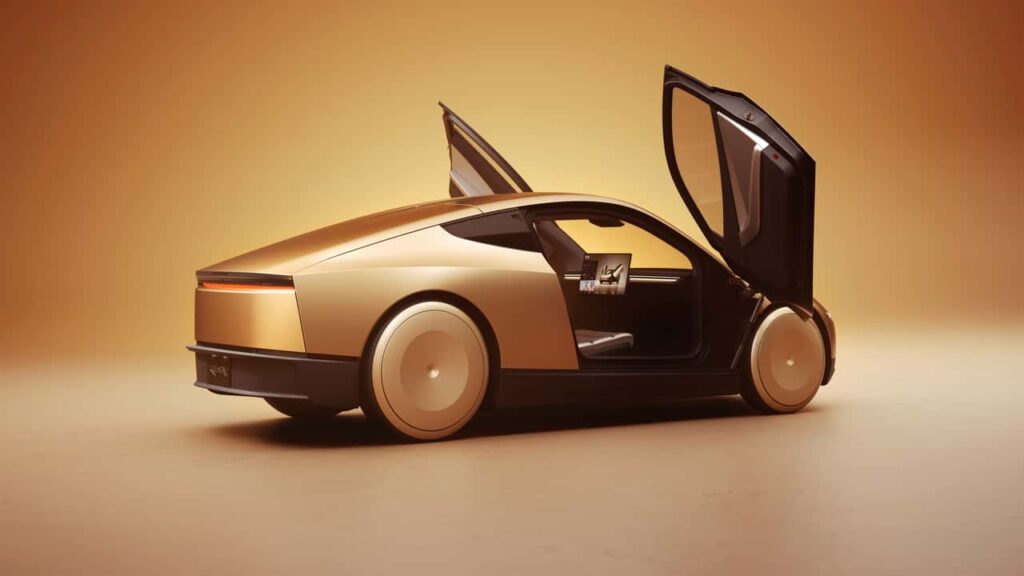
Tesla showed a new, small, two-door robotaxi without controls last year, but now uses Model Ys with some graphics on the side. Even a limited rollout in Austin did not quell doubts over its ability or desire to challenge Waymo. The EV maker was immediately met with a series of reports of unsafe driving by its robotaxis and a series of crashes, despite teledrivers being part of the safety backup. Overall, Tesla’s stated robotaxi plans are difficult to take at face value due to the company’s longstanding pattern of overpromising its autonomous capabilities.
And this brings us to a central question regarding robotaxis: Is there a path toward a viable business model here?
Given the amounts of money spent so far and the realities of owning a fleet of retrofitted or entirely unique cars, in addition to employing countless software engineers behind the scenes, at the end of the day the robotaxi industry is still trying to replace a human driver with his or her own vehicle, and has to compete with this human in terms of cost.
At the moment it’s admittedly difficult to predict just when operational costs of robotaxis will approach those of a gig economy human with their own car, if ever, but it’s clear that few companies aside Waymo are itching to find out via spending money to field vast fleets of robotaxis.
Recent Posts
All Posts
March 6, 2026
March 6, 2026

March 5, 2026
Leave a Reply