Full-Self-Denial
December 18, 2025
Jay RameyCalifornia finally takes Tesla to task over "Full Self-Driving" branding of ADAS systems, but is the damage already done?
Tesla may have recently adopted the Supervised suffix for its Full Self-Driving system, after years of controversy and more than one federal investigation, but the EV maker’s long-criticized branding is finally getting some further attention from California regulators.
The state’s Department of Motor Vehicles revealed this week that it has concluded that Tesla’s use of the names “Full Self-Driving Capability” and “Autopilot” to describe its duo of Level 2 system is not only misleading, but also violates California law. The decision is part of the DMV’s administrative law case against the automaker.
“Beginning in May 2021, Tesla advertised advanced driver assistance system (ADAS) features in written marketing materials primarily on Tesla’s website using the product label and descriptions ‘Autopilot’ and ‘Full Self-Driving Capability,’ and the phrase ‘The system is designed to be able to conduct short and long-distance trips with no action required by the person in the driver’s seat,'” the California DMV said in a statement this week.
The state has argued in its case that Tesla’s use of these names in its advertising promises features “tantamount to autonomous driving capability.”
The decision of the administrative law judge in this case has ordered a suspension of Tesla’s dealer license in California, as well as its manufacturer license, for 30 days. But the California DMV is staying, or suspending the punishment in its own decision for 60 days, the agency said, pending negotiations with the automaker.
So Tesla’s ability to build and sell cars remains unaffected for now, but could result in a 30-day suspension of solely its license to sell cars if it doesn’t resolve the matter within 60 days.
Both systems require driver attention to the road at all times, thereby making them SAE Level 2 by definition. SAE Level 3 systems, by contrast, do not require drivers to keep their eyes on the road at all times or their hands on the steering wheel, but have only seen deployment by one automaker and only in two US states that have permitted them thus far: California and Nevada.
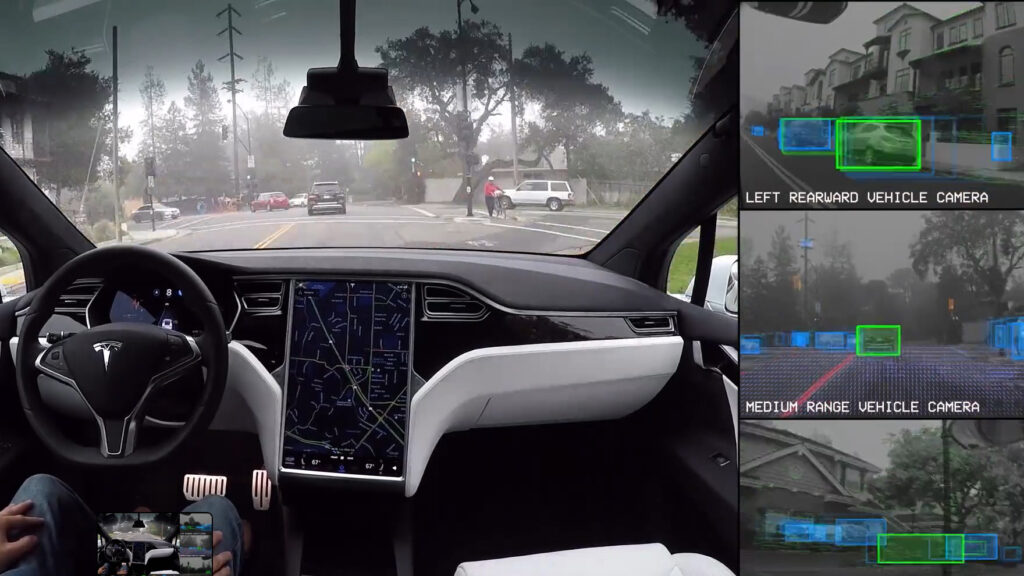
Curiously enough, Tesla had reportedly told California regulators in the past that its Full Self-Driving system is meant to be purely an SAE Level 2 system. However, that reported statement was made in 2020 and seemingly in only one known instance thus far: In communications between Tesla and the California DMV.
The EV maker’s public messaging on the topic, usually by CEO Elon Musk, has been far more limited and far more vague, with Tesla avoiding mentions of SAE levels entirely in various statements and recently dialing back promises of its eventual capabilities.
It was also the California DMV that got Tesla to adopt the Full Self-Driving (Supervised) terminology back in March 2024, instead of Full Self-Driving, thereby marking a distinction from an unsupervised Level 3 system. But that step was perhaps too incremental even at the time.
Overall, this regulatory pressure is long overdue not only in California, but on the national stage. In some foreign markets Tesla has been forbidden from marketing FSD altogether, or from describing either of its ADAS systems as “self-driving.” China has forbidden Tesla from advertising either of its systems as “self-driving” for years, including by Tesla store personnel during customer test drives. In Europe, FSD is not currently permitted amid ongoing efforts to receive regulatory approval.
It’s easy to get the impression that this case is a reflection of the limits of state regulatory powers, but at the same time it’s very difficult to picture a foreign automaker being allowed to market what is merely an ADAS system with “Full Self-Driving” in its name in the US for years without immediate repercussions. The fact that this is happening only in 2025 speaks volumes about the latitude that California (and federal) regulators have given Tesla thus far.
“Tesla can take simple steps to pause this decision and permanently resolve this issue — steps autonomous vehicle companies and other automakers have been able to achieve in California’s nation-leading and supportive innovation marketplace,” said DMV Director Steve Gordon.
It remains to be seen whether Tesla will be persuaded by California to change the name of its system further, but that ship, especially when it concerns the name Autopilot, may have sailed years ago. The damage in terms of consumer perception has already been done.
Recent Posts
All Posts
February 9, 2026
Jamie Kitman -- Illustration by James Martin
February 6, 2026
February 4, 2026
Leave a Reply