RUCKUS TRUCK
October 31, 2025
Alex KiersteinToyota’s stripped-down IMV Origin concept truck isn’t finished, on purpose.
There’s a bias that I share with a lot of other auto writers, enthusiasts, and really any otaku of any special interest: If I can’t get it, it’s somehow cooler than the things I can get. This also extends to things that are hard to get, thus the massive interest in 25-year rule cars, rest-of-world parts, and cultural trends. Dodge vans are fine as far as vans go, but dajiban are fantastic. Factor in the bloated cost of new vehicles and the possibly misguided desire for simpler new cars with fewer features, and suddenly the Toyota Hilux Champ looks like a panacea for a too-small, too-niche group: me, and those like me. Too damned few. The IMV Origin concept takes it to an extreme that even I wouldn’t contemplate, but it’s still OK to drool.
Let’s back up. The Hilux Champ is a very simple commercial truck built in Thailand and the Philippines for developing markets in Asia and South America. Remember, before the Tacoma, the Toyota Truck/Hilux? Those were already pretty austere, but there were One Ton commercial versions that could cram 2,655 pounds (advertised) in the bed and tow 5,000 pounds. Not that either would be much fun; the One Ton had a ride to match the serious leaf springs it got, and unless you needed that kind of payload capacity the average person was much better off with the normal truck’s already primitive ride.
The Hilux Champ is a bit like that. It’s not a small, cheap, single-cab Tacoma for those markets. It’s more like the One Ton. A lot like the One Ton, actually, with a 2,260-pound payload capacity, a cab limited to only two seats, and very few available frills.
Unlike the One Ton, the Hilux Champ is charming. The Thai-market Carryboy RV version is a rolling “take my money” meme.
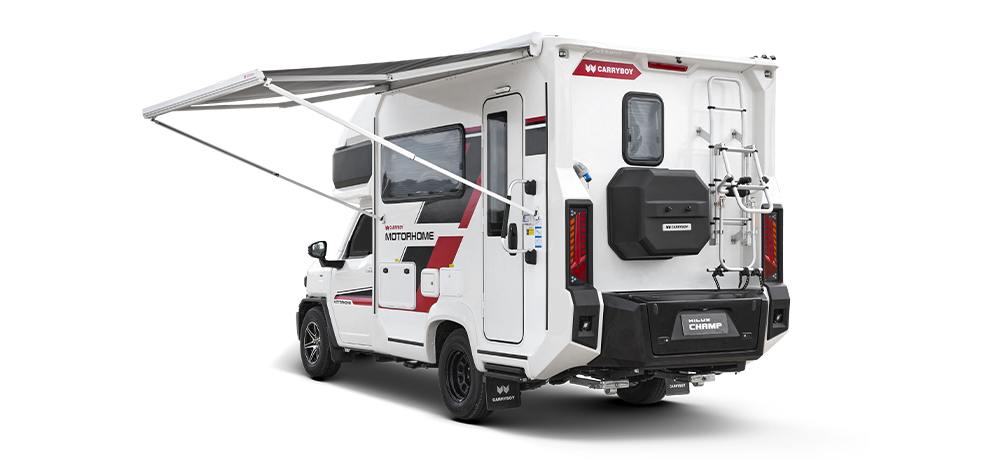
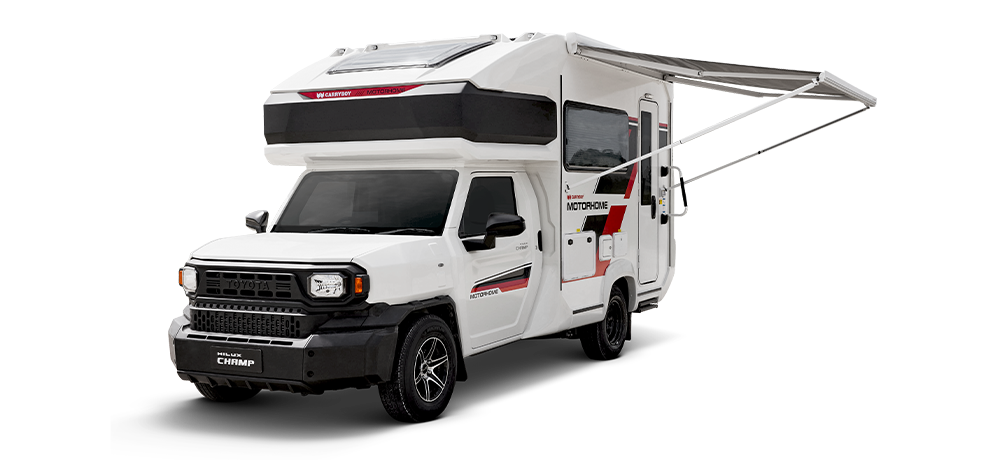
For some use cases, even the stripped-down Hilux Champ isn’t minimalist enough. The IMV Origin is a thought experiment of sorts about whether some developing markets might benefit from producing bodies locally on a Toyota-supplied rolling chassis. If that has some echoes of CKD (complete knock-down) kits for you, it should.
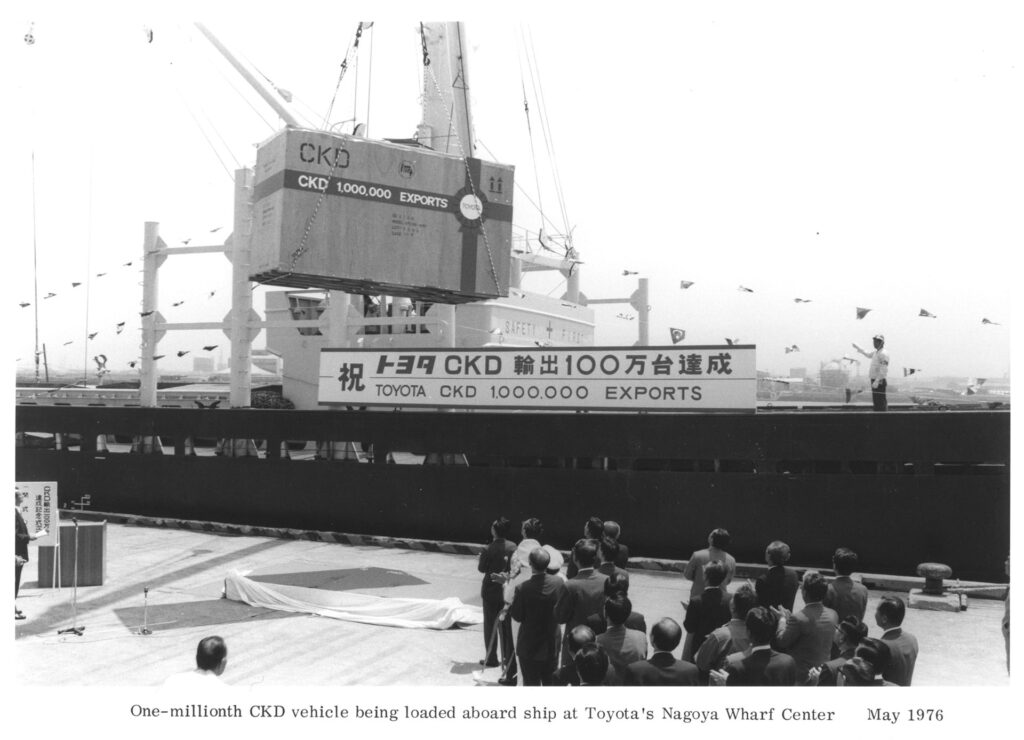
CKDs used to be very common. Small, simple factories would be set up in markets with protective tariffs or other rules about local assembly. Automakers would ship over a crate (sometimes literally) with all the pieces the local factory would need to bolt it together. That includes the body, chassis (if separate), driveline, and interior. The CKD factories created jobs locally, provided revenue for the manufacturer, and brought perhaps higher quality finished cars into the market than any native manufacturer could muster. Variations existed, with some components locally supplied, too.
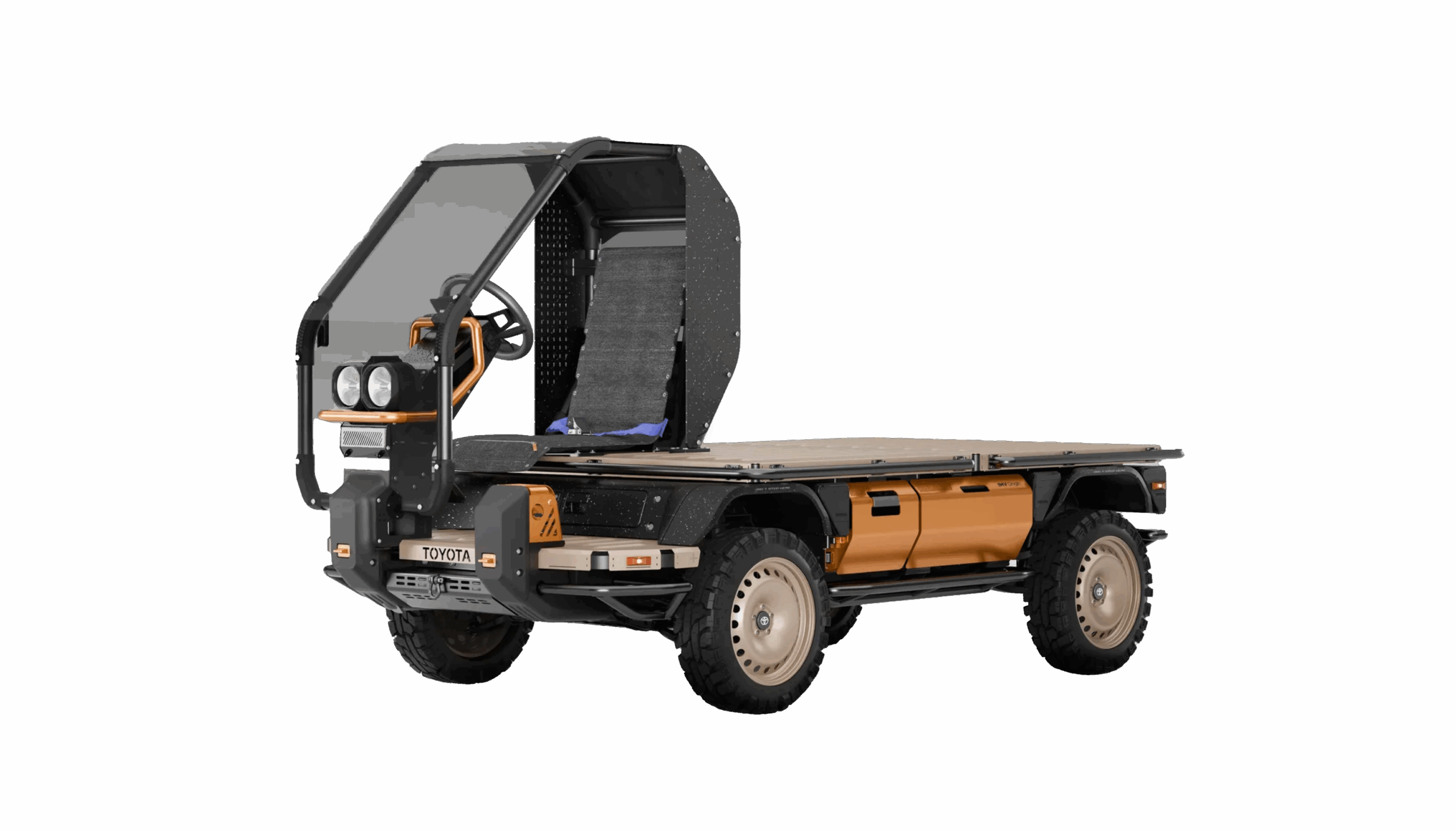
The IMV Origin is a bit different. There’s more missing than is present. It’s essentially a platform suspended above the working bits like the driveline and fluids tanks. The cab is a suggestion, a rough sketch, basically a tubular hoop arcing above a glorified beach chaise. It has the charisma of an Aliens era running prop. Remember, the APC M577 prop was based on a Hunslet aircraft towing tug, so the utility-vehicle-to-movie analogy really holds up.
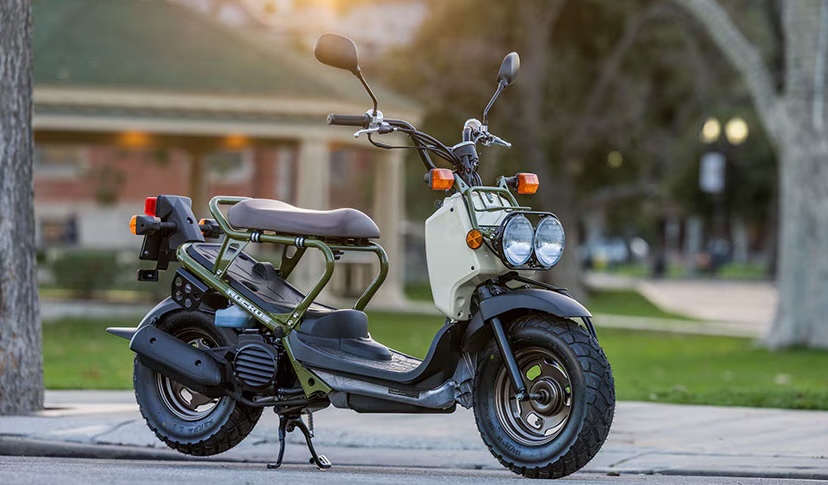
The most charming aspect of the design is arguably the little dual headlight pod attached to the steering column, which is also the dashboard and the closest thing the IMV Origin has to a grille. It’s as if the Ruckus scooter, itself a modern cult classic and the basis for some exceptionally creative modifications, rolled into some green ooze and mutated into a offworld cargo buggy.
The idea, if this were to result in a production vehicle, is that Toyota supplies the chassis that has everything needed to drive. If needed, it could operate just as it is, a little flatbed thing. There’s precedent for this.
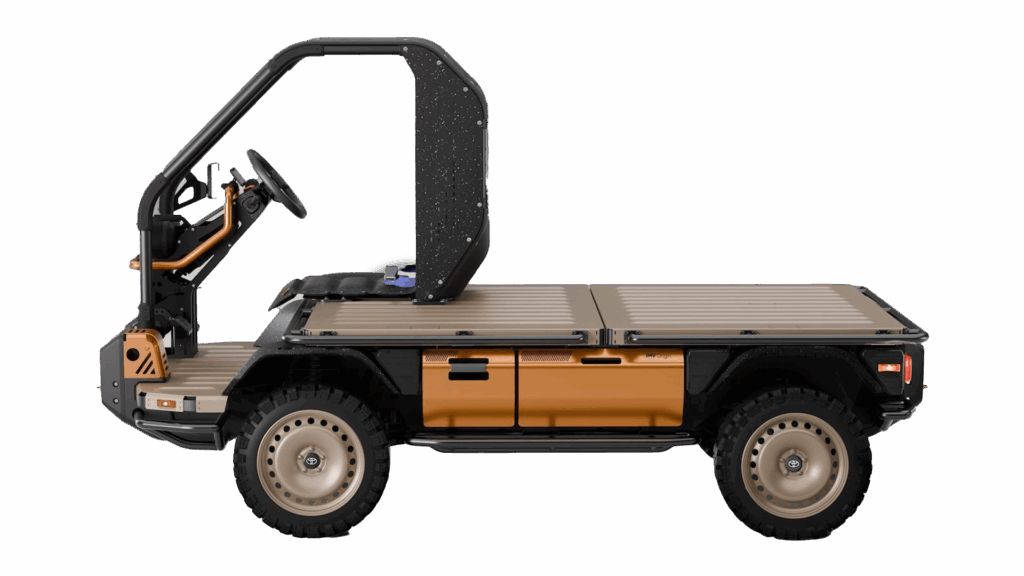
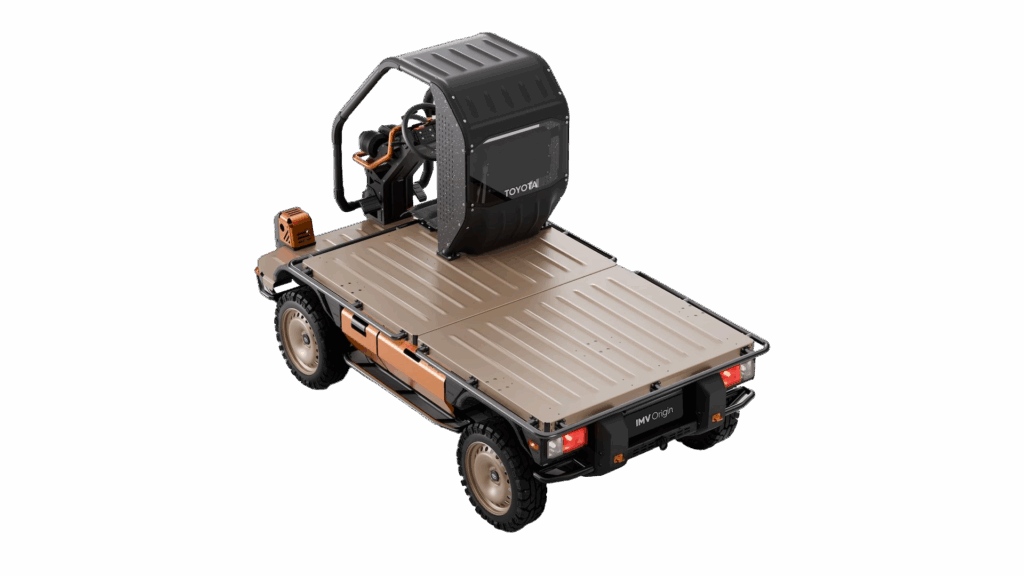
The M274 Mule, used from the mid-1950s through the 1980s and intended for airborne and jungle operations, was very similar in concept. Basically, a tiny vehicle with a seat and a small cargo platform, a half-ton payload capacity, and all-terrain capability.
Perfect for carting ammo boxes to the front line, and wounded out, in places where getting a full-size vehicle in and out of would be impractical.
But unlike the Mule, the IMV Origin would be intended for local modification. Imagine a small local shop, using local materials and production techniques suited to the available labor force, constructing a small dropside bed or cargo box. Perhaps the cabin is modified to allow for an additional seat. It is, quite intentionally, designed to be usable as-is or easily modified.
That’s a big distinction from the usual chassis-cab situation, which is intended to be fitted with a bed or box by an upfitter but not set up to be used in the state it rolls off the line in. You can drive a chassis-cab around, but you can’t do much with it.

This is not a production-intent concept, it’s a concept-concept.
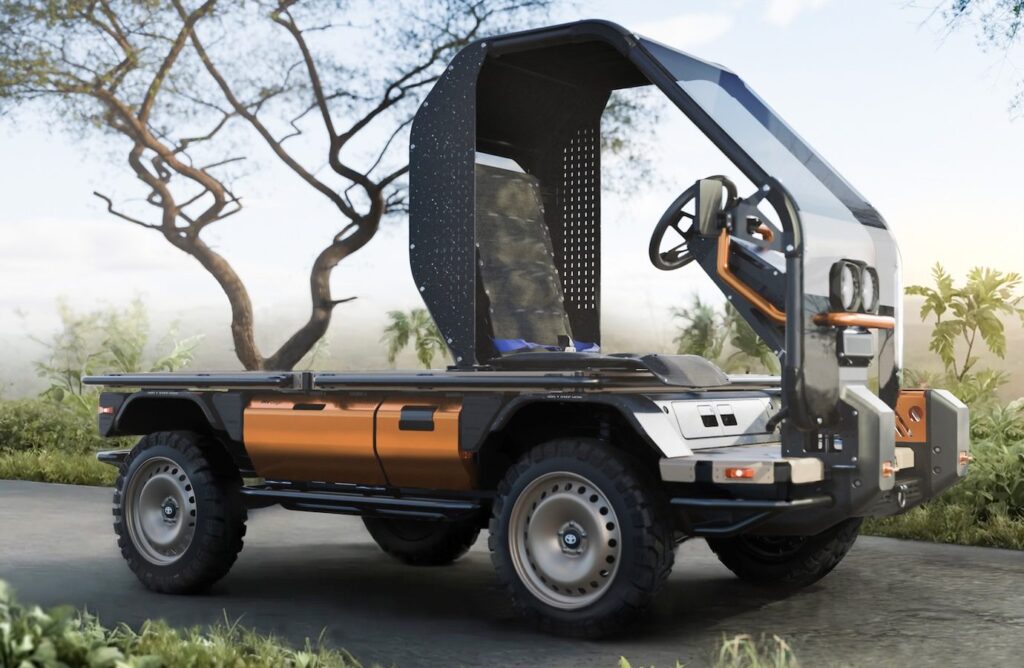
The idea has merit, depending on whether the concept continues on to production and the resulting bottom line. In some markets in Africa, it’d have to compete with the vast number of imported used vehicles and an unquantifiable number of ad hoc vehicles assembled from whatever locals can scrounge together to meet their needs.
Whether a slick customizable vehicle like the IMV Origin is a more practical choice than fabricating a box on an old but perfectly suitable Hilux will depend on the situation.
But as a concept, it’s fascinating from both an engineering and aesthetic standpoint. Just like the Hilux Champ, it’s hard for me not to try to imagine some use case, some excuse to have one myself, its impracticality and complete lack of any hint of safety equipment notwithstanding.
Also, intentionally, Toyota is mum on its mechanical particulars or specs.
It’s just … neat. And for now, that’s all it needs to be.
Recent Posts
All Posts
March 6, 2026
March 6, 2026

March 5, 2026