Ready
January 16, 2026
Rory CarrollGeely has the product to enter the US market tomorrow. Can it succeed selling EVs?
Last week, I went to CES, a trade show about AI. But, I didn’t go there to learn about how AI is a real thing that they’re about to find a use case and a business model for. I went because Geely invited me to drive a bunch of their cars.
Chinese cars have been getting some attention in western media over the last couple of years because they’re sold in western markets, and because journalists and content creators are getting access to them for the first time. Kevin Williams of Inside EVs has been covering them extensively for a while now, and he’s been telling me, his readers, and anyone else who will listen that China is producing some of the best cars in the world right now.
Among those who drive them, including Ford CEO Jim Farley, this is not a controversial opinion. It is controversial to a lot of propagandized Americans who have been steeped in anti-Chinese rhetoric for most of their adult lives. Look at the comments under Kevin’s posts to see some Cold War talking points mixed with the weird kind of racism that white-collar liberals of a certain age practice without even knowing it. It’s also the kind of racism that allowed Japanese automakers to take American automakers by surprise and allowed Korean automakers to take American automakers by surprise again. Kevin also gets a kind of dismissive, paternalistic racism from some of his readers who would believe what he was saying if I was the person saying it. It’s depressing.
I trust Kevin’s opinions and his judgement, we agree on a lot. But I was also dying to see for myself. So, I headed west to what’s been called America’s “woke-free zone”, Las Vegas.
The drive itself was held at Las Vegas Motor Speedway, on the facility’s small, flat “Outside Road Course.” The event drew more media than the organizers were expecting and pretty quickly the drive session devolved into a free-for-all. Of the eleven cars Geely had on hand, I chose the four I was most interested in and I was able to do one lap in each of them. They were:
- The Geely EX5, a front drive, mid-size crossover EV that you might recommend to your neighbor.
- The Zeekr 7X, an all-wheel-drive crossover meant to compete against the Tesla Model Y.
- The Zeekr X, a 422hp compact crossover/hatch, EV.
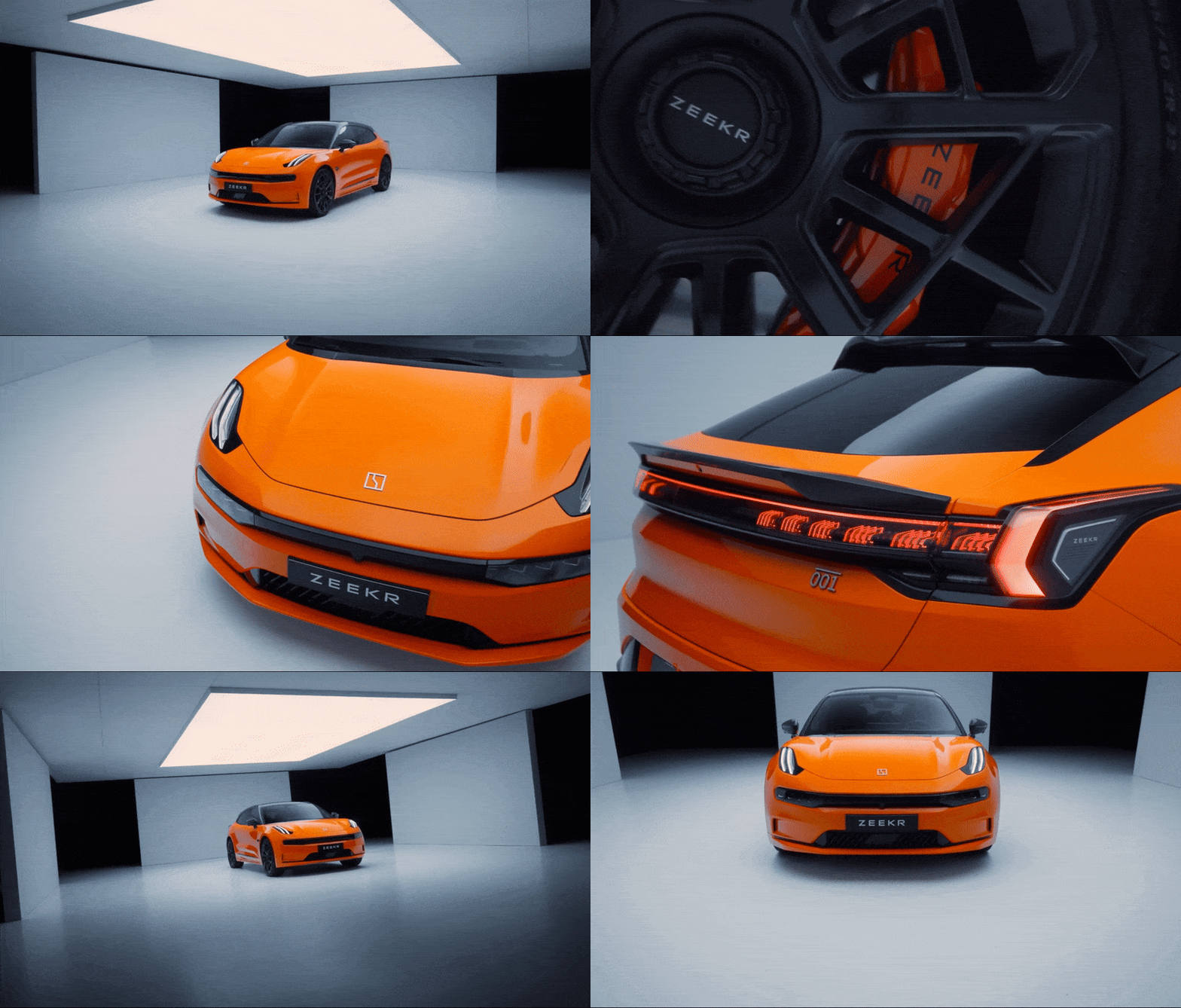
- The Zeekr 001, a 536hp hatchy thing.
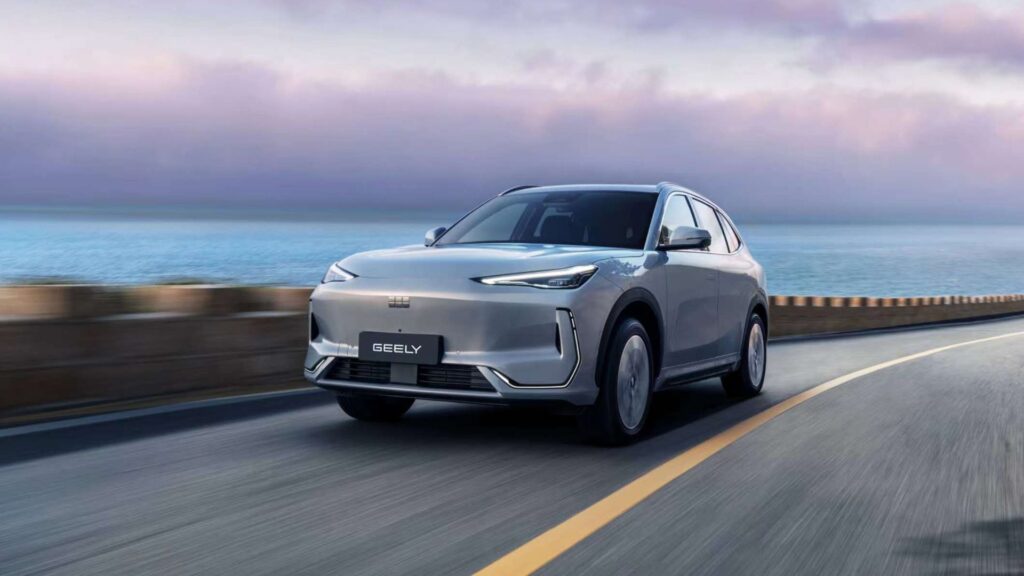
The Geely was clearly tuned for maximum comfort vs on-track performance, which brought me to the realization that I’d never driven a regular, workaday crossover on a race track and couldn’t really say how the EX5 would compare to a Chevy Equinox EV in the same scenario. I can say without hesitation that it’s a very nice car inside and out.
The Zeekr 7X was better on the track and it looks and feels more novel. While I waited to drive, I spent some time poking and prodding a Mexican-market 7X and from the paint quality to the welds, to the interior fit and finish, it was as good as anything being sold in the states. It was a hoot on the track, too–very composed and quick.
The X was probably my favorite car to drive. I heard that it wasn’t selling exceptionally well in China and I would not be surprised if the appeal was limited here, too. But, the interior is thoughtfully designed with a little hanger for your bag, a leather case for sunglasses built into the driver’s grab handle, and big chunky rocker switches for the rear windows. The center screen also slides over toward the passenger, which was a little gimmicky to be honest. The handling was very lively with the rear end eager to rotate. I would have been very happy lapping the little thing all day.
The Zeekr 001 was the star of the show, probably turning more hard laps than anything else we got to drive that day. By the time I got to it late in the day, the brake travel felt a little long, but it still delivered on the track, behaving very predictably.
At the risk of overstating it, every single car I drove was well-assembled and thoughtfully designed. They were comfortable where they were supposed to be, fast where they were supposed to be and most impressively, very well-tuned. I didn’t see a single thing that felt less than ready for the American market.
Today, American, Japanese, European and Korean brands don’t have to worry about competing with Chinese automakers in the American market. But we all know that American policymakers are willing to hold the line until a Chinese carmaker proposes building a factory in their district. The President said as much on Wednesday, and Geely understands it.
I tend to think the line about Chinese automakers being subsidized by their government in a way that’s unfair to western competitors is probably exaggerated. Do you know of a car company that’s paid full price and carried a full tax burden for an office or factory they’ve built in the US recently? But, ultimately, it doesn’t matter what’s fair. If Chinese cars hit US shores at a price that American consumers (the ones who can still afford a car) like, the cars I drove would be competitive against anything in their respective segments.
And that is where the trouble may lie. Geely makes gas, electric, and hybrid cars, but I assume the plan is to enter the American market with an EV brand, likely Zeekr. As a number of legacy automakers have discovered recently, selling EVs in an increasingly EV-hostile America is difficult work. That said, the two biggest impediments to EV adoption here are price and infrastructure. I don’t think Geely would be eyeing this market if they didn’t think they could compete on price. Would they be willing to make a Tesla-like investment in charging infrastructure here? That’s an interesting question.
Recent Posts
All Posts
March 6, 2026

March 6, 2026
March 5, 2026