Art of the Steel
April 2, 2026
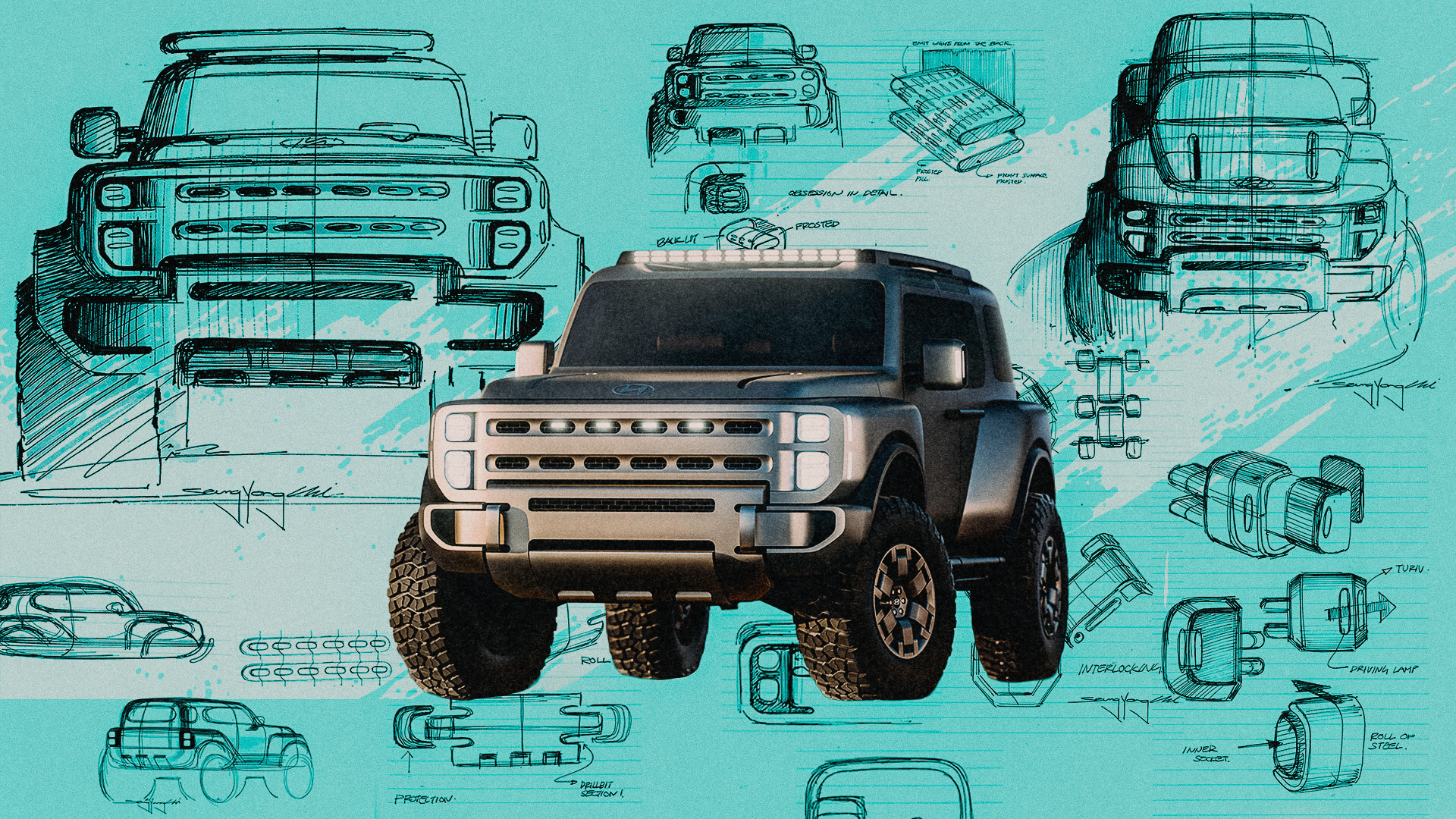
Alex KiersteinWhat the Hyundai Boulder Concept says about the Art of Steel design language.
I’m not entirely objective when it comes to Hyundai design; I’m a fan. And I appreciate the company’s recent retro designs for two reasons. The first, to be perfectly honest, is that I’m the right age for the design cues to hit. Giugiaro angularity is very much my jam. A buddy of mine learned how to drive in an Isuzu Impulse, for example, and I’ve always loved those. Secondly, a lot of the retro-ness is self-referential, which is fantastic because it’s an affectionate reinterpretation of some cars that were not objectively that attractive or well screwed together. The Hyundai Pony, for example. It’s important to the company, and it has a kitchy appeal, but a Lexus ES250 it was not. And that leaves me a bit crossed up by the Hyundai Boulder concept.
Not that it’s completely Hyundai’s fault. While Hyundai as the broader entity has some experience with military light utility vehicles, this has mainly been through its Kia brand. Historically, a Kia predecessor—Asia Motors—built licensed Jeep CJs and SJs. This evolved into a Mazda-based, Jeep-like SUV called the K131, sold as a Retona to civilians. It looks like a blend of Soviet Bloc UAZ and second-generation Ssangyong Korando, but better than the latter. Certainly ripe for reinterpretation, I’d say.
Hyundai’s core brand doesn’t really have the same military pedigree. The Hyundai Rotem subsidiary builds tanks and APCs, and there’s a historic and current commercial truck and bus division. But isn’t anything quite like the Boulder in its portfolio. Since it can’t be self-referential, it seems a bit derivative to my eye.
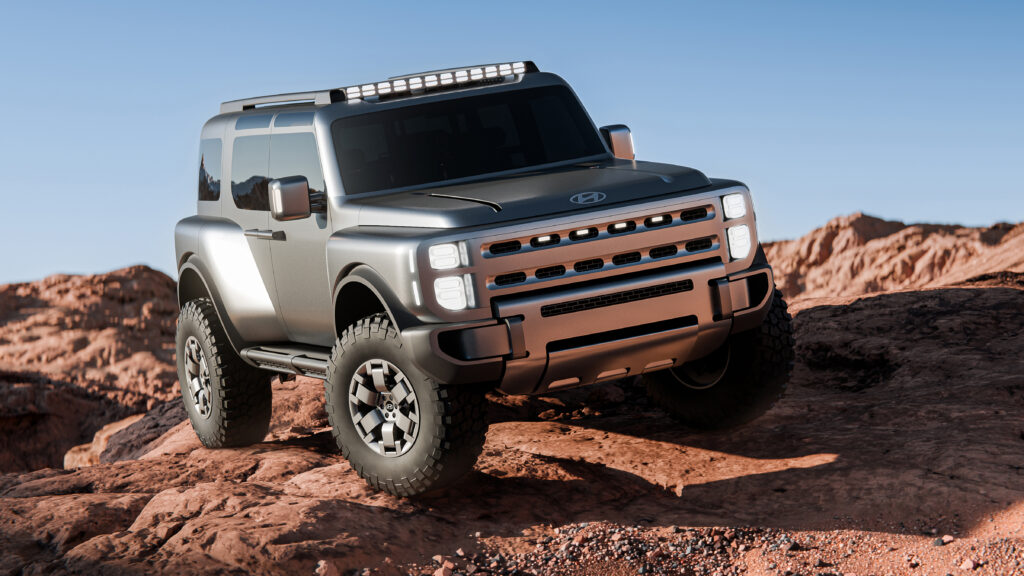
It doesn’t help that the silvery exterior and blocky proportions made everyone in our industry instantly think of the 2004 Ford Bronco concept, produced during one of the company’s design highpoints. It didn’t directly influence a production vehicle but certainly had an impact on the eventual sixth-gen Bronco that’s on sale today. The Hyundai Boulder isn’t a clone; virtually all of the specific details differ, from the profile to the fender curves, the stacked headlights, the safari roof. The resemblance is very superficial, but it leaves a vague sense that there were a lot of non-Hyundai products on the designers’ mood board.
I’m sure the Hyundai designers would scoff—who cares that a 22-year-old concept was also painted silver? Hyundai has a very good reason for the Boulder to feature a metallic finish. Hyundai is a chaebol—a large conglomerate with lots of vertical integration. Hyundai Steel is a massive operation, and as part of the Hyundai Group it can preferentially provide other subsidiaries with specialized products. Need a special high-strength steel for a lightweight chassis component? You don’t have to find a third-party supplier; just talk to your colleagues in Incheon. The silver finish celebrates that relationship, which is a key facet of the Hyundai Group’s identity and also a significant asset.
So significant that the design language is called “Art of Steel,” incidentally. It debuted on the Intium concept, which to me seems like someone took the Ioniq 5 design language and ran it through a Y2K-era styling machine. The result is better than my description sounds.
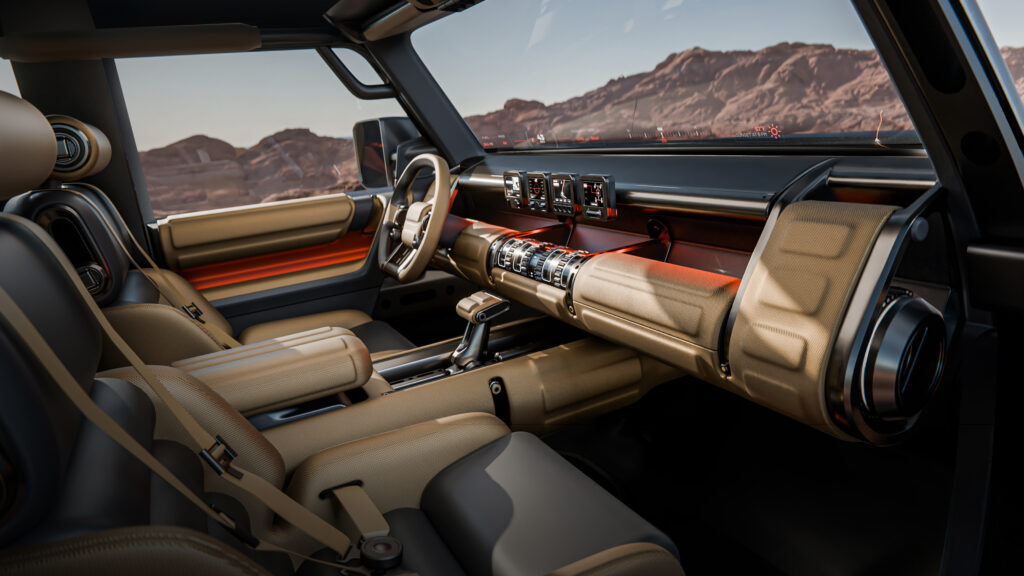
I like the Boulder Concept. It is rugged, handsome, adventurous—descriptors I’m sure the marketers are ecstatic to have applied. But there’s also something slightly generic about it, as if combining aspects of military light utility vehicles in general (consider the Land Rover-associated safari roof) results in something less than the sum of its parts. I don’t wish that Hyundai had recast the K131/Retona in modern form, but I do wish it had some of the wild distinctiveness that even the mass-market Palisade has. Those wild opaque running lights!
I will say this: the Boulder Concept is so much better-looking than the Kia Tasman pickup that I’m sure it will ignite that internal rivalry. A Boulder-derived truck would, I’d hope, cause an instant emergency redesign of the too-weird Tasman. So that’s a very positive thing.
Recent Posts
All Posts
April 3, 2026
April 2, 2026
April 1, 2026
Leave a Reply