Reality Check
December 16, 2025
Alex KiersteinFord makes some big moves, drastically scaling back its EV ambitions in the face of reality.
“Ford Follows Customers to Drive Profitable Growth,” reads the headline of a Ford press release announcing a strategic realignment of several aspects of its business, and to this I say: “Where’s the lie?” Ford is following its customers and is doubling down on surefire profit-making vehicles, backing off of various EV plans and transitioning to a mix of electrified and traditional internal combustion products. Its BEV portfolio is not an objective success. The F-150 Lightning will turn into a PHEV. Big EV plans are canceled.
It’s a murmuration of automakers in flight, a collective behavior. Automakers are rushing to scrap or dilute EV plans. Behind it all is an acknowledgment of just how easily dismantled (and ultimately how half-hearted) the national desire for wholesale change really was. Some of the EV push was based on international consensus and overseas mandates, but those are being reconsidered as well. The question, really, is where things will settle, what percentage of the overall mix EVs will present.
Thus, automakers are going to throw things back to the customers. It’s not exactly a democracy, though. Factories aren’t erected or retooled on a quarter’s worth of sales results. Even Ford, here rethinking its EV push, has investments, union contracts, supplier agreements, product cycles … thus, “customer choice.” For now, Ford will offer options. It will hedge.
This is sensible. But arguably, given the amount of time it takes to turn a ship this large, perhaps not hedging enough. As vehicles like vans and trucks shift to hybrid and EREV offerings, Ford’s remaining EV initiative is the Universal EV Platform. A flexible mid-sized architecture that will allow several “reasonably priced” vehicles to proliferate from the company’s $5 billion investment in the project.
“This is a Model T moment,” Ford said back in November. Even between now and then, it seems an incongruous thing to say. After all, Ford claims there is “no path to profitability” for its larger EVs. Like all domestic manufacturers, Ford has also had difficulty building smaller vehicles profitably. In that November announcement, Ford described its solution for addressing both issues with new manufacturing processes.
Here is what I know: the BEV F-150 lightning is Dead.
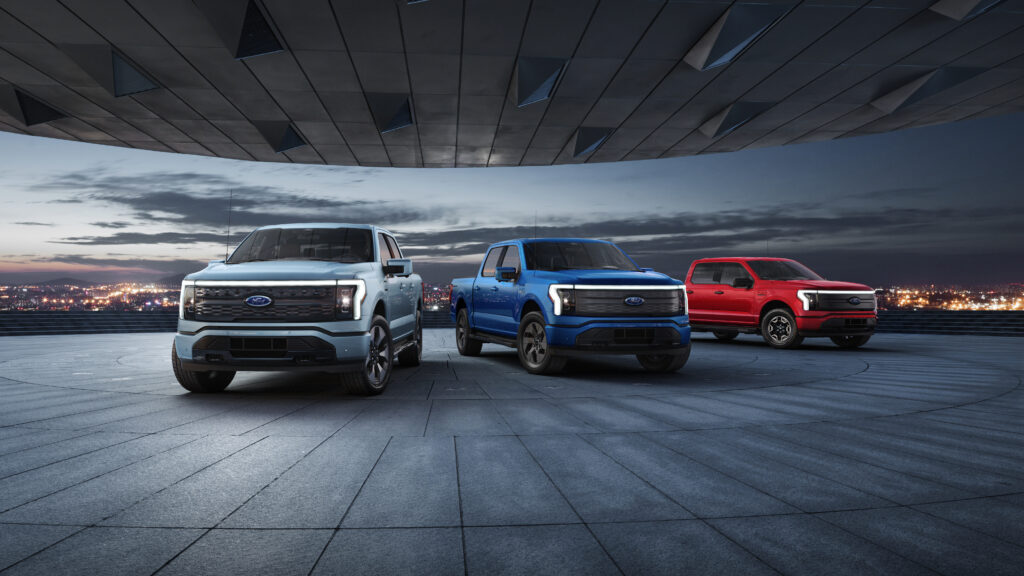
Here is what I know: the BEV F-150 Lightning is dead. Ford is winding down production. Its EREV replacement’s timing is TBD. Ford’s promises about it seem realistic if ambitious for a pure series hybrid, as Ford claims it to be. Seven-hundred-plus mile range. Zero-to-60-mph acceleration of less than 5 seconds. Worksite or home emergency power output. This is probably the F-150 Lightning that Ford should have built first, or at least offered in parallel with a BEV variant to address some of the very valid real-world concerns about towing and range.
Ford will not produce another EV van for our market. Its replacement will be a gas- and hybrid-powered van built at the Ohio plant that makes the E-Series van. Whether this marks the Transit, built in Kansas City, for death in this market is an open question—and one I’m waiting to hear back from Ford about. And with the Tennessee Electric Vehicle Center renamed the Tennessee Truck Plant, it could have broader implications for Kansas City—already having endured layoffs earlier this year due to supplier issues.
Ford was the Big Three automaker who at times seemed the most bullish on BEVs. But with a swift political realignment comes a swift reality check. What will matter the most moving forward is actual affordability, not merely profitability, and the actual market appeal of the vehicles. It will be interesting to see if Ford can turn this moment of upheaval into an opportunity.
Recent Posts
All Posts
March 17, 2026

March 16, 2026

March 12, 2026
Leave a Reply