FIREFLY
November 12, 2025
Alex KiersteinNIO’s Firefly sub-brand shows how some Chinese automakers are pushing the envelope of exterior design.
It seems inevitable that, when a country’s automakers try to break out on the world stage, the first step is overcoming mild derision. Hyundai’s tough, long road to parity, started in Canada with the Pony and here with the Excel—neither of which were great vehicles. Hyundai itself has achieved enough mainstream success to loft its earliest efforts onto pedestals, for the Pony to have a cult following, and for even the Scoupe and Tiburon to seem kind of fun in retrospect.
From a design perspective (and, I gather, an engineering and dynamics perspective, judging by the balance of respected and objective reviewers who’ve come around), the Chinese are breaking out. I put forward the Firefly, NIO’s recent new brand focusing on premium subcompact city cars, as evidence that unique design languages are emerging.
I am not arguing that the Firefly is beautiful—it’s not. It might be handsome. What it isn’t is derivative. And it’s the highly derivative designs that have been getting some attention, probably unfairly. There’s the Ora Ballet Cat, but there’s also the Xiaomi YU7, which is arguably better looking and more distinctive than not only the Tesla Model Y, but also the Alfa Romeo Stelvio.
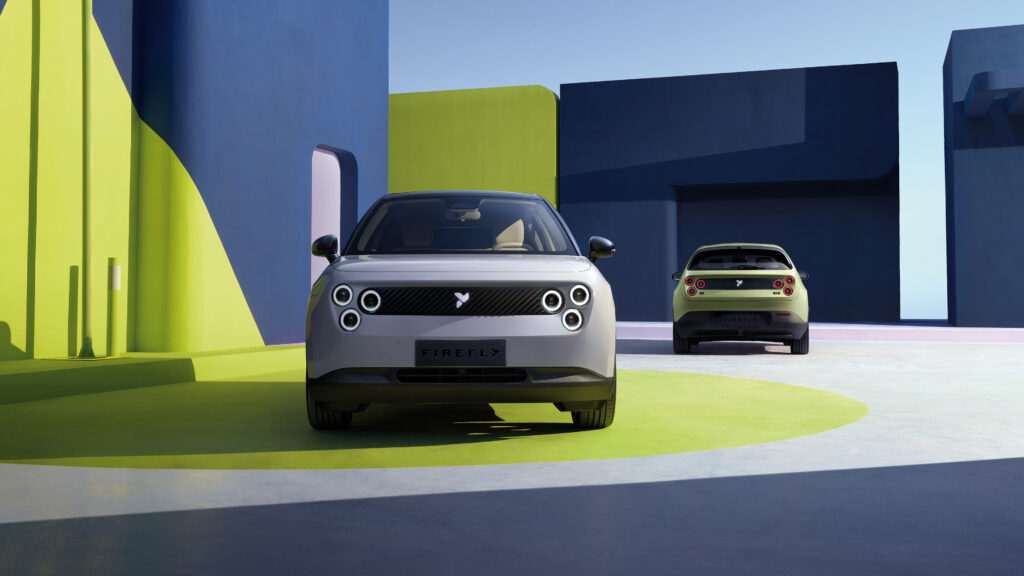
Even the Xiaomi designs of late borrow heavily from the sleekness made fashionable by Tesla and Porsche EVs, but the Firefly stands out for not looking borrowing the best elements of its competitive set. It’s on sale in Europe, too, so that set includes the Fiat 500e and the various Mini and Smart products. It’s been described as a Mini analogue, being sporty and premium, but no one would confuse the Mini’s steady evolution of its heritage design with Firefly’s bold “three-halo” signature.
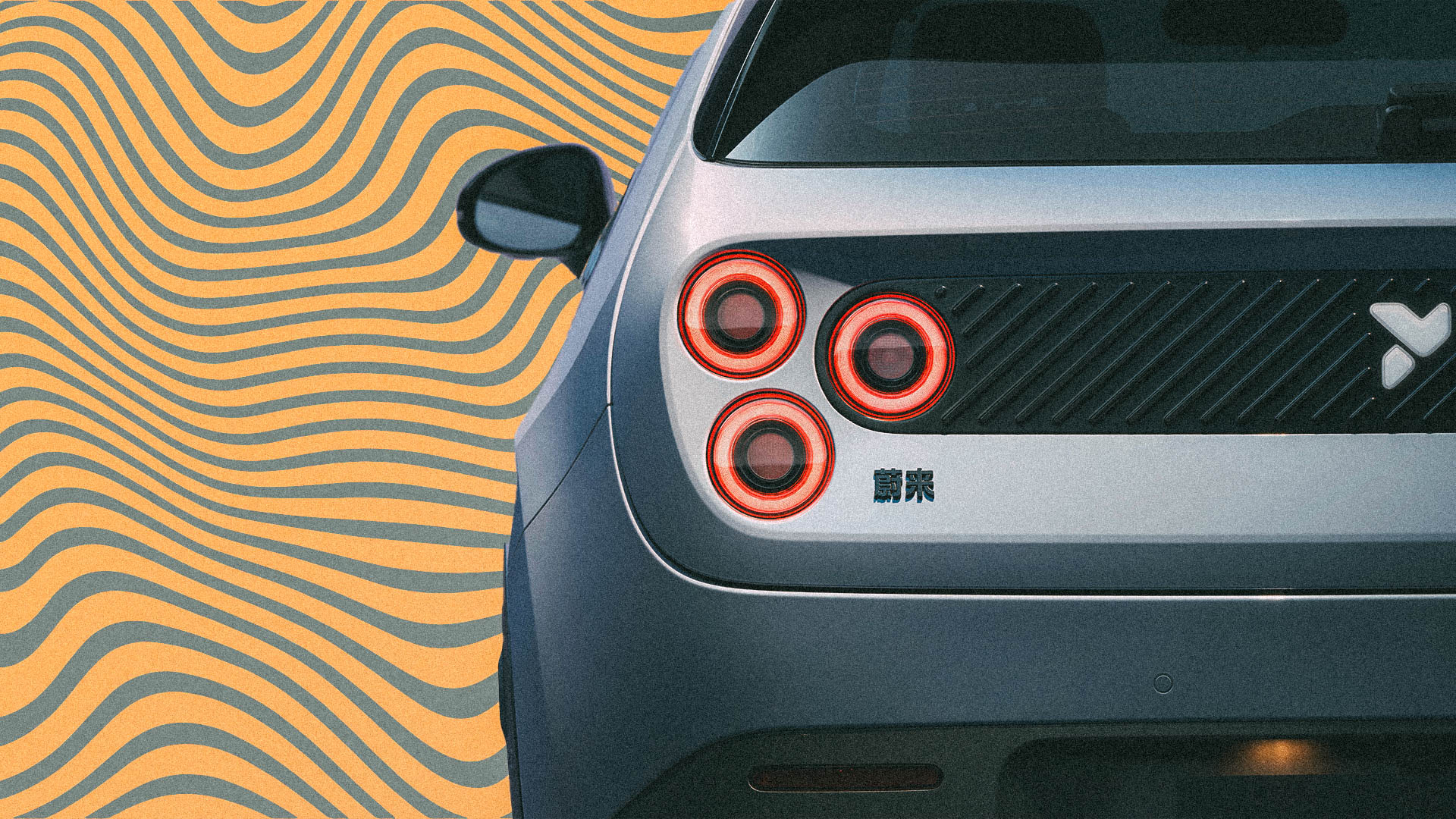
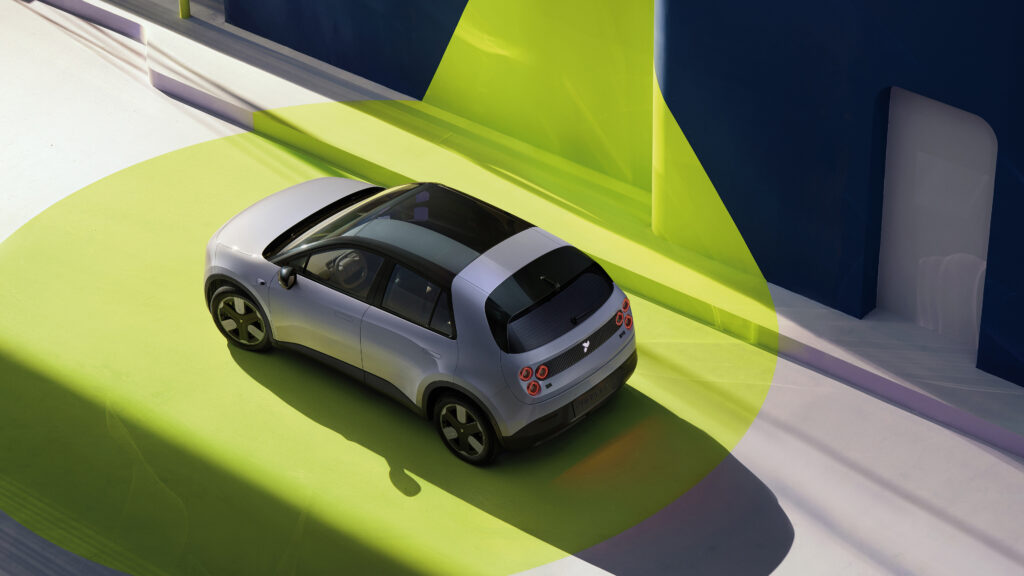
The Firefly plays with symmetry in interesting ways. The front and rear lamps are very similar, both set into large oval concave scallops with a central dark contrasting oval panel. They’re arranged the same, they’re presumably the same size. But there’s no “is that car coming or going?” schtick, simply due to the car’s shape and the contrast between the headlights’ white halo DRLs and the bright red bezels out back. The trio of lenses no doubt partially references the three-lens arrangement of many premium smartphones. (Nio now makes phones, as well, in what is becoming a trend in China of blurring those two genres. Good for consumer brand recognition, good for software ecosystems, very good for gathering data on users.)
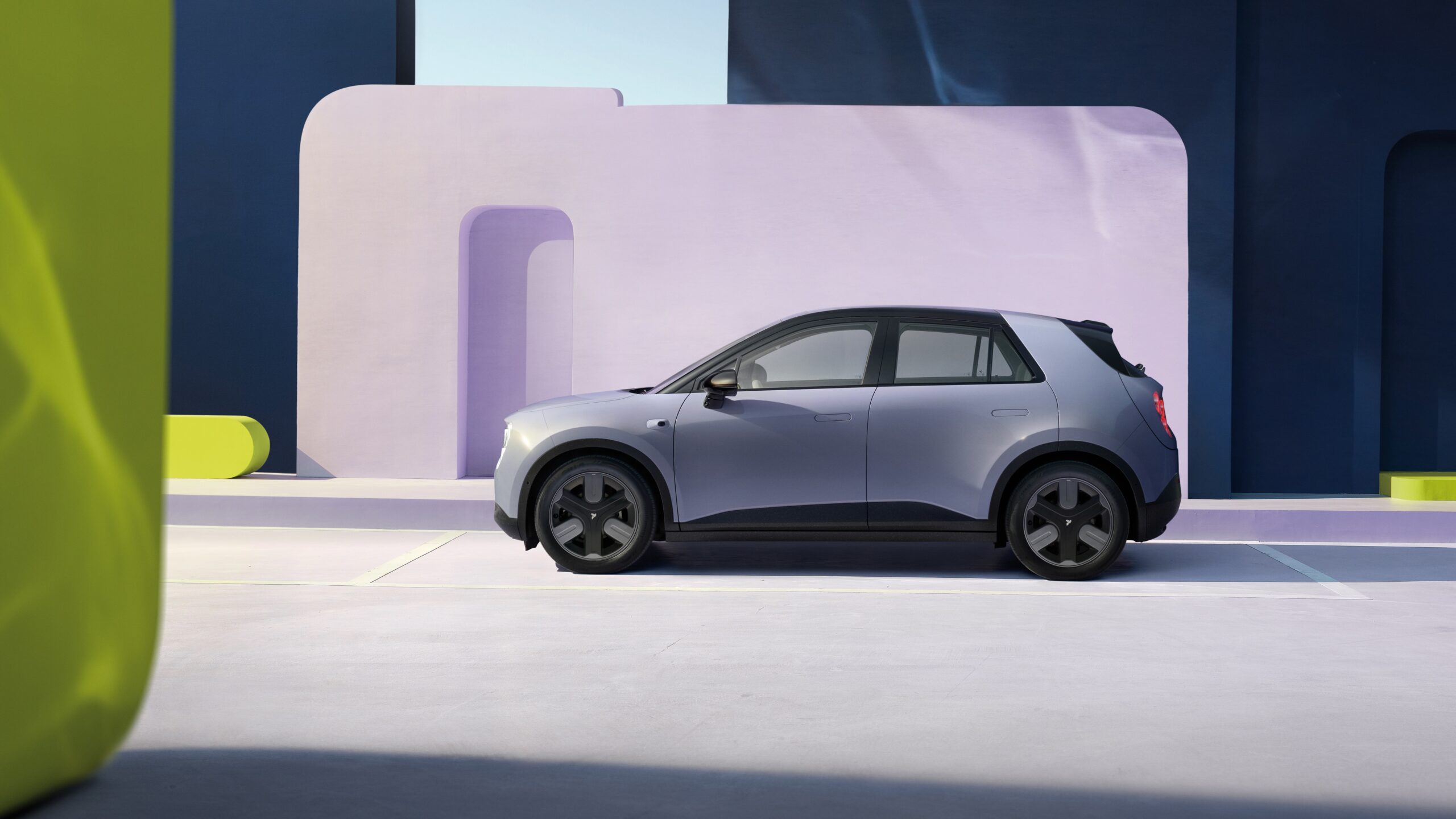
Lots of automakers have been playing with stylized C-pillars, as well, but the Firefly design team (under the leadership of Kris Tomasson, head of design at Nio since 2015 but formerly at Ford’s Premier Automotive Group and BMW) paired a blacked-out greenhouse with a simple, proportional “hoop” that arcs forward. It’s body-colored, not festooned with any vents or badges. It reduces some of the visual weight of the vehicle, which is otherwise rather chunky. This is more Volvo EX30 pseudo-SUV than the Mini’s distinct two-box profile, but it works.
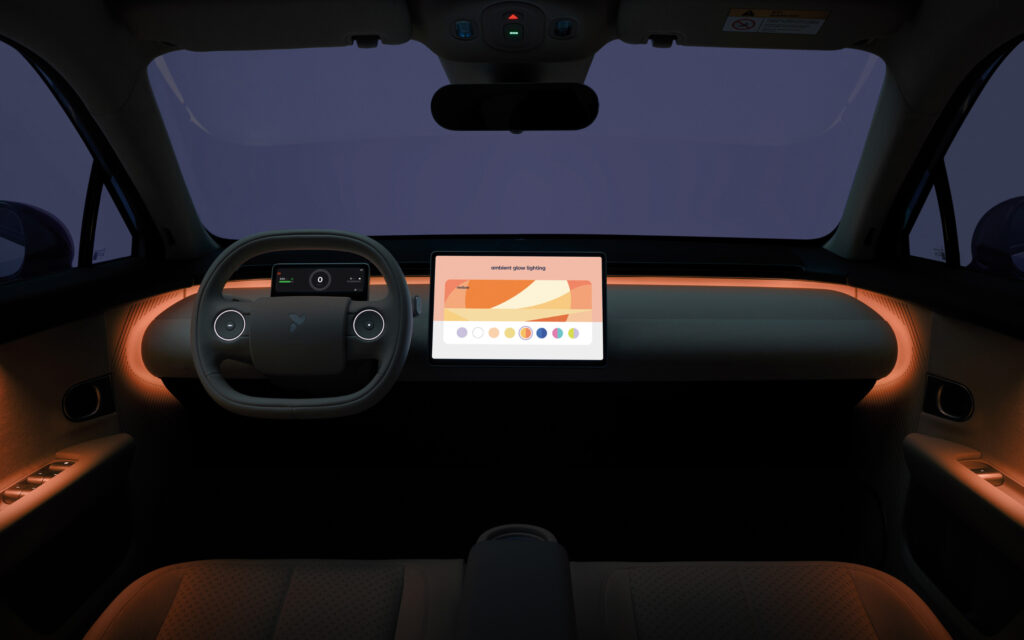
It also works well inside. The interior design is much less distinctive than the exterior, but the wide, simple dash, open floorplan ahead of the front seats, and very fast and responsive center screen software has charmed the reviewers whose pieces I read while researching this piece.
At 141 hp (soon to be 161 due to a motor upgrade) and 151 lb-ft, the single rear-mounted e-motor is adequate to provide enough scoot to be called sporty. There’s 42 kWh of juice in the battery, giving it a claimed range of 240 miles on the CATC cycle. And it is priced in the upper-$30,000 range in Europe.
The six-light fascia on the Firefly is probably a bit too insectoid to make the right kind of waves for an American-market debut, but it’s impressing European reviewers for what it is, not what it resembles. That’s an important bar for Chinese cars to clear as they seek to expand beyond their own highly competitive, highly innovative, and rapidly improving home market.
One response to “FIREFLY”
-
I see it as very derivative of the Honda e – the black panels bridging the lights front and rear, the A/B/C pillar treatment, the surfacing treatment of the flanks and wheelarches, the drivetrain layout, even the battery capacity. However it’s promised to be a fair bit cheaper than the pricey Honda, and it may have usefully more space inside.

Recent Posts
All Posts
March 6, 2026
March 6, 2026

March 5, 2026
Leave a Reply