Mass Transit

January 26, 2026
Alex KiersteinWant another reason to be endlessly fascinated with Ettore Bugatti’s legacy? This is the Autorail.
I love the broad strokes of the Bugatti Autorail’s conception. The mammoth, exquisitely engineered engine of an elephantine luxury vehicle of unparalleled elegance that was, due to circumstances, essentially surplus. The idea to repurpose it—rather, several of the engines—into a railway role. The result, which involves setting two absolute train speed records, and then suffering badly due to not only reliability issues but a devastating world war. Brilliant, problematic, and short-lived.
The Bugatti Autorail was a train, but a particular type of train. Autorail is a French word for what is essentially a large tram; think a rail vehicle that is self-propelled, like a large passenger coach with an integrated powerplant. In the Bugatti Autorail’s case, there were a few configurations, with smaller units that looked like a single self-propelled coach, unarticulated double units that looked like two coaches grafted together with an engine compartment in the middle, and triples that looked like a double but with an additional coach attached to one end.
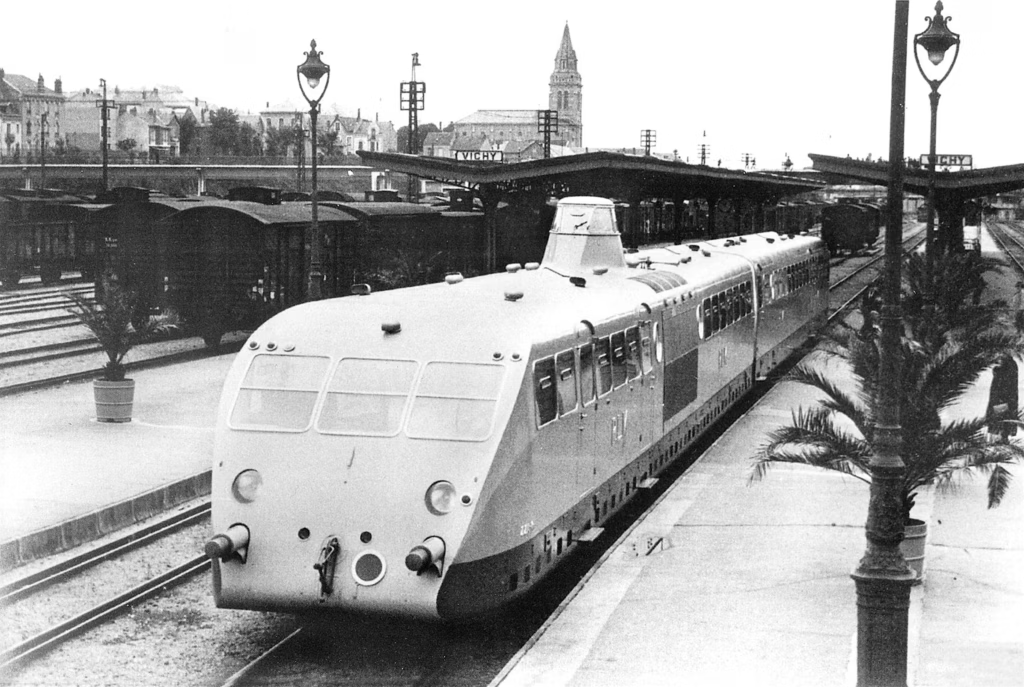
While they resemble a streetcar or tram, the idea was that they would be used for high-speed regular train service, offering a nice alternative to buses or slow, ponderous conventional trains. Apparently they were popular for a while, with Renault producing some before and after WWII, Michelin building some rubber-tired trains (which is a subject for another article), and even some self-propelled Budd coaches that were a distinctly American take on the concept.
But none of these had a 12.8-liter, overhead cam straight-8 in them. As Bugatti tells it in a history published on its media site, the concept was born from the realization that the large Royale wasn’t going to sell during the Depression. Bugatti was sitting on a bunch of Type 41 engines, and that was a damn shame .
It’s not entirely clear from the sources I’ve come across what the genesis of the idea was. It seems like it was simply a creative solution to finding a use for the engines. I wonder if Ettore reached out the the French railway before the design process started to see if it was interested in the concept. But Ettore seems to be intimately and personally involved in the project, and it was ultimately a success. According to the Bugatti Foundation, the Bugatti Autorail program was financially successful, even though the Royale that birthed it famously was not.
The Autorail is notable for a couple of other things. One variant, with a quad-engine, 800-hp arrangement, set a world speed record of 122 mph in 1934. A few things helped the Bugatti Autorails achieve such high speeds. One was an aerodynamic form, with a sloped front end. Compare that to a typical steam locomotive, even the high-speed streamliners of the 1930s, which had much bluffer front ends. If anything, the Autorails more closely resembled the aerodynamic shape of the TGV (far off in the future) than even the postwar aero trains.
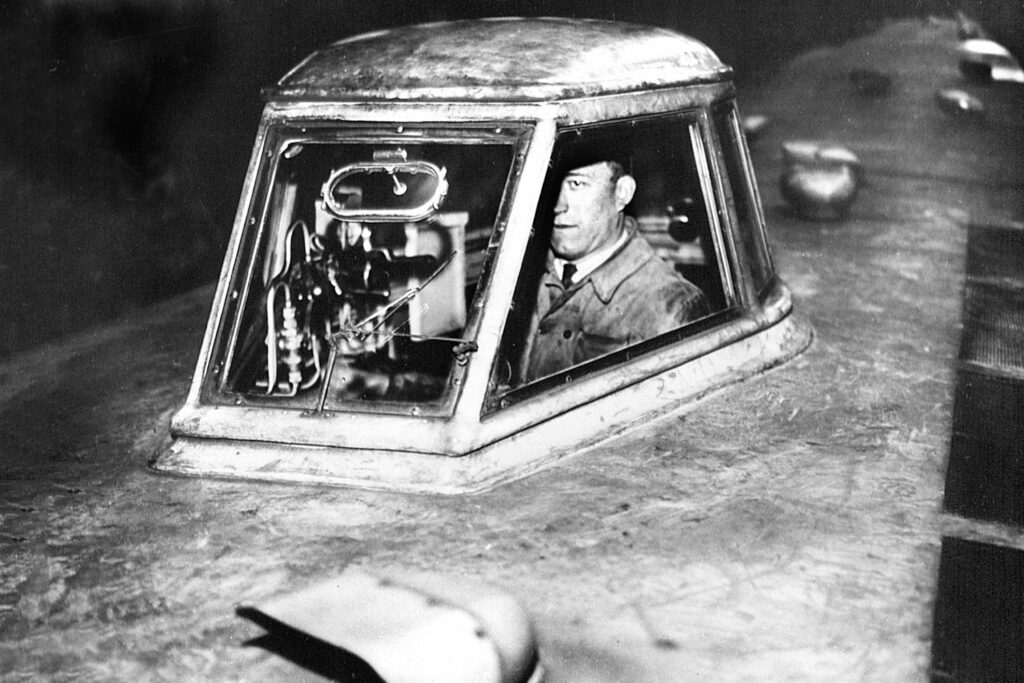
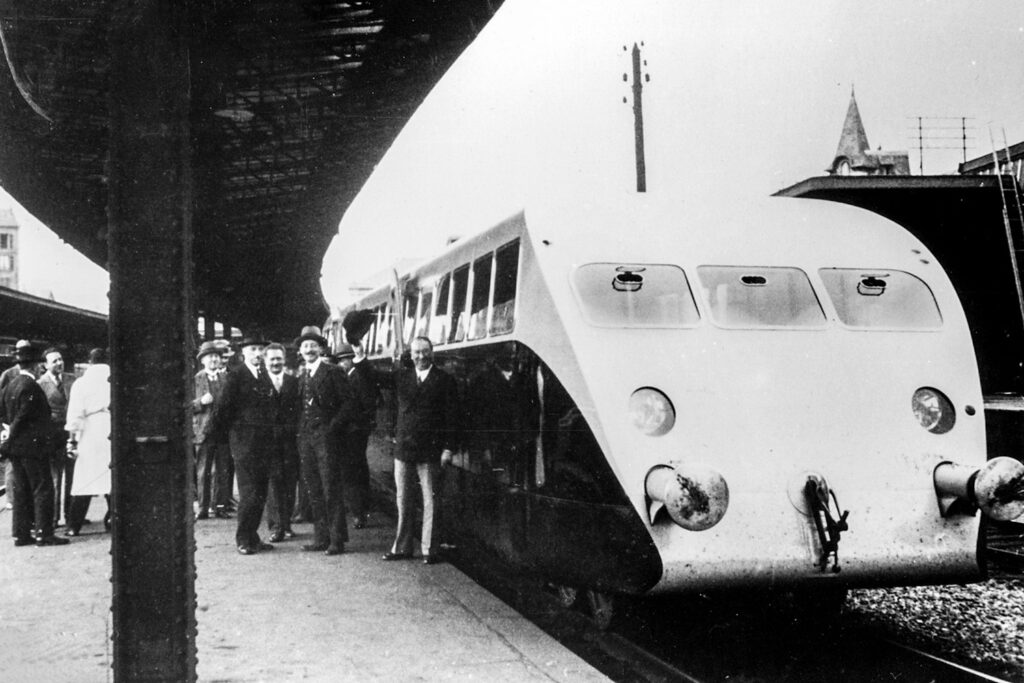
The Autorail was also, arguably, the last gasp of success for a company that would soon be destroyed by war and tragedy. It turned Molsheim, as Retours magazine argues, into an industrial company rather than a low-volume specialty firm until the very strict control of Ettore himself. In fact, with the advent of Autorail production, Ettore turned management over to his son, Jean. But Jean would die in a vehicle testing accident in 1939, which was also an inauspicious year for European events anyways. The war would destroy Bugatti’s factory, Postwar plans would flounder; a handful of cars were made. And Ettore himself died in 1947; the original company closed its doors a few years later.
Perhaps ironically, the Autorails were not used for a long time. The consensus is that fuel consumption (and the cost of fuel) made them uneconomical. Given the economic situation in postwar Europe, it is perhaps understandable that complex, fast, and luxurious Bugatti Autorails were not the vibe French rail operators were going for. A few lingered in service until 1958; only one survives to this day.
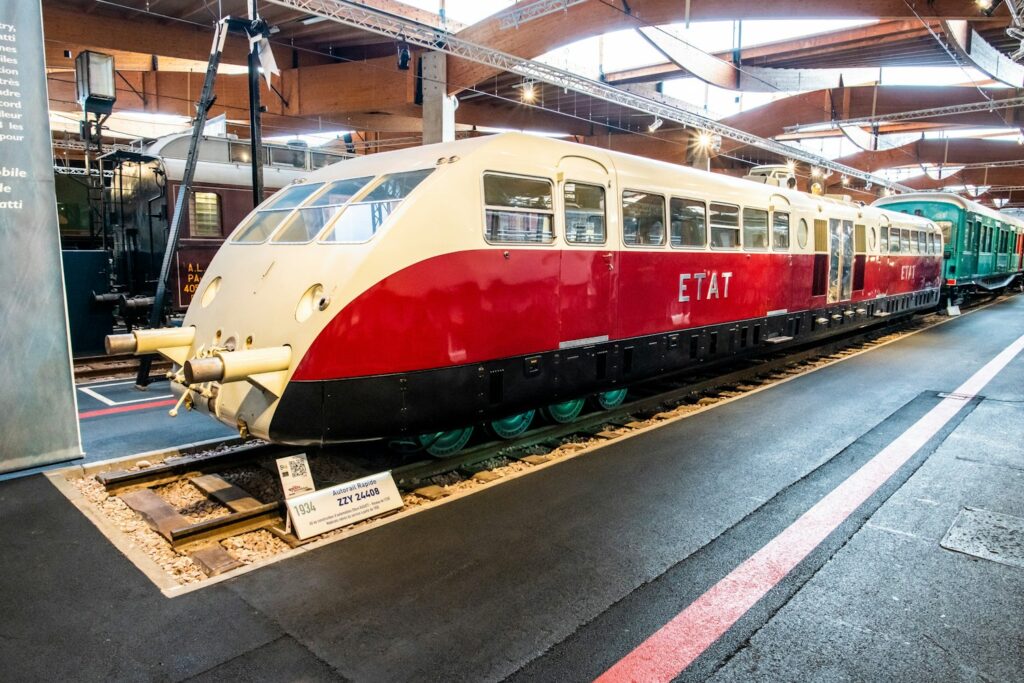
Incidentally, that surviving train will be at the Retromobile Show in a few weeks, the star of an exhibit celebrating Bugatti’s more eclectic creations. If you happen to be in Paris starting on January 28, you should go see it.
Recent Posts
All Posts
March 12, 2026

March 11, 2026

March 10, 2026
Leave a Reply