Non-Porsche
March 16, 2026
Alex KiersteinIt’s charming. It’s VW-derived. It’s sporty. And like early Porsches, it’s from Austria. But it’s not a Porsche.
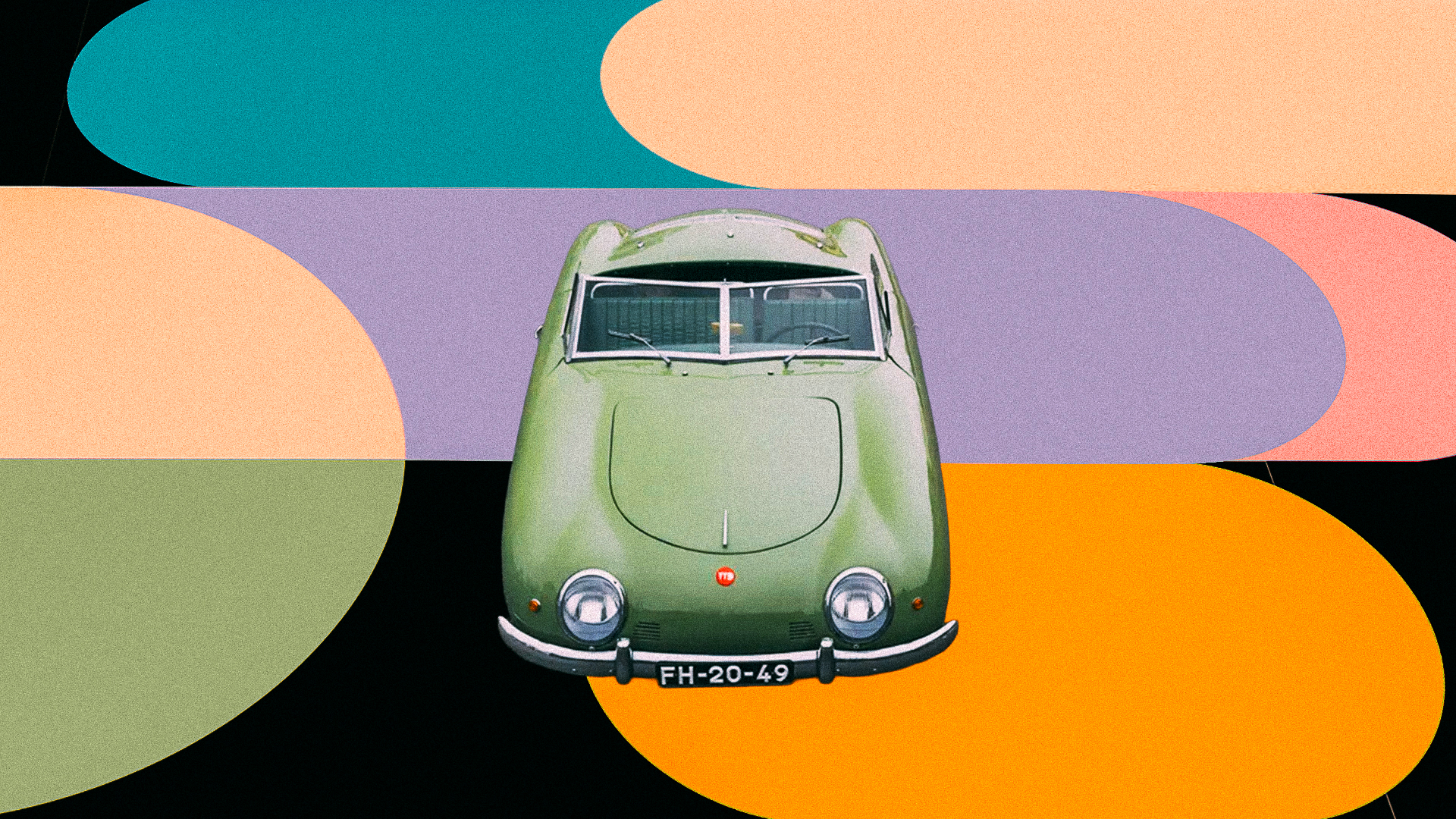
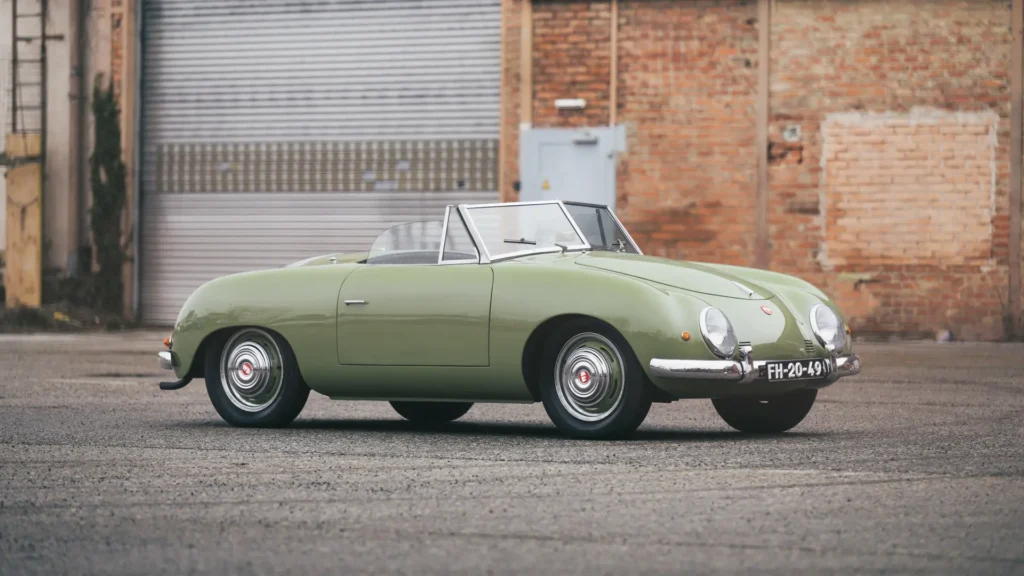
With an impending oil crisis, international conflict, and a worsening economic situation domestically, I veer between distraction (browsing car listings) and a vague revulsion at the seven-figure exotics. “A Ferrari, in this economy?” I mutter at my screen. Not that the ultra-wealthy are as affected (or troubled) by the sort of headwinds that send most of us into hoard-every-dollar mode. Today, I browsed up a something that for someone in between the one-percenters and myself, might be the perfect not-a-Porsche, this 1954 WD Denzel 1300.
It has the charm of a Porsche 356, well-known Volkswagen underpinnings, and it is just enough of an oddball to guarantee double-takes. A conversation starter, if you’re into that sort of thing. And it isn’t one of the thousands upon thousands of 356s, both meticulously restored and delightfully hot-rodded, that you see all over.
I wouldn’t say a Porsche 356 is boring. I would say its success in its era and its mechanical simplicity made them easy to keep nice. For a long time, they were an entry point into the classic Porsche world. Not expensive enough to be precious, not cheap enough to be trashed. A Goldilocks existence that 356 owners had to share with a lot of other 356 owners.
I’ve seen a lot of 356s. I have never, ever seen a WD Denzel, although I was vaguely aware of them. A short-lived example of parallel evolution—sort of. Wolfgang Denzel built his cars to seek maximum performance from a Volkswagen-derived powertrain, just like Porsche, but in some ways the Denzels were better.
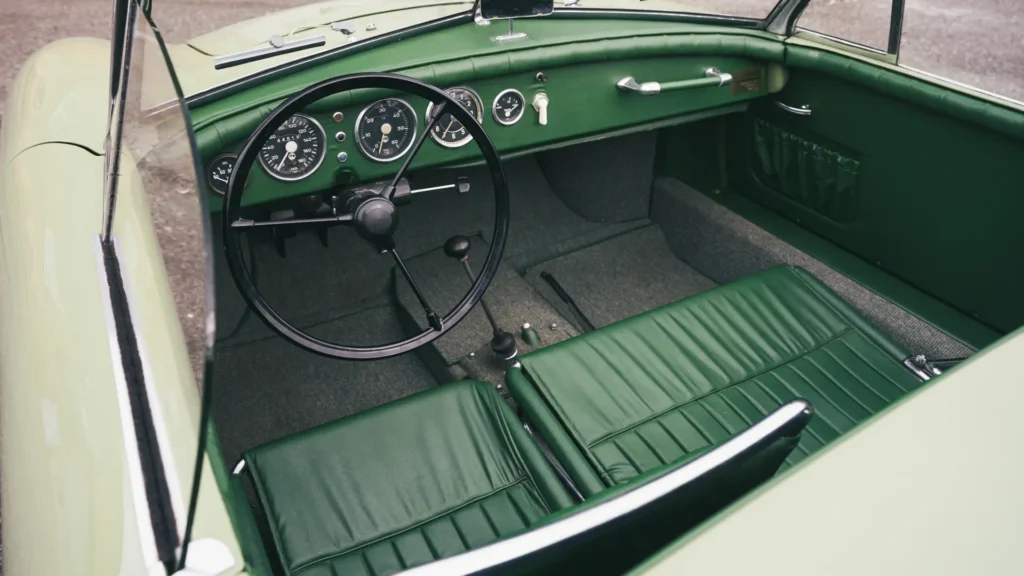
The later Denzels, like this ‘54 1300 being offered by RM Sotheby’s, were bodied in aluminum. That made them significantly lighter than contemporary 1600cc Porsche 356 Speedster—a full 555 pounds, according to Road & Track. They were also slightly shorter on the same length wheelbase. A unique chassis, utilizing box sections and tube framing, replaced the VW floorpan.
The Denzels were, essentially, a lower-volume, more specialized, custom-specification sort of thing. You paid a lot more and got a lither, lighter, and more optimized machine. Apparently the crankcase was Volkswagen (or, in some cases, Porsche) but the rest of the engine was highly modified by Denzel.
This made them very expensive. Road & Track listed the 1300 at $4,695 in 1957, compared to $3,495 for the 1600 Speedster. I think it’d take a special sort of nut to spend that sort of additional dough on a much more obscure car in an era where foreign sportscars were obscure to begin with.
Wolfgang Denzel didn’t stop making cars because the business was a flop. He stopped because he’d gotten deeply involved with BMW, becoming the official Austrian importer for its cars. In 1958, with BMW itself on the rocks and desperate for a vehicle to revive its fortunes, Denzel hired Giovanni Michelotti to design a new body around BMW 600 mechanicals. That turned what amounted to a four-seat Isetta into something that looked like a car. The proposal for the 700 Coupé was accepted by BMW, modified in-house for production, and sold in coupe and sedan forms.
BMW itself credits the 700—and by proxy, Denzel—for preserving BMW as an independent company. Denzel as a maker of sportscars would not persist, wrapping up in 1960.
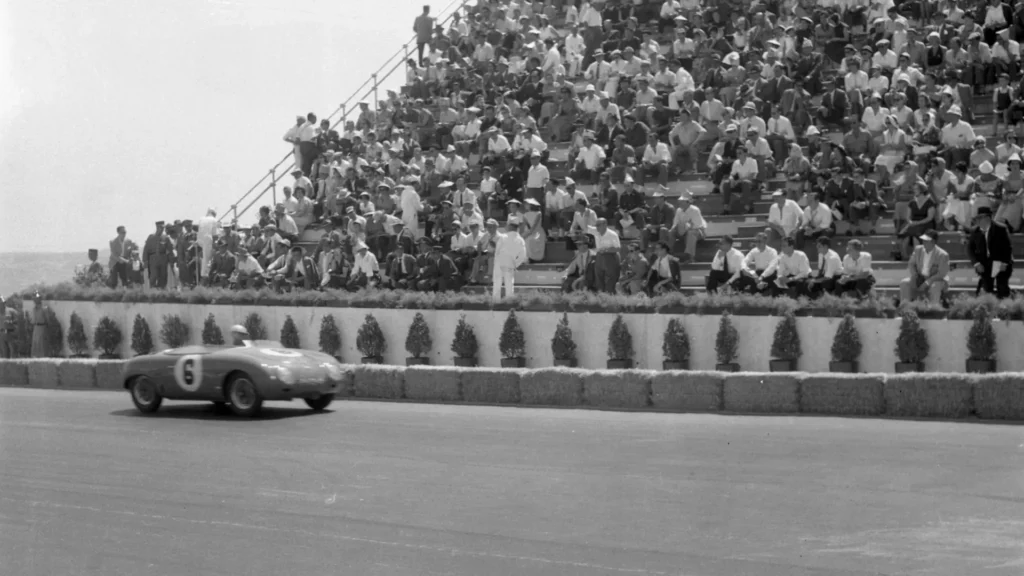
The ‘54 for sale at RM Sotheby’s seems like a charmer. It has a competition history, is presented in a fantastic pale green color, and seems to be in honest (not over-restored) condition. I have no idea about the provenance or accuracy of components or any of that concours judge stuff, but I will say that at an auction estimate of $200,000 or so, it appeals to me a lot more than an equally rare or equivalent-performing 356.
It’ll be at the Monaco auction in April.
Recent Posts
All Posts
March 12, 2026
March 11, 2026
March 10, 2026
Leave a Reply