XM
November 3, 2025
Jay RameyThe French flagship of the 1990s sought to channel the DS of decades past, while still offering a very different experience from its German rivals.
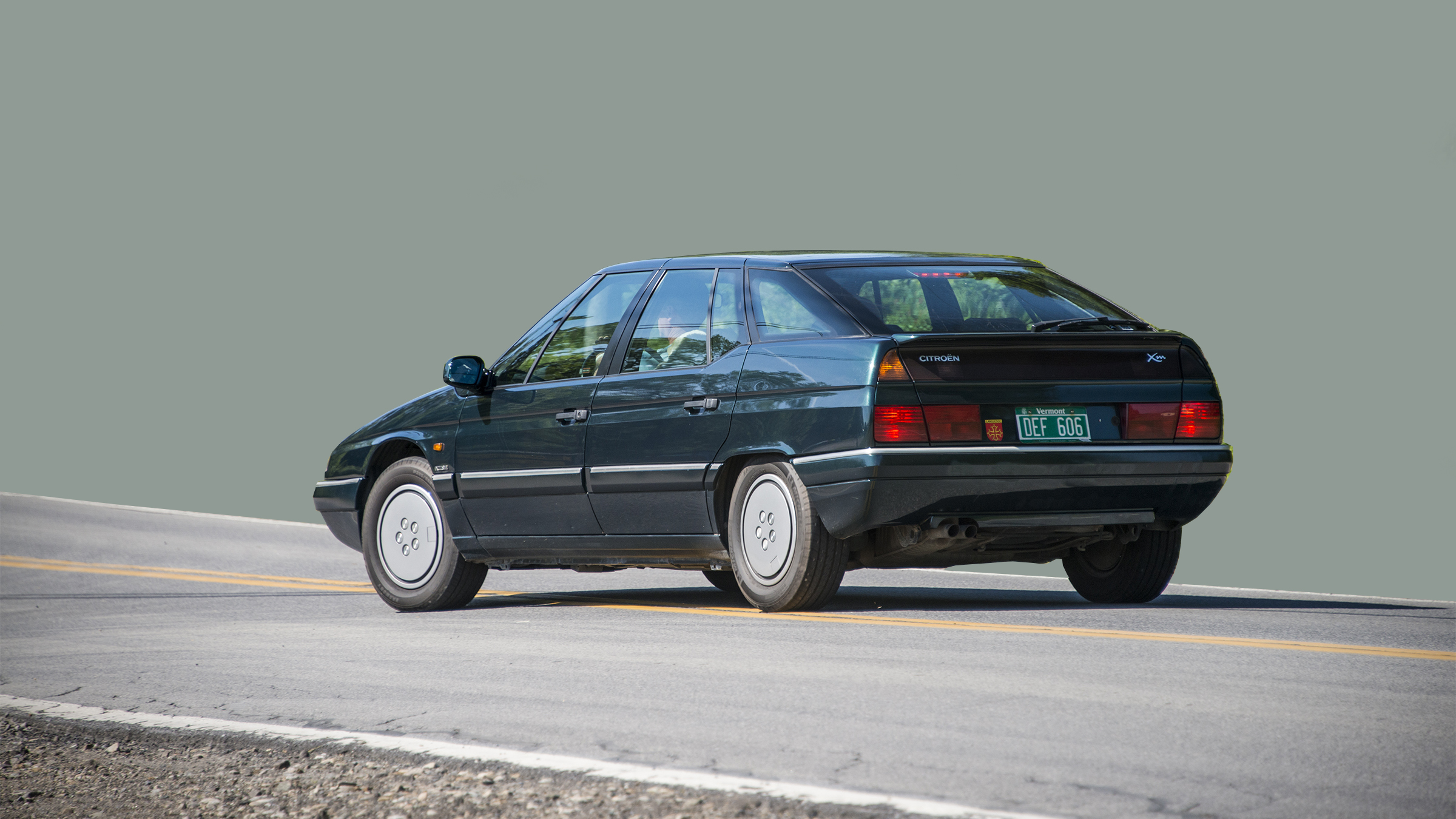
The Citroën XM is perhaps best known on this side of the Atlantic as the car used by the case-carrying villains in the 1998 John Frankenheimer classic “Ronin,” which also single-handedly put the sinisterly understated Audi S8 on enthusiasts’ radars. The film made Citroen’s flagship XM appear evenly matched with Ingolstadt’s roomiest sports sedan in the few scenes it was featured, even though the latter produced 360 hp in stock form (prior to addition of the nitrous system) with power sent to all four wheels. (That’s the power of dramatic license.)
While the S8 wouldn’t appear in the U.S. for a couple more years, the Citroën had already landed stateside years prior, during the waning years of gray market imports. And the story of its arrival is one of the more unlikely chapters in the history of French cars in America.
The XM itself debuted in May 1989 as a replacement for the long-serving CX, which debuted in 1974, trading the sleek lines of its predecessor for the creased surfaces of a stealth aircraft. While the CX largely focused on providing a magic carpet ride thanks to its hydropneumatic suspension, it was neither a large nor a particularly powerful car, relying on inline-four engines.
By the 1990s, Citroën sought a more credible competitor to Team Germany. For the XM, it turned to V6 engines, a futuristic Bertone exterior, and just enough power to make its presence known on the autobahn.
The XM kept the fastback shape of its predecessor but with a taller and more spacious interior that still catered to rear-seat passengers, while also giving the driver a more commanding view of the road.
The XM counted 13 individual glass pieces in a seemingly endless greenhouse, including not one but two panes of glass for the rear hatch. The second internal pane separated passengers from the trunk area, sitting just below the outer glass hatch, which also bought the spaceship’s crew some extra sound insulation.
The cabin itself was likewise a collection of flat but intricate surfaces with plenty of buttons, with Citroën keeping the single-spoke steering wheel as a nod to past icons, like the DS of the 1950s.
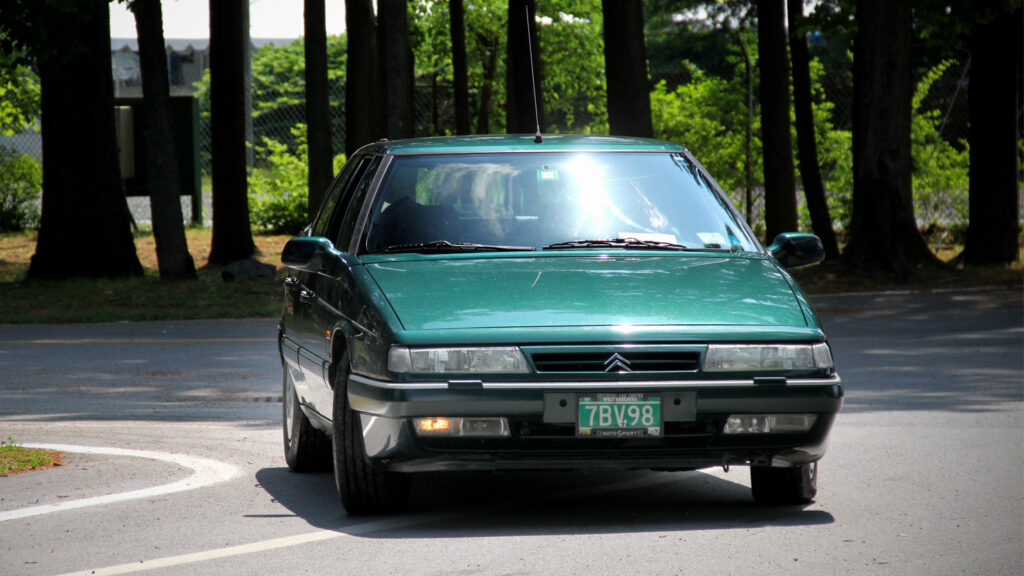
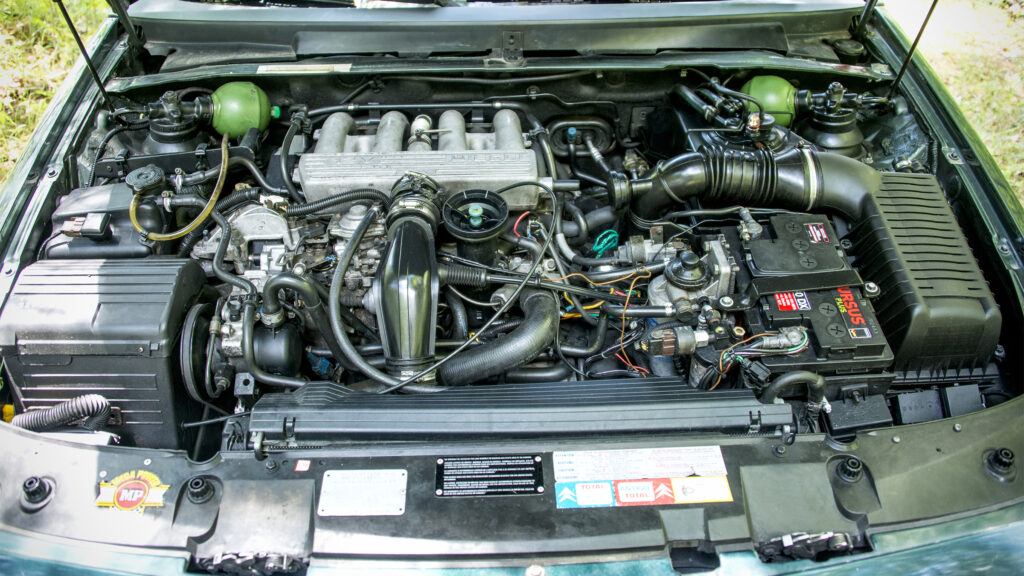
To be competitive, Citroen’s new flagship required a more serious approach to performance than it ever actually managed. The top engines in the XM lineup were 3.0-liter V6 units with 197 hp on tap, though most of the gasoline range was powered by versions of the 2.0-liter inline-four. And as this is Europe of the 1990s, diesels were also on the menu in 2.1, 2.1 turbo and 2.4-liter turbo flavors.
The main event was still Citroën’s famous hydropneumatic suspension, making the XM a very different proposition compared to the more conventional German sedans of the day. It is worth noting that when the XM debuted, the W126 Mercedes-Benz S-Class was in the last years of its long tenure while the E32-generation BMW 7-Series was in the middle of its production run. And neither promised a cloud-soft ride.
But the market valued power over comfort, and both of the German flagships easily upstaged the XM in engine power and displacement. One could spec a 5.0-liter V12 in the 7-Series, while the W126 relied on a 5.5-liter V8 at the top of the range.
In practice, the XM was often tested among the second tier of contenders in the executive category, which included the Opel Senator and the Jaguar XJ. Even the XM’s own platform sibling, the Peugeot 605, was more traditional in most regards.
But wait!, you interject. Did you say that the XM was sold stateside?
CXA Automotive of New Jersey, which for years had imported and federalized the earlier CX for those who wanted one in the heyday of the gray market, devised a similar program for the XM, dutifully giving the model amber side markers as demanded by Uncle Sam while also tinkering with the headlights and other systems.
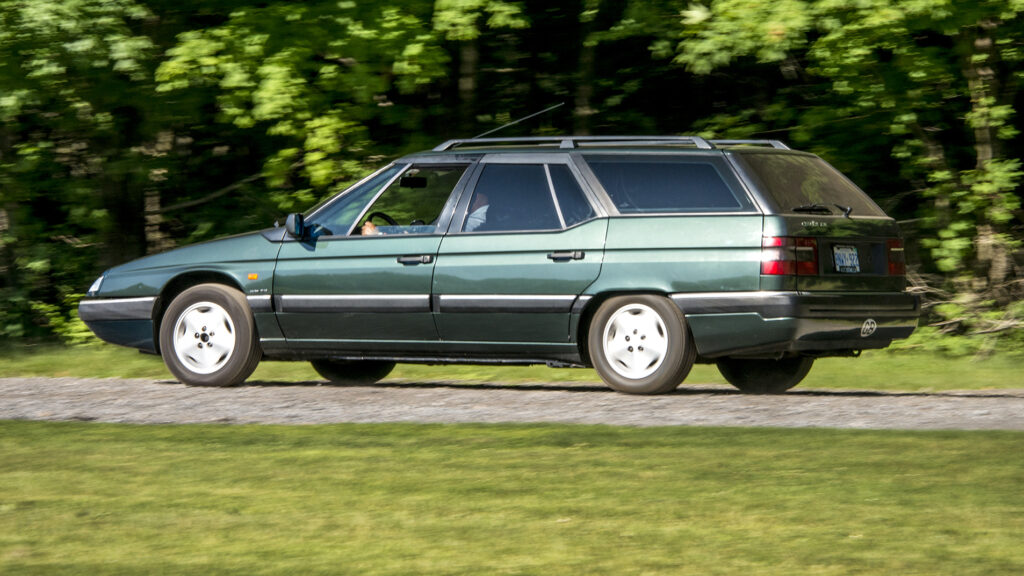
CXA Automotive didn’t exactly find a big market for the XM in America. Just around two dozen examples found homes in the first couple of years of availability, with two of the cars being station wagons. Most seemed to go to owners who had owned the earlier CX.
Putting aside the fact that such importation was possible at all during this narrow period of time at the end of the gray market era, the price for the privilege of being the only one in your state with one of these spaceships was roughly on par with a German executive sedan of the time. Most of the XMs imported were the top-spec V6 models.
I had a chance to meet a few XM owners over the years at the annual Citroën Rendezvous gathering in upstate New York, and asked them what it was like owning one of these cars in America.
“It’s great but hardly anyone has heard of this model, even if they recognize the Citroen badge,” one owner told us.
“A lot of people we meet at gas stations say ‘I never knew these were sold here,’ or they ask us if we’re from France,” laughs another owner.
And what about parts?
“We actually don’t do that many miles each year in our car, so it’s been okay,” one owner tells us. “It was our parents who bought the car new, and even though they didn’t drive it a lot in their later years they kept it serviced and in working order.”
“The parts situation isn’t that bad actually because there are a lot of these in Europe that had just sat around with a few thousand kilometers for most of their lives, and then had become cars for the family farm or something,” says another owner. “So there are still a lot of shops that can get parts off of junked cars pretty easily. Aside from a few expendables I haven’t had to get anything crazy for these.”
Of course, finding a shop that would touch a rare, old French vehicle might be more difficult than merely sourcing parts from Europe, and conversations with owners confirm this. Most do their own maintenance or pay a private mechanic.
“It’s a bit easier on the East Coast than finding Citroën service in the midwest,” another owner told us. “You just have to find a trusted mechanic who can work on oddballs like this.”
Sounds simple, doesn’t it?
Taking one XM for a spin along back roads in upstate New York, its whisper-quiet interior is inviting, with comfortable seats and a generous view of the road thanks to thin pillars. From the very first minute the Hydractiv suspension makes itself noticeable, serving up a quiet and eerie ride that keeps the XM flat without making it feel floaty, with the V6 likewise hushed.
Handling? Let me put it this way: The XM prefers straight roads, but its performance in the corners doesn’t produce much drama either.
Once the XM has some room to stretch its legs on the interstate, the V6 builds up momentum with relative ease and little road noise, whooshing past slower traffic. But it’s probably not the car I’d pick for a shoving match with an Audi S8.
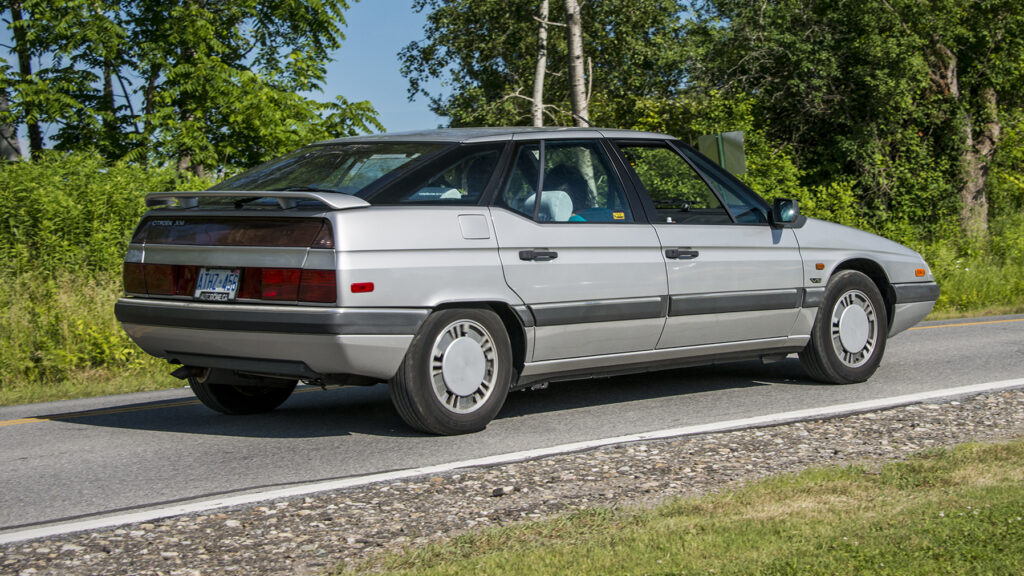
Over the past decade, a few of the originally imported XMs have been put back into service, including one station wagon. A handful more have been imported into the U.S. and Canada, including the diesel station wagon I drove.
The XM itself exited production in the year 2000 with over 333,000 examples built, France predictably being the main market for the car. Finding one across the pond for just over a thousand euros isn’t a tall order.
In another five years the XM’s own Citroën C6 successor will become eligible for importation thanks to the 25-year rule as well. Though, that car is already something of a collectible back home in Europe, with a very modest production run of just over 23,000 units.
I’ve already driven the C6 here in the U.S., but that’s a story for another time.
Recent Posts
All Posts
March 17, 2026

March 16, 2026
March 12, 2026
Leave a Reply