New Class
December 4, 2025
Tim Stevens
The BMW iX3 really is a radical reinvention for BMW, but is it what the market wants?
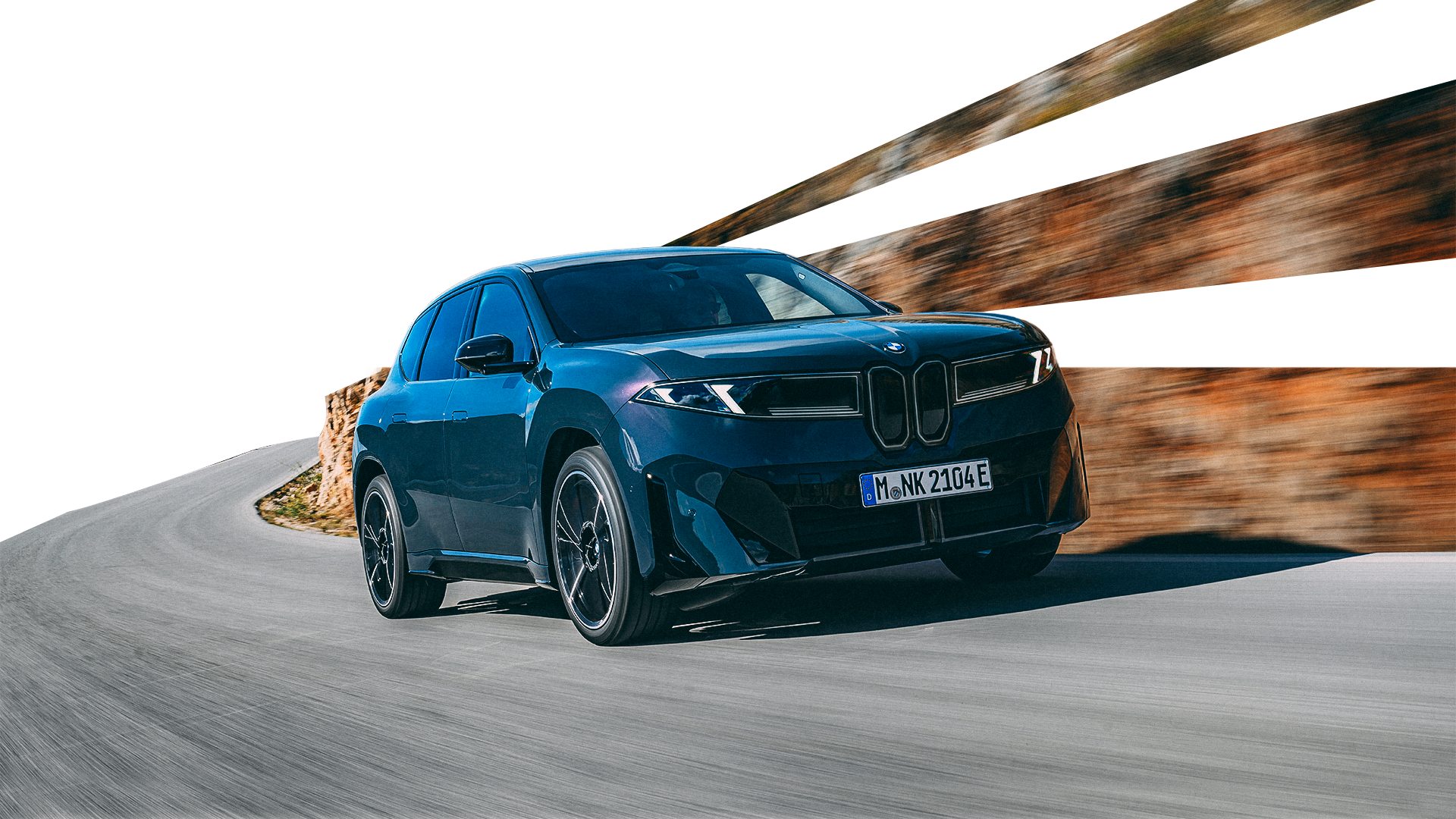
After a day behind the wheel of a production iX3, BMW’s new crossover SUV and the first of a planned armada of next-gen EVs, I was left with the overall impression of it being an extremely strange machine. That’s an impressive thing considering it competes in that most boring of vehicle segments: The crossover SUV.
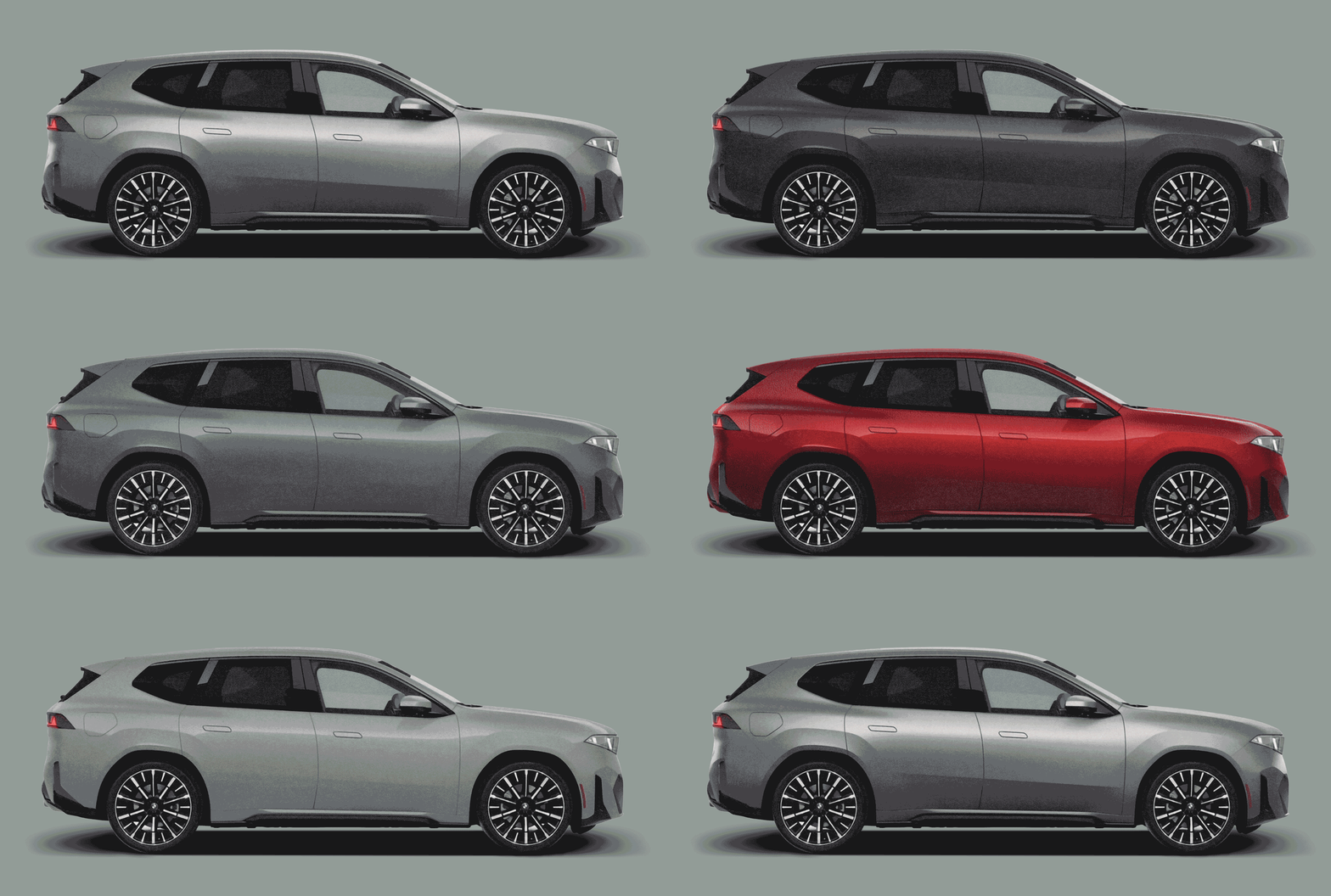
On the outside, the iX3 cuts a style that’s substantially different from even the angular oddities spawned by BMW Group Design of late. Its interior is unique, its steering wheel bizarre, and even the car’s active safety systems are unlike anything else on the road. Yet, when driven hard, it has an undeniable charm about it and even a hint of those Ultimate Driving Machine roots.
BMW promised us a new class with the iX3 and it has certainly delivered the “new” part. But with American EV interest flagging to the point that some manufacturers are all but pulling the plug, is this Neue Klasse tot bei Ankunft?
Neue Klasse Redux
Today, we know BMW as a globally recognized brand with a broad portfolio of machines, most promising some degree of sportiness and luxury. But back in the 1950s, the company nearly went bust by pouring too much into models like the absolutely lovely but previously unappreciated 507. In the early ’60s, BMW introduced the Neue Klasse of vehicles, with a renewed focus on efficiency and cost but still staying fun. Profits soon followed, along with a few decades worth of epic sports sedans.
This new Neue Klasse is attempting to work that same magic again with an electric-first foundation.
It’s all literally built around the battery pack, which sits in the floor in the typical EV location, but has a very different construction than BMW’s previous packs. This one’s made of cylindrical cells all squeezed and glued together using a construction called cell-to-pack. It’s a technique popularized by Tesla, creating a monolithic energy storage device that eschews the theoretical repairability of a modular design.
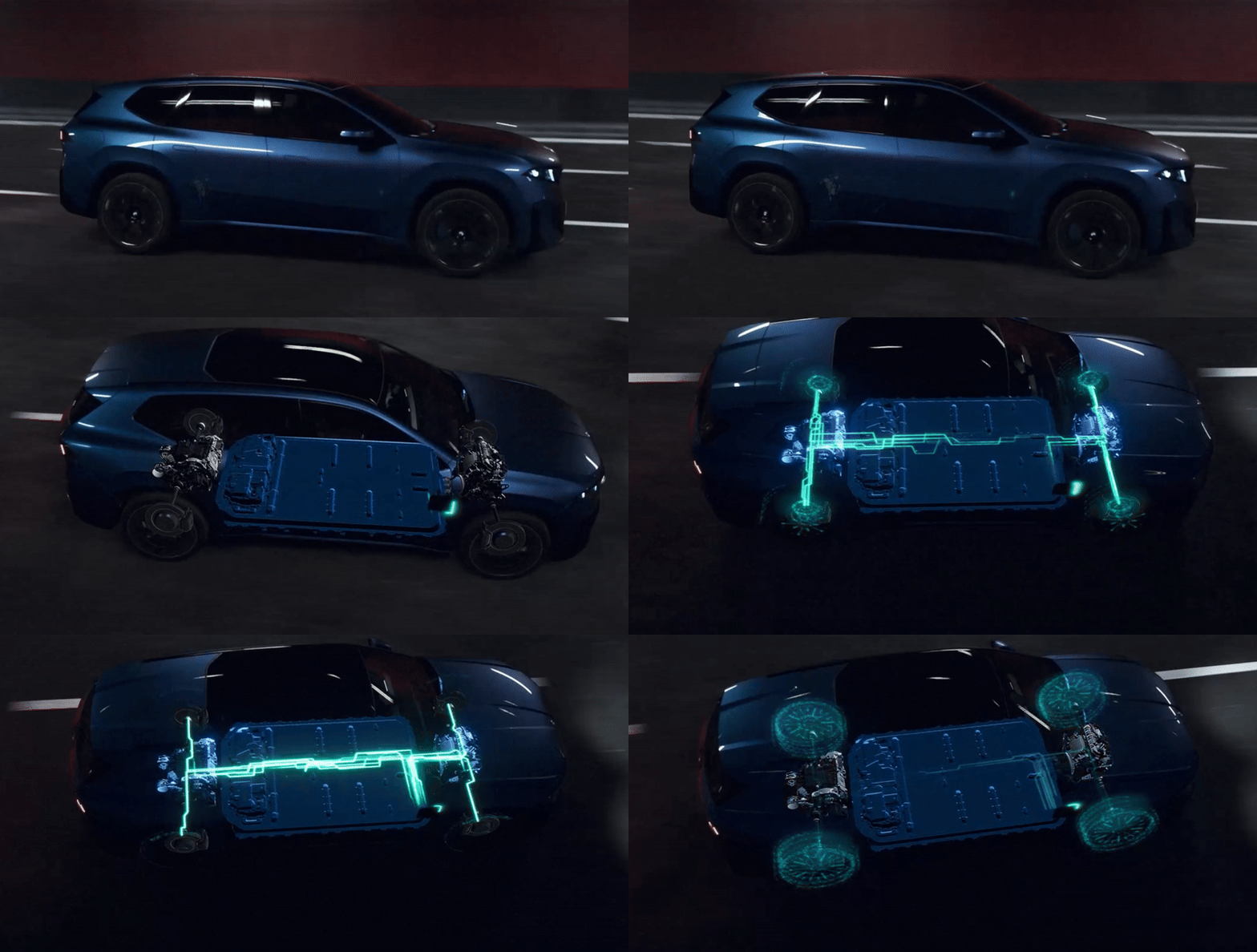
In exchange, you get simpler, cheaper construction and a higher energy density. In this case, 108.7 kilowatt-hours of capacity in an SUV that weighs 5,038 pounds. That’s about 800 more than the current X3, but crucially, about 200 pounds lighter than an Audi Q6 E-Tron Quattro, which has a smaller, 94.4-net kWh battery and about 300 miles of range.
BMW hasn’t yet done the official EPA range test for the iX3, but says to expect around 400 miles on a go. Combine that with 400 kW charging and you have what should be an all-electric road trip monster.
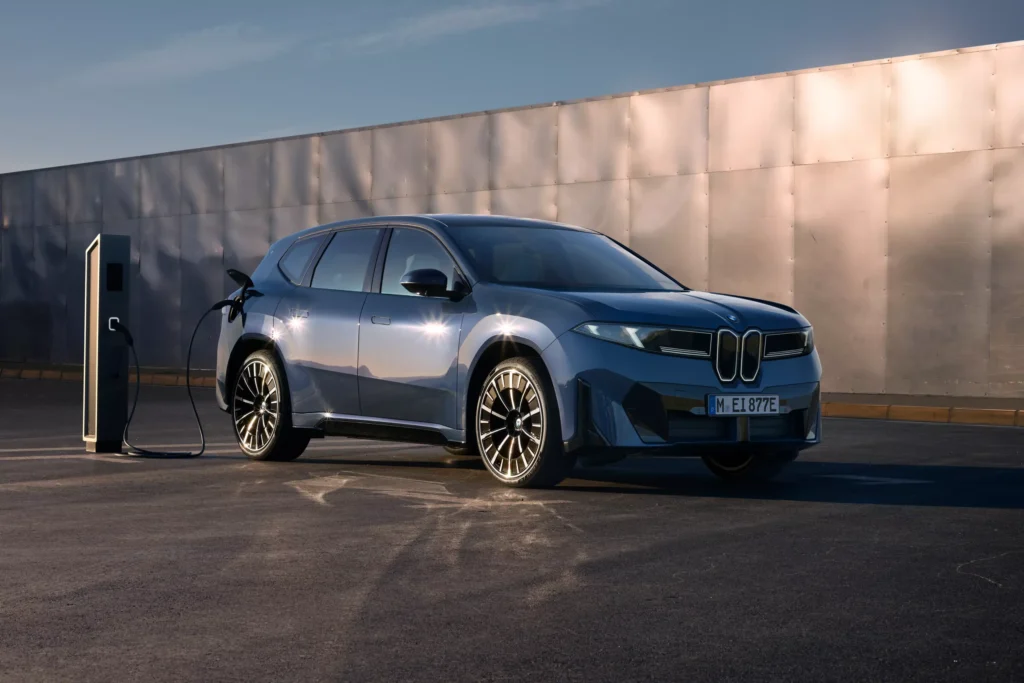
BMW’s new battery charges through a Tesla-style NACS port, a first for the brand, powering a pair of refined electric motors making 322 horsepower at the rear and a 165 at the front. Together as a system they deliver a maximum 463 hp and 476 pound-feet of torque to all four wheels.
There’s no center differential, of course. The car varies the output from the two motors to dictate the effective torque split, one of the many systems controlled by BMW’s new “superbrains.”
Heart of Joy
So, a new battery pack with new inverters talk to revised motors mounted in a wholly new chassis, and they’re all controlled by a new system that’s been developed in-house by BMW. Where most manufacturers call up suppliers like Bosch or Continental to handle anti-lock braking or traction control, BMW decided to bring it all in-house this time.
The unfortunately titled Heart of Joy is the system that now controls everything to do with the digital dynamics of the machine. This unification, BMW’s engineers told me, enables the car to react far more quickly and comprehensively to situations like hidden mid-corner patches of ice or wild wheelspin caused by an over-exuberant right foot.
What it can’t do, however, is adjust the suspension, because this first implementation of Neue Klasse makes do with good ol’ steel springs.
I spoke with Roman Daiker, responsible for driving dynamics of the iX3, who told me that BMW’s engineers challenged themselves to deliver a car that wasn’t reliant on adaptive suspension. “Because every feature you put in the car will maybe bring you more options, but it also increases weight, it increases complexity, reduces range,” he said.
Daiker didn’t mention cost, but that was surely a factor as well. Despite its fixed foundations, the resulting suspension is impressive.
Neue Klasse In Motion
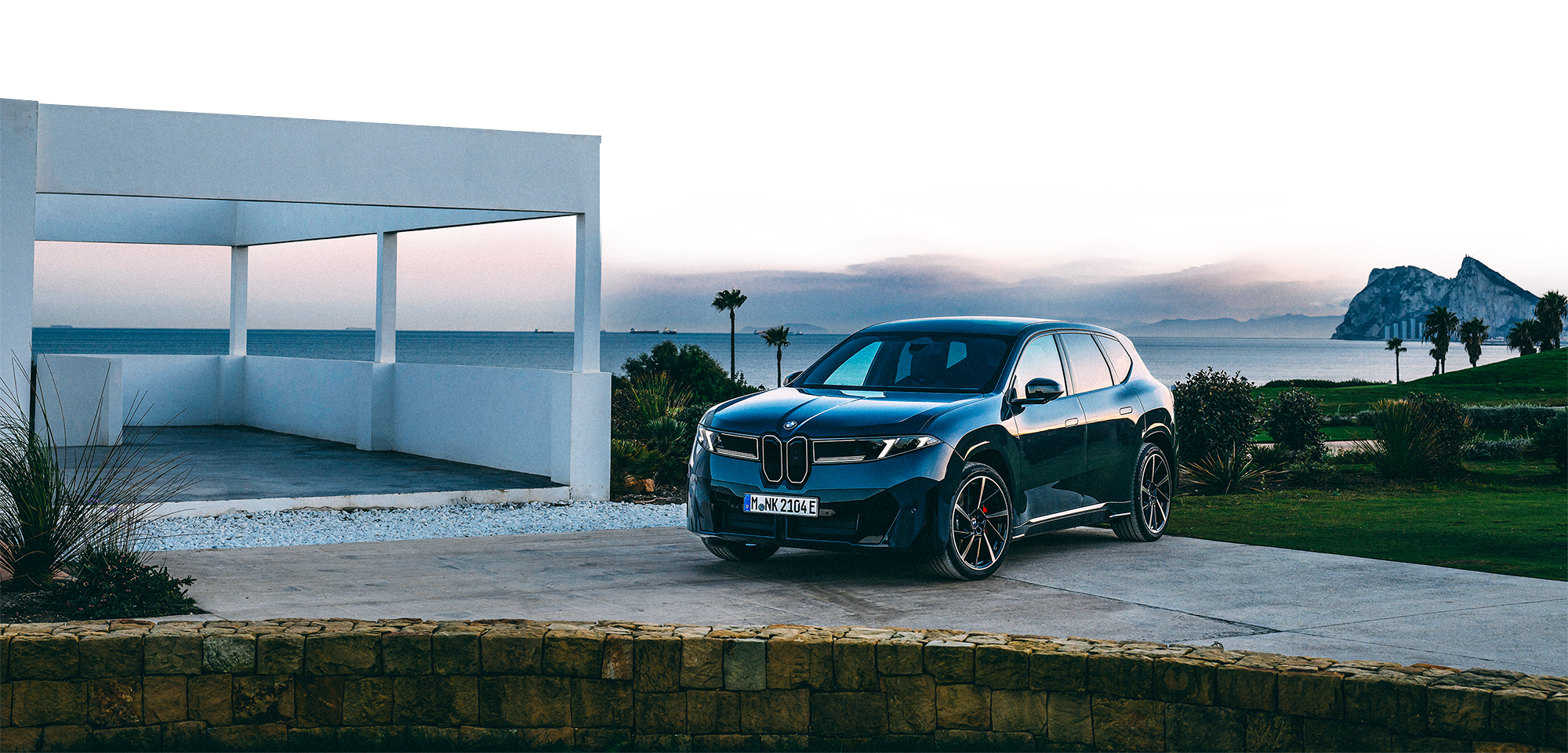
My drive in a production-spec iX3 started in an inauspicious way: idling out of a gated resort town in the south of Spain. The views were glamorous, with Gibraltar squatting in the mist and the mountains of Morocco looming not much farther afield. The roads, though, were far less spectacular, littered with speed bumps to keep rubber-necking tourists from mowing down the locals and their leashed Lhasa Apsos.
As interminable as that initial stretch of road was, one bump following another, it gave me an early and immediate respect for the iX3’s suspension. EVs in particular struggle with big disturbances like this. They have so much mass to manage that you either get a real shock riding over the hump, or you’re left wallowing up and down for a few moments as you drive away from it.
The iX3 felt smooth going up and quickly settled on the other side, doing as fine a job as any standard suspension I’ve ever experienced. It felt better than many air-sprung SUVs, even, and it continued to shine as I climbed hills of the Parque Natural Los Alcornocales.
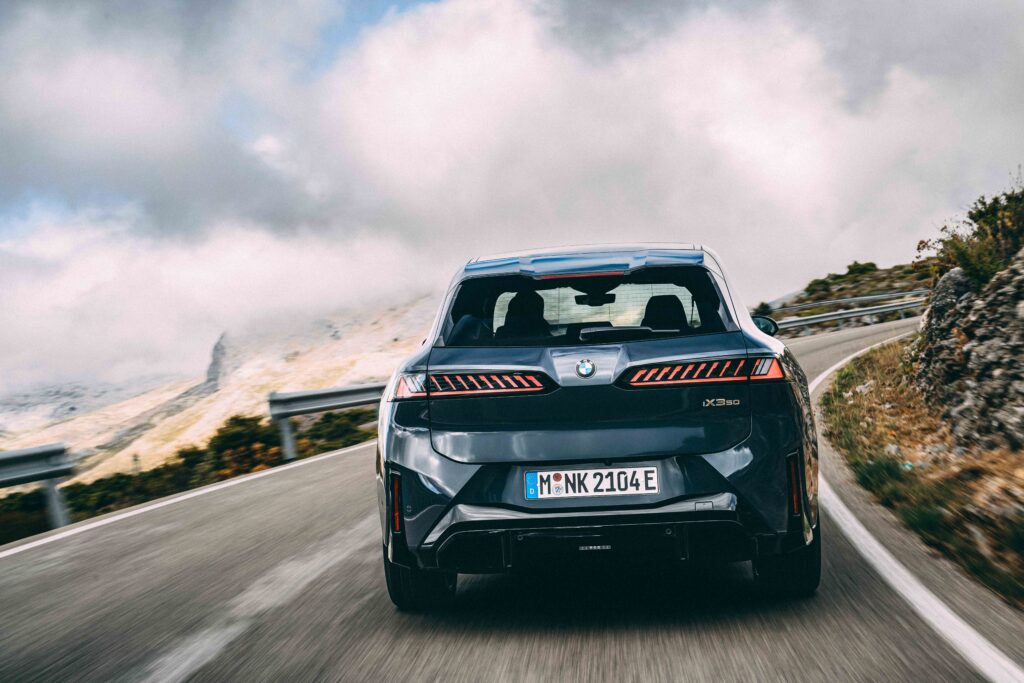
Spanish roads are a lot of things, but well-maintained is not one of them. Over the rolling, narrow stretches of broken asphalt, the SUV felt perfectly at home. Daiker told me they tuned the iX3 to maximize suspension travel, and I could feel it, the wheels and tires working hard to maintain connection with the surface.
This is another area where EVs often falter, even the really good ones like Porsche’s Taycan. Hit a big bump mid-corner and suddenly all those physics-defying dynamics go out the window and you’re left with a 5,000-pound car lurching uneasily sideways.
In those situations, the iX3 still felt planted and sure, which left me pushing harder through the corners.
ADAS Reinvention
Driving the iX3 in the hills was a truly interesting experience, but I was surprised to find the highway drive back was just as educational. There, I got a chance to try out the latest version of BMW’s Highway Assistant, which behaves substantially differently than in the company’s current cars.
Yes, you can still go hands-free on divided highways and the like, and you can also make lane changes just by glancing at the appropriate mirror. Cool stuff, but not new.
In the iX3, things get much more collaborative. If you want to make a manual lane change, just grab the wheel and turn. If you don’t check your blind spot, the steering wheel will resist your action. If you glance at the mirror, though, the car will not only relax and let you change lanes, it’ll automatically hit the turn signal for you.
The BMW blinker jokes write themselves, so I won’t add to the pile. Instead, I’ll say that I surprised myself by liking this auto-signal feature. Having one fewer thing to worry about while driving is progress in my book.
I was a little less sure about another big change: Once the cruise control system is on, it more or less stays on until you turn it off or step hard on the brakes. You can brush the left pedal to get a little more room between you and the car ahead. You can even take the car to a complete stop if you like. It’ll just bring itself back up to speed when you lift off the brakes.
On an earlier drive, Dr. Falk Schubert, who headed up ADAS on the iX3, repeatedly told me that the system was designed to be even a step beyond cooperative: “All that safety function is also developed in the stream of symbiotic behavior to not work against you, but work with you. And so we don’t have the feeling that you always have to override it.”
I’m not sure that I’m mentally prepared for a symbiotic relationship with an SUV, but after a few hours behind the wheel, I confess it all did feel perfectly intuitive.
Infotainment Overload
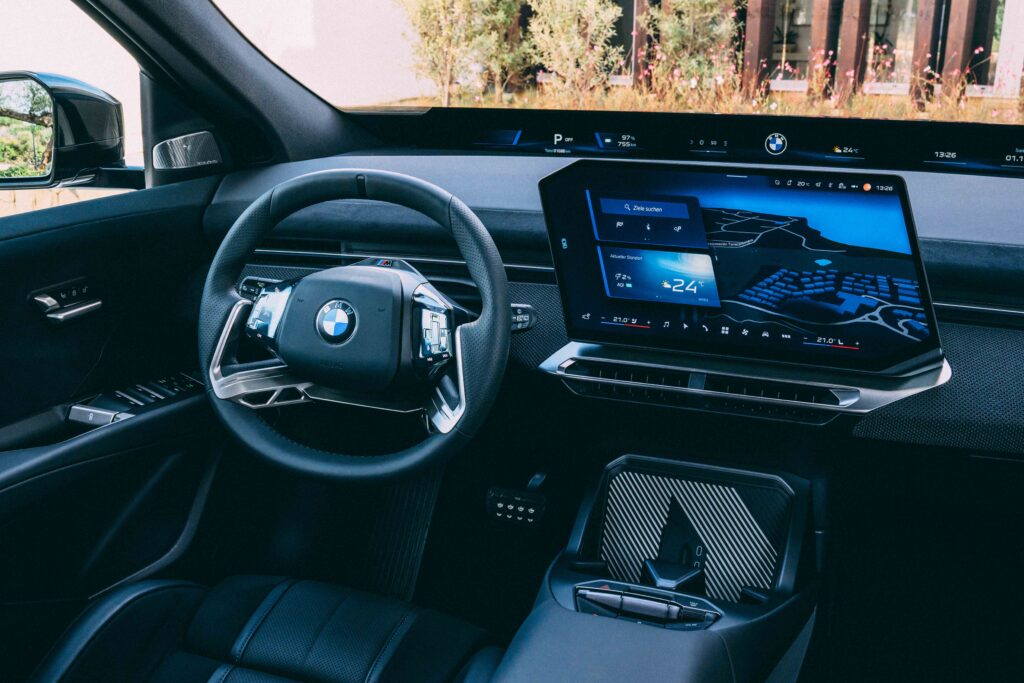
If all that change isn’t enough, the iX3 is also the first modern BMW (not counting MINI) without a traditional gauge cluster. Instead, it has what’s called Panoramic Vision, a projected display that spans the entire width of the windshield.
The left-most portion serves as the gauge cluster, which puts it cleanly up and close to your line of sight, meaning no more looking between the spokes of your steering wheel. The rest of the display is fully customizable, letting you or your passenger drag up whatever you want, ranging from whatever song is currently playing to a readout of how fast the electric motors are currently spinning.
The iX3 also marks the end of the road for BMW’s iDrive rotary controller, the spinny dial that kicked off a million imitators. You’ll now have to reach up and touch the oddly angular, 17.9-inch display here.
The interior in general is great, roomy, and comfortable, and has a lot of the feeling of airiness that you get inside the iX, despite the iX3 being substantially smaller.
But there’s one element of the interior that I’m not a big fan of, and that’s the steering wheel. The default wheel on the iX3 has a pair of spokes at the 12 and 6 positions, a curious arrangement that, at glance, makes it look like the thing is 90 degrees askew when the wheels are perfectly centered.
Putting the spokes there means BMW designers then had to add cut, half-spokes at the 6 and 3 positions so that your thumbs have somewhere to rest. It’s all a bit odd and has the air of someone literally trying to reinvent the wheel. Thankfully you can opt for a more traditionally shaped M Sport wheel if you like.
All New, Too Late?
It’s not perfect, but despite all that change the iX3 is ultimately a remarkably polished and damned fine SUV, a real charmer in a segment full of crossover clones. It’s far more desirable than BMW’s current crop of X3s, but will it sell? The X3 is consistently among BMW’s most popular models in the U.S., and while the iX3 isn’t replacing it, the hope is surely that it’ll find similar success.
A starting price around $60,000 won’t help. That’s about $10,000 higher than the cheapest X3, and with no more federal incentives to help narrow the gap, customers will be left stretching their budgets to get a taste of all this newness. The iX3 is the better SUV, but when it comes to EVs versus their gas-powered competition, lately the better cars seem to be losing.
Recent Posts
All Posts
March 6, 2026
March 6, 2026

March 5, 2026
Leave a Reply