Semi Smart
March 27, 2026
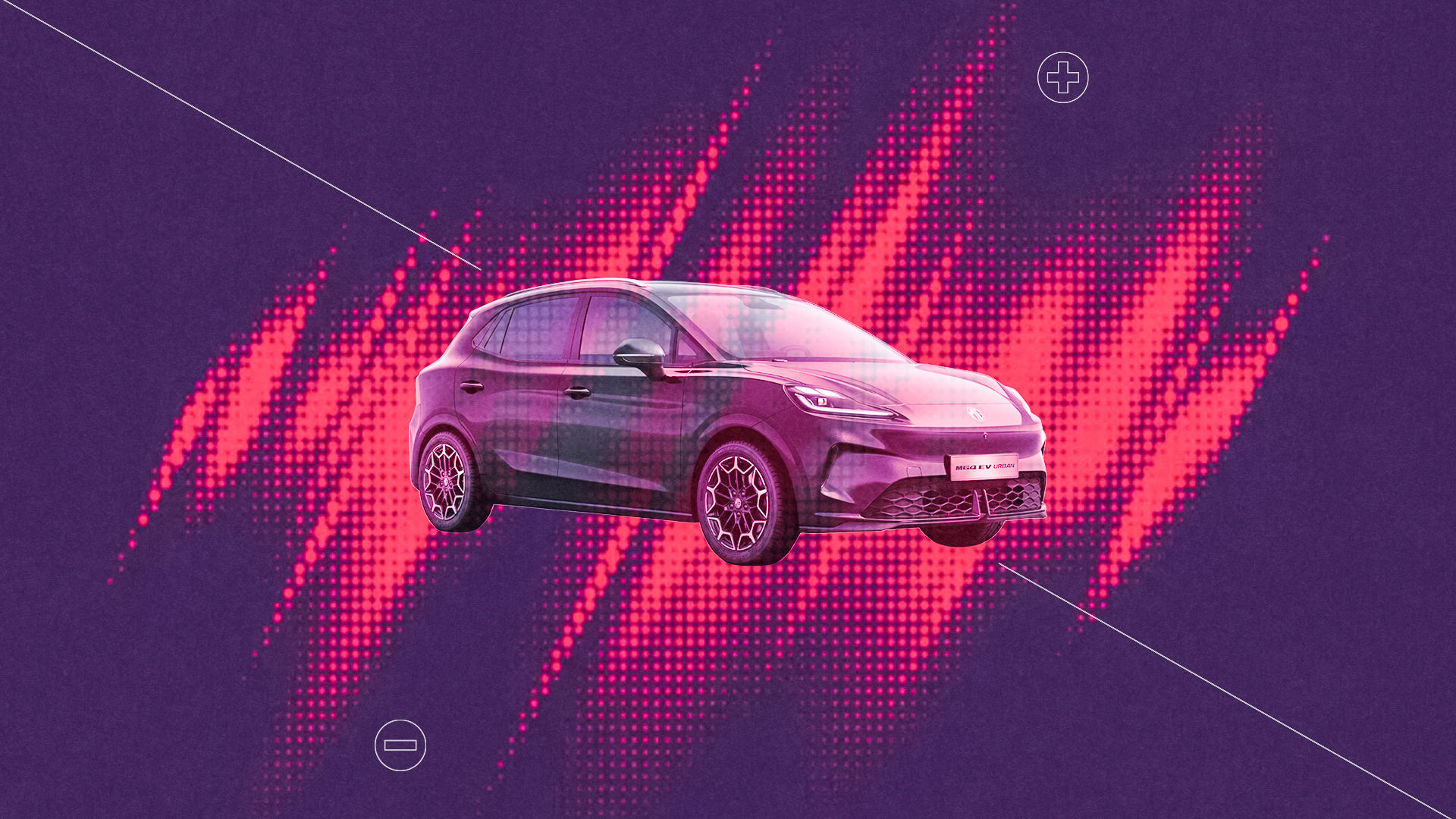
Alex KiersteinThe latest Chinese EV innovation involves cutting-edge battery tech going into a low-end vehicle, a strategy that is worth examining.
Solid-state EV batteries are supposed to be the near-term end goal for battery development, offering significantly more energy density and faster charging speeds. But there are also some serious issues with the tech, mainly dendrites—formations within the solid electrodes that cause the battery to short-circuit. Solutions are being developed, but they’re a ways off. But I think there is, and will continue to be, a market for a cheaper but incrementally improved battery types, and apparently so does MG Motor. The SAIC-owned automaker is bringing semi-solid-state battery tech to market — not in some high-end vehicle, but in a low-cost, volume model that will be sold in Europe.
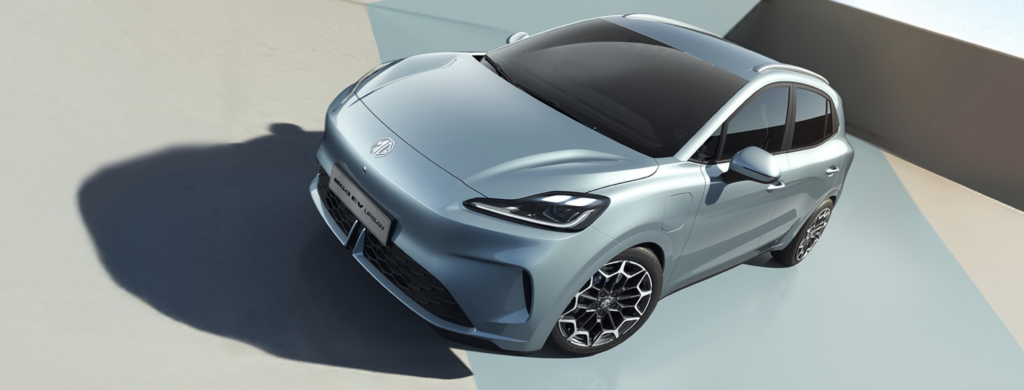
Why? It’s a purely pragmatic move. MG Motor will put it in the MG4 EV Urban, a C-segment hatch that is roughly comparable to a Kia Niro EV in size and market positioning. The MG4 EV is already on sale in some European countries with a less-advanced (but still attractive from a unit cost standpoint) lithium iron phosphate battery, coming in at roughly $23,000.
As a way to reduce the cost disparity between EVs and internal combustion vehicles that has been a stumbling block for buyers, I am a big fan of lithium iron phosphate (LFP) battery chemistry. those batteries offer lower cost, better charging characteristics (charging to 100% doesn’t accelerate battery degradation), and they don’t contain some of the more problematic minerals used in more common li-ion chemistries, like nickel manganese cobalt (NMC). The lower power density means a lower range per unit of mass, but at the lower end of the market it’s kind of a wash, and the greater amount of usable battery capacity helps as well.
So far, the MG4 EV strategy makes sense and squares with how other automakers are employing LFP batteries. But the latest move by SAIC is almost the inverse, putting a new MG4 EV variant on sale with bleeding-edge semi-solid-state battery tech onboard.
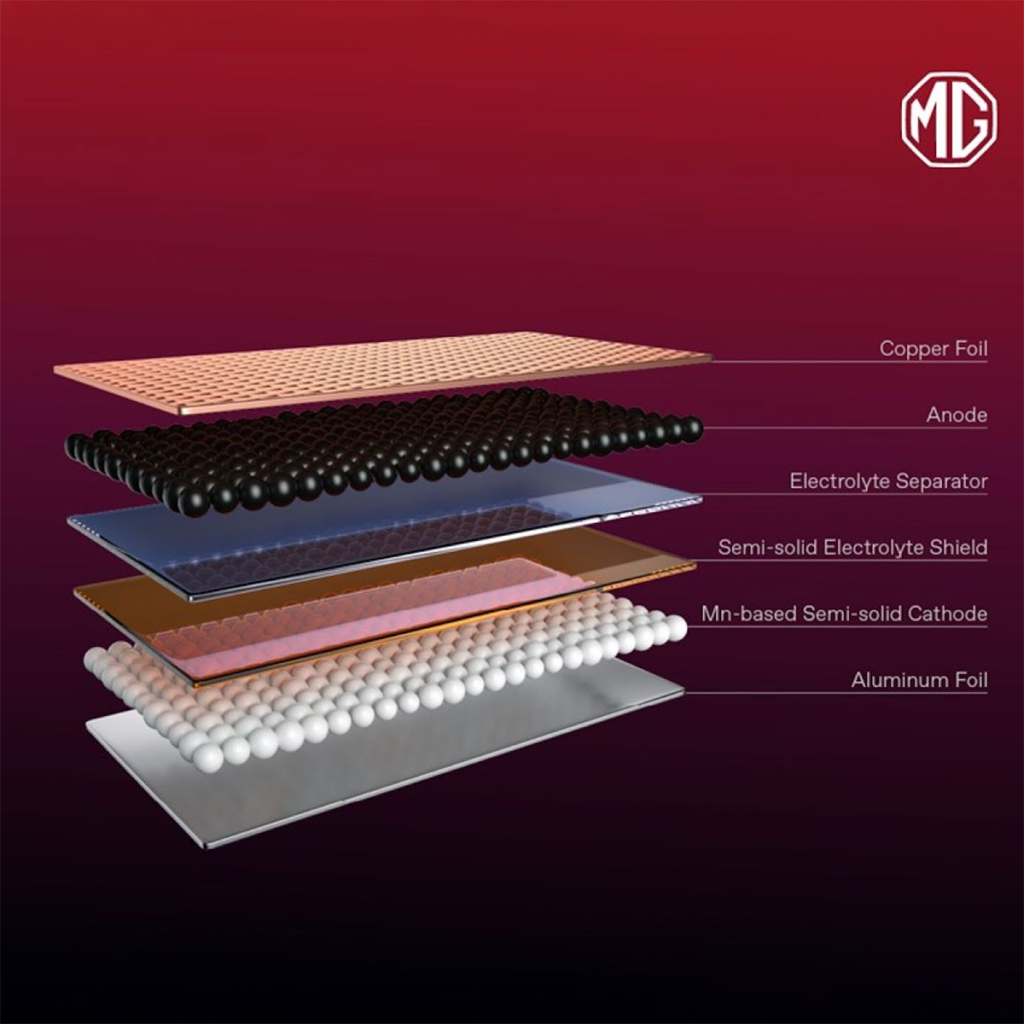
Semi-solid-state batteries attempt to improve upon traditional li-ion batteries by getting rid of one of their biggest liabilities: the liquid electrolyte. It’s composed of a lithium salt dissolved in a solvent. If that is ringing some alarm bells in your brain based on some hazily remembered properties of lithium—mainly that it is highly reactive with water and produces hydrogen gas as well as a corrosive compound, lithium hydroxide—it should be. This is one of the reasons li-ion battery overheating causes thermal runaway, and why the resulting fires are very hard to extinguish.
Getting some of this reactive, dangerous liquid out of batteries is part of the rationale for solid and semi-solid state battery tech. Semi-solid-state suspends the lithium salt in a polymer gel, which both reduces the overall flammability of the cell and reduces the chance of it leaking.
The MG4 EV’s battery has a 5% liquid to 95% solid electrolyte ratio, compared to the typical 20-80 ratio in an NMC li-ion pack. That’s a significant reduction in the highly reactive, potentially dangerous liquid electrolyte material. The increased cost of the new pack for the European market wasn’t noted by MG, but in its home market, the semi-solid state model costs $4,800 more than the $9,600 base trim. I doubt the delta between the European base model and the semi-solid-state model will be quite that extreme, but I also think the resulting car likely won’t top the equivalent of $30,000 in Europe.
Introducing this as an upgrade battery option in a low-cost, midsized (for Europe), volume car strikes me as a play for economies of scale, and I think it’s a smart move. It’s an admission that scaling up production serves the company (and ultimately, the consumer) better than releasing the battery as a prestige option in a high-end vehicle. Many current EVs have LFP base models and NMC upgrade batteries; a world in which semi-solid-state takes over as the NMC analogue and LFP remains as the budget option would likely be better for everyone, with few perceptible downsides.
As Automotive News and the analysts it spoke to note, this is the inverse of the typical strategy outside of China. Testing out a new technology that might appeal to early adopters in a low-volume application lets automakers get some real-world data without the capital investment of volume production. But I don’t think the Chinese automakers looking at this technology consider it a risk, but rather an incremental improvement over battery technologies to which they are intimately familiar and have more expertise in than producers in any other country. To them, I imagine this is no different than retooling a factory to produce an enhanced version of an existing gas engine.
I will be very interested to see how the semi-solid-state batteries do as they accumulate road miles in Europe. If the benefits are what the battery producers claim—including improved charging characteristics and competitive power densities—it might encourage non-Chinese producers to license or develop the tech. And its advantages might improve the MG4 EV’s appeal, which given its likely low price point may have an effect on MG Motor’s market share.
We’ll see. I don’t know if solid-state tech will prove out, but I think the MG Motor experiment with semi-solid-state batteries might help automakers decide if these gel-polymer electrolyte batteries are a short-term transitional technology, or a longer-term supplemental option to the next big thing.
Recent Posts
All Posts
May 22, 2026

May 21, 2026
Leave a Reply
You must be logged in to post a comment.