Right

February 16, 2026
Alex KiersteinA 911 cabriolet isn’t to everyone’s taste, but I think everyone can agree that this Singer creation improves the original in the right ways.
Singer hooked up with Red Bull’s Advanced Technology engineering arm a little while back to develop a structural model used to improve the stiffness of the 964 monocoque. The cabriolets and targas, without a permanent roof tying together the two ends of the structure, can’t match the coupe’s stiffness. But the carbon fiber reinforcements the companies developed is claimed to achieve parity with the coupe in terms of driving experience. This is the sort of project you can undertake with a wealthy clientele and decades of advancement in materials and computer modeling. The limited-run Porsche 911 Carrera Cabriolet Reimagined by Singer is the result.
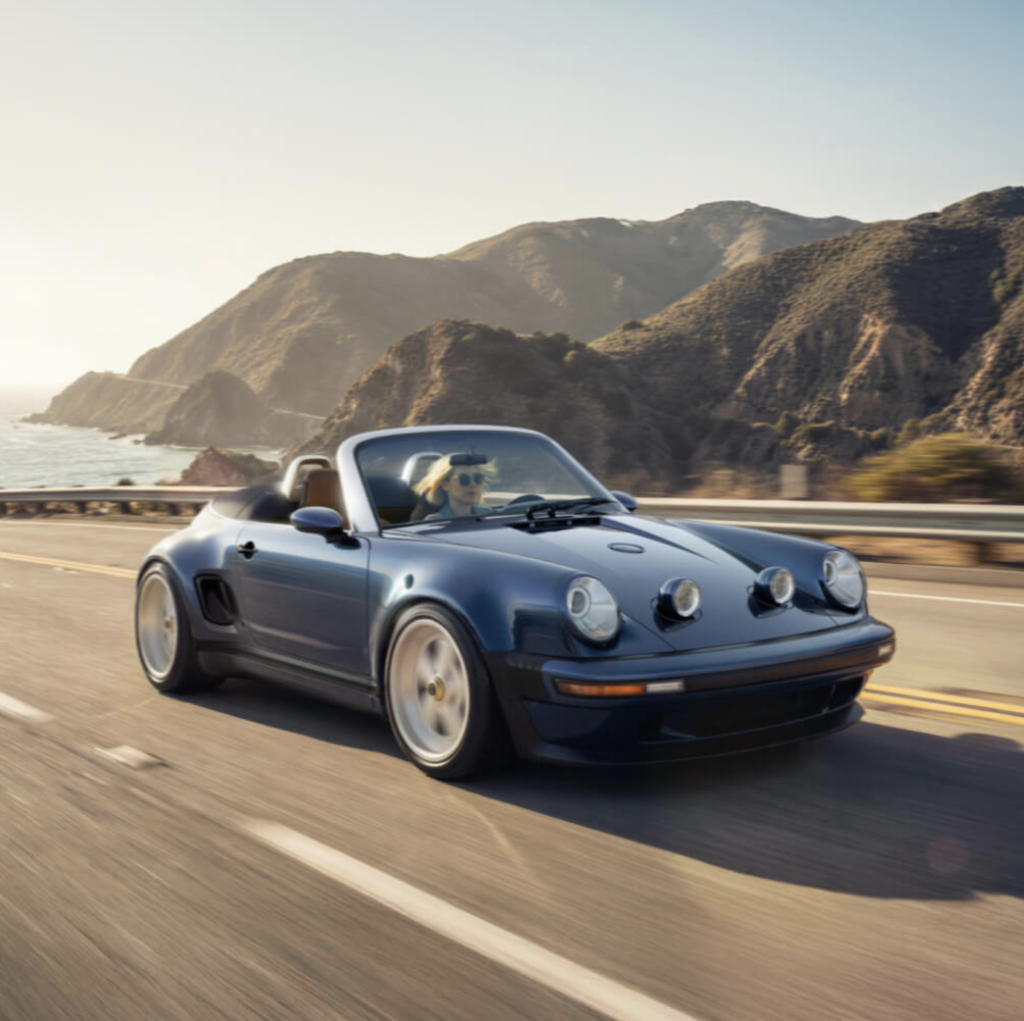

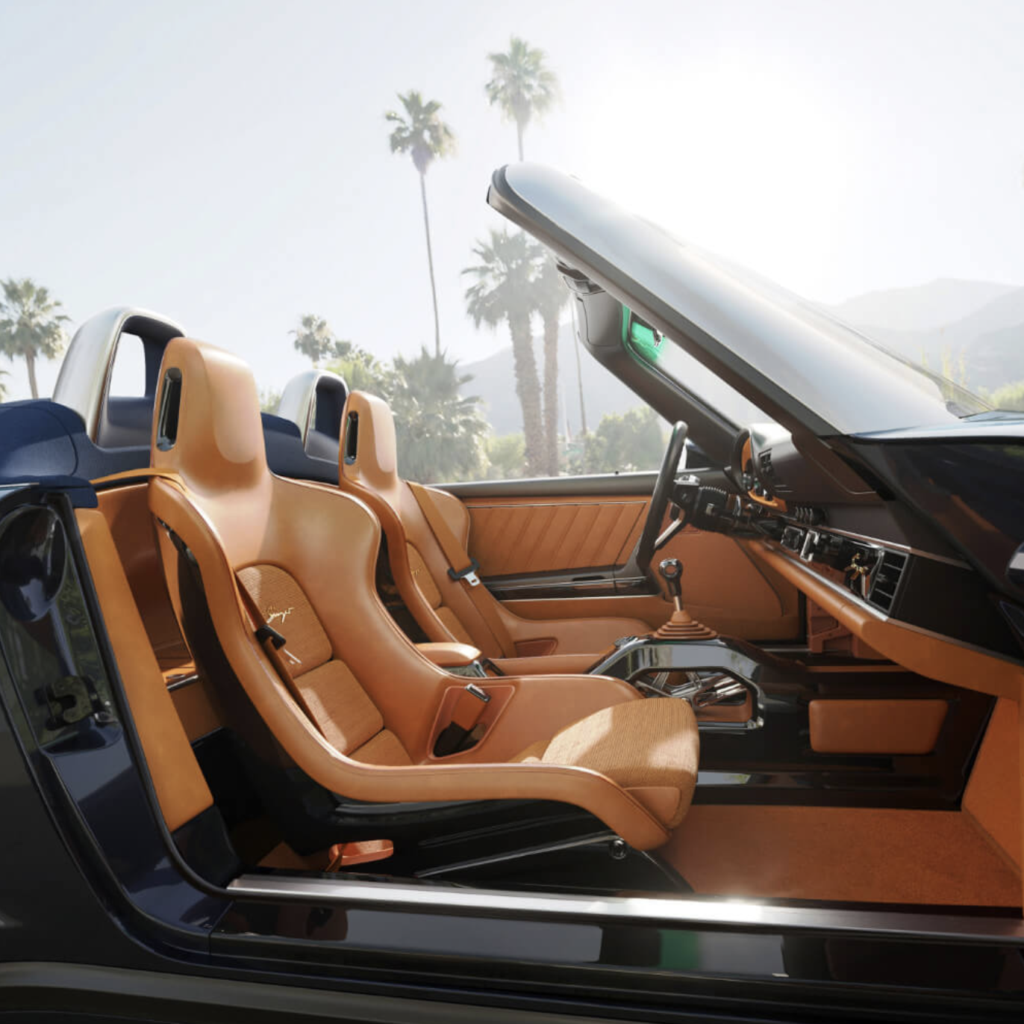
Porsche cabriolets are polarizing, I understand that. I’m a slicktop guy. But what I like about this is that it engineers around the cabriolet’s weak points, mainly its lack of structural stiffness and increased weight. The bodywork is carbon fiber, the structural reinforcements are a combination of steel and carbon fiber, and the reengineered folding top is claimed to be lighter. I don’t have exact numbers, because these aren’t built on a line—each will be built to a customer’s specification and then dialed in. But I have to imagine the result will be as close to ideal in terms of stiffness and weight reduction considering the state-of-the-art in 2026. Singer does not mess around.
It also features the 420-hp six co-developed with Cosworth, which is not merely a hot-rodded SC motor. Singer had already developed a four-valve head with Williams (is there a major British motorsports legend Singer hasn’t worked with?) in consultation with Hans Mezger (!!!) back in 2017, and this is an evolution of that basic design. It uses, for the first time for Singer, variable valve timing. And it is the first non-turbo motor with the company’s water-cooled head design, taken from the DLS Turbo car program.
Which, if you think about it, is wild. The 964 ended production in 1993. Thirty-three years later, Singer and a handful of top-grade motorsport engineering firms have leveraged years of development to produce what’s on some level what a 964 would look like if it was engineered today. And they can build 75 of them. It’s staggering, when you think of the development hours and the money involved, both invested by Singer and put up by clients.
Oh, and there are pop-up auxiliary lights. I don’t really want a widebody convertible, but I do want pop-up aux lights.
Singer’s work doesn’t come cheap, but there are few companies that execute on its level. The attention to detail on the latest creation is testament to that.
Recent Posts
All Posts
August 3, 2026

July 30, 2026

July 27, 2026
Leave a Reply
You must be logged in to post a comment.