Emissions Test

December 17, 2025
Jay RameyThe EU softens its 2035 emissions target, but the new plan relies too much on items that have yet to materialize at scale.
Europe’s 2035 target date for phasing out sales of ICE vehicles is no more, at least in its initial form. After years of lobbying a number of European automakers have gotten their wish, with the European Commission altering the CO2 targets and extending the era of the internal combustion engine.
But it comes with plenty of asterisks, hedges, horse trading, protectionist fears, and cold realities.
“A sole focus on 100% BEV risks undermining Europe’s industrial competitiveness and strategic autonomy,” the European Automobile Manufacturers’ Association (ACEA), led by Mercedes-Benz CEO Ola Källenius, has argued in recent weeks.
“The EU is only beginning to establish its own EV battery value chain, and weak consumer demand means carmakers struggle to sell EVs at scale — threatening growth and jobs in the long run.”
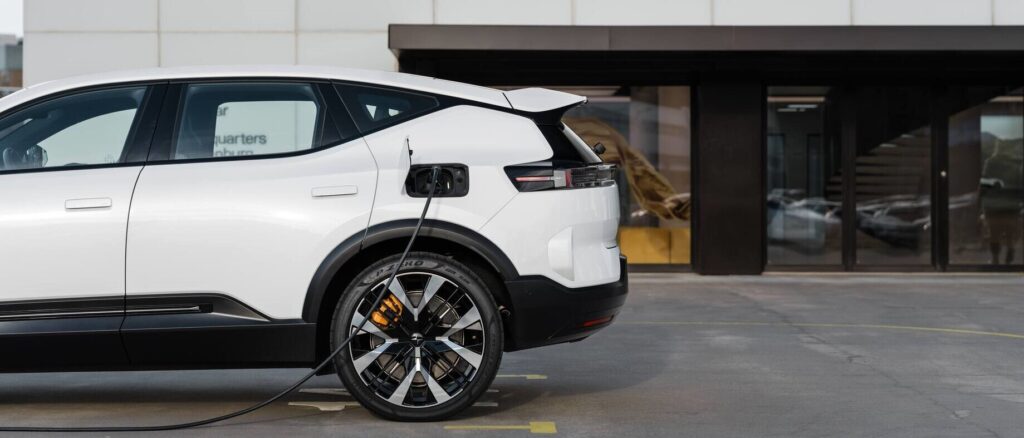
Automakers had also cited increased competition from China, whose EVs have been making rapid gains in Europe, for pushing back the 2035 target.
Instead, this week the European Commission has introduced a framework that will require automakers to achieve a 90% tailpipe emissions reduction target by 2035 instead of the earlier 100%, while addressing the remaining 10% through the use of the use of low-carbon steel produced in the EU, biofuels, and e-fuels.
More crucially, the EU’s new framework still leaves a place for hydrogen fuel-cell models and hybrids of all types, including PHEV and EREV models, with the former seeing far more interest from buyers in the EU than in the US. Hybrids are perhaps the main win for the automakers that have lobbied for amendments to the 2035 target, in ways that could yet expand in the coming years.
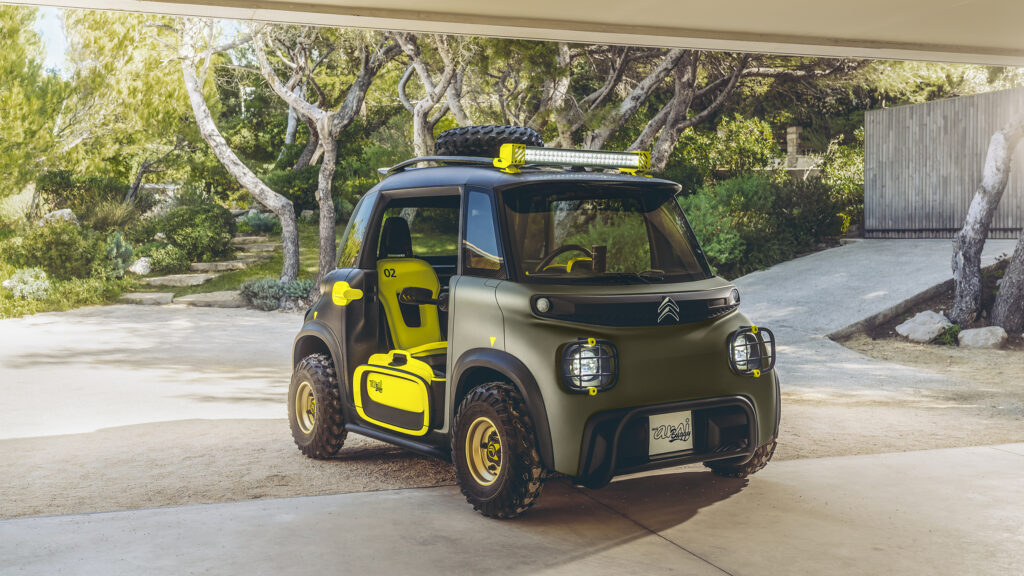
The new framework also includes a provision for a kei car-style class of small and affordable electric cars up to 13.7 feet in length, which have been the subject of a related lobbying effort by European automakers, and which has also been largely motivated by fears of a wave of Chinese models continuing to rapidly gain market share. But the details of this new vehicle category, including technical requirements and buyer incentives, are yet to be hammered out.
“Prior to 2035, car manufacturers will be able to benefit from ‘super credits’ for small affordable electric cars made in the European Union. This will incentivize the deployment on the market of more small EV models,” the European Commission noted in a statement.
The revised rules also carve out a relatively small measure of exemption for vans, which are seen as struggling to make gains in the EV space. The EU will now require that the interim 2030 target year should see a 40% CO2 reduction requirement among vans, compared to the prior 50% mandate.
The fate of heavy-duty vehicles, meanwhile, will be decided via a separate amendment the details of which will be determined later.
Perhaps the least market-ready aspects of the new framework, aside from the kei-style EVs that have yet to be developed and successfully marketed, are the e-fuels, biofuels, and so-called green steel to offset some of the emissions. These three items still largely exist in the cottage industry stage if not the drawing board and will require years of scaling efforts, which might ultimately prove to be less than financially worthwhile for their providers.
The EU’s plan for partial reliance on such fuels and materials, therefore, could be viewed as a bit aspirational if not premature. But with ten years of development (and generous government incentives), all three might yet make sufficient gains.
If there is one non-EU state that still deserves a mention when it comes to 2035 targets, the UK is still set on phasing-out ICE models by 2035, though that plan as well could be revised as the target year gets closer.
Overall, the amended 2035 emissions framework could be seen as a win for Europe’s auto industry, albeit a very small one. Much investment will be needed to make the Small Affordable Cars initiative appealing to consumers, while e-fuel production remains on a boutique level and will need to be expanded at some cost.
And the difference between 90% CO2 reduction and the prior 100% target by 2035 is still a high bar to clear at the current pace of EV adoption, with BEVs making up just 13.6% percent of the EU market in 2024.
Ultimately, it’s very easy to picture another, perhaps far sharper, course correction in another five years, as consumer preferences and other realities have a momentum of their own.
Recent Posts
All Posts
July 17, 2026
July 16, 2026

July 13, 2026
Leave a Reply
You must be logged in to post a comment.