High Drama
February 6, 2026
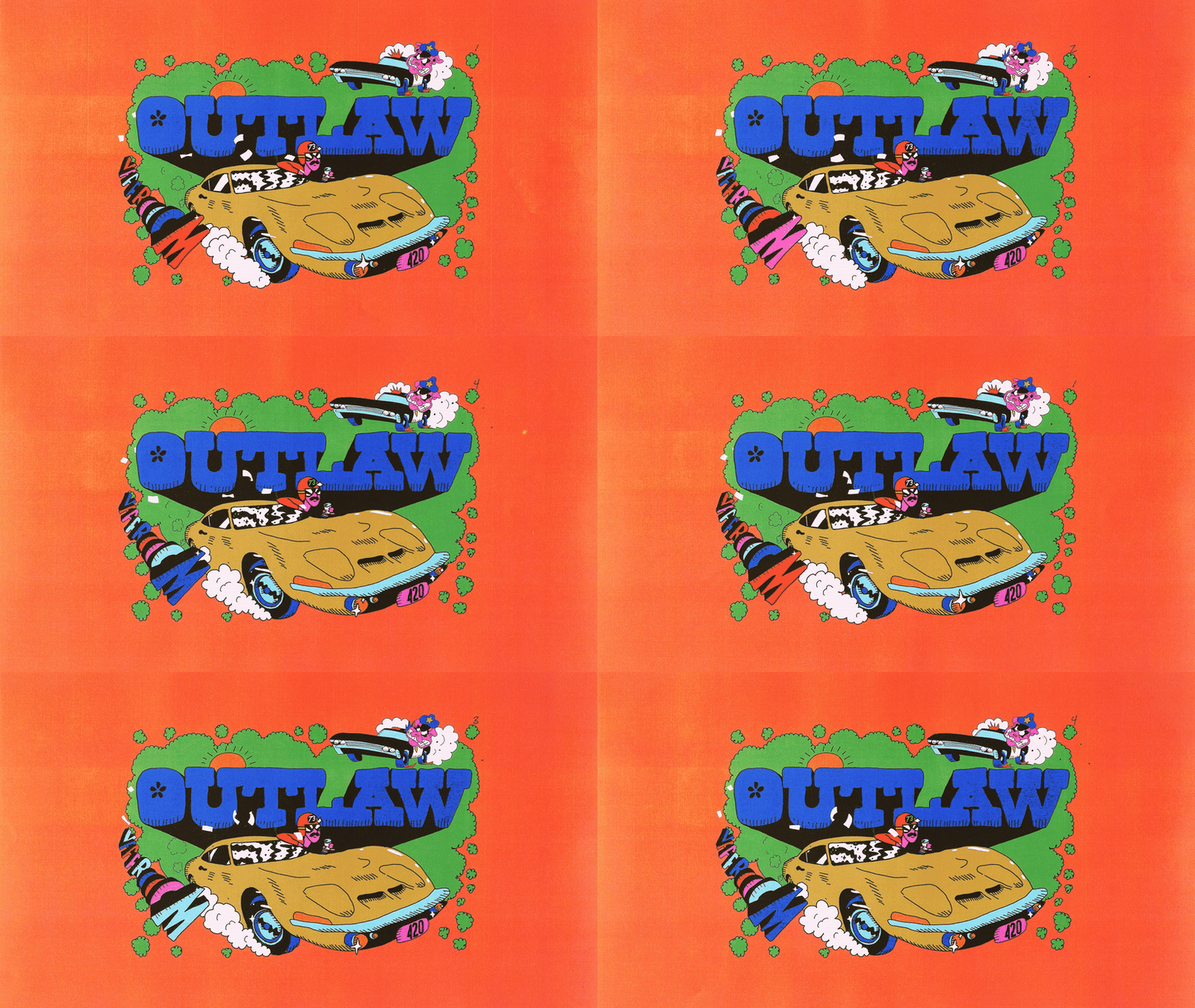
Jamie Kitman -- Illustration by James Martin
In search of weed's place in American car culture, Jamie Kitman looks to America's outlaw heroes in NASCAR.
It was almost fifty years ago, but I remember like yesterday the day I went to take my driver’s road test. Lodi, New Jersey, didn’t have a monopoly on the state’s legendary industrial grimness, but it had a solid toehold. In the midst of vast swathes of pavement and forbidding pieces of 1950s state architecture stood a DMV facility guaranteed to strike terror in a license-seeking young American’s heart.
This was back when uniformed New Jersey state police conducted driving tests, staged but a football field’s distance from armies of other troopers conducting annual vehicle inspections, with hundreds of cars lined up in rows, often idling for an hour or more, each waiting for their own smoggy turn. It was the measure of the peoples’ enthusiasm for driving that they tolerated it.
The Staties, kitted out in hella frightening, militaristic uniforms ushered in by a Nixon-era Republican governor, looked for all the world like they were getting ready to march in a Nazi parade. Proof that cosplay wasn’t invented by Kristi Noem, they served their intended effect, scaring the bejeezus out of me. I had long hair, for one thing, and, of course, I was stoned.
A friend’s 1973 Opel GT in era-appropriate ochre—a lot better machine than I was used to—was the car I’d be driving. Unlikely to break down during the test, which was good. But it did stand out, which might be bad. My test giver? A portly, soon-to-retire trooper. Lowering his creaky, plus-sized frame into the slim-hipped bucket seat beside me, the buttons of his uniform visibly straining, his power hat denting the headliner, he did not look happy.
To me, he looked terrifying, objectively, and I would have thought so even if I wasn’t high.
Continuing the “off on the wrong foot” vibe, he chided me for holding an open can of Diet Pepsi, back in those days before cupholders. It was a posture which admittedly flew in the face of the “two hands on the wheel” orthodoxy. A practice, I conceded under questioning, that might make a lot of sense.
But most concerning to me that long ago afternoon was that as he began barking out instructions I suddenly spied a bunch of marijuana seeds rolling around the center console from which the shifter sprouted.
Ten or fifteen minutes in the cozy confines of the two-seat Opel with a humorless cop dressed like a decorated member of the Wehrmacht? Knowing this handful of seeds that weren’t even mine could roll into view and send me to prison for a long time? So much terror. I died one hundred deaths.
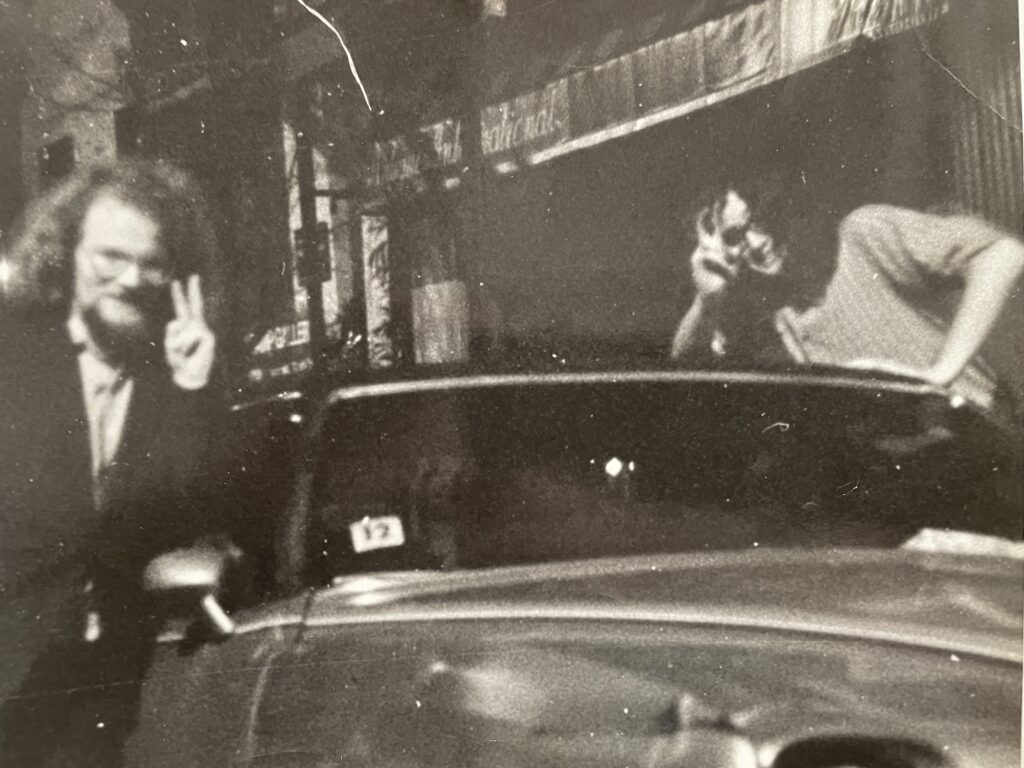
Then two miracles occurred. The lawman failed to notice the seeds and I passed my test.
A lot has changed since then, now that marijuana, one of the country’s biggest cash crops, is de facto legal in most places. Seventy-nine percent of the population live in a county with at least one dispensary, more than 1 in 3 women use it, and tax revenues for 2025 are projected to exceed those collected on alcohol, as they have since almost every year since legalization, four score and billions of bong hits ago. Now that President Trump has announced plans to decriminalize marijuana further at the federal level , the scourge of stoned driving can only be expected to increase.
Some may dispute how mighty a scourge it really is. For among the most obvious and important distinctions between stoned, drunk and other types of drugged driving is that potheads (the many who aren’t also drinking or doing meth) tend not to be the ones running red lights while entering intersections going the wrong way at 110 miles per hour with their pants off. I’d call pot the lesser of two evils.
Which isn’t to say there aren’t some wild stories of things pot enthusiasts did in cars, and lots of them. Some foolish, some funny, some deadly. In the amusing vein, there was, for instance, the time my older high school friend, Jim, after toking up with me in his mom’s Pontiac Grand Am, got us and our long hair and flannel shirts pulled over in our hometown late one mid-1970s afternoon. Just returned from a long road trip to visit colleges and on our way home, it turned out we were going 3 miles an hour down the main drag. The timing was fortunate, however, because only moments earlier we’d been bemoaning the fact that our impoverished teenage selves had burnt the very last of our cannabis supply. Sad as we were about that, it now meant we were also able to avoid scene-blowing paranoia over an ensuing search of the car. Which never happened. Instead, we got sent on our very merry way, with a caution to speed up.
Why, you may ask, do I bother recounting all this now? Because while I’ve been known like every self-respecting American to enjoy alcohol, even managing to arrange a charge account at the local liquor store when I was just 16, I am a boomer. And many, many boomers are even more enthused about good ol’ Mary Jane: marijuana.
Now you know too much about me. But what I want to know is, where in the mythology of the American road do we place all this once-illegal car/weed activity? Now that Mom is popping a gummy instead of (or in addition to) a valium, how should we think about pot’s relationship to cars?
This won’t be a defense or recommendation of driving high, but it will touch on the lived experience of many tens of millions of Americans. Lest we forget, some Americans drive drunk everyday, others once in a while. Ditto the powder sniffers and pillheads. We’re sharing the roads with them every day and every night, whether we know it or not. They might not condone it, they might not be proud of it, but they do it, anyway. Sometimes they celebrate it. Ditto stoned people. Though to a large extent, outside of the Cheech and Chong oeuvre, the stupid things pot enthusiasts used to do in cars have been under-discussed, because the substance was once so highly (no pun intended) illegal.
Right. Finding the place of weed in the mythology of the American road.
For insight on how to proceed at this delicate cultural juncture, let us take a moment to consider how American society previously managed to normalize, romanticize and memorialize another once-criminal activity.
Two uniquely momentous moments in American history occurred when the manufacture, distribution and sale of alcohol was made illegal, and then, not long after, re-legalized. And a good place to start a discussion of alcohol’s road back would be NASCAR, the great American North Star where driving and mind-altering contraband is concerned.
Like most enduring institutions, NASCAR has its own Creation Myth. Finely tuned through the years, the story the giant stock car sanctioning and operating body likes to tell about the sport it rode to billions is a beguiling mixture of fact and fantasy. And, as any race fan not too deep in his cups might tell you, beyond the thrill of racing generally, the essential animating feature of NASCAR’s tale is, was and will always remain, illegal things done with alcohol.
It’s one of the reasons NASCAR is so popular, as a trip to the 2.66 mile, high-banked oval at Talladega a few years back reminded me. A sort of alco-fueled Burning Man for working class Republicans, public drunkenness was on display every minute of every day of the three-day race weekend past 11am, with empty bourbon bottles, spent kegs and piles of drained beer cans to be found outside of most every RV, along with parades of shitfaced topless men and women, waving giant Trump banners, Confederate flags and the occasional swastika. Lawless, yes, but family entertainment in the 2020s isn’t what it used to be..
NASCAR’s story begins with alcohol: Nigh on one hundred years ago, some good ole, hard-drinking Southern boys found their finances in states of smoky ruin, made worse on account of the lingering effects of the Great Depression. Denied not just drink but also their livelihoods, first by a draconian constitutional amendment enacting Prohibition and then, with its repeal, over-burdensome taxation, the hardship in their minds being any taxation at all. So, they fought back. Covertly distilling and peddling homemade liquor, inventory they liberally partook of when not otherwise hard at work breaking the law and raising hell.
Fleshing out the moonshiners’ tale—faithfully recounted at most every chance by the media ever since that first race in 1949—NASCAR lore posits that these hardboiled Southern wheelmen grew up forever on the lookout for “revenuers” and other government agents—the ones who would do unpopular things like arriving unannounced to tax or arrest them, seizing these hardworking Americans’ cash and precious merchandise, then gleefully destroying their homemade camps and stills.
Righteously fighting for their right to party long before you were born, sometimes these black-market entrepreneurs with hearts of gold were forced to face the music and even serve serious jail time in consequence of their illegal activities. However, legend reminds us, when confronted by cops and revenuers they’d just as often make successful getaways. In their cars, of course.
Speeding down tree-lined county highways, over hill and dale, through forest, stream and fence. Weaving and drifting under pitch black skies as they tore down dirt trails, careering through farmers’ fields and across neighbors’ lawns. Perpetually ignoring the limits of speed and common sense as well as those of their machines’ bias-ply tires. Then ditching the car somewhere for a spell, maybe in a hayloft or tobacco drying shed, to escape the long (and reliably compromised) arm of the law. Good times, right?
These big-hearted outlaws, honorable, law-breaking bootleggers, drove old sedans, we’d learn, hopped up for extra speed and massaged for superior roadholding. Allied to the amplified car control skills they’d perfect over years of outrunning the man, the best of the best of these misunderstood distillers and errand-boys would become NASCAR’s first ever drivers. With backwoods tuning skills put to work, the stock cars they raced were made to go faster than many thought possible. Trading in fleeing the law for a profession not only legal but one also potentially more lucrative and possibly even more hazardous, they now hammered their howling machines around ginormous ovals (some dirt-surfaced) for fun, profit and acclaim.
Booze was legal again, available just about everywhere. And all was forgiven, the criminal pasts of some of NASCAR’s most famous drivers not just acknowledged but proudly referenced ever since. Bootlegging and the 11/10ths driving it necessitated were things to be celebrated. Beer sponsorships cultivated. The bitter fruit of the alcohol lifestyle—alcoholism and its myriad risks to health, citizenship and household harmony—don’t figure in these stories. Child neglect, domestic abuse, adultery, sodomy, divorce, they don’t talk about those, either, or the extraordinary dangers of drunk driving or speeding on public roads. Alcohol aids and abets breaking the laws of man and God, of this we humans have been certain for countless millennia.
Just as any celebration of the alcohol-driven antics of the stock car racers we revere necessitates overlooking the fact that the protagonists were breaking the law on multiple fronts in service (and often under the influence of ) a potentially dangerous but quite popular drug, I propose that it is high time to begin reclaiming the automotive history of now increasingly legal, socially acceptable and less dangerous marijuana, mining the past for adventures outside of the written law. After all, when weed was illegal, before the rise of edibles, people needed the car as a place to smoke, to get away from other people who might wish to object, possibly by arresting them.
This means the many in-car adventures of the stoners, pot dealers and other ordinary citizens who spent decades on the wrong side of the law, until it was decided that the law as written made no sense, can and must be told. It probably isn’t through racing, but there must be some way to weave the mostly-harmless exploits of a generation of potheads into the myth. If NASCAR’s first class of drivers can do it, is it too much to ask that we end up looking a little more like heroic figures in counterculture? It may not be the most important challenge of our time, but one way or the other this moment in history will be memorialized. So, c’mon, brothers and sisters, let’s write it ourselves.
I’ll go first, even if I’m sure there are millions of Americans with more lurid records of stupid stoned driving achievement. And to be clear, while I will share a few humble memories, I don’t recommend any of this. But that’s part of recontouring the debate. Far as I know, Junior Johnson didn’t need his mother to tell him not to mix drinking, bootlegging and driving. I didn’t ask the late, sometime NASCAR racer and all-around legend Parnelli Jones for drunk driving tips the day I spent alone with him on the 1998 Lincoln Town Car launch, (most of it stuck in traffic on the Long Island Expressway headed to Bridgehampton circuit from Manhattan,) but he offered them anyway. So here goes.
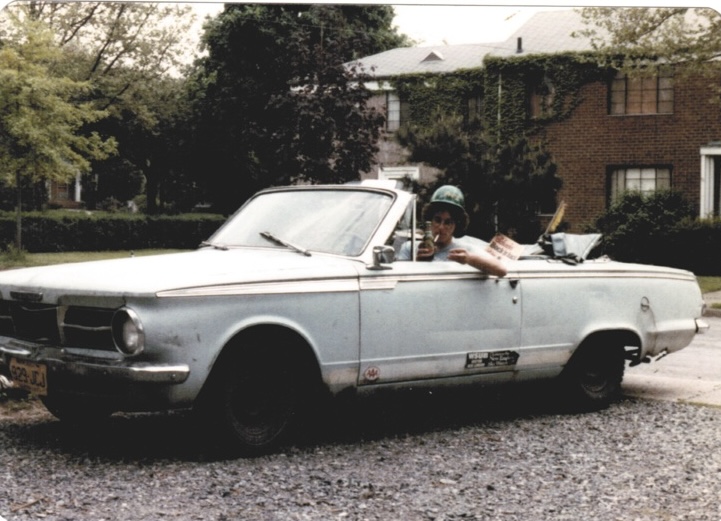
In 1979, my 80-something maternal grandfather sold his 1964 Buick Special post sedan to my friend, Michael, for $75, the going price for a beater back then and more than fair since my mother’s old man had spent 15 years touch parking this otherwise low-mileage machine’s way around the streets of Brooklyn’s Boro Park, denting every single panel at least twice near as I could discern.
For some reason, once my friend brought the Buick back to New Jersey, the local constabulary took a special interest in his new old car and its uniformly longhaired occupants. Some months it seemed like we were getting pulled over once every week, often by the same police captain, a fellow whose son had been in my class for all 13 years of grade and high school. But like clockwork, he’d pull us over, act like he didn’t know us and ask to see our drivers’ licenses and registration. (“Officer Dittmar, don’t you remember us from last week?” I once asked. To which he replied, frostily, “Stop talking.”)
The last time he pulled us over, the officer proceeded, as he always did, to search the Buick, usually while one or both of us were swallowing the last of whatever marijuana we had on our persons. This time, as we waited by the car on the side of the road, he climbed all over it with extra purpose, poking here and there, lifting up this or that, all with no luck.
Then, after inspecting some unexpectedly funky sleeping bags in the trunk, he opened the front passenger door , then leaning on the front bench, he stuck his arm as far under the seat as it would go. A large, malevolent smile cracked as his stoic face lit up. The sound of a plastic bag being excavated, crumpled, and dragged towards daylight could be heard, striking terror in our hearts and every other vital organ. We gulped as he pulled out the bag with a theatrical flourish. But, then, his grin evaporated.
Against all odds, the content of the bag was a tuna fish salad sandwich Michael’s girlfriend had misplaced on her way to work about two weeks earlier.
Disgusting. Yet beautiful. We tried not to laugh.
A longer story brings us a little bit closer to the spirit of NASCAR’s good ol’ boys. One day in 1975, I persuaded a gas station owner on Route 4 East in Englewood, New Jersey, to let me help him sell a 1962 Mini 850 that had been left with him to sell by its French diplomat owner who was leaving the country. I drove off in the car, only to quickly find out to my deluded British car fan surprise that there was a very thin market locally for the Mini, with zero response to a New York Times classified ad I’d placed. But while waiting for something, anything, to materialize (it never did,) I delighted in driving it around corners as fast as I could, something I knew was possible in an ur-Mini because I’d read about it in car magazines.
One day, while hanging around the lounge area of my public alternative high school, a fine fellow we’d nicknamed Grabich and I agreed in the middle of a school day afternoon that we should step out for a short cruise in the Mini for the purpose of incinerating a restorative spot of weed in the small travel bong he owned. He had a lighter. I had a pack of rolling papers as back up and most importantly, the key to the most crucial ingredient after the smokables, a car.
Scene: a couple of teenaged longhairs head west down interstate Route 80, caning a white, buzzing Mini 850 with no papers that also sported French diplomatic plates for that last bit of extra undesirable visibility. Slowing to exit at Hackensack, New Jersey’s Green Street turnoff, the wind died down and Grabich in the shotgun seat finally got around to igniting the bong with his lighter’s alarmingly long flame, almost torching his eyebrows off. Helping, as it turned out, to illuminate for a state trooper—who at that precise moment passed us going the other way—exactly what we were up to.
The law man’s view now included Grabich with a smoking bong tight against his lips. Then, having spotted the trooper, my friend dropped the bong, starting a small fire on the floor while holding both hands to the sides of his terrified face, mouth agape like the guy in Norwegian painter Edvard Munch’s “The Scream” or the kid in the Home Alone movie. Catching this admission of guilt and my own horrified expression, the cop lit up the cherries on the roof of his 1975 Plymouth Fury and readied to spin his steed around. Level stakes plus that he was about to pull us over and arrest us—or worse.
But then came one of my then-young life’s proudest moments, a profile in race-worthy, seat of the pants, spur of the moment, good ol’ boy inspiration. Recognizing that our friend in blue hadn’t yet fully turned around and that we still weren’t officially being pursued, I realized that the winding entrance ramp to Route 80 East, next to the winding exit ramp we’d just taken to get off Route 80 West, beckoned. If I could get back to it and its three sharp corners in time, before the cop was directly on our tail, we’d buy a moment to lose the contraband before the Statey and his ill-handling battleship caught up with us.
As Grabich tamped out the flames from the fallen bong load, I approached the first turn, following a very brief debate with my friend about the relevance of his lament over losing his most favorite and useful bong. Not a discussion we’re entertaining right now, I told him, wrapping the thought in a lavish smorgasbord of profanity.
Instead, accelerating as hard as the Mini’s 34 (net) horsepower would permit, I rammed open its fabric sunroof, grabbed the bong and bag of pot from him and just as we entered a second blind corner tossed both out the sunroof. A millisecond later we could see the Fury lurching full-pursuit-style around the same corner behind us, lights and sirens blazing, its driver oblivious to the bag of weed and the bouncing bong getting crushed under his wheels and spit out behind him.
A second later, we were pulled over, made to get out of the car and searched thoroughly. No pot. The cop found my pack of rolling papers, though, and a pack of matches in my pants pocket and asked, triumphantly, what they were for. After a long silence, I had a plan. “Oh, those? Hand-rolled cigarettes,” I told him.
“Oh really?” he said dubiously “What type of tobacco you use?”
Wracking my brain, after an even longer and more awkward silence, I remembered the one brand of loose cigarette tobacco I’d ever heard of—Drum. There being nothing illegal about rolling papers per se, he deflated. And a few moments later we were on our way, shaken mightily but not the first-time enrollees in the criminal justice system we might have been.
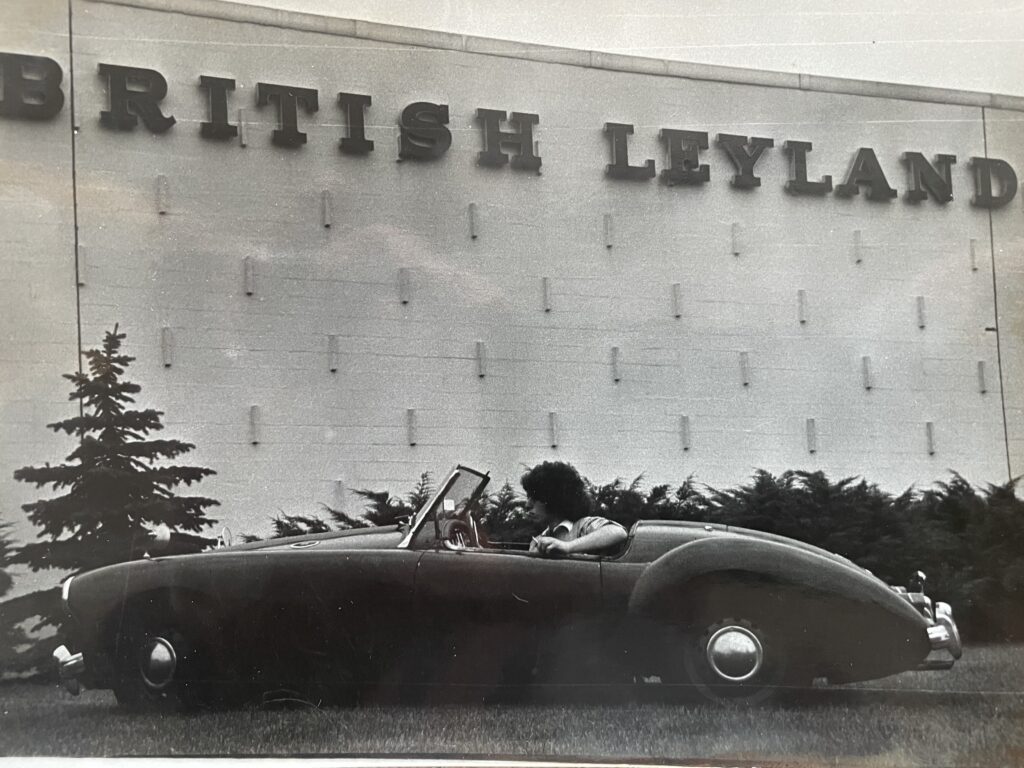
Driving antics aside, credit for our freedom the fact that I had French plates, no paperwork for the car and that I had throughout valiantly attempted to engage the officer in a cheerful technical discussion about the Mini, the miniscule displacement of its transverse mounted engine and its yellow French headlights. Talking cars was a time-honored deflection among pot-smoking gearheads when in or near police custody, making the whole situation both more time-consuming and, I daresay, less interesting to him, likely hastening our return to the schoolhouse. He had other miscreants to apprehend.
So, we start with this: a generation of young men and women did just like the future NASCAR drivers and used their wiles and their cars to escape arrest for messing around with an outlawed substance. Based on my own experience, sometimes we got lucky and sometimes we didn’t. Sometimes we got hassled for no reason at all, other than we looked like we were stoned. Which we probably were.
It’s hard to believe these days, when smiling police in many states stand inches from folks toking up on the street without hauling them off to jail. For what once could have been decades-long prison sentences or even life behind bars today earns one, at most, a soft-spoken rebuke. The criminalization of marijuana was directly tied to the end of Prohibition, when a whole bureaucracy of jobs, favor and money, needed to find a new substance to stamp out. And marijuana laws made it very easy to target people out of favor with the government, long-hairs—and most especially racial minorities, Black and Brown partakers being enthusiastically and disproportionately targeted by the law. But when white teenagers and others with entrepreneurial spirits began getting sent into the penal system for marijuana infractions, one knew a change was going to come.
There’s no point denying that pot can be deleterious to some peoples’ mental health and to physical health, too, especially if smoking is the method of ingestion. Smoking weed is as bad for you as smoking cigarettes (or worse), though in most cases even heavy weed smokers won’t have a two-pack-a-day habit. And while it’s clearly not right for some people (not unlike alcohol), pot is generally considered to be less damaging to human health.
Things change. Society’s view of marijuana certainly has, if the legal weed dispensary opening around the corner from me in my little village is any indication. I’m not saying we deserve a hero’s welcome, per se. Rather, I merely submit now’s the time to start dusting off and preserving the memories. They could be the basis of a future racing series’ creation story, assuming a roomful of potheads could ever get it together. But they will preserve a fuller record of an important time in history, when the sacred bud—a fan favorite for more than a century, even when illegal—increasingly intersected with the automobiles we operated.
Most everything about the procurement, consumption, and transportation of weed has changed since the laws have changed Sure, there’s little need to smoke and drive today, when you can smoke weed right in front of the bank, a crowded theater, at daycare drop off …. Then again, I’m guessing that more people are driving stoned now than ever before. Entering the state of Michigan recently, I was struck again by an astronomical number of billboards along the interstate inviting motorists to stop into the weed superstore at an upcoming exit. (Bowl, Bong and Beyond, where are you?) And that’s not even counting the millions driving around on psychoactive (and other) pharmaceuticals.
So, it’s on to the future. And while we won’t address here the in-car party prospects of autonomous cars, anyone with a gnat’s eyebrow of insight into the human character can predict self-driven machines will immediately find themselves hosting previously unimaginable amounts of bad behaviors, including ingestion of drugs of all kinds and our most enduring societal through-piece, alcohol. How irresistible will burners of all ages find a self-driving, four-wheeled party palace that will transport them to their destinations while not only allowing them to, er, lie down with their partner, but have their mount dispense beer, chardonnay and mixed drinks, along with built-in bong hits, pre-rolled reefers and essential body oils? Colored lights, fog machines, light shows and the dense, acrid smoke of stinky weed? How soon? I’m guessing pretty soon. A new age of ‘70s sin-bin vanning will be upon us, only with everyone’s ride and behaviors prepared for the autonomous worst. Or the best? You decide.
Maybe in some distant future, a too-stoned teenager will struggle to recount the more or less apocryphal story of how the self-driving cars that changed our relationship with the road were invented for and by the good ol’ potheads who, in the age of prohibition, would roll up their windows and fill compact cars with smoke. Until then, out with the old, old stories and in with the new, old ones, with new, new ones to follow. Remember, in many instances, the statute of limitations will have run.
4 responses to “High Drama”
-
Circa 1970. Six of us in Tim’s (aka Stash) five passenger Camry headed back to The Barn in Stowe from a party at UVM. The Doodle (RIP) found a J someone at the party had laid on him. Car full of smoke as we drove down 89. Came over a rise and the road ahead was a sea of flashing cop cars. Quick roll down the manual windows. Roll them back up as we stopped in a short line of cars. Tim rolled his window down a crack as the Trooper shone his light on each of us. Trooper said “six bad guys had escaped from prison. Don’t stop for any hitchhikers” and waved us away.
-
Good stuff JK. Thanks for the outlaw driving lore and prophetic musings. I’ve often explored the various bootlegging parallels. Nice read
-
As a naive Brit, whenever I’m on foot in LA I’m always amazed by the number of single-occupant cars with a haze of weed fumes wafting from an open window. I know weed is legal in California, but is nobody checking the drivers for impairment? Over here, positive roadside drug wipes appear to be on the up.
-
A beautifully composed saga of a long lost era. Makes me teary to think of all that has passed. Those were the days.


Recent Posts
All Posts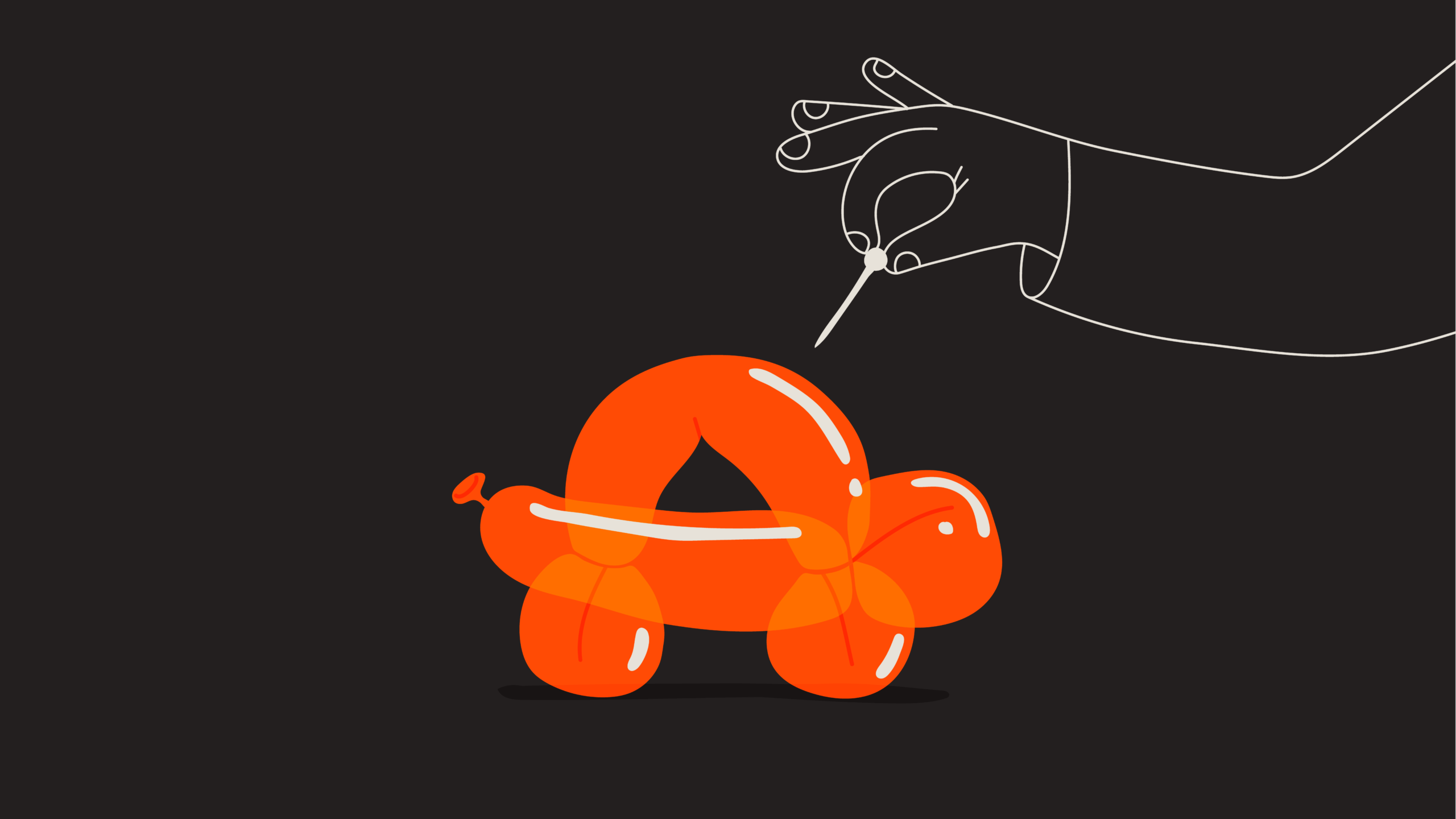
July 17, 2026

July 16, 2026
July 13, 2026
Leave a Reply
You must be logged in to post a comment.