Super Gazoo

December 5, 2025
Alex KiersteinGazoo Racing achieves the goal of becoming Toyota’s performance halo with an actual halo car, a long-hooded, turbo-hybrid beast of a coupe.
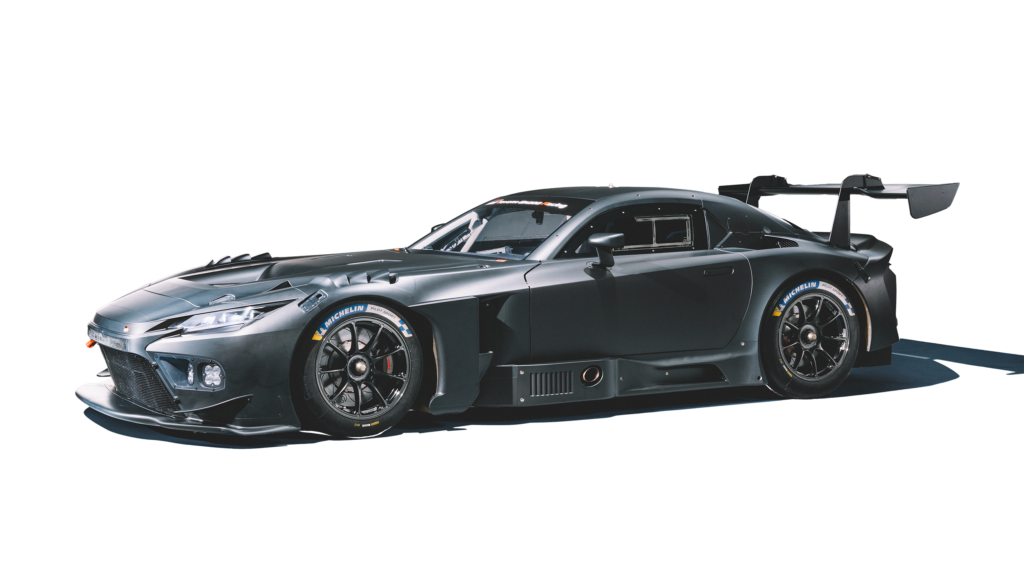
Cast your memory way back. Do you remember a time when Toyota was thought of as a boring company that made sensible cars? When the Prius was frumpy? The arrival of a pair of front-engine performance cars in the form of the Toyota GR GT and Toyota GR GT3 has pushed that time period even further behind us. There’s also a new, electric Lexus LFA concept to think about.
Toyota has stubbornly refused to place a midengined performance car at the top of its sporty lineup, sticking with front-engined, rear-drive coupes like the previous Lexus LFA. That car, with its singular naturally aspirated V10 and advanced construction, was clearly an influence on the new Toyota GR GT. It is, like previous Toyota halo cars including the 2000GT, a front-rear machine. Unlike the 2000GT or the LFA, however, it’s a racing homologation vehicle first and a halo model second.

You can see this in some of the engineering and design choices. For one, it’s not a testbed for some wild new technology. The LFA was a showcase for a new carbon fiber manufacturing process using a very expensive and impressive carbon loom to weave three-dimensional shapes out of the composite fibers. It was used for the roof pillars, to make them ultra-thin yet strong, for example.
Meanwhile, the GR GT uses an all-aluminum chassis that supports body panels made out of a combination of carbon fiber and aluminum. This is a great choice—aluminum is light and strong, and well-understood. It is not revolutionary, but this is not criticism. The GR GT is truly a product of Gazoo Racing. There’s no need to build massive, hideously expensive tooling to make the roof pillars thinner when well-understood construction techniques can meet the design parameters. Toyota’s target is less than 3,858 pounds—that’s a little portly, so this seems like a low bar to clear.
By the way, it’s Toyota’s first all-aluminum chassis. It is bookended by a front-mid mounted twin-turbo V8 (i.e., the engine is behind the front wheel centerline, for better weight distribution—45% front, 55% rear in the GT) and it sends power through a composite torque tube to a rear-mounted transaxle. It’s technically a hybrid setup, with a single motor and some unspecified amount of onboard battery capacity. That aspect is one of the few in which it differs significantly from its race version; FIA GT3 rules don’t allow motor-generator units.
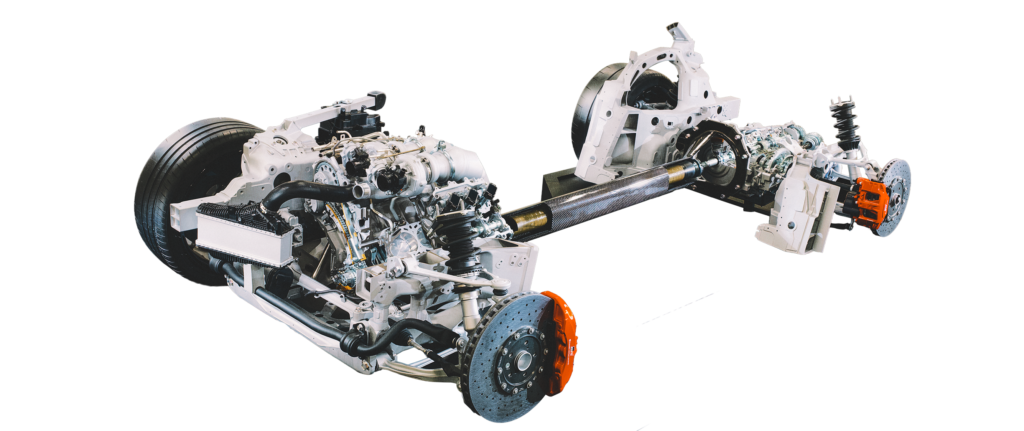
The power figures are also vague, which isn’t unexpected. Toyota has been teasing this car for a long time, with years of spy photos and rumors before the official info drip began. It’s a prototype, so power figures aren’t finalized, likely pending a final tune for EPA testing, although the final numbers surely won’t surprise the engineers.
For now, Toyota is simply saying it’ll best 640 horsepower and 627 lb-ft of torque. Like many European performance engines, it’s a hot-vee layout, with the turbos nestled in the vee of the oversquare 4.0-liter V8. The transaxle is a “newly developed” 8-speed automatic with an integrated single motor, simpler and probably lighter than the Lexus LC 500h’s rather absurd automatic-plus-CVT arrangement.
In my mind the most “race car first, street car second” aspect of the GR GT is the look. I like long-hood, short-roof proportions as much as any enthusiast, but you could land a helicopter on the hood. I believe Toyota when it says that the design worked backward from aerodynamic and packaging considerations. There’s a genericness to the profile and proportions, particularly the center section and greenhouse, to which some Toyota elements have been adhered.
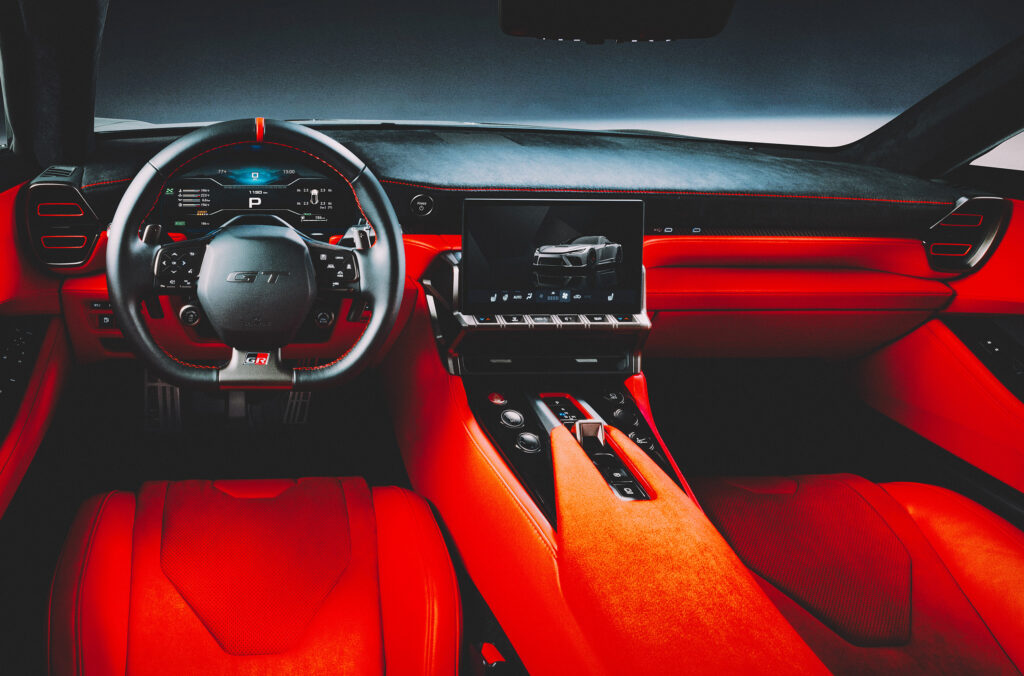
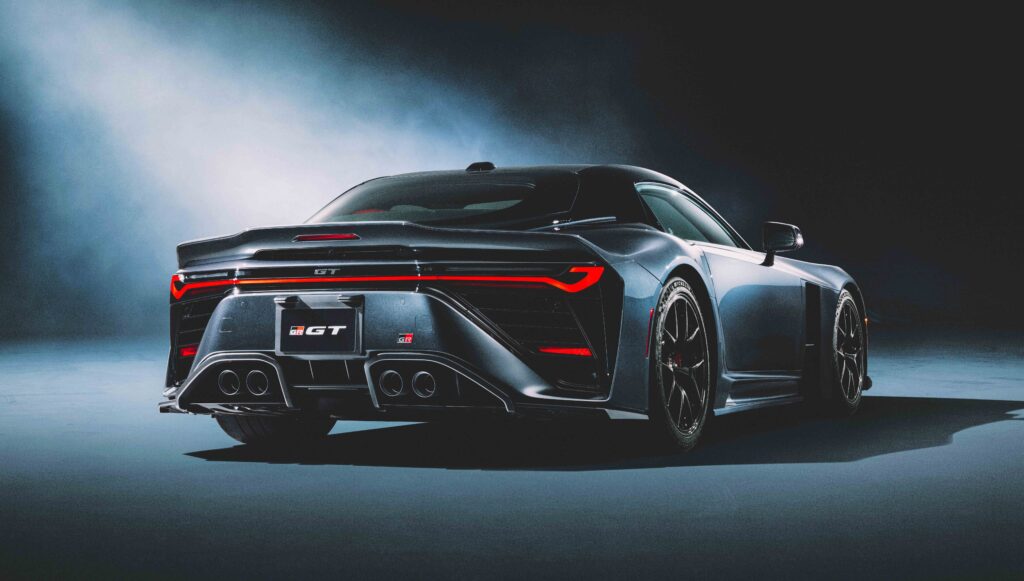
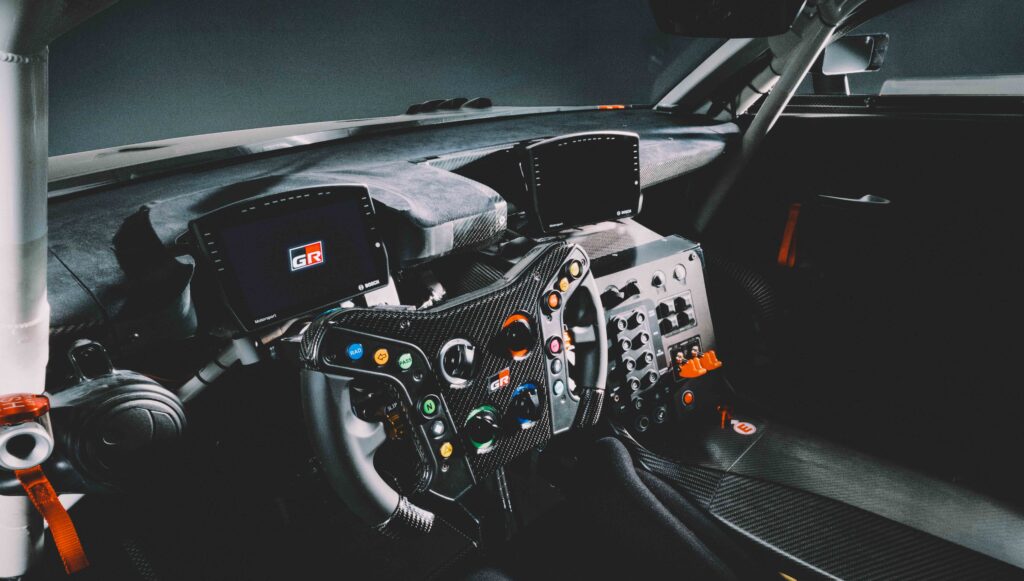
I’m aware this may sound like criticism, but it’s not. The Lexus LFA concept, co-developed with the GR GT and also utilizing an aluminum chassis, is the variant that explores the aesthetic possibilities of the coupe. The GR GT and its GT3 counterpart are the sort of uncompromising, function-first designs that come out of a development process completely dominated by engineers. Race engineers.
It has been interesting to watch Gazoo Racing become so deeply integrated into Toyota’s performance universe. The GR GT seems like the ultimate culmination of GR’s ethos, as well. The GR GT isn’t messing around, and it looks like it. I have zero doubt the GR GT3 will be competitive on track; you don’t make a car like this if there’s any question about it. Will it be as successful as a road car?
Recent Posts
All Posts
August 3, 2026

July 30, 2026

July 27, 2026
Leave a Reply
You must be logged in to post a comment.