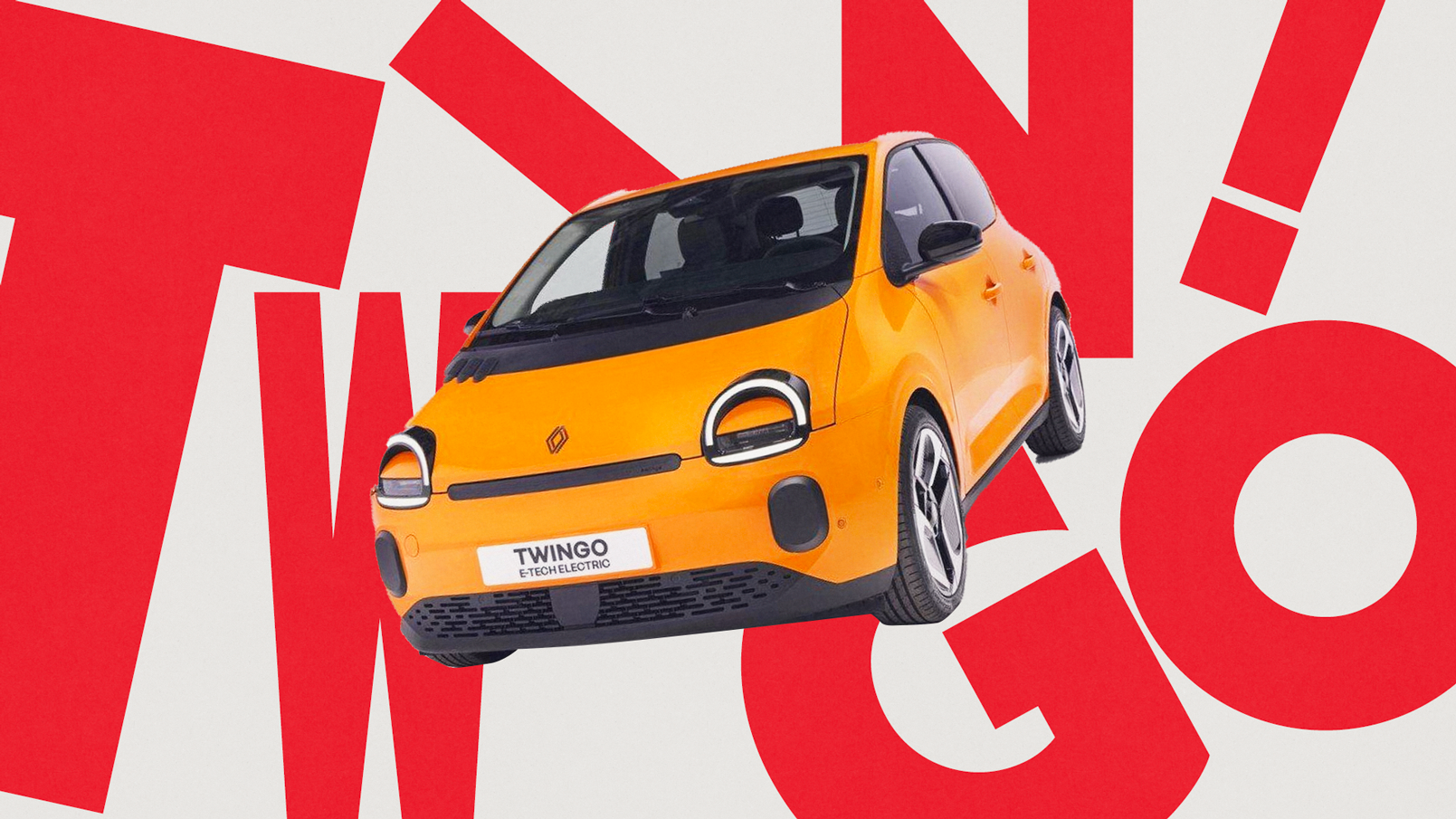
Go Twingo Go
November 6, 2025
Alex KiersteinRenault’s smiling city car returns, not as a neoretro tragedy, but as a disarming modern EV.
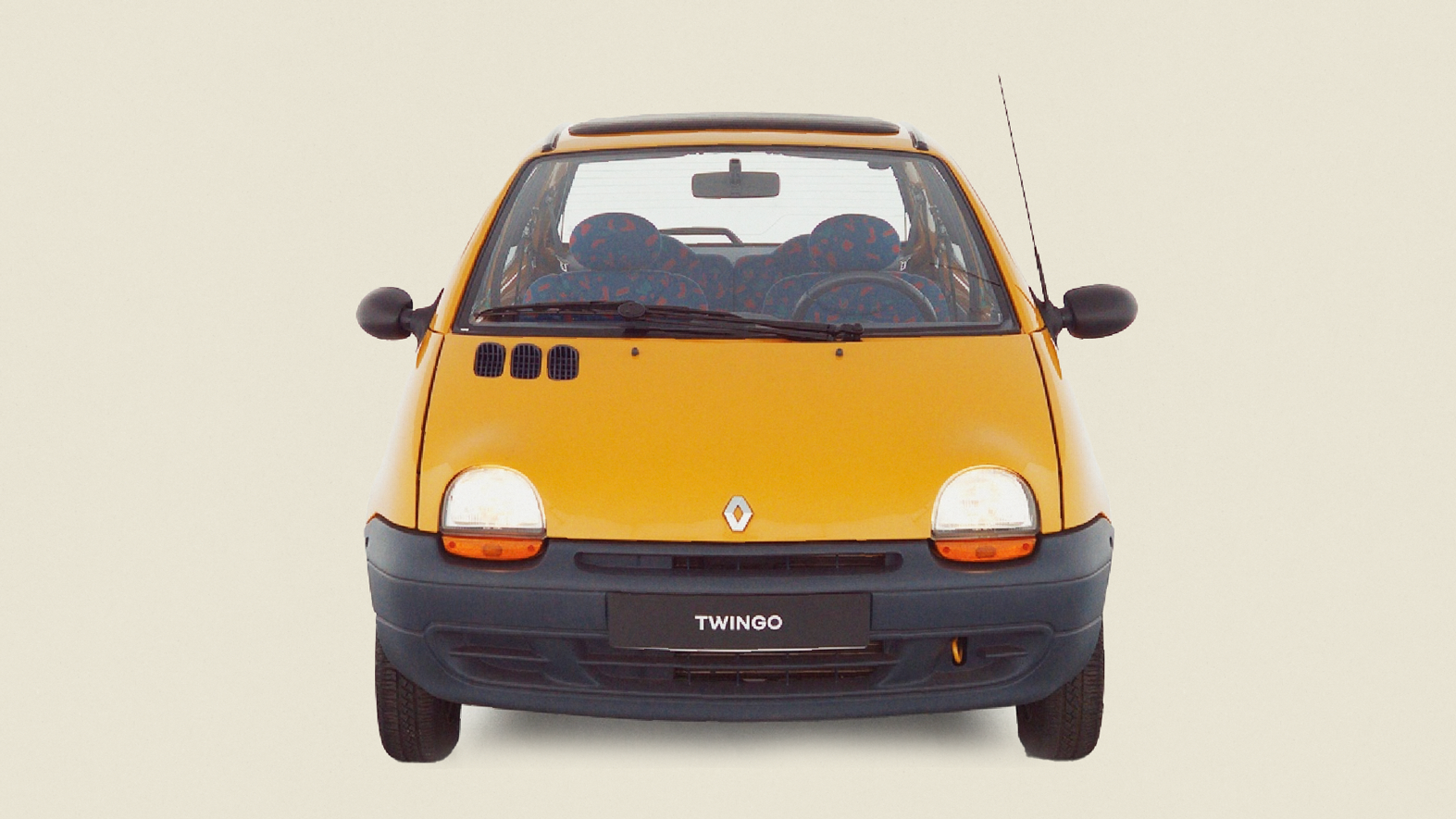
The original Renault Twingo was a hard sell, as Patrick le Quément told it to his alma mater, Birmingham City University. Renault’s president, Raymond Lévy, “saw that the car smiled at him, and he smiled back,” le Quément recalled. Renault executives wanted to literally wipe the smile off of the city car’s fascia. The focus group results were abysmal.
Le Quément wrote a note to Lévy: “choose instinctive design versus extinctive marketing.” Lévy listened, and after that le Quément answered to nobody except the CEO.
The original Twingo was design-driven despite its low price and humble mission. The protruding humps, the bumper cutouts that framed the cheerful headlights. That smile. The large and casual “twingo” wordmark. Its successive generations aren’t bad-looking, but none have even an iota of the charm of the original—and that charm formed much of its appeal.
Redoing the Twingo, again, could be a futile exercise. But after a very concepty concept a few years back, the production version reveal’s that Renault’s done it again. It follows the successful design ethos of the Renault 5 E-Tech, which isn’t so much a neoretro version of its inspiration but what it might look like had it evolved directly into the present, leapfrogging a few decades.
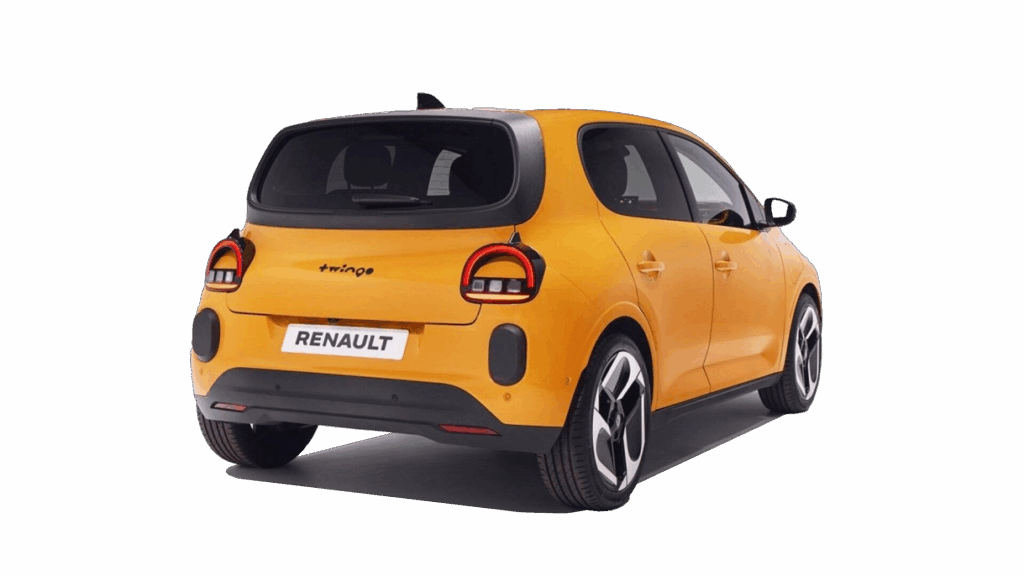
The Renault Twingo E-Tech is, like the 5, an EV. It features a variant of its AmpR platform, a 82-hp e-motor, a 27.5 kWh lithium-phosphate traction battery, and weighs relatively little at around 2,600 pounds. Renault says it will start under $23,000.
It also references the original without aping it. The shape and stance are different, modern, as is the greenhouse, particularly the curvature of the rear quarter glass into the C-pillar. The dark, protruding rear glass surround doesn’t even recall a vintage Renault to me; the first thing that pops into my head is the funky Honda Z600’s rear window “bezel.” Large bumper “lozenges” imply a gritty utility, like unpainted plastic bumpers used to.
Refreshingly, the front end is friendly. It may not quite have the ecstatic puppy quality of the original, but it is also not as aggressively challenging as some modern designs that seem to be designed to be distinctive above all else. Look how Renault has turned the obscured/hidden driving light into a playful way to visually reference the original Twingo. The running lights form a cheerful arc, but their thinness communicates modernity. Nested subtly between the hood cut line and the lower running light element are the driving lamps. Thankfully they’re up with, and not well below, said running lights.
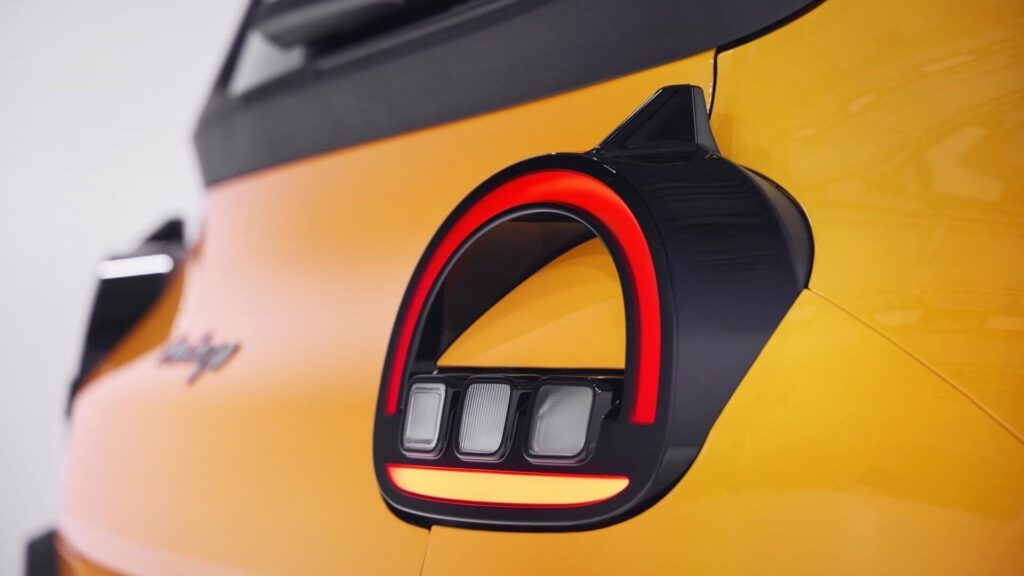
But it does alter the dynamic. The headlights were the visual focus, the personality, of the original. Now, a narrow outline, and body-colored negative space, do the same thing.
The three offset hood/cowl vents return, as they should. In the original, this little trio turned the cabin air intake vent—perhaps the antithesis of a feature worth applying any design to—into a central aesthetic feature.
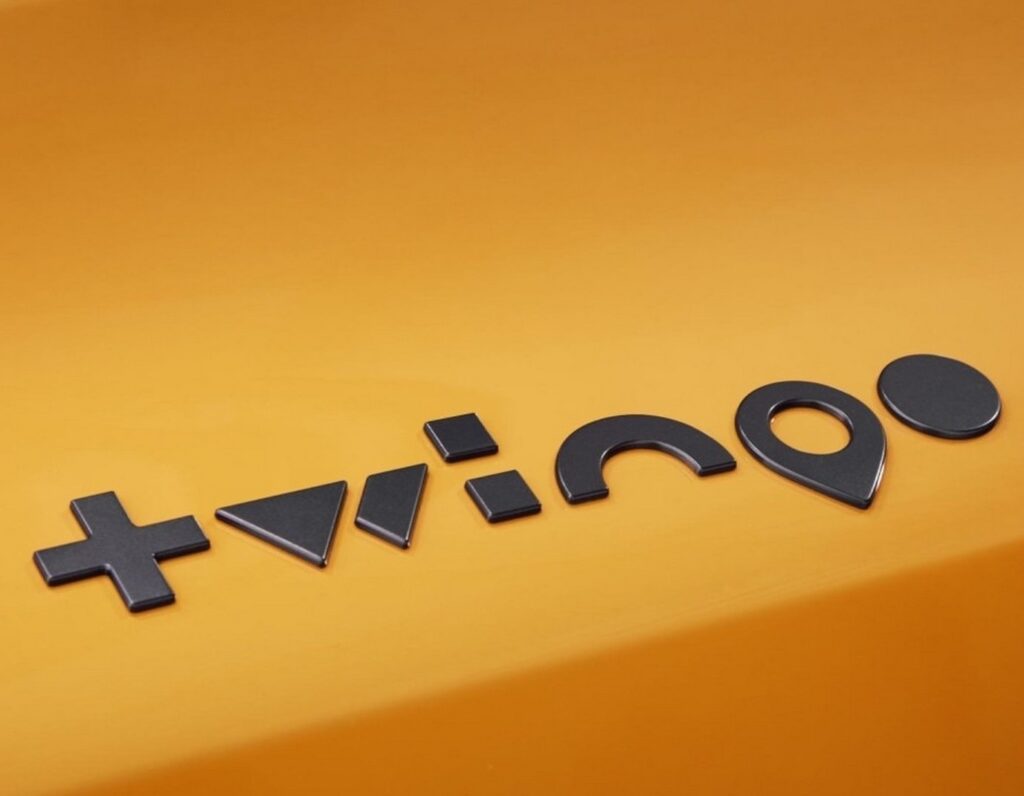
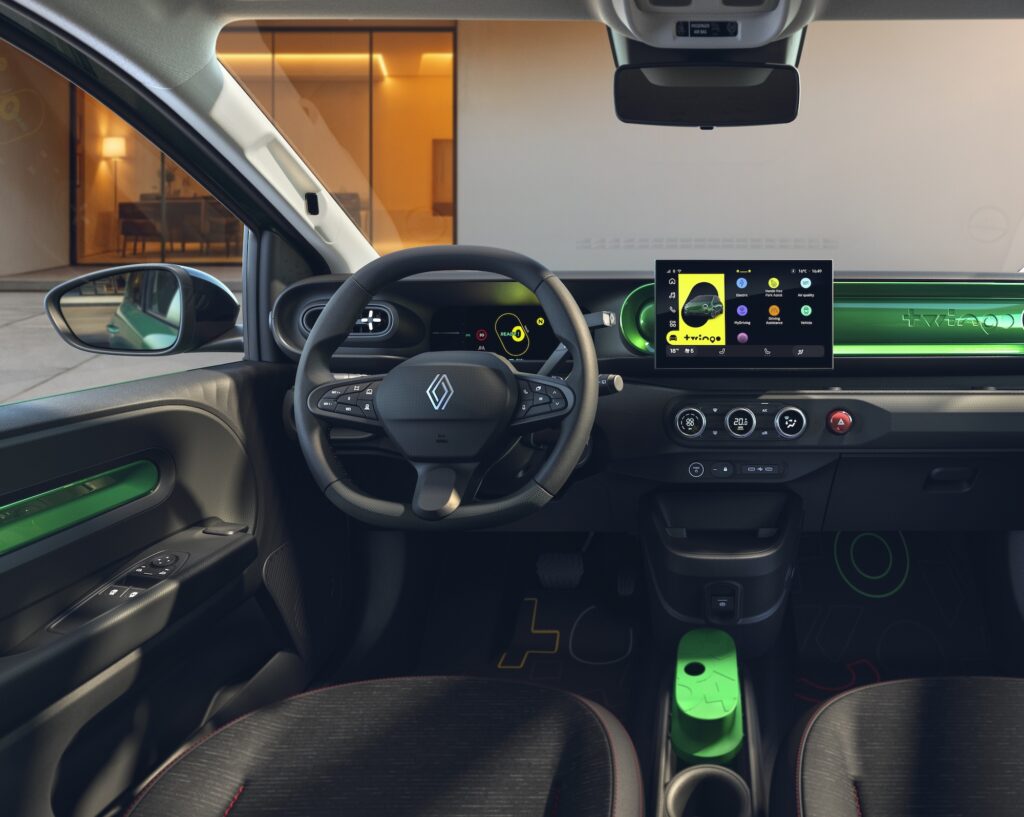
But as great as the outside was (and is), it was the wildly imaginative, whimsical interior that made the Twingo great to be inside. The switchgear in low-cost cars was often, at this time, dull to the point of anonymity. The Twingo’s interior was anything but.
Unfortunately, the new Twingo’s masterful remix of its ancestor’s exterior charm doesn’t extend to the interior. It’s somewhat anonymous, dark and dull with generic shapes and a few halfhearted nods towards visual interest, like the body-colored panels on the dash and door cards. At least they tried.
Updated with information from Renault after the car’s official reveal on November 6, 2025
Recent Posts
All Posts
August 3, 2026
July 30, 2026
July 27, 2026
Leave a Reply
You must be logged in to post a comment.