Ute Cute
December 11, 2025
Alex KiersteinWith the Soul’s discontinuation, Kia can focus on the Seltos. A more focused entry-level SUV emerges.
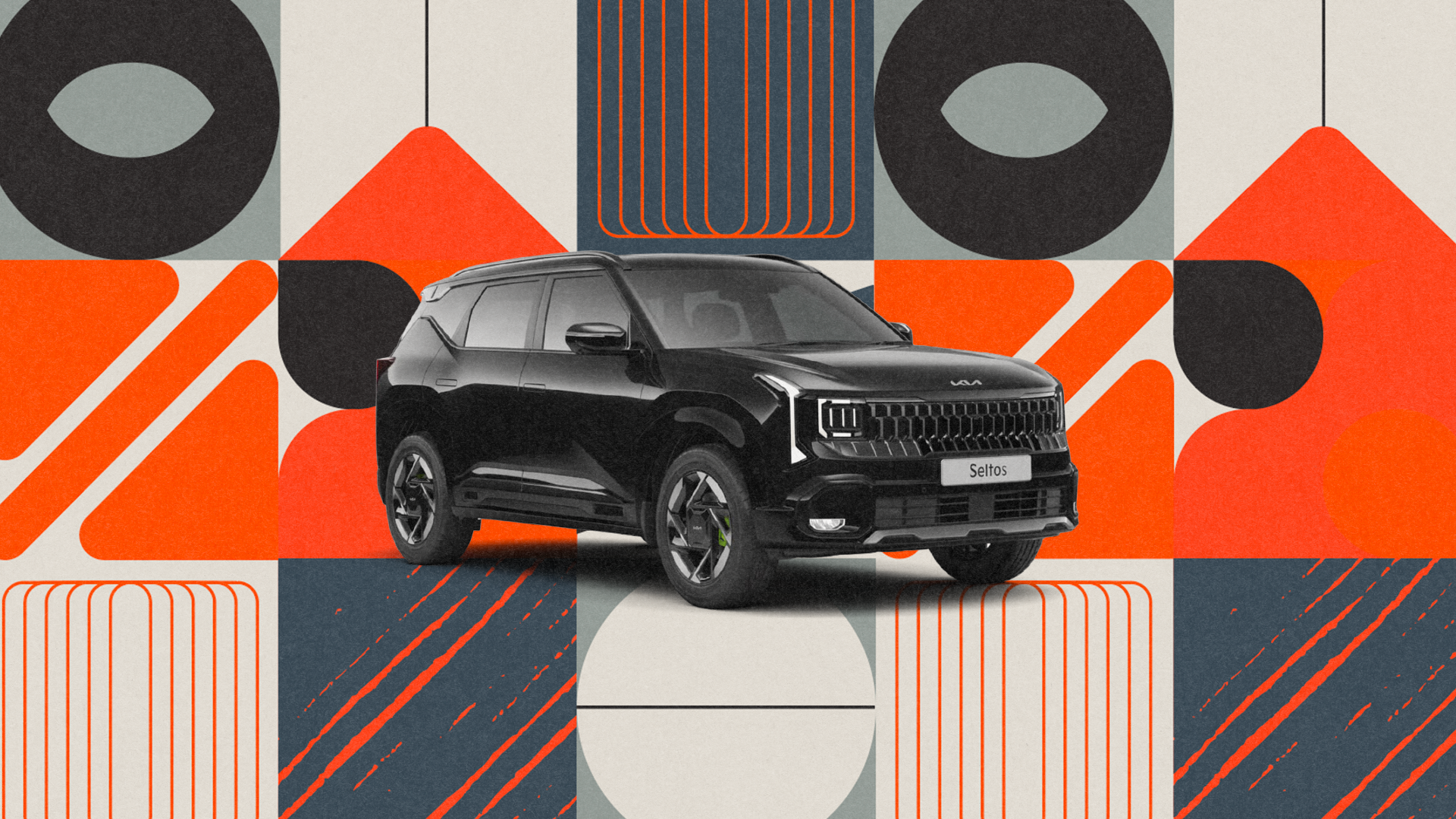
Inoffensive adequacy is no longer, er, adequate for entry level vehicles. Have you seen the current Nissan Kicks? It transformed from an amorphous blob, not quite hatchback and not quite crossover, into something distinctive and perhaps handsome. It’s still an entry level vehicle, but it has character. With the reveal of the 2026 Kia Seltos, the Korean automaker does a similar trick outside but one-ups the Kicks inside.
This is the Korean-market model; Kia and Hyundai like home-market debuts first, with export details to come later. But our versions are usually different in only the details. The first thing to notice is a profile that looks like a smaller-scale Telluride, which itself shares some overall inspiration with the EV5 and EV9.
What’s interesting about that is that the Seltos sits just under the Kia Sportage in the lineup, but the Sportage is sharp and swoopy. The new Seltos is much blockier, so perhaps Kia is moving towards a more unified overall shape for its SUVs. It’s not quite a raw application of a corporate design language; the same shape and style in different sizes. But it does look like a crystallization of a broader idea: that Kia SUVs should look alike.
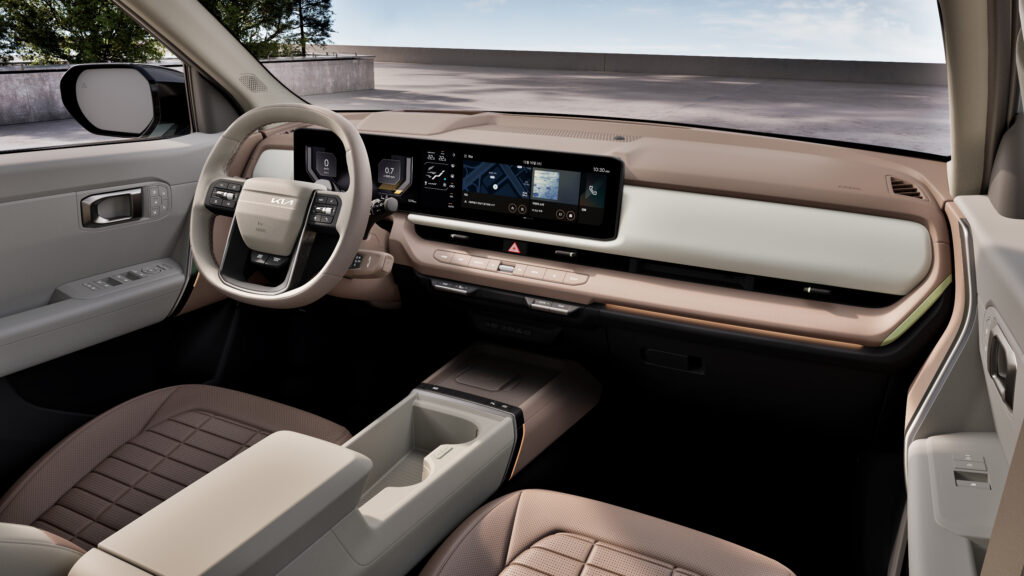
Thankfully, if that’s the template, it’s a handsome one. That feeling continues inside, where the Seltos gains some contour and contrast. Kia attempted to impose some style upon the current Seltos’ plasticky interior, but it does seem imposed. An overlay of contemporary elements, like the wide aspect ratio dual screens, onto what is essentially last decade’s interior DNA.
Meanwhile, the new Seltos takes the same basic idea and refines it. For one, the protruding PRNDL gear selector is gone, allowing the dash to float above a flat, broad center console. It makes the interior look wider and less cluttered. Cleverly implemented panels on the door don’t simply wrap into the dash, they protrude a bit, breaking up what’s often a visually awkward transition that’s right in the front occupants’ line of sight. They look a bit like buttresses, supporting the dash from the side so it can arc through the center of the car without substantial support underneath.
I’m a big fan of this trend. It makes the space feel airier, more open. The smaller a vehicle is, the bigger the impact to the overall sense of well-being. I’ve been in small crossovers with high cowls and large center consoles, and it feels like you’re sitting in a snug turret. It’s not exactly claustrophobic, but there’s a sensation of limitation, of being penned in. I sense that the new Seltos will feel larger inside than its predecessor.
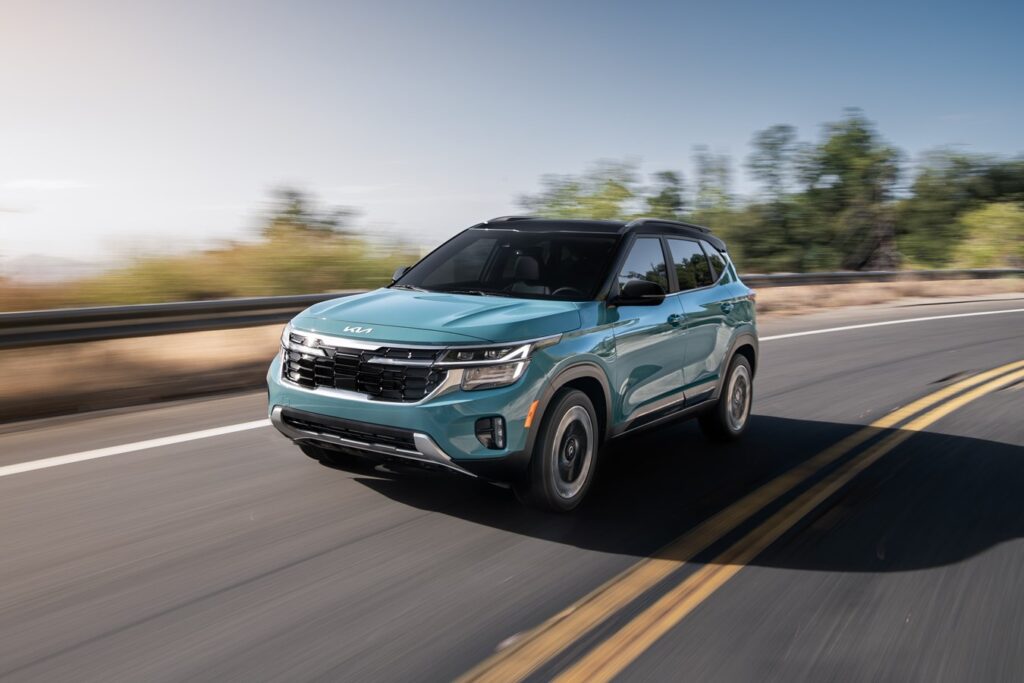
It will actually be larger, too. The new Seltos is 2 inches wider and rides on a wheelbase 4 inches longer than its predecessor. Interior volume specs aren’t available yet, as they’d be country-specific, but presume that more space in between the wheels and in between the mirrors equals a nonzero improvement inside.
Three available engines of 1.6- and 2.0-liter displacement and five available transmissions is somewhat bewildering. There is a six-speed manual we certainly won’t get, two flavors of DCT, a CVT, and an 8-speed automatic. Presumably the addition of optional all-wheel drive influences which transmission is utilized.
The current US Seltos base models use a naturally aspirated 2.0-liter and a CVT, while the upmarket models use the 8-speed auto and get standard all-wheel drive, so that’s a safe bet for the 2027 Seltos. Given the eccentric and inconsistent driving experience with a DCT, especially in a straight consumer product with no sporty pretensions, that’s a smart move—just like it was to drop that transmission when the current Seltos was reworked recently.
But the powertrains are probably less important to consumers (as long as they’re adequate, which the AWD one certainly will be) than the value proposition. And thankfully, that calculus now can include interesting interior and exterior design, which makes driving entry level vehicles an experience that transcends its market position.
Look, driving is about being inside the vehicle. Many people don’t like to drive; it’s a necessity. I really feel that a pleasing, comforting interior improves safety and reduces distractions. I’ll be interested to see in person if the airier new Seltos makes it a less anxious place to do obligatory, not pleasure, driving.
Recent Posts
All Posts
March 16, 2026
March 12, 2026

March 11, 2026
Leave a Reply