Enduring Cool
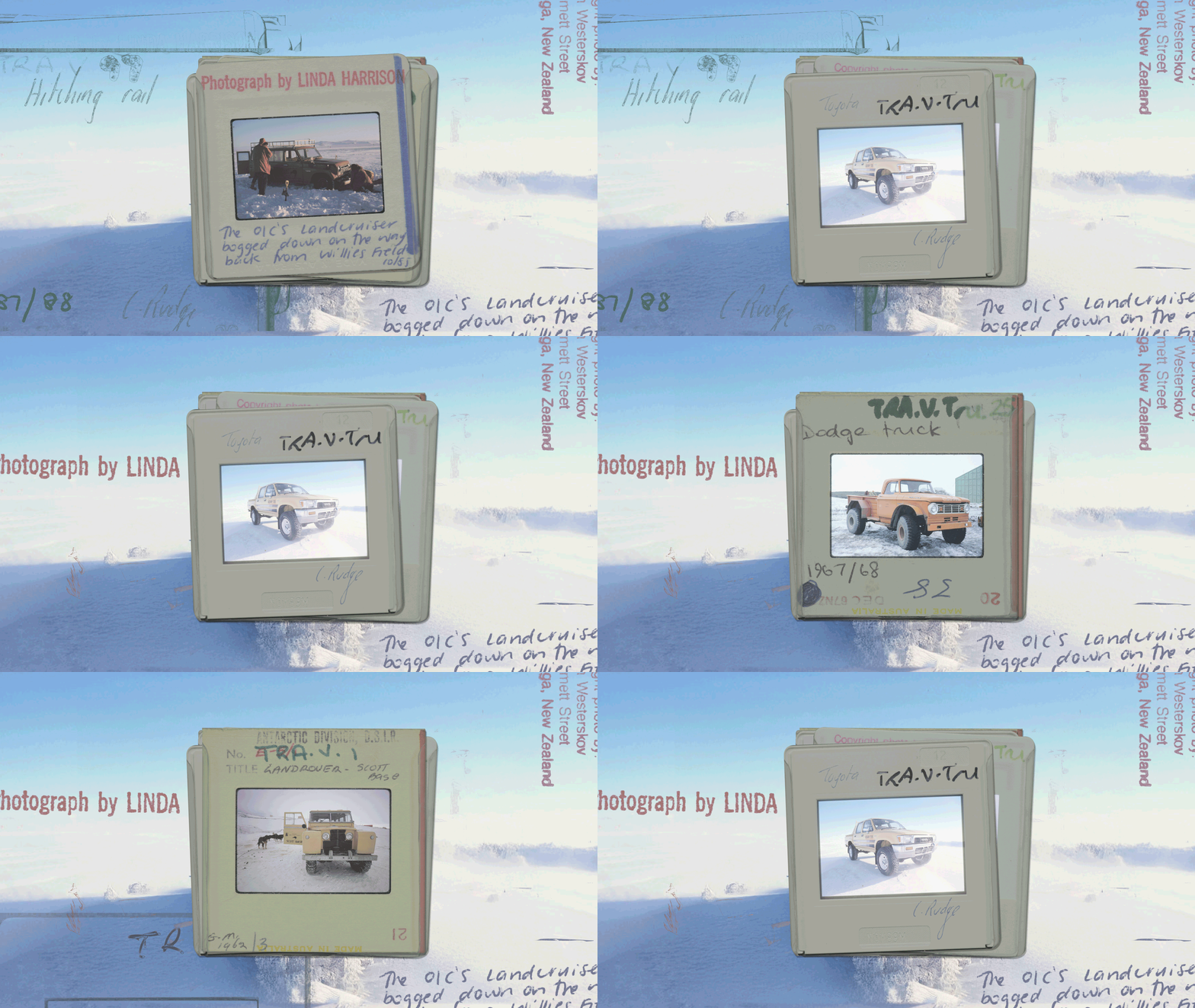
Antarctica is home to the highest winds and the lowest temperatures on the planet. It’s the only continent without an indigenous population. The singular people on Antarctica are scientists and support staff operating on temporary government-backed short term research assignments. Being the coldest, driest, and windiest continent prevents permanent human inhabitation, but roughly 30 nations maintain research facilities that host people year round. Specialized equipment has always been a part of keeping those facilities running so scientists could carry out their work.
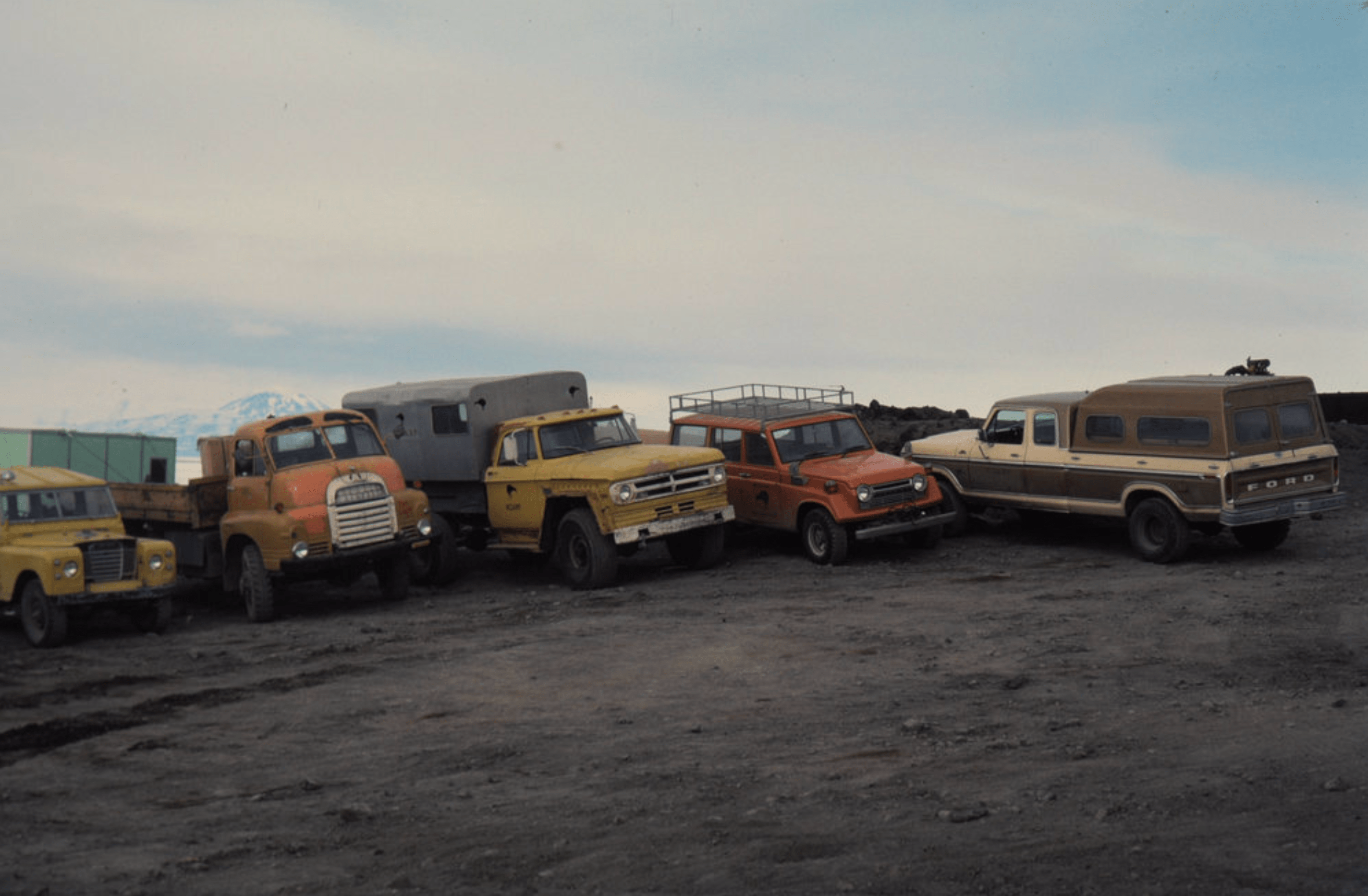
In the case of the New Zealand Antarctic Research Program, otherwise known as NZARP, the fleet of trucks keeping the station running throughout the decades could not have been any cooler. But before they were cool, they were just trucks. Trucks robust enough to stand up to the harshest climate on earth, and trucks accessible enough for a government to comfortably spend public funds on them. They had to work. The well-being of the entire program–and its participants–depended on it. Maybe that’s exactly what makes them so magnetic today, decades later. Simplicity. Providing an analog solution to a consequential problem. They’re just doing what they were made to do. Try fixing any modern SUV or pick up in the field today and it all makes sense.
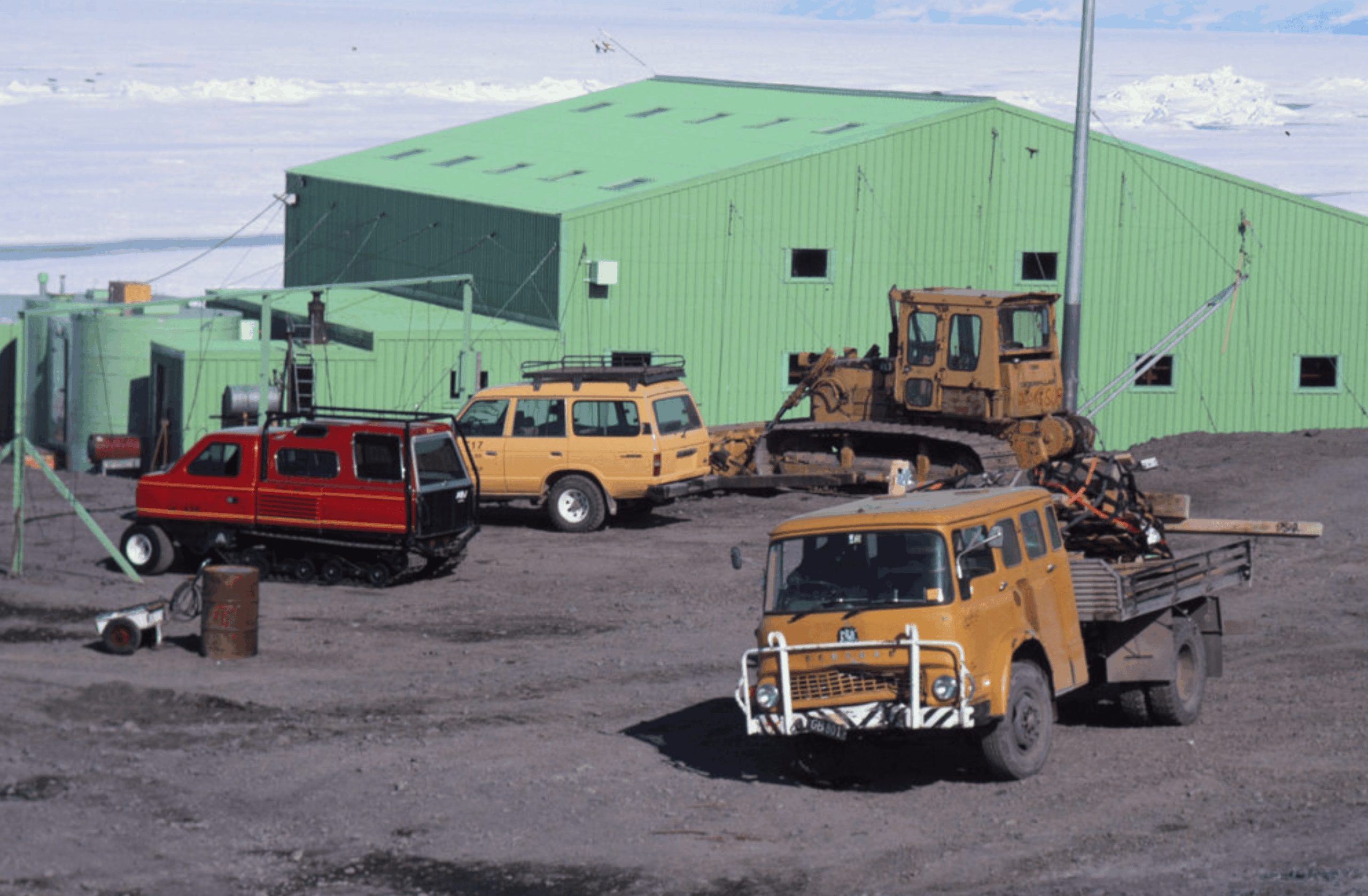
We looked through the “Living and Working” tag in the NZARP digital archives and gathered the best shots of the Antarctic vehicles at work over the years for your enjoyment.
The Land Rover Series IIA (1971-72)
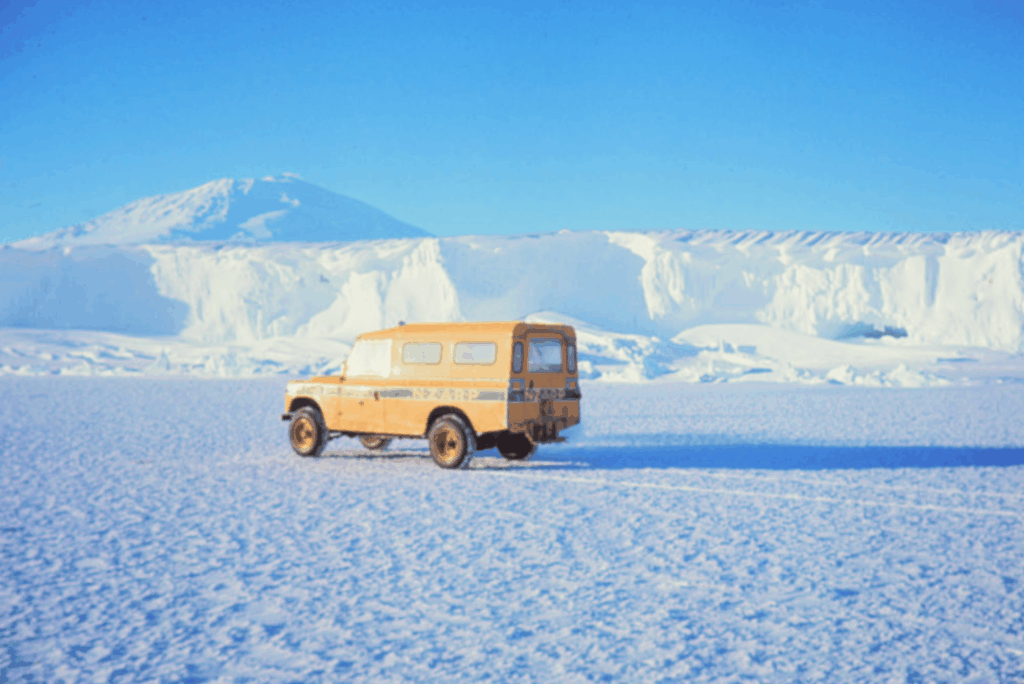
The Land Rover Series IIA is the model that’s done the most to contribute to the adventurous image of the Land Rover. It’s often associated with everything from African safaris to weekend jaunts to the muddy fields of country homes for some proper shooting with the lads. It’s practically become a trope at this point, but for good reason. This vehicle really has been everywhere. Here, it’s depicted crossing a snowy plain, with Mt. Erebus off in the distance. In ‘79, New Zealand experienced its worst civil aviation disaster, with 237 passengers and 20 crew perishing aboard sightseeing Air New Zealand Flight TE901. The DC-10 crashed into Mt. Erebus due to a navigation miscommunication.
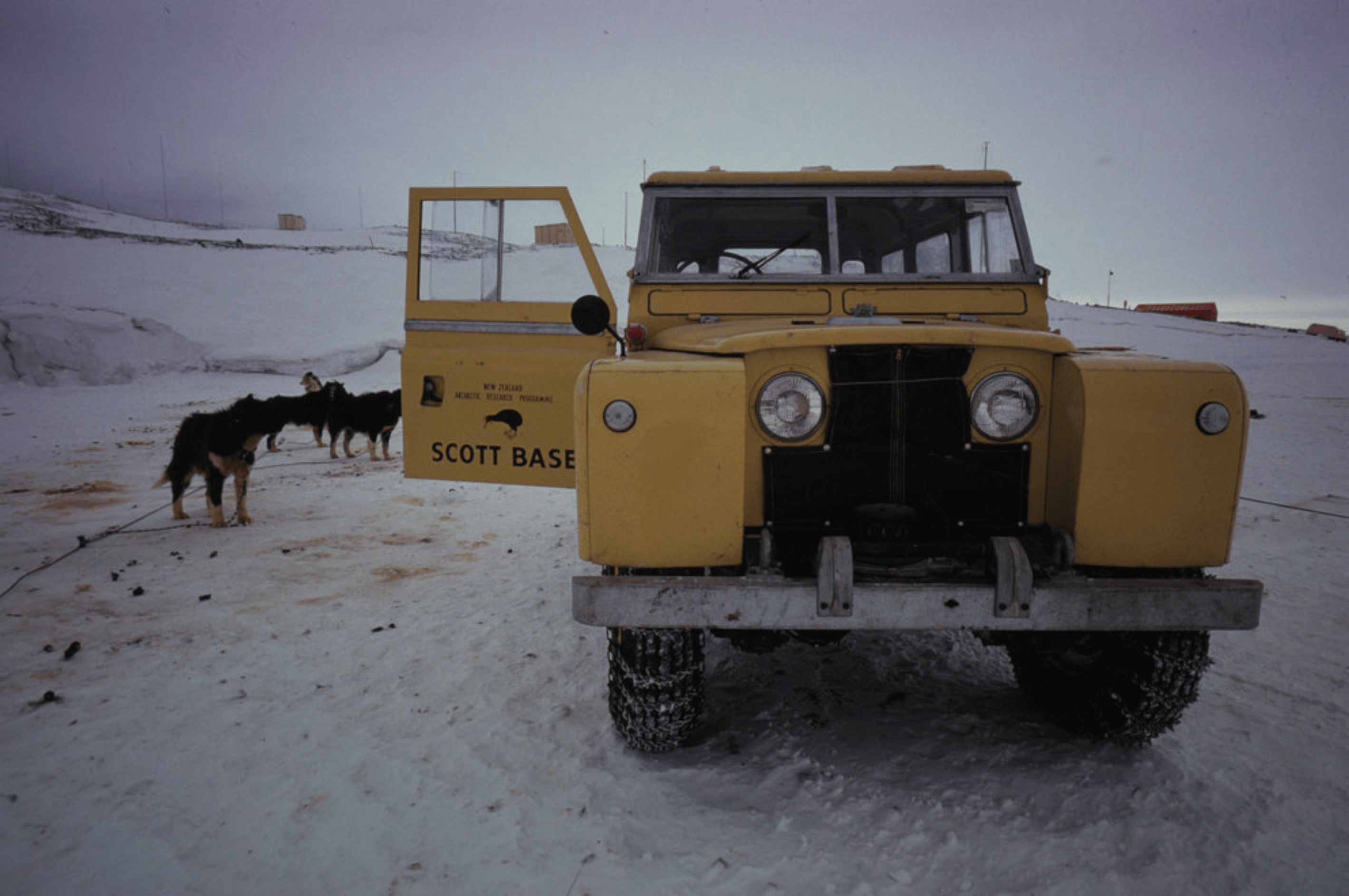
As a member of the Commonwealth, it’s no surprise that machines from Solihull were part of New Zealand’s Antarctic fleet. Kits from England would be shipped for local assembly by the New Zealand Motor Corporation.
The Mighty Dodge Power Wagon (1967-68)
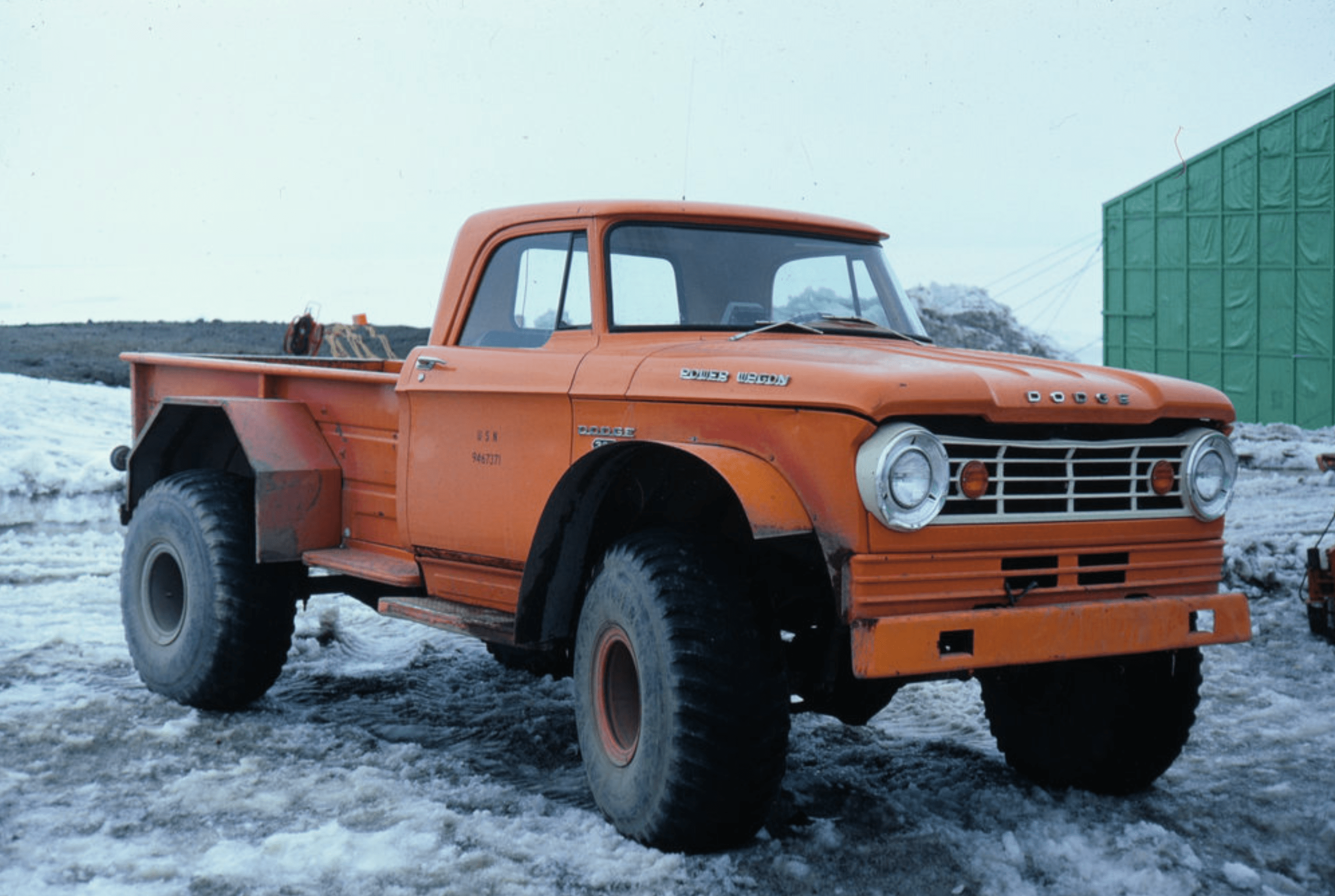
Today, there are companies like Arctic Trucks that cater specifically to the segment of the market using trucks in antarctic and arctic environments. In fact, Arctic Trucks maintain a permanent presence in Antarctica today, but back in the late ‘60s, trucks like the Dodge Power Wagon had to be modified by NZARP for use in the Great White South. Here, large fenders have been added to this W300 to accommodate protruding wheels that are much wider and taller than the stock set up. This set up created positive flotation, allowing the wheels to distribute the one-ton truck’s weight over a larger surface, not to mention improved ground clearance.
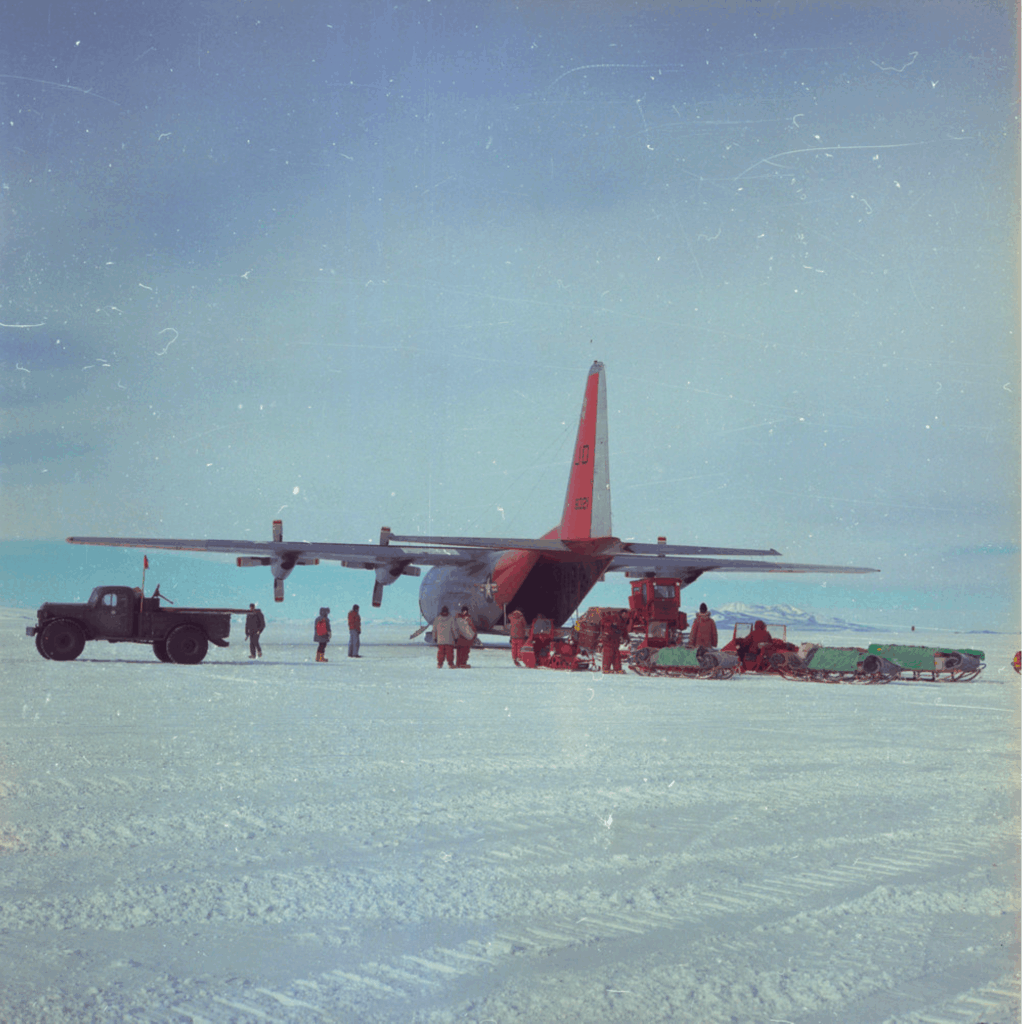
Kiwi photographers working at Scott base photographed the nearby McMurdo base being resupplied by LC-130s and using Dodge WC series truck from the US military. This was part of Operation DEEP FREEZE, a series of missions carried out by the USAF linking supply routes between the US, New Zealand, and Antarctica’s ice runway. The LC-130s used skis as landing gear and JATO (jet assisted take off) to ensure a successful take off on the ice runway. The Dodge WC trucks supported the maintenance of the ice runway.
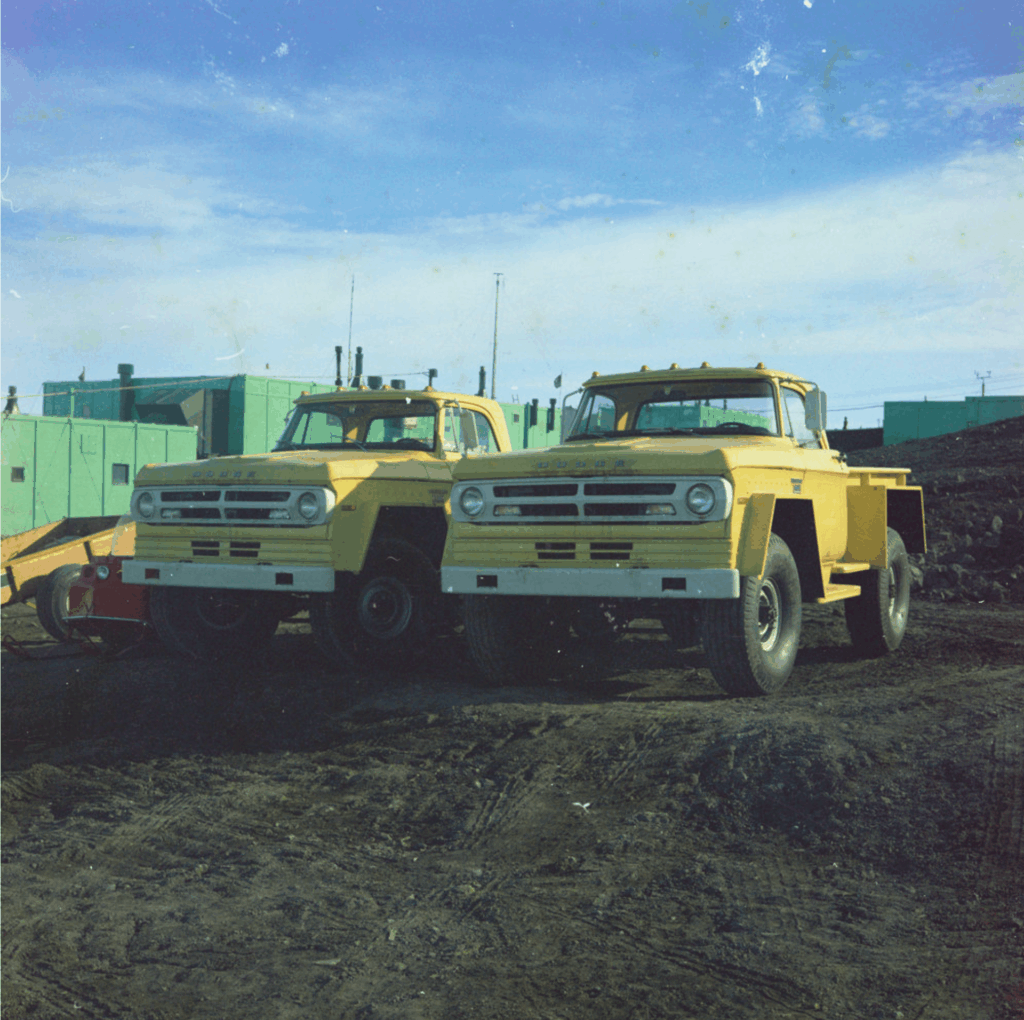
The Workshorse Unimog (1988-89)
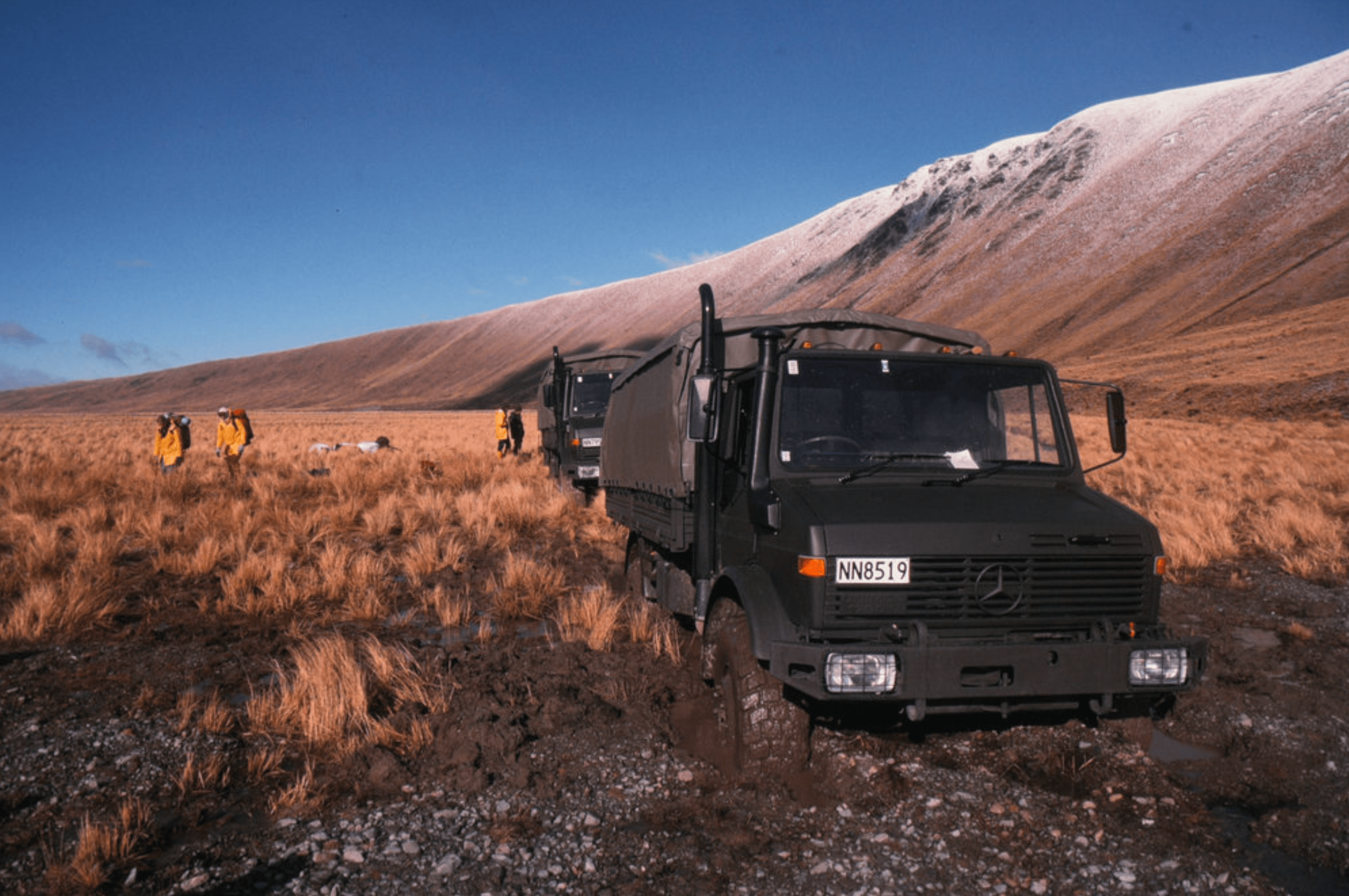
This isn’t Antarctica, but rather the Tekapo Military Training Area where NZARP personnel that would be deployed to Scott Base trained for their time on the ice. The high altitude environment on New Zealand’s south island is often snow-covered, simulating some of the conditions the Antarctic crew will face. The Unimog, in this case, a bogged Unimog, was used to transport scientists around the training facility and it was mud that slowed them down–something that would not happen in Antarctica.
The Indestructible Toyota Hilux (1990)
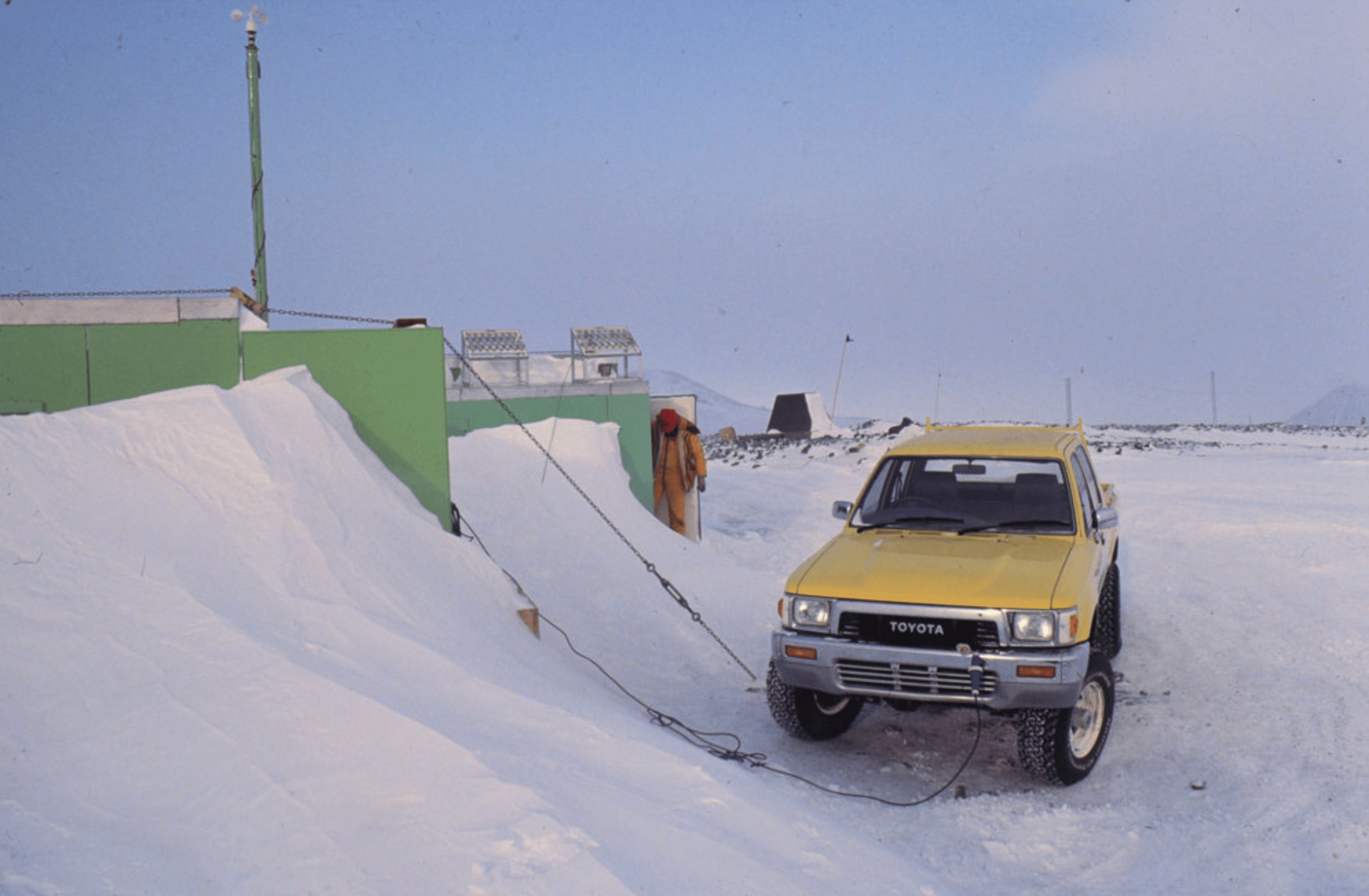
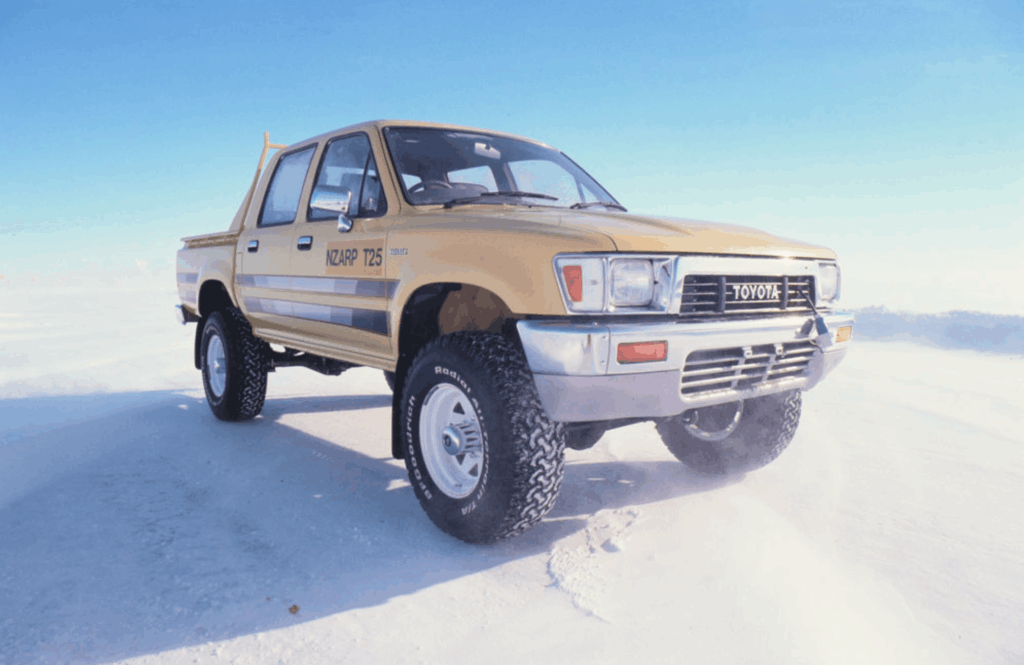
The Hilux is no stranger to polar duty, just watch Top Gear Polar Special and you’ll see how fitting a platform it is on the ice. But long before the British TV series went to the North Pole, Toyota Hilux examples were being used by NZARP at the other end of the world. This 5th Gen Hilux is hooked up to a block heater that warms up the engine enough to aid in cold starts and increase the vehicle’s longevity in the austere conditions of Antarctica. Just a few years prior in 1987, the “Toyota War”, a Gaddafi-led conflict between Chad and Libya with Toyotas being used as technicals, would cement the connection between trouble in the middle east and the Toyota Hilux long before the Global War on Terror.
The Cult Classic Iron Pig (1972-73)
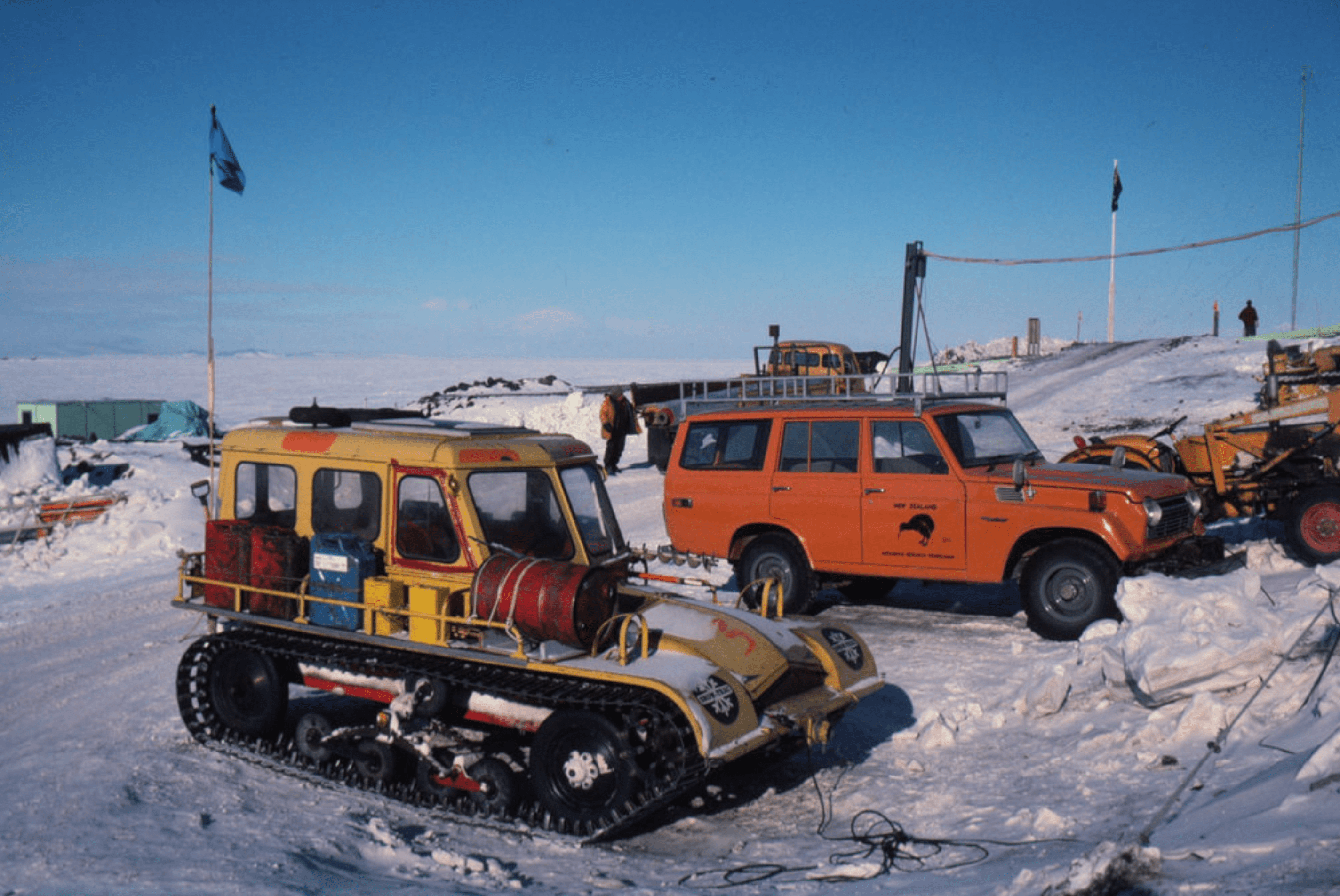
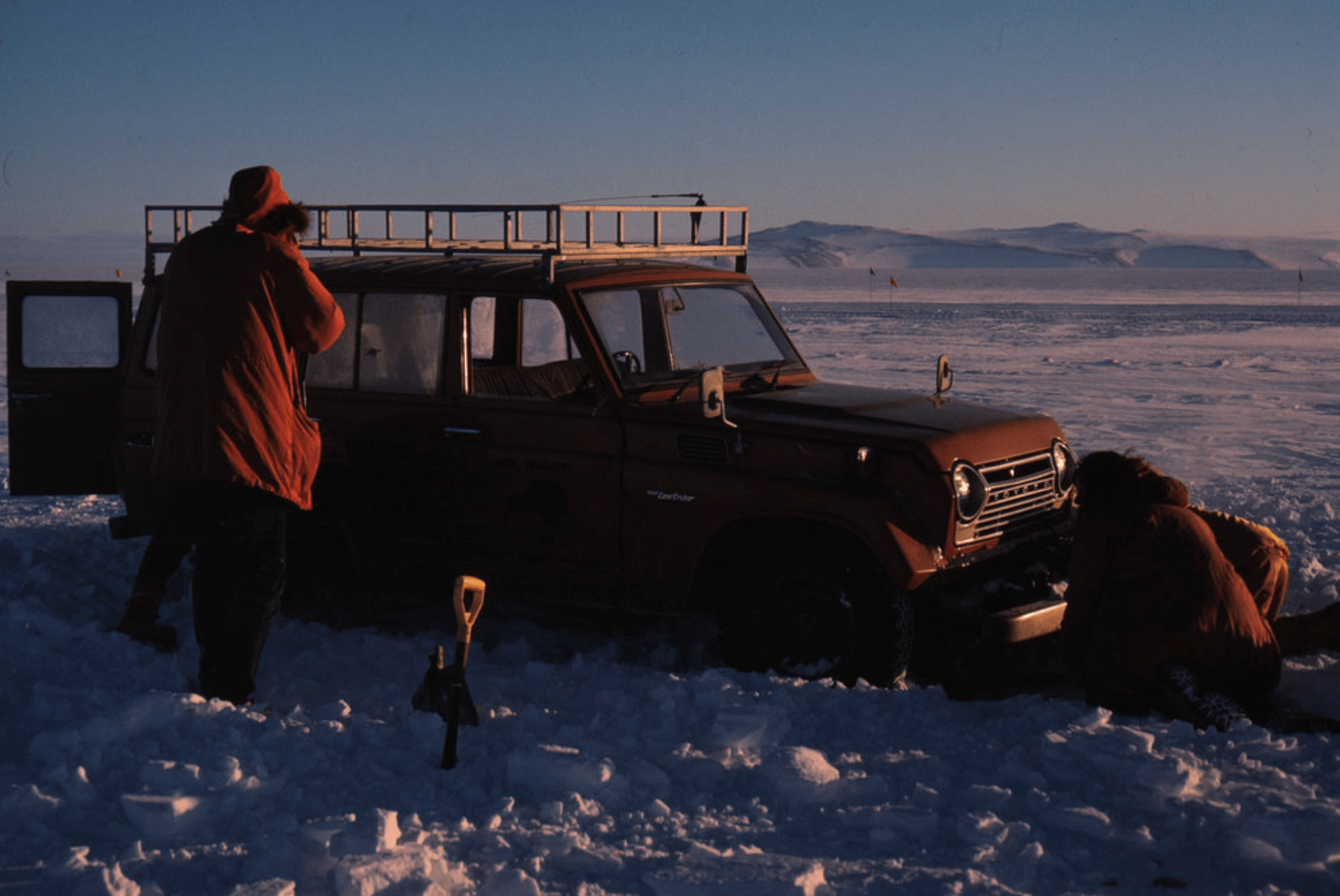
The FJ55 is a rare bird, just like kiwi painted on the side of this one. It was Toyota’s first foray into designing a serious off-roader focusing on recreation instead of solely utility. It established the blueprint for a “luxury” SUV that the later FJ60 eventually became. No longer were just mining, forestry, and the like the envisioned use case for this truck, but perhaps a family ski weekend in the mountains as well. Prior to the 55, the Land Cruiser line hadn’t been designed with any sort of passenger vehicle practicalites in mind. In fact, the 55 had created an entirely new branch of the family tree: The Land Cruiser Station Wagon. In Antarctica, there are no family vacations. The FJ55 is used purely as a working truck like any other, and that’s what makes its selection for duty so interesting.
Alloy art direction :Fernando Pino
One response to “Enduring Cool ”
-
Fantastic overview of the vehicles that made it possible to traverse the white continent back in the day. This article has got it all – kiwis, fender flares and and a bunch of good old fashioned 4wd power

Recent Posts
All Posts
March 17, 2026

March 16, 2026
March 12, 2026
Leave a Reply