French Glass

November 26, 2025
Alex KiersteinFor two short years, you could sail a Renault with a Gordini engine and a charming fiberglass hull with a space-age design. It was a flop.
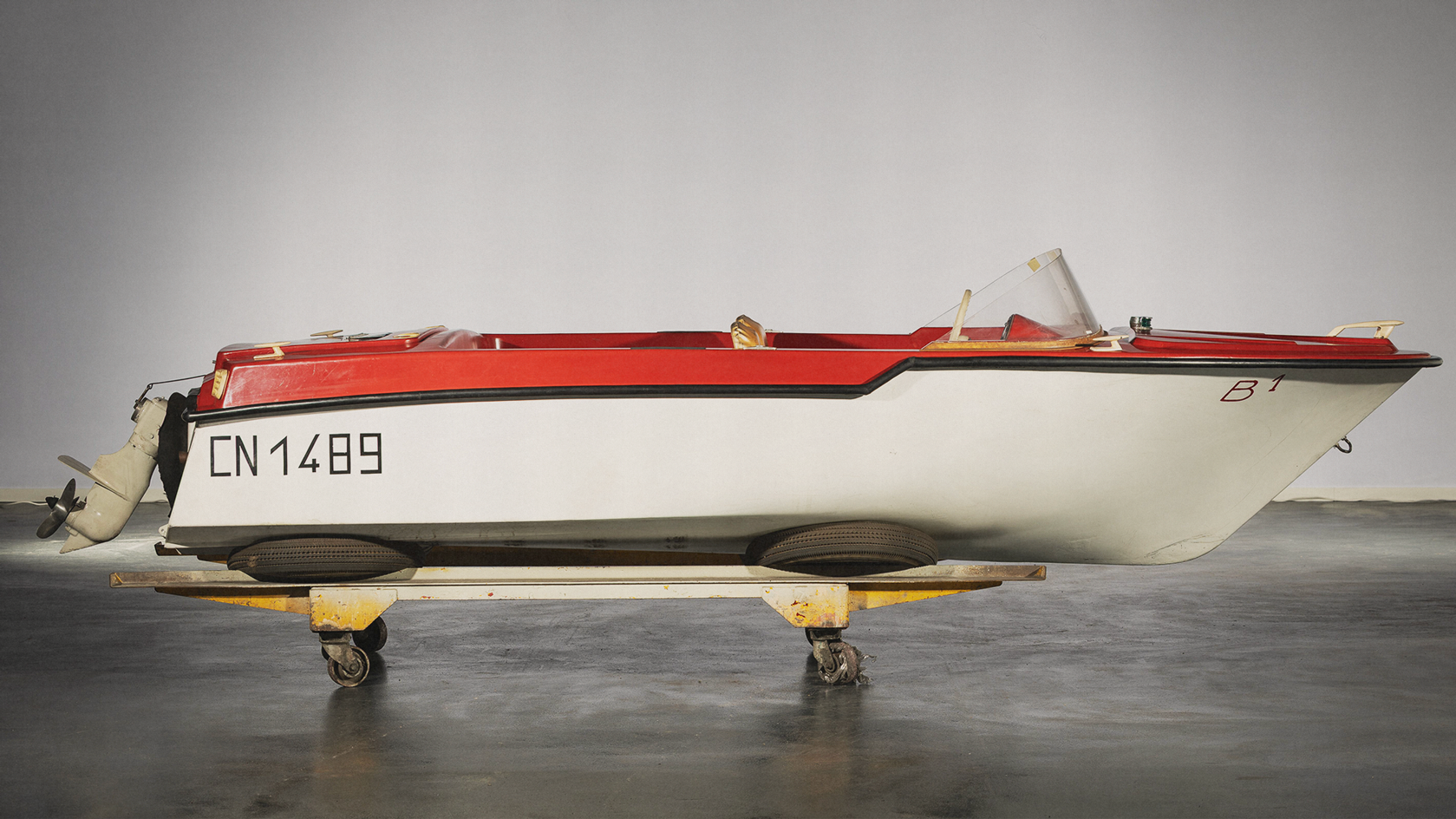
The Renault-Penhoët runabout you see here is lightweight, made out of fiberglass, and has a Renault-Gordini inline-four in the rear from a Dauphine-Gordini. And, like other vehicles derived from the Gordini, like the Henney Kilowatt, it was a commercial flop. But it’s a convenient jumping-off point to discuss carmakers and the boats they occasionally built.
I was actually hunting for a Chrysler Marine Mutineer when I bought a Catalina Capri 14.2. This was all set in motion when I made the surprising discovery that Chrysler of all automakers was in the fiberglass sailboat business for a minute. Everyone (?) knows that car engines power boats—GM smallblocks, Volvo Penta, that sort of thing– but do they know that some car companies built whole boats? When Jay shared a link to a Renault collection at the French auction house Artcurial, the Renault-Penhoët Runabout RP1 stood out.
About the same time fiberglass, plastic, and other composites created a boom in the kit car market and helped enable the Corvette, boat makers eagerly adopted the material.
Easy to mold and much more durable than wood, as well as being nonreactive to seawater, it was a natural choice. And while lightweightness isn’t necessarily as important in many marine applications—those early fiberglass sailboats were laid thick and heavy with the stuff, overbuilt due to unfamiliarity with the novel material—it certainly is if you’re trying to power a sporty boat with a 32-horsepower automobile engine.

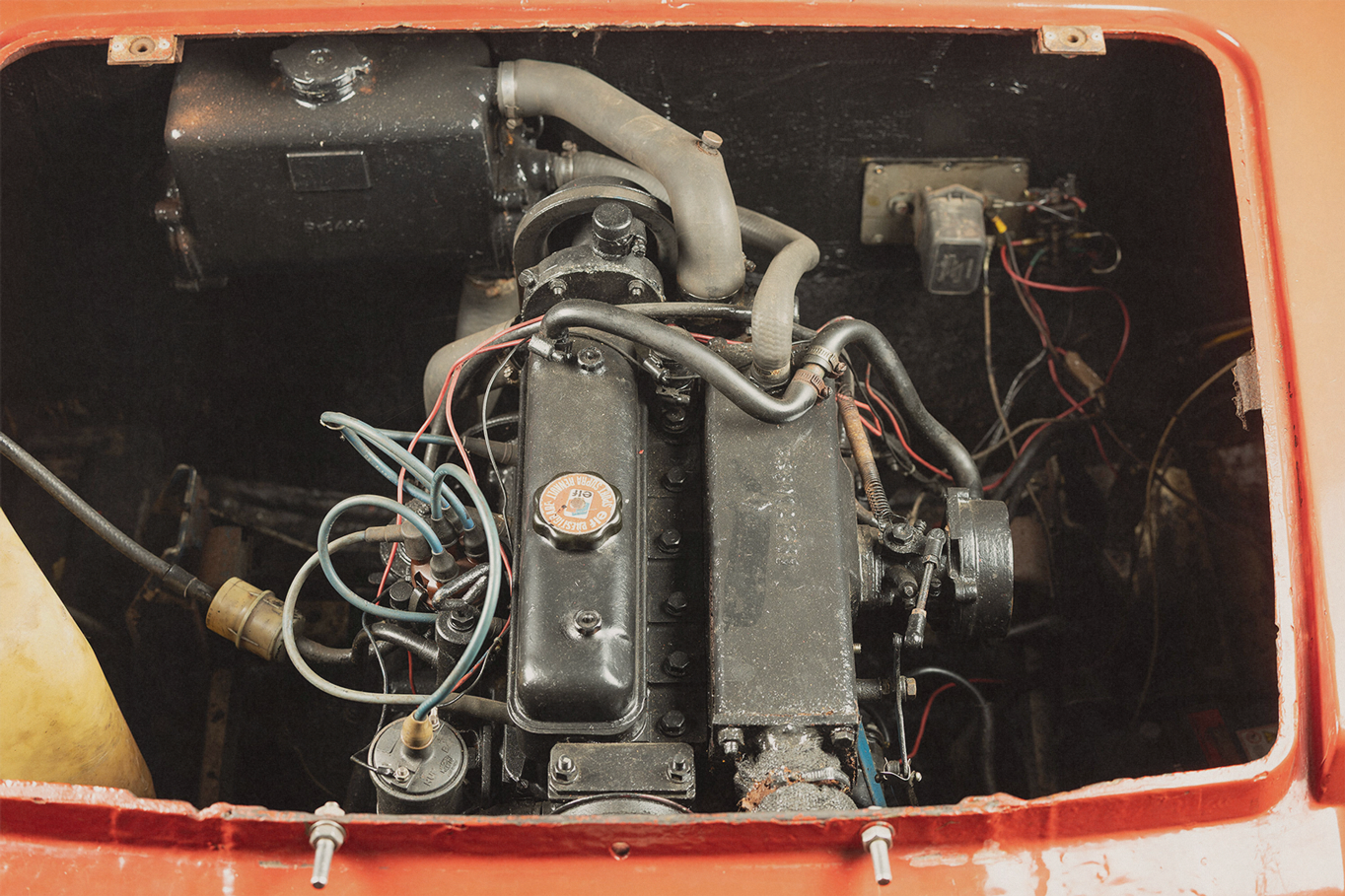

That said, that was about right for a small powerboat at the time; it’s just shy of 15 feet long overall. And it was reasonably economical considering that boat hull design was pre-CAD and its Renault engine breathed through a Zenith carburetor. It apparently would consume 2.3 gallons an hour at full tilt, and 1.5 at cruise. It’s not clear what it’s top speed was, but that’s not so surprising.
The boat didn’t sell well. Built with the help of the famed Ateliers et Chantiers de Saint-Nazaire Penhoët shipyard, it was introduced in 1961 and discontinued two years later. The reason? Some light digging didn’t bring up any English-language (or accessible) source with a rationale.
I love the RP1’s cheerful, optimistic shape. The two bright tones that turn its construction—two molded pieces joined by a seam that is a jaunty character line unto itself—into an aesthetic strength. It has the aesthetic qualities of a full-sized toy, and that’s a compliment. It’s a plaything with no real working purpose, a real pleasurecraft. And so the purity, the simplicity of it, and the Gordini engine in the back (however modestly specced) have me thinking about the excess of 1950s and 1960s runabouts around.
Look in your local listings. Runabouts with needs are lousy in areas with a strong boating culture. It’s a testament to the permanence of fiberglass construction, really. While the chance of finding a Renault-Penhoët in America is virtually nil, the chance of finding something equally futuristic and modestly charming is high.
Recent Posts
All Posts
March 17, 2026

March 16, 2026

March 12, 2026
Leave a Reply