POSSIBILITY MACHINE
November 10, 2025
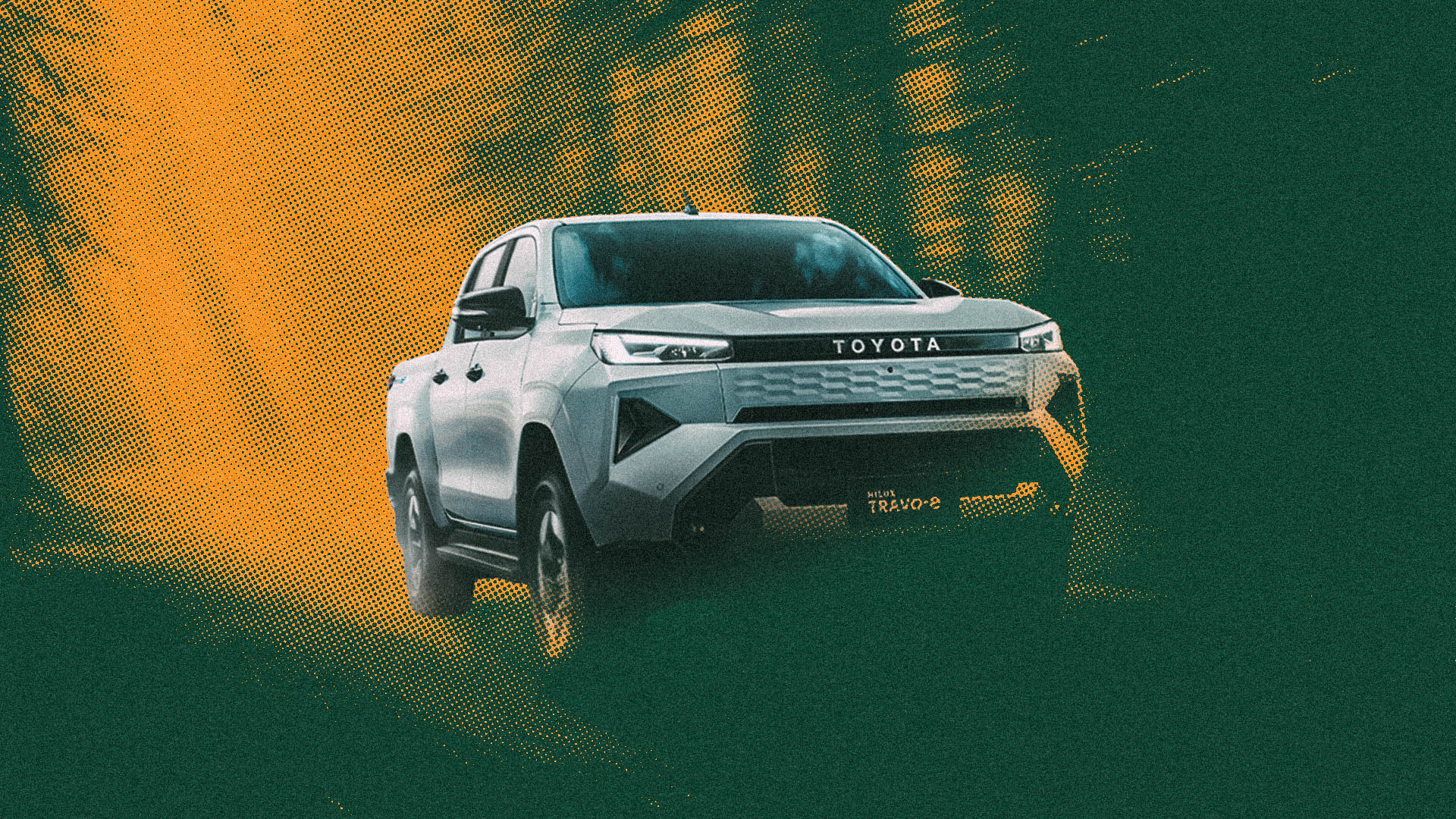
Alex KiersteinThe Toyota Hilux is a truly global truck, excluding America. Now it’s a BEV. What are we missing out on?
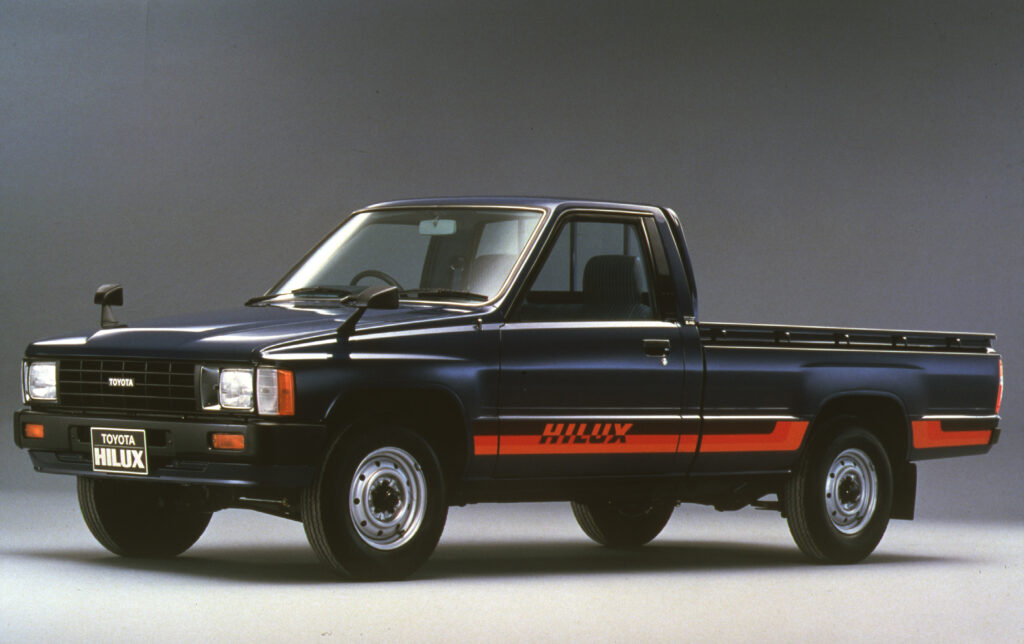
I can’t overstate how important the Toyota Hilux is to Thailand, where it’s built. Pickup trucks benefit from a favorable tax structure and are still generally basic (and thus inexpensive), so they are a versatile and affordable option for small businesses and regular consumers. The Hilux isn’t small, but its position in the market is a bit like how compact pickups were situated in the 1980s and for much of the 1990s: lots of specs, lots of options, but still available as low-cost and low-spec trucks with plenty of capability. (The Thai market even supports lower-cost, more basic trucks like the Hilux Champ.)
Toyota’s operations in the country stretch back more than 60 years, and the Hilux (and its predecessors like the Stout) have always been popular. In its home market, the Hilux alone accounts for 30 percent of the entire automotive industry and 3 percent of the total GDP, according to Toyota. And it has plenty of competition, which makes the numbers even more surprising. The Isuzu D-Max, the Hilux’s arch-competitor in Thailand, and others like the Ford Ranger and Nissan Navara are built there, too.
The Hilux is not sold here, making the U.S. basically the only major auto market where it’s not available.
Instead, we get the similarly-sized Tacoma that is mostly a consumer truck. Sure, there are stripped-down versions with a rear-seat delete that some fleets use, but the commercial versions of domestic mid- and full-size trucks seem to be more popular.
The new Hilux, which was just unveiled, is built on the existing IMV platform (like the smaller Hilux Champ, the 4Runner-like Fortuner SUV, and the previous-generation Hilux). But unlike any Hilux before, it’s now available as a full BEV starting at the equivalent of $46,000 in Thailand.
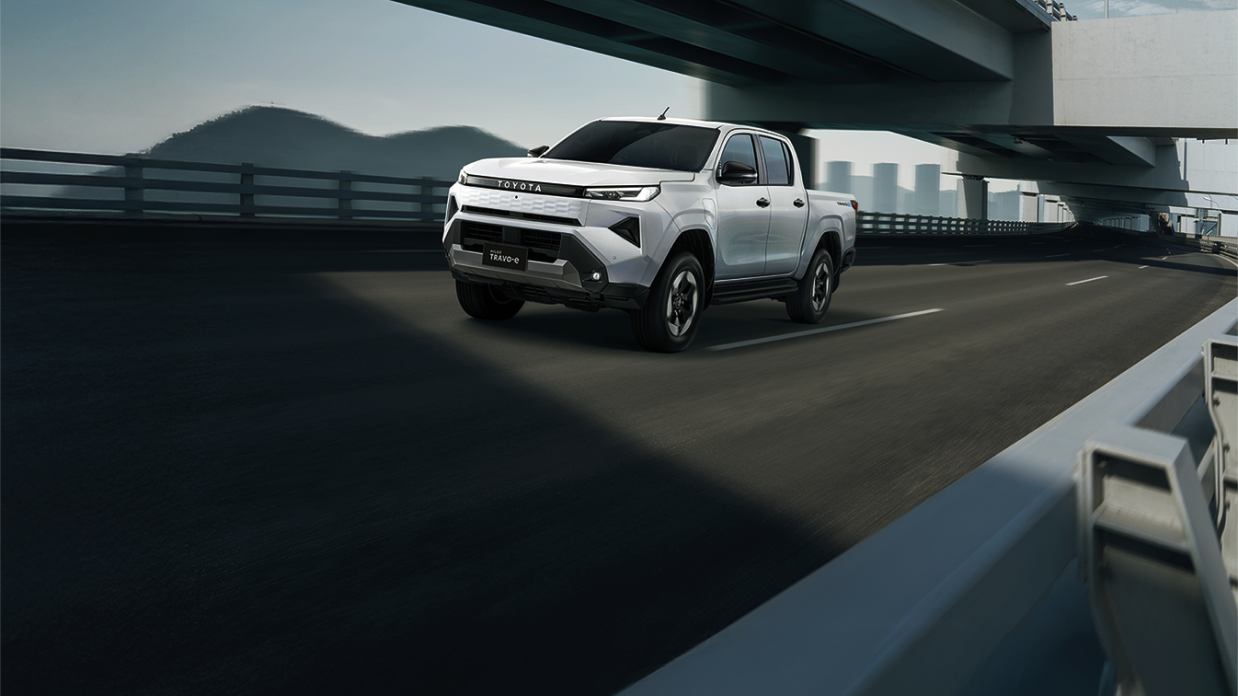
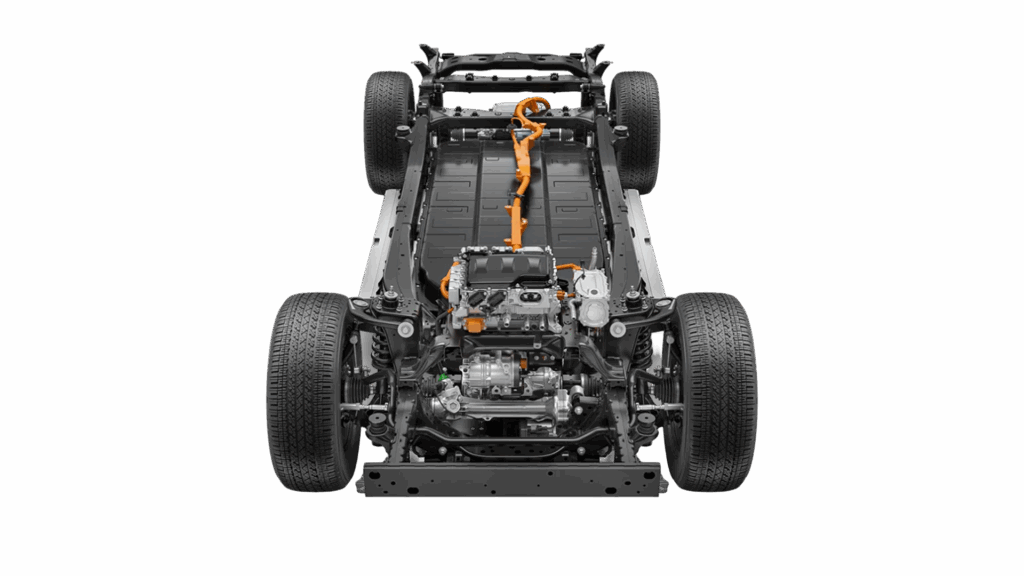
The specs look attractive for a lot of the urban and suburban use cases I can imagine. It’s a dual-motor setup with 196 total horsepower, with the front motor making 151 lb-ft and the rear making 198 lb-ft. The battery capacity is modest by American market standards, with 59.2 kWh and an estimated range of just about 200 miles (using NEDC cycle range estimation). It’ll recharge at up to 125 kW on a DC fast charger.
While range would suffer, the Hilux BEV (called the Hilux Travo-e in Thailand) can tow around 3,500 lbs and has a 1,500-pound payload capacity. These are beefy numbers, proving the Hilux Travo-e isn’t some sort of performative production. It’s a real truck with all-wheel drive and decent capacities, provided owners can deal with range limitations when loaded. A more conventional 2.8-liter turbodiesel inline-four is available with a manual or an automatic, as well. In some markets, there will be a mild hybrid version, and theoretically, there will also be a hydrogen fuel-cell version, too.
Setting aside Toyota’s persistent fascination with hydrogen fuel cells in consumer vehicles, which seems to be going exactly nowhere in America after the Mirai fiasco and the political climate, the Hilux BEV doesn’t seem to have any implications for the direction that USDM products may be headed. Our Hilux analogue, the Tacoma, utilizes an entirely different vehicle platform that isn’t going away anytime soon.
More importantly, even if the powertrain was adaptable to the TNGA platform variant it shares with the Land Cruiser, 4Runner, and their Lexus equivalents, the specs just don’t match consumer preferences. The dismal sales of range-limited vehicles, like Mazda’s horrible bet on the MX-30 and even the flatlining sales of the relatively long-legged F-150 Lightning EV, make it highly unlikely that Toyota could derive anything useful from its BEV powertrain development work on the Hilux.
The wind seems to be blowing in the direction of hybrid and range-extended hybrid pickups, and that’s likely going to have nothing to do with the rest-of-world Hilux. It may not even have anything to do with the once-promising Slate pickup, which looks less promising after EV incentives were pulled, vaulting its optimistic starting price up to a much riskier tier.
For now, Americans make do with the powerful Tacoma i-Force Max hybrid, which is efficient for its power density. But it’s no Prius with a bed.
For now, at least, the Hilux isn’t some early sign of a midsize EV pickup wave lapping at our shores. It’s an interesting truck built entirely for non-American markets and non-American tastes, and while it’ll be interesting to see which markets take to the Hilux Travo-e and for what purposes, it’ll be
Recent Posts
All Posts
March 17, 2026

March 16, 2026
March 12, 2026
Leave a Reply