Bandwagon
December 5, 2025
Peter Hughes
Time to build a new set of longroof associations, starting now. Wagons are fast! Wagons are hot! Wagons are sexy!
Sometimes a lede gets buried. It happens. When the story is something as stunning as the G90 Wingback concept wagon that Genesis revealed to unsuspecting journalists a couple weeks ago, it’s understandable. Long, lithe, and sinister, perhaps the most striking aspect of the Wingback is how close to production-ready it appears. Indeed, while stopping short of committing, Genesis hinted broadly that it could very well find its way into showrooms. An exciting prospect.
But there was something even more exciting in our story about the Wingback, a few paragraphs down. It was a quote attributed to HotCars, from Hyundai and Genesis Chief Creative Officer Luc Donckerwolke, and it went like this: “With SUVs becoming commodities, other typologies will become interesting again.”
Coming from the head of design of one of the world’s largest auto manufacturers, in the context of a station wagon reveal, this has implications.
It’s no secret, of course, that sales are up big-time for a couple of notable hot wagons. The new BMW M5 Touring is currently outselling its sedan counterpart in the U.S.; meanwhile global demand for the outgoing Audi RS6 Avant was up better than 40% through the first six months of 2025. Given such an atmosphere, it would make sense for an aspiring premium brand like Genesis to throw its hat into this admittedly small ring, and grab a bit of low-effort, high-margin market share for itself.
That’s beside the point, though. At least in this country, wagons have been all but extinct for decades now. And while it’s a cliche that only car nerds on the internet care about station wagons, it’s a cliche for a reason: the internet is where people have conversations, car nerds are people who are passionate about cars, and the station wagon is, objectively, the best kind of car.
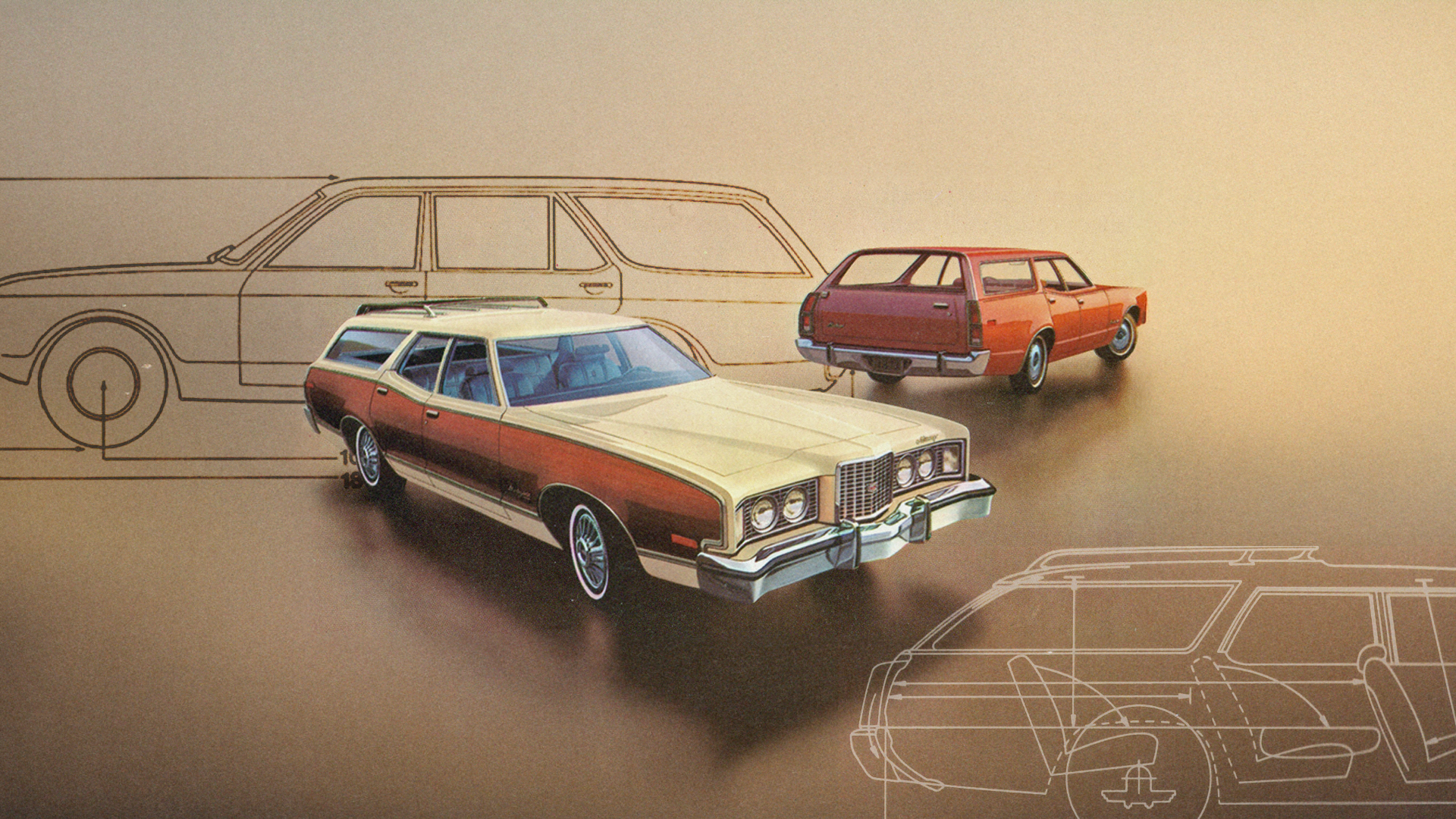
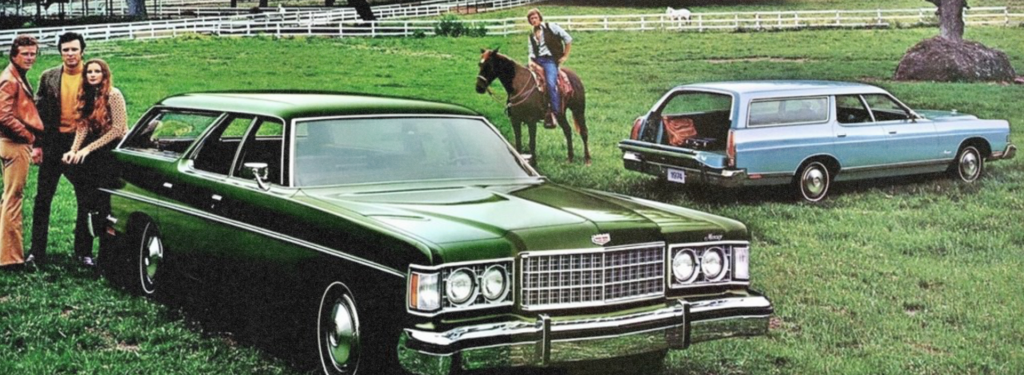
Once upon a time, this was widely understood, and for reasons that were entirely practical. In the second half of the American Century, the station wagon was the de facto family car. Think about The Brady Bunch. You’re a suburban architect presiding over a brood of six kids; of course you’re buying a new fuselage-body Plymouth wagon every year. You get two rows of three-abreast bench seating plus a rear-facing jump seat for Bobby and Cindy out back. Fold down those back seats and enjoy a veritable pick-up trucks’ worth of utility. Need to tow a travel trailer for your trip to the Grand Canyon? No problem. And you’re doing it all in comfort and style.
Foreign and domestic, big and small, from stripper to Country Squire, there were wagons for every budget and lifestyle. And while it’d be an exaggeration to say that they dominated the automotive landscape—at their peak in the 1970s they represented about 10% of the market—for decades, wagons nevertheless constituted a reliably healthy chunk of it. So what happened?
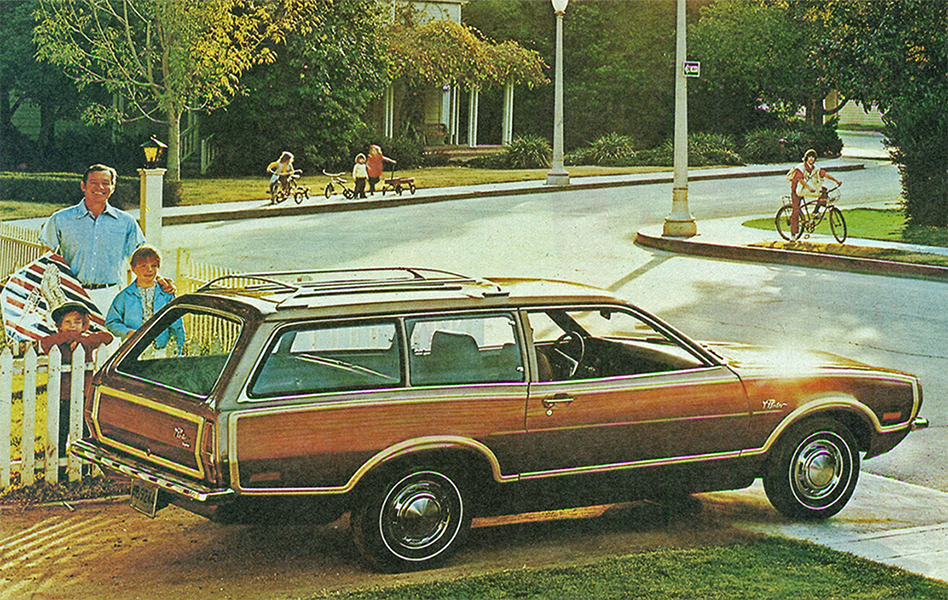
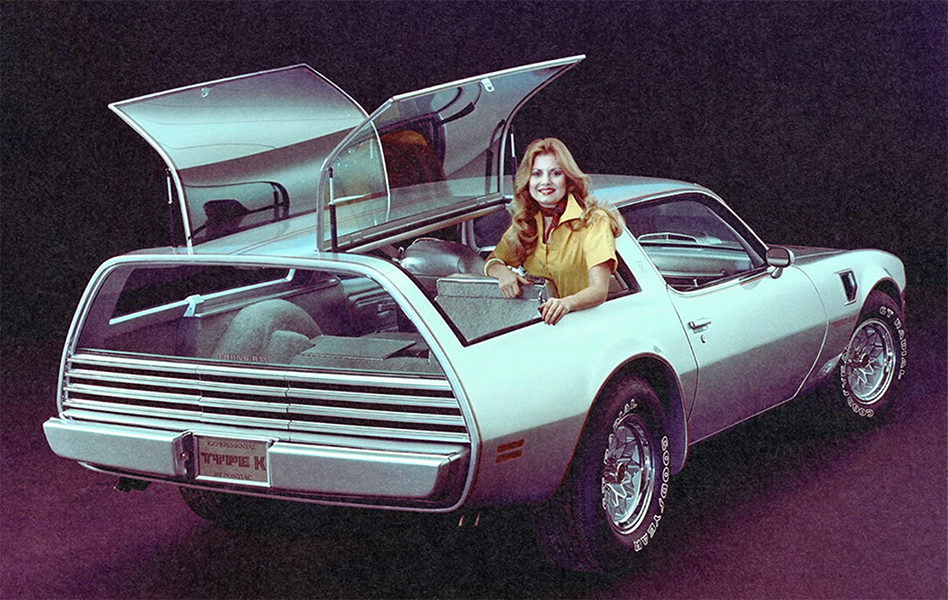
For better or worse, we are a country that places as much importance on the semiotic value of things—symbolism, appearances—as we do on their actual usefulness. And as boomers came of age and sixties hippies morphed inexorably into eighties yuppies, station wagons came to be seen as emblematic of a newly unfashionable brand of postwar consumer excess. Tacky, in other words. Compare Mike and Carol Brady’s graceful ’73 Satellite to the grotesque “Wagon Queen Family Truckster” of National Lampoon’s Vacation, a scant ten years later. A hideous caricature of the traditional family wagon, festooned with stacked sets of quad headlights up front, misshapen windows and yards of fake wood appliqué, it provides a pretty good illustration of just how far the station wagon had fallen in the American imagination.
And then of course there was the minivan. Not an entirely new concept, it took Lee Iacocca grafting it to an economical front-drive, transverse-engine platform for it to find mainstream acceptance. But did it ever. A genuine improvement on previous family haulers, the Chrysler’s new-for-1984 minivans were essentially station wagons, only taller and minus the stigma. And the taller part was not insignificant, for it was at exactly this time that child safety seats became a thing.
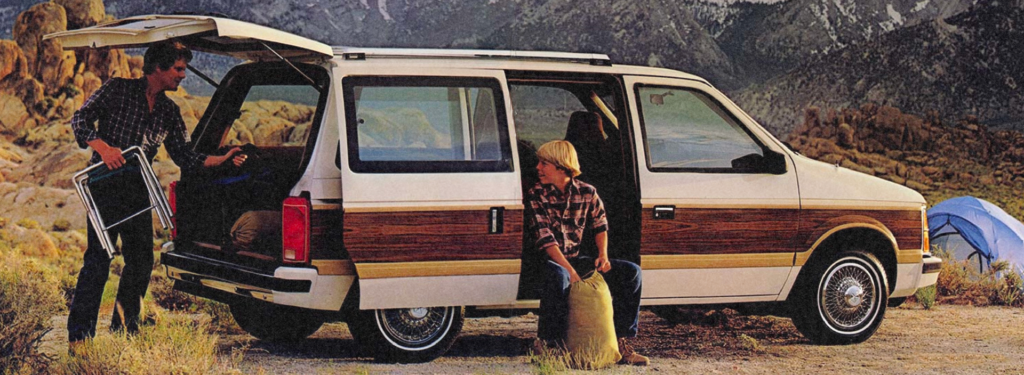
Where previous generations had been content to throw kids in the back and pray, the weak-minded, worrywart, helicopter parents of the eighties actually took to strapping their offspring into devices specifically designed to protect them! (Child seats became mandatory in all fifty states beginning in 1985.) As anyone who’s ever had to do it on a regular basis knows, it’s a hell of a lot easier buckling up a toddler from at least a semi-erect posture, the kind that a minivan readily permits. The death of the wagon was imminent.
By 1996, the list of U.S.-manufactured, full-sized station wagons was down to two, the GM B-body Chevy Caprice and Buick Roadmaster siblings. The next year they were gone. Misguided CAFE regulations incentivized manufacturers to turn everything into a truck, a trend that dovetailed conveniently with yet another generational shift. This time it was the minivan’s turn to look hopelessly lame, lost in the fervor for less practical but symbolically more potent SUVs. As we all work bullshit jobs now, it’s important that our jeans and our cars project rugged self-reliance.
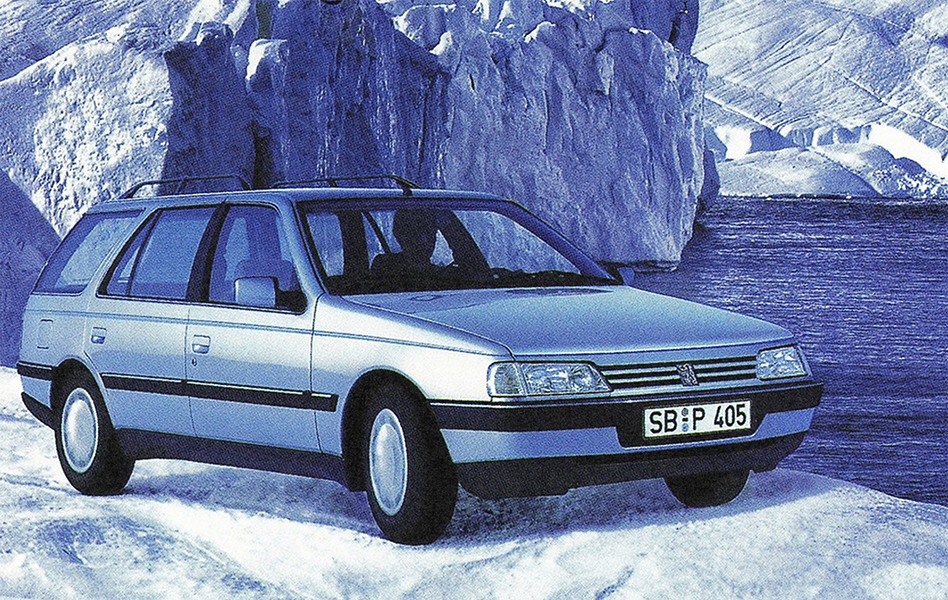
So whither the actual station wagon? They’ve never left us completely; you’ve always had the choice of the odd Volvo or Subaru, although most of them have adopted the pretenses of their sport-utility cousins. The ’00s saw the Dodge Magnum, and Ford—having kept the fire burning through previous decades with extended-roof versions of the Taurus and Focus—made a valiant attempt to back-door the idea into the 2010’s marketplace with the neither-fish-nor-fowl Flex. A trickle of Mercedes E-class wagons continued to find their way to our shores, and there was even the lustworthy Jaguar XF Sportbrake for a few years there, appealing to the same niche as the current German hits, but at a time when nobody seemed to be paying attention.
As a body style, as an automotive format, as a “typology,” the station wagon really is a unique value proposition. It’s just a sedan with a longer roof, but that small modification buys so much added utility with so little compromise that nothing else really compares. Sedan comfort, sedan ride, sedan performance (if it’s that kind of sedan), with enormously expanded carrying capacity—enough in many cases to make our beloved trucks redundant—at a negligible penalty in weight, efficiency, or cost. Granted, if you have small children, a minivan is probably still your best option. But for the rest of us? Do you really need eight inches of ground clearance to get to the supermarket?
And this is what makes me optimistic about Genesis design boss Donckerwolke’s statement. As I see it, the only obstacles to a wider range of wagons in the U.S. marketplace are inertia and fashion. Forty years ago wagons became unfashionable in this country for a host of reasons, some good, but most of them dumb. The number of car buyers who are old enough to remember the cultural baggage that once attached to them is dwindling; at this point most buyers don’t think of wagons at all.
What better way, then, to reintroduce the idea of the station wagon to the American consciousness than with the kind of aspirational, desirable vehicles that the M5 Touring, RS 6 Avant, and G90 Wingback represent? Time to build a new set of longroof associations, starting now. Wagons are fast! Wagons are hot! Wagons are sexy!
Down with the hegemony of the commodity SUV. Sure, not everybody can afford a six-figure luxury estate car. But if you could trade in your Civic for a Civic wagon, wouldn’t you?
Recent Posts
All Posts
March 17, 2026

March 16, 2026
March 12, 2026