FLAT SPIN
November 14, 2025
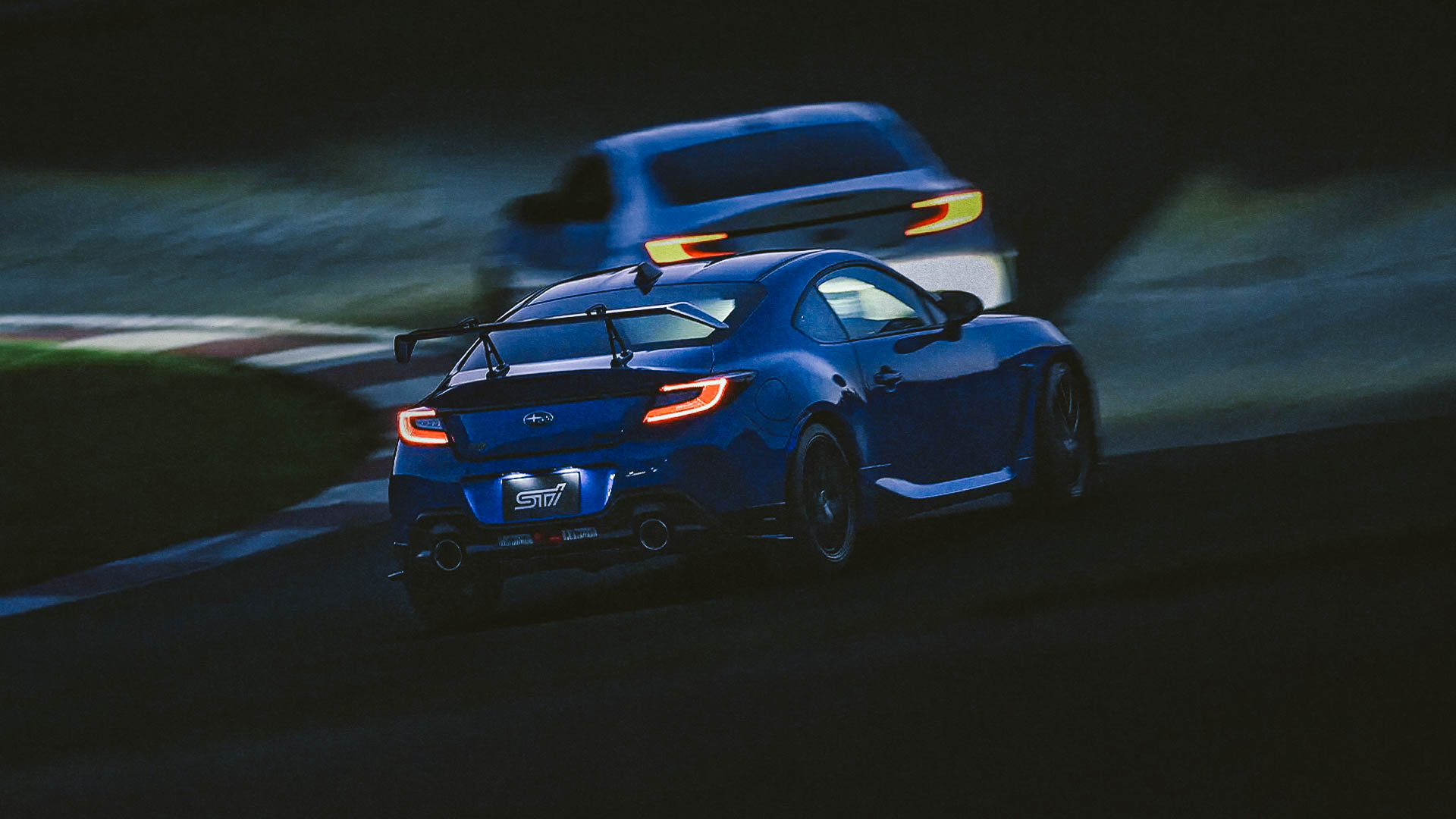
Alex KiersteinSubaru of Japan’s latest pseudo-STI is a BRZ with an engine workover that is about precision and optimization rather than output.
I don’t blame Subaru for keeping the latest low-volume BRZ STI Sport Type RA away from America. It only takes a glance at the headlines generated when the circa 2018 Subaru WRX STI Type RA landed here to see why. “A WEAK PERFORMANCE VALUE,” announced Car and Driver. Not that the headline was wrong, because the Type RA was frighteningly pricey at nearly $50,000 while in some ways important to American buyers (and to American reviewers) it was also more compromised than the marginal STI it was based on, shifting its performance attributes for better on-track performance at the expense of off-track livability.
Like the STI, the new BRZ STI Sport Type RA is about refinement and balance rather than “more of everything,” and that’s a hard sell here. The reason? Cheap information.
When a new performance car variant can perform some objective task better, it’s easier to classify it as, well, better. If it offers some experience that’s subjectively superior, or better in one situation but slightly worse in another, it’s going to take time and effort to suss that out.
That’s why the persistent narrative about the broader 86/BRZ’s lack of power—that a “real” BRZ STI could and should be coming—is problematic.
A boosted BRZ would be good, but would it sell? What does it mean for the WRX STI halo, which in this generation has committed the sin of not being significantly better than its predecessor? I don’t want to leave out the tepid response of reviewers to the BRZ tS, which has much better brakes … and not much else. They make a difference, but not in a way that’s obvious in a showroom or on a test drive.
Despite the lack of a turbo variant, the BRZ has persisted for two complete generations, has remained affordable, and has objective and subjectively improved for in its most recent guise. Let’s take a moment to appreciate that. It’s a legitimate rear-drive, 2+2, affordable sports car with a manual, and it doesn’t appear to be facing an immediate existential crisis.
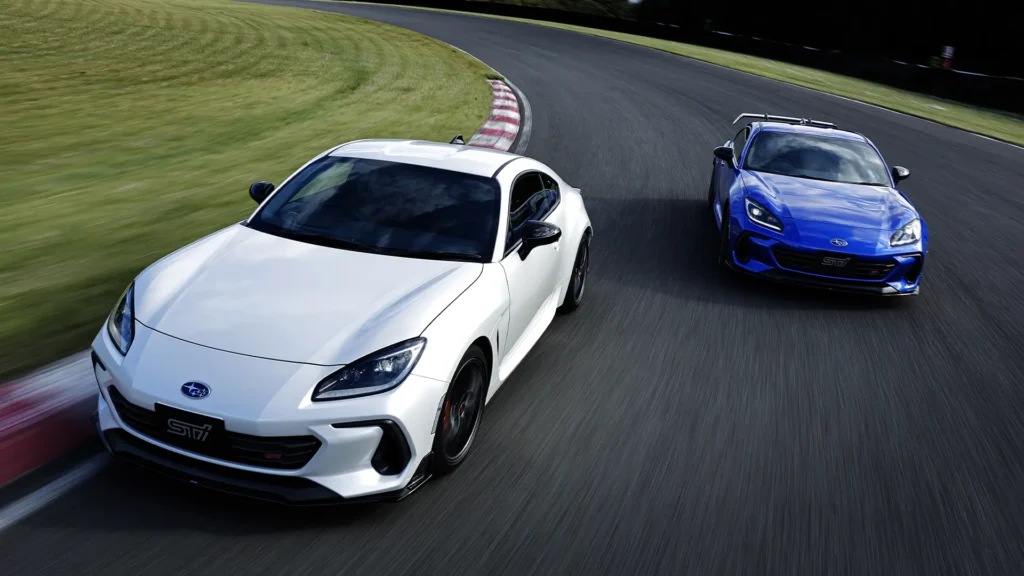
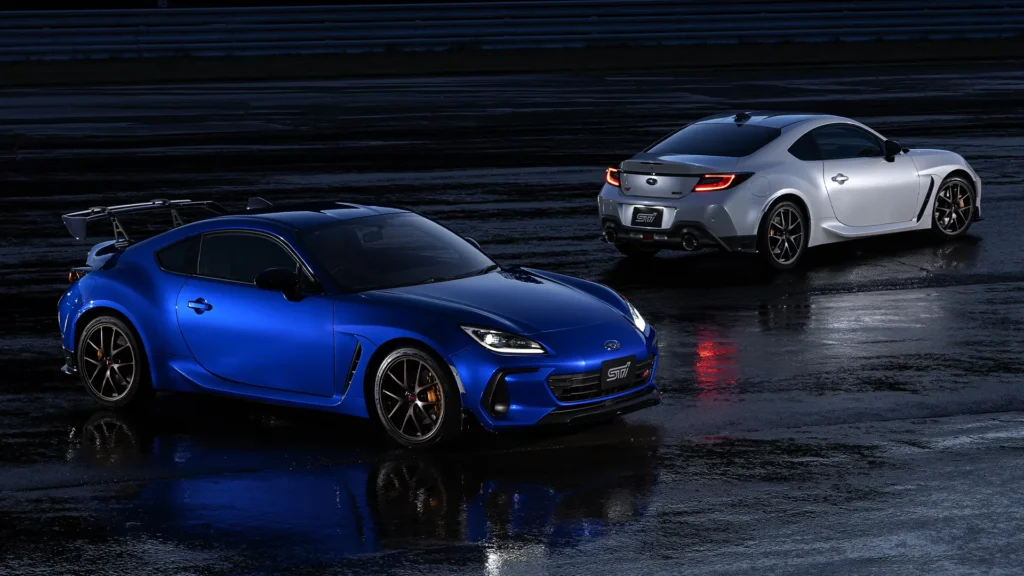
Back to the BRZ STI Sport Type RA. It’s part of the “STI Sport” line of models in Japan, usually limited-edition jobs with a host of STI-developed parts. The non-Type RA is a milder thing, with few performance tweaks but a lot of unique cosmetic elements, and that’s fine for the Japanese market. Sometimes exclusive bits and an aura of specialness are enough to satisfy those buyers.
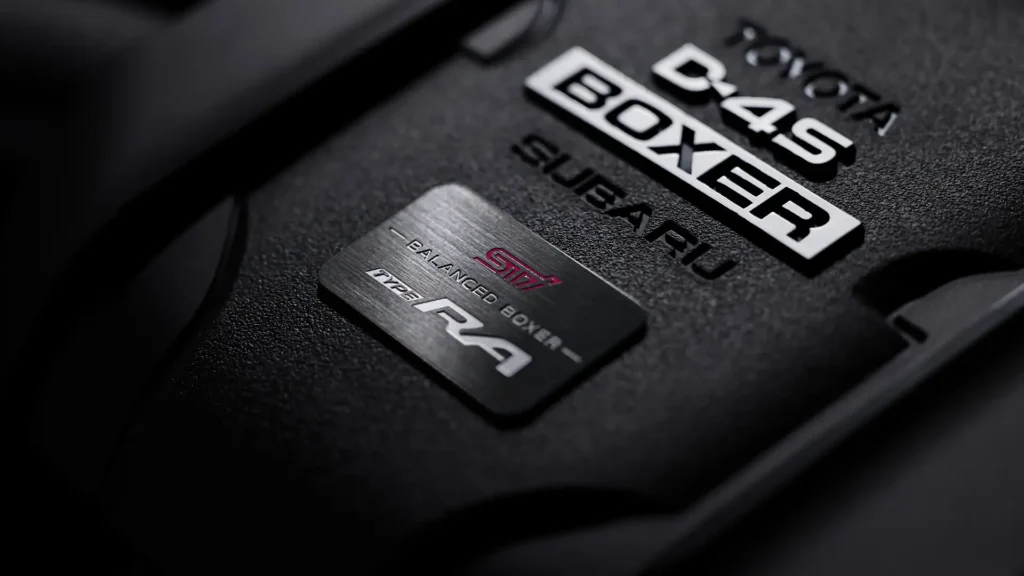
The Type RA is more serious, and more comprehensible as a value proposition, because its FA24 flat-four gets some serious balance work done. That means the pistons and rods are balanced to a tolerance 50% better than the factory manages, while the crank hits 80%. While that will improve smoothness, making it more pleasing to rev out, it’ll also allow it to sustain high-RPM operation for longer with less wear to the bearings.
In other words, anyone actually using a Type RA on track will probably enjoy it more and rebuild it less. On that note, the lighter flywheel and clutch cover will also help with snappier response.
I can’t tell you if the percentage improvement in rotating balance tolerances equals a similar improvement in subjective enjoyment, but it definitely doesn’t hurt. And getting this done at the factory is efficient, in some respects. You don’t have to tear down a brand-new engine and then work with suppliers to get a matched, balanced rotating assembly. Subaru can sort parts off the line to achieve a similar result—it’s just an improvement of the existing process. Neat!
STI also worked a no-lift shift feature into the Type RA it calls “Flat Shift,” holding RPM when the accelerator is depressed at the same time as the clutch. The other enhancements are interesting but a little more subtle. The Type RA gets some tuned ZF dampers, a performance muffler, and BBS wheels—that latter of which are bronze if you opt for a very prominent carbon fiber rear wing. Some aero bits, chassis braces, and a finned rear diff case round out the mix.
It starts at $32,100 (sans wing), $35,400 (with), which somehow is right in line with what our American non-STI BRZs are priced at. (The BRZ STI Sport starts at $24,450 in Japan, so the Type RAs are a not-insignificant step up in price.) Just 200 of the non-wing and 100 of the winged will be sold via a lottery system, which seems to be somewhat common in Japan for exclusive, limited-production things.
I bet the Type RA is a wonderful BRZ with a palpable benefit compared to a regular coupe. I also think a BRZ whose main selling point is the subtle charms of a balanced rotating assembly would be a very, very hard sell in a market where cheap information is good information, power is cheap, and attention spans are short.
That said, the Type RA’s promise doesn’t diminish what the regular BRZ and Toyota 86 offer our market. If you want to keep real sports cars around, go vote with your dollars.
Recent Posts
All Posts
March 17, 2026

March 16, 2026
March 12, 2026
Leave a Reply